What Is the Most Sturdy Pop Up Canopy
When it comes to outdoor protection, not all pop up canopies are built the same. The most sturdy pop up canopy combines heavy-duty materials, reinforced frames, and smart design to withstand wind, rain, and daily wear. Whether you’re heading to the beach, hosting a backyard event, or camping, choosing the right one ensures safety, comfort, and long-term value.
Key Takeaways
- Frame Material Matters: Steel frames offer superior strength and wind resistance compared to aluminum, making them ideal for harsh weather.
- Reinforced Joints and Connectors: Look for canopies with double-braced or cross-truss systems to prevent bending or collapsing under pressure.
- Heavy-Duty Fabric: Canopies with 300D to 600D polyester or Oxford fabric with UV and water-resistant coatings last longer and resist tearing.
- Proper Anchoring Is Essential: Even the sturdiest canopy needs strong stakes, sandbags, or weights to stay secure in windy conditions.
- Size and Weight Indicate Durability: Larger, heavier canopies often use thicker materials and stronger frames—don’t assume lightweight means low quality.
- Top Brands Prioritize Stability: Brands like Coleman, Eurmax, and Abba Patio are known for engineering rugged, reliable pop up canopies.
- Regular Maintenance Extends Lifespan: Cleaning, drying, and storing your canopy properly prevents mold, rust, and fabric degradation.
📑 Table of Contents
- What Makes a Pop Up Canopy “Sturdy”?
- Frame Material: Steel vs. Aluminum
- Fabric Quality: Thickness, Coating, and UV Protection
- Design Features That Boost Stability
- Anchoring and Setup: The Hidden Key to Sturdiness
- Top Brands Known for Sturdy Pop Up Canopies
- Maintenance Tips to Keep Your Canopy Strong
- Conclusion
What Makes a Pop Up Canopy “Sturdy”?
When you’re shopping for a pop up canopy, the word “sturdy” gets thrown around a lot. But what does it really mean? A sturdy pop up canopy isn’t just about looking tough—it’s about performance under pressure. Think strong winds at the beach, sudden rainstorms at a picnic, or heavy sun exposure during a weekend market. The most sturdy pop up canopy is designed to handle these challenges without flapping, bending, or collapsing.
Sturdiness comes down to three main factors: the frame, the fabric, and the overall build quality. A weak link in any of these areas can turn a sunny day into a frustrating cleanup. For example, a canopy with a flimsy aluminum frame might fold in a gust, even if the fabric is top-notch. That’s why it’s crucial to look beyond marketing claims and focus on real-world durability. In this guide, we’ll break down exactly what to look for so you can invest in a canopy that lasts.
Frame Material: Steel vs. Aluminum
Why Frame Strength Is Everything
The frame is the backbone of your pop up canopy. It supports the entire structure, so choosing the right material is critical. Most canopies use either steel or aluminum frames, and each has pros and cons.
Steel Frames: The Heavyweight Champion
Steel frames are the gold standard for sturdiness. They’re thicker, heavier, and far more resistant to bending or breaking under stress. If you’re setting up in windy areas—like beaches or open fields—steel is your best bet. Brands like Eurmax and Abba Patio often use powder-coated steel frames that resist rust and corrosion, even in humid or salty environments.
One popular example is the Eurmax 10×10 Pop Up Canopy, which features a reinforced steel frame with cross-bracing for extra stability. Users consistently praise its ability to stay upright in strong winds, especially when properly anchored.
Aluminum Frames: Lightweight but Less Rigid
Aluminum frames are lighter and easier to carry, making them great for casual use or quick setups. However, they’re generally not as strong as steel. Thin aluminum poles can bend or snap under pressure, especially in larger canopy sizes. That said, some high-end models use thick-walled or reinforced aluminum to improve durability.
If you’re using your canopy for occasional backyard gatherings or farmers’ markets, aluminum might suffice. But for frequent use or harsh conditions, steel is the smarter long-term investment.
Fabric Quality: Thickness, Coating, and UV Protection
Denier Rating Explained
Fabric strength is measured in denier (D)—the higher the number, the thicker and more durable the material. Most budget canopies use 150D to 210D polyester, which is fine for light use but can tear easily. For a truly sturdy pop up canopy, look for 300D to 600D fabric. This thicker material resists punctures, fading, and wear over time.
Waterproof and UV-Resistant Coatings
A good canopy fabric should have a waterproof coating (like PU or PVC) to repel rain and prevent leaks. It should also include UV inhibitors to protect against sun damage. Without these, the fabric can weaken, fade, or develop mold after just a few seasons.
For example, the Coleman Instant Canopy uses 300D polyester with a 50+ UV guard and water-resistant coating. It’s not the heaviest on the market, but it strikes a great balance between durability and portability—perfect for family outings or tailgating.
Reinforced Seams and Stress Points
Even the best fabric can fail at the seams. Look for canopies with double-stitched or heat-sealed seams, especially around the corners and roof joints. These areas take the most stress during setup and in windy conditions. Reinforced grommets and attachment points also help distribute tension and prevent tearing.
Design Features That Boost Stability
Cross-Bracing and Truss Systems
The most sturdy pop up canopies include structural reinforcements like cross-bracing or truss systems. These add extra support to the frame, reducing flex and increasing wind resistance. Instead of a simple X-frame, look for models with multiple support bars or arched roof designs that better distribute weight.
Adjustable Height and Tension Rods
Some premium canopies offer adjustable legs and tension rods that let you tighten the fabric after setup. This reduces flapping in the wind and keeps the canopy taut, which improves both appearance and durability. The Abba Patio 10×10 Commercial Canopy includes this feature, along with a vented roof to allow wind to pass through without lifting the structure.
Vented Roofs for Wind Resistance
A vented roof is a small detail that makes a big difference. It allows air to flow through the top, reducing the “sail effect” that can lift a canopy in strong gusts. While not all sturdy canopies have vents, it’s a smart feature to look for if you live in a windy area.
Anchoring and Setup: The Hidden Key to Sturdiness
Why Anchoring Is Non-Negotiable
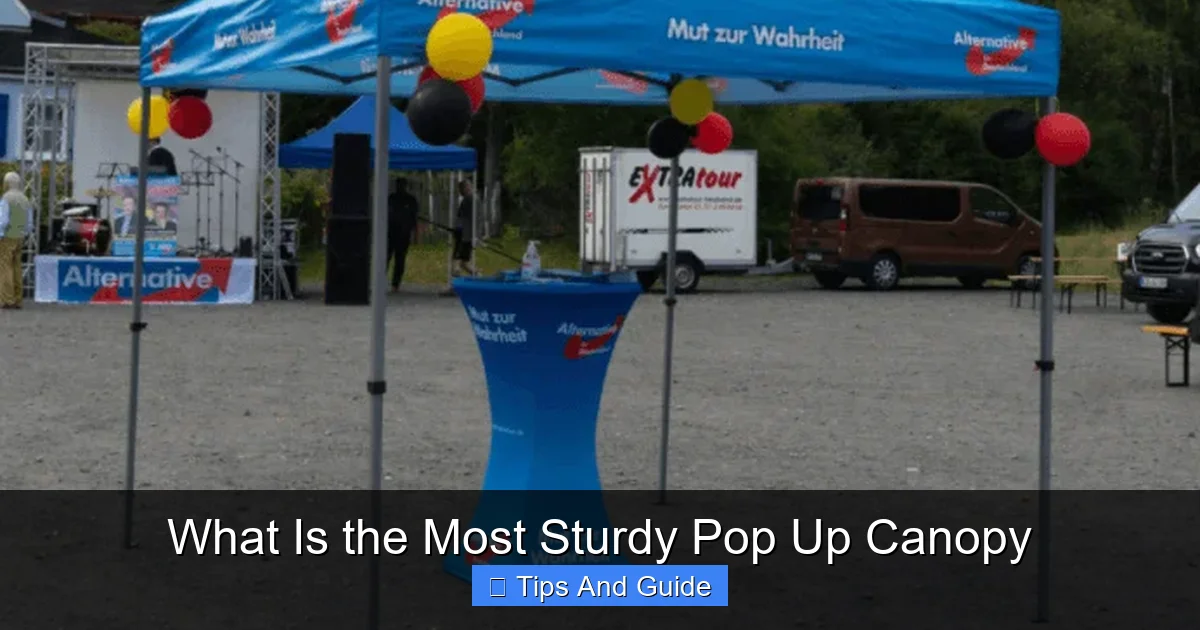
No matter how strong your canopy is, it won’t stay put without proper anchoring. Even the most sturdy pop up canopy can become a flying hazard if it’s not secured. Always use heavy-duty stakes for grass, sandbags for hard surfaces, or weighted feet for decks and patios.
Recommended Anchoring Methods
- Grass/Dirt: Use J-hook stakes at least 10 inches long, driven at a 45-degree angle away from the canopy.
- Sand/Beach: Sandbags or auger-style stakes work best. Fill bags with sand or rocks and attach them to each leg.
- Concrete/Decks: Use weighted feet or cinder blocks. Never rely solely on the canopy’s built-in feet.
For a step-by-step guide, check out how to set up a pop up canopy the right way—it covers anchoring, tensioning, and safety tips to keep your setup secure.
Top Brands Known for Sturdy Pop Up Canopies
Not all brands are created equal when it comes to durability. Some prioritize style over strength, while others engineer their products for commercial or heavy-duty use. Here are a few brands consistently praised for building the most sturdy pop up canopies:
- Eurmax: Known for commercial-grade steel frames and reinforced fabrics. Ideal for events, markets, and long-term use.
- Abba Patio: Offers heavy-duty canopies with vented roofs, adjustable height, and rust-resistant coatings.
- Coleman: A trusted name in outdoor gear, Coleman makes reliable canopies with good weather resistance and easy setup.
- Oileus: Popular for beach use, Oileus combines sturdy frames with sand-resistant designs and UV protection.
If you’re comparing models, our best pop up canopy tent review breaks down the top performers based on real user feedback and performance tests.
Maintenance Tips to Keep Your Canopy Strong
Even the most sturdy pop up canopy won’t last forever without care. Follow these simple maintenance tips to extend its life:
- Clean Regularly: Rinse off salt, sand, or dirt after each use. Use mild soap and water—avoid harsh chemicals.
- Dry Before Storing: Always let the canopy dry completely to prevent mold and mildew.
- Store Properly: Keep it in a cool, dry place inside its carrying bag. Avoid folding it the same way every time to reduce crease wear.
- Inspect for Damage: Check frames, fabric, and seams before each use. Repair small tears or bends early to avoid bigger problems.
Conclusion
So, what is the most sturdy pop up canopy? It’s not just one model—it’s any canopy that combines a strong steel frame, high-denier fabric with weatherproof coatings, smart design features like cross-bracing and vents, and proper anchoring. Brands like Eurmax, Abba Patio, and Coleman lead the pack, but the real test is how well it holds up in your specific environment.
Whether you’re shielding guests at a wedding, selling goods at a market, or enjoying a day at the beach, investing in a durable canopy pays off in peace of mind and long-term use. Don’t skimp on quality—your next outdoor adventure deserves the best protection.
Frequently Asked Questions
What is the most sturdy pop up canopy for windy conditions?
The most sturdy pop up canopy for wind is one with a steel frame, cross-bracing, and a vented roof. Models like the Eurmax 10×10 or Abba Patio Commercial Canopy are excellent choices. Always anchor it properly with stakes or weights.
Can a pop up canopy withstand rain?
Yes, if it has a waterproof fabric coating and sealed seams. Look for canopies labeled as water-resistant or waterproof, such as the Coleman Instant Canopy. However, avoid leaving it up in heavy storms without supervision.
How do I stop my pop up canopy from blowing away?
Use heavy-duty stakes, sandbags, or weighted feet on all four corners. Add extra tie-downs if needed, and choose a canopy with a vented roof to reduce wind lift. Proper anchoring is the #1 way to prevent blowaways.
Are heavier canopies more durable?
Generally, yes. Heavier canopies often use thicker frames and fabrics, which contribute to overall sturdiness. However, weight alone isn’t the only factor—design and materials matter just as much.
How long do sturdy pop up canopies last?
With proper care, a high-quality canopy can last 5 to 10 years. Regular cleaning, drying, and storage significantly extend its lifespan. Cheaper models may only last 1–2 seasons.
Can I use a pop up canopy for camping?
Yes, but choose one designed for outdoor use with UV protection and weather resistance. For camping, consider models with screens or sidewalls, like those reviewed in our guide to pop up tents for camping.