What Is a Tent Card
A tent card is a folded piece of paper or cardstock that stands upright like a small tent, commonly used for advertising, labeling, or providing information. They’re popular in restaurants, hotels, trade shows, and retail settings due to their visibility and professional look.
Have you ever walked into a restaurant and noticed a small, upright card on the table displaying the Wi-Fi password or daily specials? Or perhaps you’ve seen one at a hotel front desk listing check-out times and amenities? That’s a tent card—a simple yet powerful communication tool that’s been quietly making waves in marketing and customer service for decades.
Despite its humble appearance, the tent card is a versatile and cost-effective way to deliver important messages directly to your audience. Whether you’re running a small café, organizing a corporate event, or setting up a pop-up shop, tent cards can help you communicate clearly and professionally without breaking the bank. They’re easy to make, simple to update, and highly visible—making them a favorite among business owners, event planners, and marketers alike.
In this guide, we’ll dive deep into what a tent card is, explore its many uses, and show you how to design and print effective ones for your needs. By the end, you’ll understand why this unassuming little card might just be the secret weapon your business or event has been missing.
Key Takeaways
- Definition: A tent card is a self-standing, folded promotional or informational display that forms a triangular shape when set up.
- Common Uses: Used in restaurants for menus, hotels for Wi-Fi details, events for schedules, and retail for product highlights.
- Materials: Typically made from cardstock, but can also be printed on plastic, foam board, or laminated paper for durability.
- Design Tips: Keep text concise, use bold fonts, include high-contrast colors, and ensure readability from a distance.
- Printing Options: Can be printed at home with a standard printer or professionally for higher quality and finishes.
- Customization: Easily personalized with logos, QR codes, images, and branding elements to match your business identity.
- Eco-Friendly Choices: Recycled paper and biodegradable materials are available for sustainable tent card production.
📑 Table of Contents
What Exactly Is a Tent Card?
At its core, a tent card is a flat sheet of material—usually paper or cardstock—that’s folded in the middle so it stands upright on a surface, resembling a small tent. This fold creates two panels that face opposite directions, allowing information to be read from both sides. Because of this design, tent cards are often double-sided, maximizing visibility and impact.
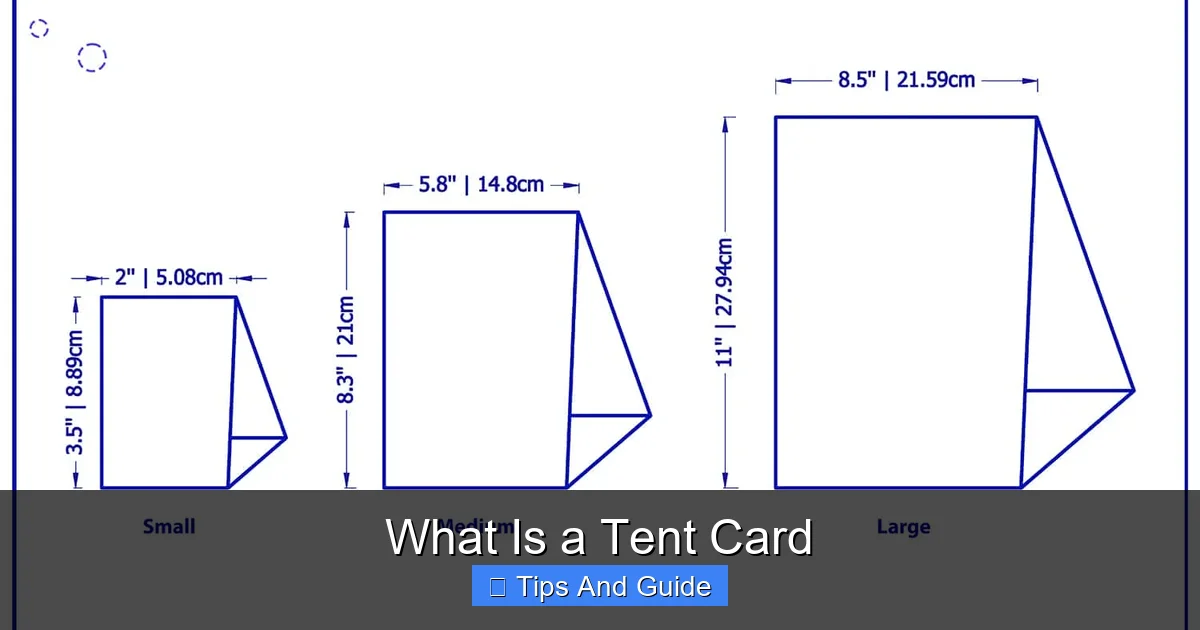
Unlike traditional flat flyers or posters, tent cards don’t require tape, stands, or frames. They’re self-supporting, which makes them incredibly convenient for placement on tables, counters, shelves, or display stands. Their compact size—typically ranging from 4×6 inches to 8.5×11 inches—means they take up minimal space while still delivering maximum message clarity.
Tent cards are not just for businesses. They’re also used in schools for classroom schedules, at weddings for seating charts, and even in homes for recipe cards or emergency contact lists. Their adaptability is what makes them so popular across industries and settings.
Common Uses and Applications
Tent cards have a wide range of practical applications. Their ability to stand on their own and display information on both sides makes them ideal for high-traffic areas where people need quick access to details.
Restaurants and Cafés
One of the most common uses of tent cards is in food service. Many restaurants use them to display daily specials, drink menus, or QR codes that link to their full digital menu. For example, a small bistro might place a tent card on each table with a message like, “Scan here to see today’s chef’s special!” This not only reduces contact but also enhances the customer experience.
Hotels and Hospitality
Hotels frequently use tent cards in guest rooms and lobbies. You might find one near the front desk with check-in/check-out times, or on the nightstand with instructions for using the TV remote or accessing Wi-Fi. These small touches improve guest satisfaction by providing clear, easy-to-find information.
Trade Shows and Events
At conferences or trade shows, exhibitors use tent cards to highlight product features, share contact details, or promote special offers. Because they’re lightweight and portable, they’re perfect for booth displays. A well-designed tent card can catch the eye of passersby and encourage them to stop and learn more.
Retail and Product Displays
Retailers use tent cards to spotlight new arrivals, sale items, or product benefits. For instance, a skincare brand might place a tent card next to a moisturizer explaining its key ingredients and benefits. This helps customers make informed decisions without needing staff assistance.
Personal and Home Use
Tent cards aren’t just for businesses. They’re also great for personal projects. Think wedding table numbers, recipe cards in the kitchen, or emergency contact info near the phone. Their simplicity and functionality make them useful in everyday life.
Materials and Design Options
Choosing the right material and design is key to creating an effective tent card. The material affects durability, appearance, and cost, while the design determines how well your message is received.
Paper and Cardstock
Most tent cards are made from cardstock, which is thick enough to stand on its own but still easy to fold. Standard weights range from 100 lb to 130 lb, with heavier weights offering more rigidity. For a professional look, consider matte or glossy finishes. Matte reduces glare, while glossy enhances color vibrancy.
Laminated and Plastic Options
For high-moisture environments like outdoor events or poolside bars, laminated or plastic tent cards are ideal. They resist water, tearing, and fading, making them perfect for long-term use. While more expensive, they offer superior durability.
Eco-Friendly Choices
If sustainability is important to you, look for recycled paper or biodegradable cardstock. Many printing companies now offer eco-friendly options that don’t sacrifice quality. These are great for businesses that want to reduce their environmental footprint.
Design Best Practices
When designing your tent card, keep these tips in mind:
– Use large, bold fonts for readability.
– Stick to 2-3 colors max to avoid visual clutter.
– Include your logo and brand colors for consistency.
– Add a QR code for digital engagement (e.g., linking to a website or video).
– Leave enough white space so the card doesn’t feel crowded.
How to Make and Print Tent Cards
Creating your own tent cards is easier than you might think. Whether you’re doing it yourself or working with a professional printer, the process is straightforward.
DIY Tent Cards at Home
To make tent cards at home:
1. Choose a template from design software like Canva, Microsoft Word, or Google Docs.
2. Set the page size to your desired dimensions (e.g., 5×7 inches).
3. Design both sides of the card, ensuring text is readable from a distance.
4. Print on heavy cardstock using a standard printer.
5. Fold the paper in half along the center crease.
6. Gently press the fold to create a crisp edge.
For best results, use a bone folder or the edge of a spoon to score the fold before printing. This prevents cracking and ensures a clean stand.
Professional Printing Services
For larger quantities or higher quality, consider using a professional printing service. They offer advanced options like UV coating, die-cutting, and custom sizes. Many online printers allow you to upload your design and receive samples before placing a bulk order.
Cost Considerations
DIY tent cards are very affordable—often under $0.10 per card when using your own printer. Professional printing costs vary but typically range from $0.25 to $1.00 per card, depending on quantity, material, and finishes. For events or long-term use, the investment is usually worth it.
Tips for Maximum Impact
To get the most out of your tent cards, follow these practical tips:
– Placement Matters: Put tent cards where people will naturally look—on tables, near entrances, or next to products.
– Update Regularly: Keep content fresh. Change daily specials, event schedules, or promotions as needed.
– Test Visibility: Step back and view your card from a customer’s perspective. Can you read it easily from 3 feet away?
– Use QR Codes Wisely: Make sure QR codes are large enough to scan and link to mobile-friendly pages.
– Combine with Other Displays: Pair tent cards with banners, posters, or digital screens for a cohesive marketing strategy.
Conclusion
Tent cards may seem like a small detail, but their impact is anything but minor. From boosting customer engagement to simplifying communication, they offer a simple, affordable, and effective way to share information. Whether you’re running a restaurant, hosting an event, or managing a retail space, tent cards can help you connect with your audience in a clear and professional way.
With the right design, material, and placement, a tent card can do more than just sit on a table—it can drive action, enhance experiences, and reinforce your brand. So next time you need to get a message across, consider reaching for a tent card. It might just be the perfect solution.
Frequently Asked Questions
What is a tent card used for?
A tent card is used to display information in a self-standing format, commonly in restaurants, hotels, retail stores, and events. It’s ideal for sharing menus, promotions, schedules, or contact details.
How do you fold a tent card?
To fold a tent card, print your design on cardstock, then fold the paper in half along the center crease. Press firmly to create a clean fold so it stands upright like a tent.
Can tent cards be reused?
Yes, especially if made from durable materials like laminated cardstock or plastic. They’re great for recurring events or seasonal promotions.
Are tent cards eco-friendly?
They can be! Many are now made from recycled paper or biodegradable materials. Look for sustainable printing options if environmental impact is a concern.
Do I need special software to design a tent card?
No. You can use free tools like Canva, Google Docs, or Microsoft Word. Many platforms offer pre-made tent card templates to get you started quickly.
How much do tent cards cost to print?
DIY printing costs just a few cents per card. Professional printing ranges from $0.25 to $1.00 each, depending on size, material, and quantity.