

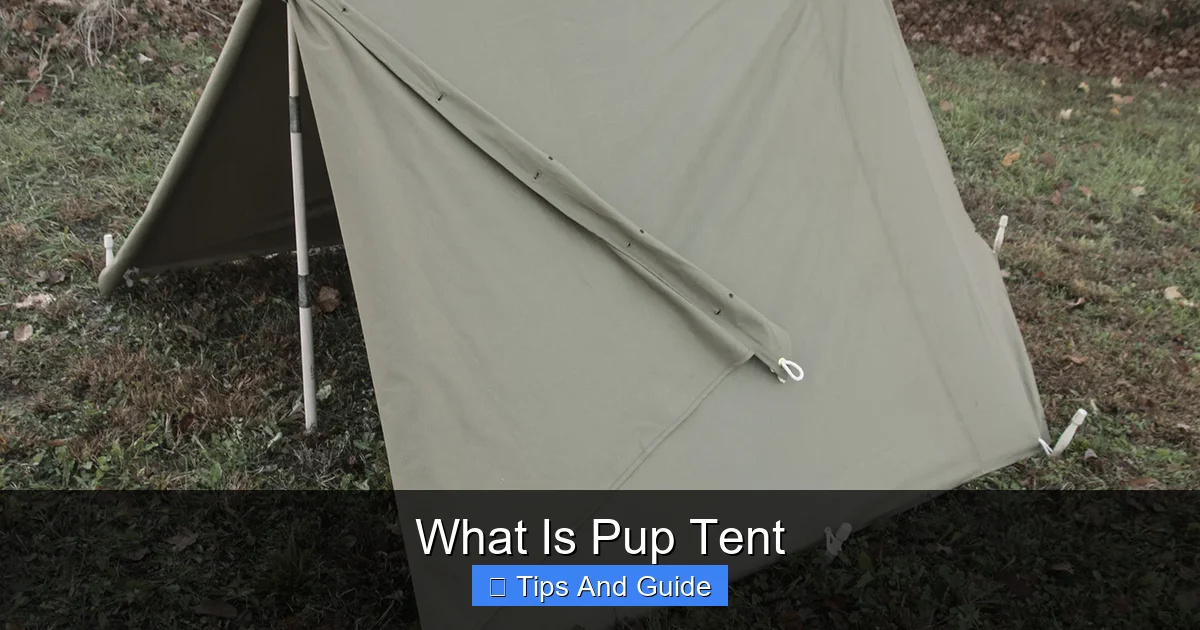
A pup tent is a small, lightweight, two-person shelter designed for quick setup and portability. Originally used by soldiers, it’s now a favorite among campers and hikers who value simplicity and efficiency in the outdoors.
If you’ve ever spent a night under the stars with just a thin layer of fabric between you and the wilderness, you might have used a pup tent. But what exactly is a pup tent? At its core, a pup tent is a small, portable shelter designed for one or two people. It’s simple, lightweight, and built for speed—perfect for hikers, backpackers, and minimalist campers who want to travel light without sacrificing basic protection from the elements.
Unlike large family tents with roomy interiors and multiple rooms, a pup tent is all about efficiency. Think of it as the minimalist’s answer to outdoor shelter. It’s not meant for luxury camping or week-long stays, but rather for short trips where every ounce in your pack counts. Whether you’re trekking through a forest, setting up camp near a mountain trail, or just enjoying a quiet night in the backyard, a pup tent offers a no-frills solution that gets the job done.
Key Takeaways
- Compact and Lightweight: Pup tents are designed for easy transport, making them ideal for backpacking and solo adventures.
- Quick Setup: Most pup tents can be assembled in under 5 minutes with minimal gear.
- Two-Person Capacity: Typically built for one or two people, offering just enough space for sleeping and gear storage.
- Durable Materials: Made from weather-resistant fabrics like nylon or polyester with waterproof coatings.
- Military Origins: First used by U.S. soldiers in World War I, the design has evolved but retains its core functionality.
- Great for Fair Weather: Best suited for dry, calm conditions—less ideal for extreme weather or long-term camping.
- Affordable Option: Generally more budget-friendly than larger family or cabin-style tents.
📑 Table of Contents
History and Origins of the Pup Tent
The pup tent has a rich military background. It was first introduced during World War I as a lightweight alternative to heavier army tents. Soldiers needed something they could carry easily on long marches, and the pup tent fit the bill perfectly. The name “pup” likely comes from its small size—similar to a dog’s pup tent, or perhaps as a playful nod to its compact nature.
These early versions were made from canvas and used two poles with ropes and stakes for support. They were often shared between two soldiers, providing just enough space to sleep and store a few personal items. Over time, the design evolved with new materials and better engineering, but the core concept remained the same: a simple, two-person shelter that’s easy to carry and quick to set up.
Today’s pup tents are far more advanced than their military ancestors. Modern versions use lightweight aluminum poles, ripstop nylon, and waterproof coatings. But the spirit of the original design lives on—efficiency, portability, and reliability.
Design and Structure
So, what does a typical pup tent look like? Most pup tents are A-frame or ridge tents, meaning they have a simple structure with two poles forming a ridge along the top. The fabric is stretched over the poles and secured to the ground with stakes and guylines. This creates a triangular cross-section that’s low to the ground and aerodynamic, helping it resist wind.
Materials Used
Modern pup tents are made from synthetic materials like ripstop nylon or polyester. These fabrics are lightweight, durable, and resistant to tearing. Many also feature a waterproof coating or a separate rainfly to keep you dry during unexpected showers. The floor is usually made from a heavier-duty material to prevent punctures from rocks or roots.
Poles and Setup
Most pup tents use collapsible aluminum or fiberglass poles that snap together easily. Some models are freestanding, meaning they can stand on their own without stakes, while others require guylines for stability. Setup is typically straightforward—just insert the poles into the grommets or sleeves, stake down the corners, and you’re ready to go.
One of the biggest advantages of a pup tent is how fast it sets up. In ideal conditions, you can have your shelter ready in under five minutes. This is a huge plus when you’re tired after a long hike and just want to get inside quickly.
Who Should Use a Pup Tent?
Pup tents are perfect for certain types of outdoor enthusiasts. If you’re a backpacker, thru-hiker, or solo camper, a pup tent might be exactly what you need. Its small size and light weight make it ideal for long-distance travel where every pound matters.
They’re also great for weekend campers who don’t need a lot of space. If you’re camping with a partner and just need a place to sleep, a pup tent offers enough room without the bulk of larger models. Some people even use them for backyard camping with kids or as emergency shelters during outdoor events.
However, pup tents aren’t for everyone. If you’re planning a family camping trip, need space for gear, or expect bad weather, you might want to consider a larger, more robust shelter. For example, if you’re looking for something more spacious, you might want to check out our comparison of the Coleman Instant vs Camping Tent to see how larger options stack up.
Pros and Cons of Pup Tents
Like any piece of gear, pup tents come with their own set of advantages and drawbacks. Let’s break them down.
Advantages
- Lightweight: Most pup tents weigh between 2 to 4 pounds, making them easy to carry.
- Compact: They pack down small, fitting easily into a backpack or bike pannier.
- Fast Setup: No complex instructions—just poles, stakes, and a few minutes of your time.
- Affordable: Generally cheaper than larger tents, with many quality options under $100.
- Low Profile: Blends into the environment and resists wind better than taller tents.
Disadvantages
- Limited Space: Not ideal for tall people or those who like to move around at night.
- Minimal Storage: No vestibules or gear lofts—everything goes inside or under the fly.
- Weather Limitations: Not built for heavy rain, snow, or high winds.
- Less Privacy: Low walls mean less headroom and visibility from the outside.
If you’re considering a pup tent but want more space for gear, you might want to explore options like the Unp Tent 10 vs Coleman Sundome to see how larger tents compare in terms of livability and storage.
Tips for Choosing the Right Pup Tent
Not all pup tents are created equal. Here are a few things to consider when shopping for one:
Weight and Pack Size
If you’re backpacking, every ounce counts. Look for tents under 4 pounds with a compact packed size. Ultralight models can go as low as 2 pounds, but may sacrifice durability or comfort.
Weather Resistance
Check the waterproof rating (measured in millimeters). A rating of 1,500mm or higher is good for light rain, while 3,000mm+ is better for heavier conditions. Also, look for sealed seams and a full-coverage rainfly.
Ventilation
Condensation can be an issue in small tents. Choose a model with mesh panels or vents to improve airflow and reduce moisture buildup.
Ease of Setup
Some tents use color-coded poles or clips for faster assembly. If you’re new to camping, this can make a big difference.
Durability
Look for ripstop fabric and reinforced stress points. A tent that tears easily won’t last long on the trail.
For a real-world comparison of lightweight options, check out our guide on the Fanttik Tent vs Coleman Sundome to see how modern designs balance weight, space, and performance.
Conclusion
A pup tent may be small, but it packs a big punch when it comes to simplicity and efficiency. Born from military necessity, it’s now a trusted companion for outdoor adventurers who value speed, portability, and reliability. While it may not offer the comforts of a full-sized camping tent, it excels in situations where weight and setup time are critical.
Whether you’re a seasoned backpacker or a casual camper looking to lighten your load, a pup tent is worth considering. It’s not about having the most space—it’s about having just enough. And sometimes, that’s all you need to enjoy a peaceful night under the stars.
Frequently Asked Questions
What is a pup tent used for?
A pup tent is primarily used for lightweight camping, backpacking, and short outdoor trips. It provides basic shelter for one or two people and is ideal for fair-weather conditions.
How many people can fit in a pup tent?
Most pup tents are designed for one or two people. They offer just enough space for sleeping bags and minimal gear, but not much room to move around.
Is a pup tent waterproof?
Many pup tents are water-resistant and come with a rainfly, but not all are fully waterproof. Check the fabric rating and seam sealing before relying on it in heavy rain.
Can you stand up in a pup tent?
No, pup tents are very low to the ground. You’ll need to crawl in and out, and there’s no standing room inside.
Are pup tents good for winter camping?
Generally, no. Pup tents lack insulation and are not designed for snow or extreme cold. They’re best suited for spring, summer, and fall use.
How do you set up a pup tent?
Insert the poles into the sleeves or grommets, stretch the fabric over them, and secure the corners with stakes. Most models take less than 5 minutes to assemble.
