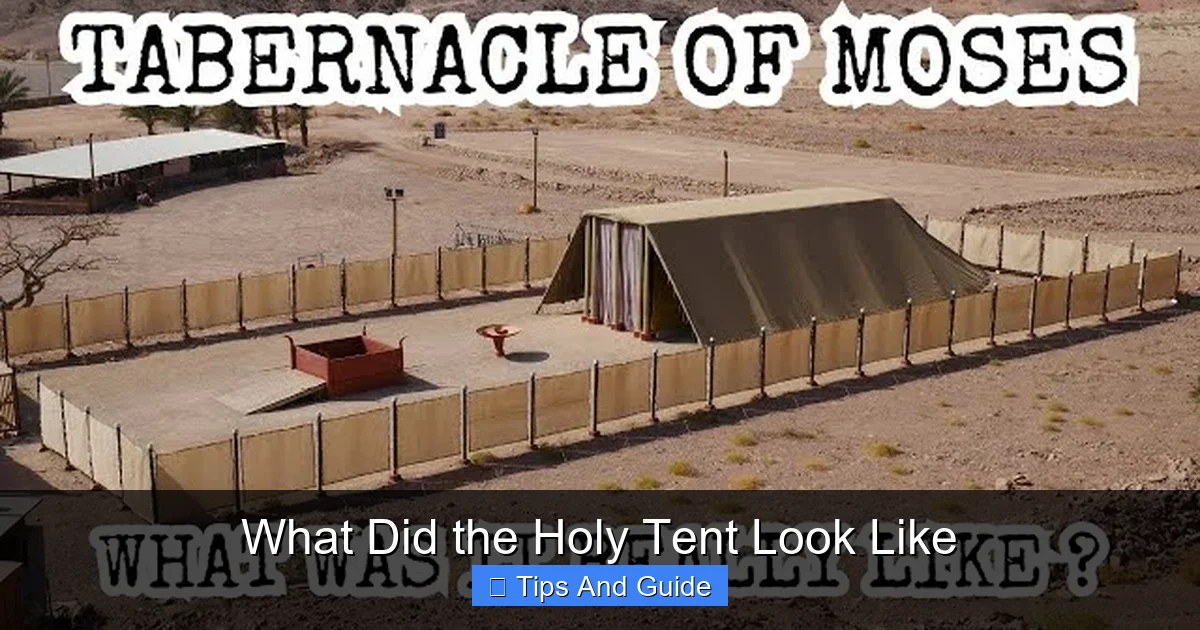
What Did the Holy Tent Look Like
The holy tent, also known as the Tabernacle, was a portable sanctuary used by the Israelites during their journey in the wilderness. It was carefully designed according to divine instructions and served as a sacred space for worship and sacrifice.
Key Takeaways
- Divine Blueprint: The holy tent was built exactly as God instructed Moses on Mount Sinai, ensuring every detail had spiritual meaning.
- Portable Design: Made with lightweight materials and carried by Levites, it could be easily moved during the Israelites’ travels.
- Three Main Sections: The tent included the Outer Court, the Holy Place, and the Most Holy Place, each with specific functions and access rules.
- Rich Materials: Gold, silver, bronze, fine linen, and animal skins were used to reflect its sacred purpose.
- Symbolic Furnishings: Items like the Ark of the Covenant and the Menorah represented God’s presence and guidance.
- Central to Worship: It was the only place where sacrifices and rituals could be performed, making it the heart of Israelite religious life.
- Legacy in Modern Faith: The design and rituals of the holy tent influenced later temples and continue to inspire religious symbolism today.
📑 Table of Contents
Introduction to the Holy Tent
Imagine walking through a vast desert, the sun beating down, the sand stretching endlessly in every direction. In the middle of this harsh landscape, a special structure rises—a tent unlike any other. This was the holy tent, also known as the Tabernacle, and it was far more than just a shelter. It was a sacred meeting place between God and the people of Israel.
The holy tent wasn’t built by chance. It was designed with incredible precision, based on detailed instructions given to Moses on Mount Sinai. Every board, curtain, and piece of furniture had a purpose. It wasn’t just a place to sleep or store supplies—it was a symbol of God’s presence among His people. Even though it was made of simple materials like wood and fabric, its spiritual significance made it one of the most important structures in biblical history.
Origins and Purpose of the Holy Tent
The story of the holy tent begins in the book of Exodus. After the Israelites escaped slavery in Egypt, they wandered in the wilderness for 40 years. During this time, they needed a way to worship God and stay connected to Him. That’s when God gave Moses the blueprint for the Tabernacle.
God said, “Have them make a sanctuary for me, and I will dwell among them” (Exodus 25:8). This wasn’t just about building a tent—it was about creating a space where heaven and earth could meet. The holy tent became the center of religious life for the Israelites. It was where sacrifices were made, prayers were offered, and God’s presence was felt most strongly.
Unlike permanent temples, the holy tent was portable. It had to be, because the Israelites were constantly on the move. When it was time to travel, the Levites—a tribe set apart for religious duties—would carefully dismantle it, carry the parts, and reassemble it at the next campsite. This made the holy tent a true companion on their journey, always at the center of the camp.
Structure and Layout of the Holy Tent
The holy tent was more than just a single room. It was made up of three main areas, each with its own purpose and level of holiness. Think of it like a spiritual journey—starting from the outside and moving inward toward God’s presence.
The Outer Court
The first area you’d enter was the Outer Court. This was the largest section and the only part open to all the Israelites. It was surrounded by curtains hung on bronze poles, creating a rectangular enclosure about 150 feet long and 75 feet wide.
At the entrance stood the Bronze Altar, where animals were sacrificed to atone for sin. This was a smoky, solemn place where the people could come to seek forgiveness. Nearby was the Bronze Laver, a large basin filled with water. Priests had to wash their hands and feet here before entering the next area—a reminder that purity was essential when approaching the sacred.
The Holy Place
Beyond the Outer Court was the Holy Place. Only priests could enter this inner section. It was a long, narrow room, about 30 feet long and 15 feet wide, covered by a richly decorated tent.
Inside, three key items stood out. First, the Table of Showbread held twelve loaves of bread, representing the twelve tribes of Israel. These were replaced every week and symbolized God’s provision. Second, the Golden Lampstand, or Menorah, provided light with its seven branches. It was always burning, a sign that God’s presence never dimmed. Third, the Altar of Incense filled the air with sweet smoke, rising like prayer to heaven.
The Most Holy Place
At the very back of the tent was the Most Holy Place, also called the Holy of Holies. This was the innermost chamber, separated by a thick curtain. Only the high priest could enter—and only once a year, on the Day of Atonement.
Inside stood the Ark of the Covenant, a gold-covered wooden chest. It held the stone tablets of the Ten Commandments, a jar of manna, and Aaron’s staff. Above it were two golden cherubim, their wings spread over the “mercy seat,” where God’s presence was believed to dwell. This was the most sacred spot in all of Israel.
Materials and Construction
The holy tent was built with a mix of precious and practical materials. God didn’t want just any tent—He wanted one that reflected His glory.
The framework was made of acacia wood, a strong and durable desert wood. These planks were overlaid with gold, making them shine like sunlight. They were set into silver bases, which also helped stabilize the structure. The roof had multiple layers: fine linen dyed blue, purple, and scarlet, then goat hair, and finally animal skins for waterproofing.
The curtains were woven with intricate designs and bright colors. The blue represented the sky and heaven, purple stood for royalty, and scarlet symbolized sacrifice. These weren’t just decorations—they told a story of who God is and what He had done for His people.
Even the tools and furniture were made with care. The Ark was gold inside and out. The Menorah was a single piece of hammered gold. Every detail mattered because this was a place set apart for God.
Furnishings and Their Symbolism
Each item inside the holy tent had deep spiritual meaning. They weren’t just functional—they were symbols of faith, worship, and God’s promises.
The Ark of the Covenant was the most important. It wasn’t just a box—it was a throne for God. When the Israelites marched, the Ark went first, leading the way. It reminded them that God was with them, guiding and protecting.
The Menorah’s light was a constant reminder that God is the light of the world. Even in the darkest desert nights, the flame burned, showing that His presence never fades.
The Table of Showbread showed that God provides daily bread—both physical and spiritual. The twelve loaves were a weekly reminder of His covenant with the twelve tribes.
And the Altar of Incense? Its rising smoke was like the prayers of the people, ascending to heaven. It taught that worship isn’t just about words—it’s about a heart turned toward God.
How the Holy Tent Was Used
The holy tent wasn’t just for show. It was a working sanctuary where real worship happened every day.
Priests performed daily rituals—burning incense, lighting the lamps, and replacing the bread. Once a year, the high priest entered the Most Holy Place to sprinkle blood on the mercy seat, seeking forgiveness for the sins of the people.
Ordinary Israelites could come to the Outer Court to offer sacrifices—whether for sin, thanksgiving, or fellowship. These acts weren’t just traditions; they were ways to stay close to God.
When the people traveled, the holy tent was packed up and carried by the Levites. It was always set up in the center of the camp, with the twelve tribes arranged around it in a square. This showed that God was at the heart of everything.
Even the way it was assembled had meaning. The tent was erected at sunrise, and the cloud of God’s presence would descend upon it. When the cloud lifted, it was time to move.
Legacy and Modern Relevance
Though the holy tent no longer stands, its influence lives on. It was the model for the Temple built by Solomon in Jerusalem. Many of its rituals and symbols appear in the New Testament, where Jesus is described as the true sacrifice and the new temple.
Today, people still draw inspiration from the holy tent. Its design teaches about holiness, order, and the importance of worship. Some churches use similar layouts, with altars, candles, and sacred spaces that echo the ancient pattern.
Even in modern camping, we can see echoes of the holy tent. Just like the Israelites relied on a portable shelter in the wilderness, today’s campers use tents for shelter and community. Whether you’re setting up a best tent for the rain or a best 8 person tent for the money, the idea of a safe, shared space remains powerful.
And if you’re ever caught in a storm while camping, knowing the best way to set up a tent in the rain can make all the difference—just as the holy tent provided shelter and hope in the desert.
Conclusion
The holy tent was more than a tent. It was a divine blueprint, a spiritual center, and a symbol of God’s presence. From its golden boards to its sacred furnishings, every detail pointed to something greater. It taught the Israelites—and still teaches us—about worship, holiness, and the importance of having a place set apart for God.
Though we don’t build tabernacles today, the lessons remain. Whether you’re camping under the stars or praying in a quiet room, you can carry the spirit of the holy tent with you—a reminder that God is always near, and His presence is worth seeking.
Frequently Asked Questions
What was the holy tent made of?
The holy tent was made of acacia wood, gold, silver, bronze, fine linen, goat hair, and animal skins. These materials were chosen for their durability and symbolic value, reflecting both beauty and strength.
Who could enter the Most Holy Place?
Only the high priest could enter the Most Holy Place, and only once a year on the Day of Atonement. This strict rule emphasized the holiness of the space and the seriousness of approaching God.
How big was the holy tent?
The entire structure, including the Outer Court, was about 150 feet long and 75 feet wide. The Holy Place was 30 feet long and 15 feet wide, and the Most Holy Place was a perfect cube, 15 feet on each side.
Why was the holy tent portable?
The holy tent was designed to be portable so the Israelites could carry it with them during their 40 years in the wilderness. It was assembled and disassembled by the Levites whenever the camp moved.
What happened to the holy tent after the Temple was built?
The holy tent was eventually replaced by Solomon’s Temple in Jerusalem. The Ark of the Covenant was moved into the new temple, and the original tent was no longer used for worship.
Can we visit the holy tent today?
No, the original holy tent no longer exists. However, its design and significance are described in the Bible, and some museums and religious sites have created replicas for educational purposes.