

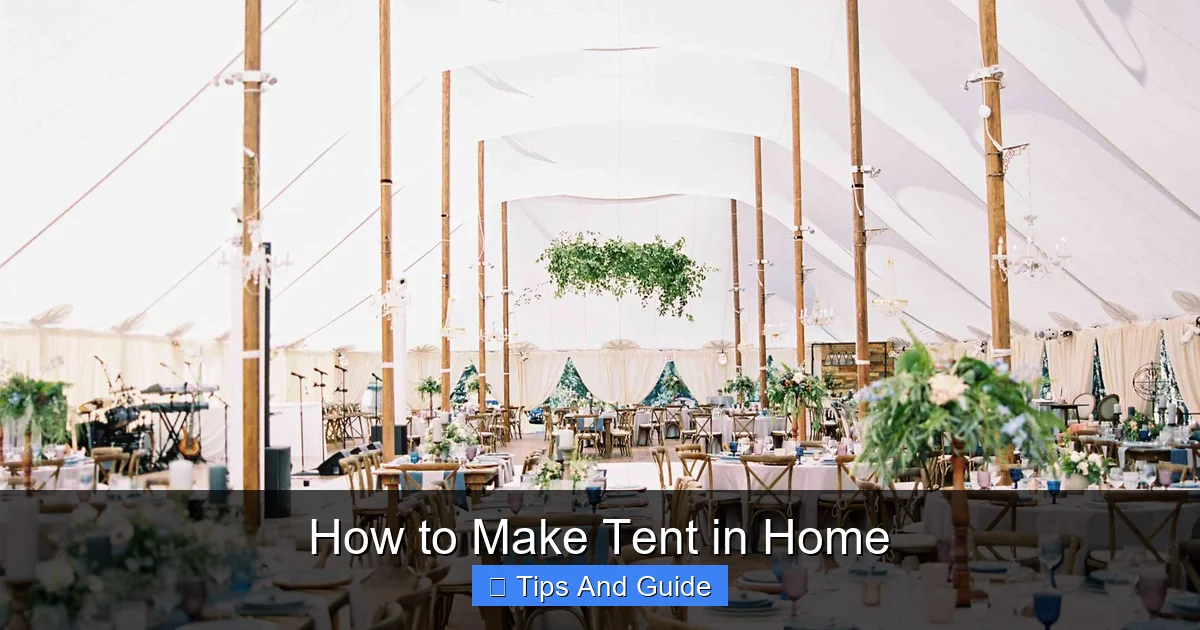
Looking to build a fun and imaginative space indoors? This guide will teach you how to make a tent in your home using common household items. You’ll learn simple techniques for creating a cozy and stable structure, perfect for playtime, reading nooks, or a unique hangout spot. Get ready for some indoor adventure without needing any special equipment!
# How to Make Tent in Home
Ever wished you could capture that feeling of adventure and cozy seclusion you get from a real tent, but right in the comfort of your own home? You’re in luck! Building a tent indoors is a fantastic way to spark imagination, create a special reading nook, or just have a fun, temporary hideaway. It’s an activity that can bring joy to both kids and adults alike. Forget the hassle of pitching a tent outdoors; we’re going to explore how to make a tent in your home using things you likely already have around the house. This guide will walk you through the simple steps, offering tips and ideas to make your indoor tent a success.
## Why Build a Tent Indoors?
Before we dive into the “how-to,” let’s talk about the “why.” Indoor tents aren’t just for kids. They offer a unique way to:
* Spark Imagination: A tent can be a spaceship, a secret fort, a castle, or a cozy reading den. The possibilities are endless.
* Create a Quiet Space: In a busy household, a tent can provide a much-needed personal sanctuary for quiet time, reading, or relaxation.
* Add Fun and Novelty: It breaks up the routine and adds an element of surprise and excitement to your living space.
* Cost-Effective: It’s a DIY project that requires minimal to no cost, relying on items you already own.
* Temporary and Adaptable: Unlike permanent structures, an indoor tent can be set up and taken down as needed, fitting into any room.
## Planning Your Indoor Tent
The first step to building anything is a little planning. Think about where you want your tent to go and what kind of tent you envision.
### Choosing Your Location
Consider the available space. A corner of a living room, a bedroom, or even a playroom can be ideal.
* Room Size: Will your tent need to be large or small? Do you have enough floor space?
* Furniture Proximity: Will you use existing furniture like sofas or beds as part of your tent structure?
* Traffic Flow: Ensure your tent doesn’t block essential pathways.
* Natural Light: Near a window can be nice, but also consider if you want it to be a dark, cozy space.
### Deciding on the Style
There are many ways to build an indoor tent. Here are a few popular styles:
* Chair Fort: Uses dining chairs or armchairs as the main support.
* Table Tent: Utilizes a dining table or coffee table as the base.
* Freestanding Tent: Relies on poles, broomsticks, or sturdy cardboard tubes for support.
* Bed Tent: Integrates with a bed frame or mattress.
## Gathering Your Materials
The beauty of making an indoor tent is that you can use what you have. Here’s a list of common items that are super useful:
* Fabric:
* Lightweight sheets (twin or full size work well)
* Blankets (fleece or cotton are good choices)
* Large towels
* Support Structures:
* Chairs (dining chairs, folding chairs, armchairs)
* A table (dining table, coffee table)
* Broomsticks or mop handles
* Cardboard boxes or tubes
* Clothes drying racks
* Fasteners:
* Clothespins or binder clips
* Safety pins
* String or rope
* Duct tape or packing tape (use carefully on furniture)
* Comfort Items:
* Pillows
* Cushions
* Sleeping bags or extra blankets for the floor
* Optional Extras:
* Fairy lights or battery-operated lanterns (for ambiance – check out our guide on best camping lights for tent for inspiration!)
* Books
* Snacks
## Step-by-Step Guide to Building Your Indoor Tent
Let’s get building! We’ll cover a couple of common methods.
## Method 1: The Classic Chair and Sheet Tent
This is probably the most common and easiest way to build an indoor tent. It’s versatile and can be adapted to many spaces.
### Step 1: Arrange Your Support Chairs
* H3: Position the Chairs: Place four or more chairs in a square or rectangular formation. The backs of the chairs should face outwards. The distance between the chairs will determine the size of your tent. For a more spacious tent, leave more room between them.
* H3: Consider the Table Option: If you have a sturdy coffee table, you can use that as the central support. Place chairs around it, or use the table as the *roof* support and drape fabric over it.
### Step 2: Drape the Main Fabric
* H3: Select Your Sheet: Choose a large, lightweight sheet. A twin or full-size sheet is usually a good starting point.
* H3: Drape Over the Chairs: Carefully drape the sheet over the backs of the chairs. Try to center it so that it hangs down evenly on all sides.
* H3: Secure the Corners: Use clothespins or binder clips to secure the sheet to the chair backs. This prevents it from slipping off. If using safety pins, be cautious not to snag the fabric.
### Step 3: Create Walls and Entrance
* H3: Add More Fabric (Optional): If your first sheet doesn’t cover all the sides completely, or you want a more enclosed space, add more sheets or blankets. Drape them over the sides, tucking them in or securing them with clips.
* H3: Design Your Entrance: Decide where you want your door to be. You can leave one side open, or overlap two pieces of fabric and secure them at the top, allowing them to be pushed aside. For a cleaner look, you can tie back the fabric panels with string.
### Step 4: Reinforce and Stabilize
* H3: Check for Sagging: Look for areas where the fabric might be sagging. You can use extra clips or tie strings to higher points on the chairs to tauten the fabric.
* H3: Secure Loose Edges: Tuck in any loose edges or secure them with tape if necessary. Be mindful of delicate furniture finishes when using tape.
## Method 2: The Tablecloth Tent
This method is excellent if you have a sturdy table that you can dedicate to your fort.
### Step 1: Prepare the Table
* H3: Clear the Table: Remove everything from the tabletop. Make sure the legs of the table are stable.
* H3: Choose Your Fabric: Lightweight tablecloths or large, thin blankets work best here. You might need several to cover the sides.
### Step 2: Drape the Fabric
* H3: Cover the Table: Drape your chosen fabric over the entire table, letting it hang down to the floor. If using multiple pieces, overlap them to avoid gaps.
* H3: Secure the Fabric: Use clips or tape to secure the fabric around the edges of the tabletop. This is crucial to prevent it from sliding off.
### Step 3: Create an Entrance
* H3: Designate an Opening: Decide which side will be your entrance. You can leave one section of fabric unclipped at the bottom to act as a flap.
* H3: Add Curtains (Optional): For a more defined entrance, you can attach additional fabric panels with clips that can be pushed aside.
### Step 4: Add Comfort Inside
* H3: Floor Covering: Place soft blankets, cushions, or a camping mat inside the tent to make it comfortable to sit or lie down on.
* H3: Lighting: Battery-operated fairy lights or a small LED lantern can create a magical atmosphere. Always ensure lights are cool to the touch and safe for indoor use.
## Method 3: The Freestanding Broomstick Tent
This method requires a bit more structure but results in a tent that can stand on its own without relying on furniture.
### Step 1: Construct the Frame
* H3: Gather Poles: You’ll need several broomsticks, mop handles, or sturdy cardboard tubes. The number depends on the size and shape you want.
* H3: Create a Base: You can arrange four poles to form a square base on the floor.
* H3: Build Upwards: For a simple A-frame tent, lean two poles against each other at the top and secure them with tape or string. Repeat for the other side, creating an inverted ‘V’ shape. Then, connect the tops of these ‘V’s with another pole or two to form a ridge. You can also create a cuboid shape by connecting poles at the corners.
* H3: Secure the Joints: Use duct tape, string, or strong clips to firmly secure all the joints where the poles meet. This is vital for stability.
### Step 2: Drape the Fabric
* H3: Cover the Frame: Drape your sheets or blankets over the constructed frame. Ensure you have enough fabric to cover all sides and leave an overhang.
* H3: Secure the Fabric: Use clothespins, clips, or safety pins to attach the fabric to the poles.
### Step 3: Define the Entrance and Walls
* H3: Create an Opening: Decide where you want your door. You can leave a section of fabric unattached, or overlap two fabric panels to create a doorway that can be opened.
* H3: Add Extra Layers: If your fabric is too thin and light can pass through, you might want to add a second layer of fabric for more privacy and darkness.
### Step 4: Weigh Down the Edges
* H3: Prevent Drafts: Since this tent is freestanding, the bottom edges of the fabric might lift. Use books, cushions, or even small weights to hold down the edges of the fabric to the floor.
## Tips for a Better Indoor Tent Experience
Once your tent is built, you can enhance it further.
* Comfort is Key: Load up on pillows, soft blankets, and perhaps even a camping mattress or sleeping bag for ultimate coziness.
* Lighting Magic: Battery-powered fairy lights, LED lanterns, or even a flashlight can transform the interior. Avoid anything that gets hot. Check out our guide on the best camping light for tent for ideas that can work indoors too.
* Decorate: Bring in books, stuffed animals, or draw pictures to hang inside.
* Theme It: Decide on a theme! Is it a pirate ship, a fairy house, or an alien spaceship? This can guide your decoration choices.
* Ventilation: Ensure there’s enough airflow, especially if multiple people will be inside. Leave a small gap or ensure the fabric isn’t sealed too tightly.
## Troubleshooting Common Indoor Tent Problems
Even with the best intentions, you might run into a few snags.
* Tent Collapses:
* Problem: The structure isn’t stable.
* Solution: Reinforce the support structures. Use more tape, string, or clips to secure joints. If using chairs, ensure they are positioned stably and not on an uneven surface. For freestanding tents, ensure poles are well-connected and the base is secure.
* Fabric Slips Off:
* Problem: Sheets and blankets keep falling down.
* Solution: Use more clothespins, binder clips, or safety pins. You can also tie strings from the fabric corners to higher points on furniture or the frame.
* Gaps and Drafts:
* Problem: Light and air are coming in through unwanted holes.
* Solution: Overlap fabric pieces more. Use extra clips to secure edges together. You can also use small pieces of fabric or towels to stuff into any small gaps.
* Not Enough Space:
* Problem: The tent is too small.
* Solution: Rearrange the chairs or supports to create a larger footprint. Use larger or multiple sheets to expand the coverage.
## Conclusion
Making a tent at home is a wonderful, simple project that unlocks a world of fun and creativity. Whether you’re looking for a quiet reading nook or a grand adventure base, these methods provide a solid foundation. Remember, the most important ingredients are your imagination and the readily available items around your house. So, gather your supplies, get your family involved, and start building your very own indoor oasis. Enjoy the magic of your custom-made tent!
Key Takeaways
- Create an instant cozy hideaway: Building a tent at home is a fantastic way to add a special, imaginative space to any room.
- Utilize common household items: You don’t need fancy materials; blankets, sheets, chairs, and pillows are your primary building blocks.
- Prioritize stability and safety: Ensure your tent is secure and won’t easily collapse, especially if children will be using it.
- Customize your tent for comfort: Add soft furnishings like pillows and blankets, and consider lighting to enhance the atmosphere.
- Involve the whole family: Making a tent can be a fun, collaborative activity for all ages.
- Encourage imaginative play: Once built, the tent becomes a canvas for storytelling and adventure.
