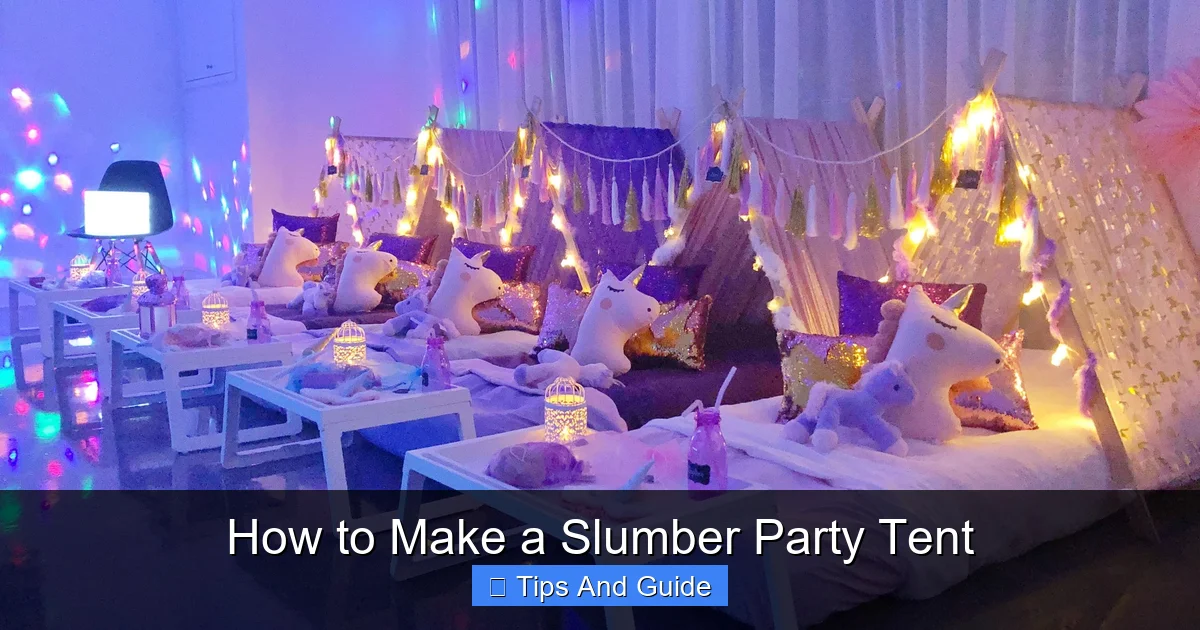
How to Make a Slumber Party Tent
Transform your living room into a magical wonderland with a DIY slumber party tent! This guide offers simple, step-by-step instructions to build a fun and cozy space for sleepovers. You’ll learn how to gather materials, construct the frame, and decorate your tent, ensuring an unforgettable experience for all the kids. Get ready for giggles, stories, and lasting memories!
# How to Make a Slumber Party Tent
Get ready for an epic slumber party! Nothing says “fun” quite like a cozy, magical tent set up right in your living room. It’s a special place where stories are shared, secrets are whispered, and laughter echoes until the wee hours. Making a slumber party tent is easier than you think, and it’s a fantastic way to create lasting memories for your kids and their friends.
This guide will walk you through everything you need to know. We’ll cover gathering your materials, building a sturdy frame, draping your coverings, and adding those special touches that make a tent truly magical. By the end, you’ll be a slumber party tent-making pro, ready to host the most memorable sleepover ever!
## Step 1: Planning Your Dream Tent
Before you start building, a little planning goes a long way. Think about the space you have available and how many guests you’ll be hosting. This will help you decide on the size and complexity of your tent.
### H3: Choosing the Location
The living room is usually the go-to spot for an indoor tent. It’s typically spacious and accessible. Make sure there’s enough room for the tent itself, plus some space around it for movement and activities. Consider the placement of furniture to maximize the usable space. Avoid areas with direct drafts or heating vents if possible, to keep the inside temperature comfortable.
### H3: Estimating the Size
Consider the number of kids who will be sleeping in the tent. A good rule of thumb is to have enough space for each child to lie down comfortably. You don’t want it to be too cramped, but a little coziness adds to the slumber party vibe! A larger tent might require more furniture to support it, so keep that in mind.
### H3: Deciding on a Theme (Optional)
While not essential, a theme can add an extra layer of excitement. Think pirates, fairies, outer space, or a jungle adventure. This can influence your fabric choices, decorations, and even the activities you plan inside the tent.
## Step 2: Gathering Your Slumber Party Tent Supplies
The beauty of a DIY slumber party tent is that you probably have most of what you need right at home. It’s all about using everyday items creatively.
### H3: The Foundation: Furniture and Support
You’ll need sturdy items to form the basic structure of your tent.
* Chairs: Dining chairs, folding chairs, or even beanbag chairs can work. The backs of the chairs will be key to creating height and support.
* Sofas and Couches: These are excellent for providing a large, stable base and can act as walls or anchor points.
* Tables: Coffee tables or small side tables can be used to create different levels or to extend the tent’s structure.
* Stools: Shorter stools can add varied heights and support.
### H3: The Walls and Roof: Fabric Coverings
This is where your tent gets its cozy, enclosed feel.
* Blankets: Different sizes and thicknesses of blankets are perfect. Lighter blankets are easier to drape, while heavier ones can add more insulation and stability.
* Sheets: Flat sheets are ideal for covering larger areas and creating smooth walls. Fitted sheets can sometimes be used to tuck around furniture legs.
* Throws: Smaller throws can be used to fill gaps or add decorative layers.
### H3: The Connectors: How to Hold It All Together
You need things to keep your fabric in place.
* Clothespins: A classic for a reason! They’re great for clipping fabric to furniture or to other fabric pieces.
* Binder Clips: These offer a stronger grip than clothespins and are excellent for thicker materials.
* Safety Pins: Use with caution and adult supervision, but they can securely fasten fabric layers together.
* Heavy Books or Decorative Weights: These can be placed on the edges of fabric that are lying flat on the floor to keep them from shifting.
* String or Rope: Useful for tying fabric to furniture legs or creating overhead supports.
### H3: Comfort and Coziness: The Inside Stuff
Once the structure is up, you need to make it a welcoming space.
* Pillows: Lots and lots of pillows! They’re essential for comfort and can also be used to prop up fabric walls.
* Sleeping Bags or Mats: For sleeping, of course! Consider the best camping mattress for a tent or a comfy camping mat for extra cushioning.
* Fitted Sheets: If using an air mattress or cot, a fitted sheet will keep it in place. The best camping bed for a tent can also be a great option.
* Soft Rugs or Extra Blankets: To put on the floor inside the tent for added warmth and softness.
### H3: Ambiance and Fun: The Finishing Touches
These items make the tent feel magical.
* Fairy Lights or String Lights: Battery-operated ones are safest and add a wonderful glow. The best camping lights for a tent often include battery-powered options perfect for indoor use.
* Flashlights: Essential for late-night reading or exploring the “dark corners” of the tent.
* Soft Toys or Stuffed Animals: To keep the little ones company.
* Decorations: Drawings, printed pictures, or even simple streamers can liven up the interior.
## Step 3: Building the Tent Frame
This is where your tent starts to take shape. The key is to create a stable structure that can hold the weight of your fabric without collapsing.
### H3: Arranging the Furniture
Start by positioning your furniture. Place chairs back-to-back, or facing outwards, to create anchor points. Use the backs of sofas or tables as the main structural elements. Think about creating different “rooms” or levels within your tent if you have enough space.
Example: You could place two chairs back-to-back, about 3-4 feet apart. Then, place another two chairs similarly a few feet away, creating a rectangular or square base. Use a coffee table in the middle to connect them or create a central point.
### H3: Creating Height and Support
Use the furniture’s height to your advantage. The backs of chairs are perfect for draping fabric over. If you need more height, you can stack cushions on top of chairs (carefully!) or use taller pieces of furniture.
### H3: Securing Anchor Points
Make sure the furniture is stable and won’t easily move. If you’re using a sofa, it’s likely quite stable. For chairs, ensure they are on a level surface and not wobbly. You might need to push them slightly against a wall or other furniture to prevent them from shifting.
## Step 4: Draping the Fabric
This is the fun, creative part! It’s about transforming your furniture frame into a cozy enclosure.
### H3: Starting with the Roof
Begin by draping your largest sheets or lightest blankets over the highest points of your furniture frame. This will create the basic roof of your tent. Let the fabric hang down the sides.
### H3: Securing the Roof Fabric
Use clothespins or binder clips to attach the roof fabric to the tops of the chairs or the edges of the table. If the fabric is too long, let it drape down the sides for now. If it’s a large sheet, you might be able to drape it over multiple pieces of furniture.
### H3: Building the Walls
Once the roof is in place, start draping your other blankets and sheets to create the walls. Overlap the fabric pieces to avoid gaps. Drape them from the roof fabric down to the floor, or connect them to the sides of your furniture.
### H3: Securing the Walls
Use more clothespins and binder clips to secure the wall fabric. Clip it to the roof fabric, to furniture legs, or even to each other. If a section of fabric is lying flat on the floor to create a wall, you can place heavy books on the edges to hold it down.
### H3: Creating an Entrance
Decide where you want your entrance to be. You can leave a gap between two fabric panels, or create a flap by draping a sheet that can be easily lifted or tied back.
## Step 5: Making it Cozy Inside
Now that your tent is structurally sound, it’s time to make it a comfortable haven for slumber party guests.
### H3: Laying the Floor
Place soft rugs, extra blankets, or a large camping mat on the floor of the tent. This will make it much more comfortable to sit and sleep on. Consider the best camping mat for a tent for extra padding.
### H3: Setting Up Sleeping Areas
Arrange sleeping bags or air mattresses. If you’re using cots, ensure they fit comfortably within the tent’s footprint. Add pillows galore! The more pillows, the better. A best camping cot with tent setup might be an option if you’re looking for elevated sleeping.
### H3: Adding Soft Furnishings
Scatter more pillows around the tent. They are great for leaning against while telling stories or playing games.
## Step 6: Decorating for Magic and Ambiance
This is where you truly bring your slumber party tent to life!
### H3: Lighting the Way
Battery-operated fairy lights or string lights are perfect. Drape them around the inside of the tent, along the furniture supports, or weave them through the fabric. This creates a warm, enchanting glow. Flashlights are also a must-have for added fun and practicality. Think about using the best camping light for tent for a reliable light source.
### H3: Personal Touches
Encourage the kids to bring their favorite stuffed animals. You can also tape up drawings, photos, or other small decorations to personalize the space.
### H3: Ventilation Check
While it’s important to make the tent feel enclosed, good ventilation is crucial for comfort and safety. Ensure there are small gaps or the entrance can be opened easily to allow fresh air to circulate. Avoid using a best camping heater for tent inside unless it’s specifically designed for enclosed spaces and used with extreme caution and adult supervision.
## Step 7: Planning Activities
The tent is more than just a place to sleep; it’s an activity hub!
### H3: Story Time
Gather everyone for spooky stories or funny tales. A flashlight held under the chin is a classic for a reason!
### H3: Games
Card games, board games, or even charades can be great fun inside the tent.
### H3: Movie Time
If space and technology allow, a mini movie screening can be a huge hit. Make sure to have popcorn!
### H3: Arts and Crafts
Bring in some paper, crayons, or coloring books for some quiet creative time.
## Troubleshooting Common Tent Problems
Even with the best planning, you might run into a few snags.
### H3: Tent Collapsing
* Problem: The tent keeps falling down.
* Solution: Check that your furniture is stable and not wobbly. Ensure the fabric is evenly distributed and not pulling too hard on one point. Add more support points by using extra chairs or tables. You might need to adjust the tension of the fabric.
### H3: Gaps and Light Leaks
* Problem: There are too many gaps, letting in too much light or draft.
* Solution: Overlap your fabric pieces more generously. Use smaller blankets or throws to fill in any small holes. Secure the edges of the fabric more firmly with clips or weights.
### H3: Fabric Slipping
* Problem: The blankets keep sliding off the furniture.
* Solution: Use stronger clips like binder clips. Tie fabric to furniture legs with string or rope. Place heavy books or decorative weights on the edges of fabric that lies flat on the floor.
## Conclusion: Your Magical Slumber Party Tent Awaits!
Creating a slumber party tent is a wonderful way to spark imagination and foster a sense of adventure for kids. It’s a project that encourages creativity, teamwork, and ultimately, unforgettable memories. By following these steps, you can transform an ordinary living space into an extraordinary den of fun and friendship. So gather your blankets, your pillows, and your best pals, and get ready to embark on a magical sleepover adventure in your very own DIY slumber party tent! It’s a simple, budget-friendly way to create a truly special experience that everyone will cherish.
Key Takeaways
- Material Gathering: You’ll need basic household items like blankets, sheets, chairs, and pillows to build your slumber party tent.
- Frame Construction: Utilize furniture like chairs, sofas, and tables to create a stable structure for your tent.
- Securing the Fabric: Use clothespins, binder clips, or heavy books to keep your blankets and sheets in place.
- Comfort is Key: Stock your tent with comfortable sleeping arrangements, like sleeping bags or air mattresses, and plenty of pillows.
- Ambiance Matters: Enhance the experience with soft lighting, fairy lights, and personal touches like drawings or photos.
- Entertainment Zone: Plan for activities within the tent, such as reading, playing games, or watching movies.
- Safety First: Ensure good ventilation and clear pathways around the tent for easy exit in case of emergencies.