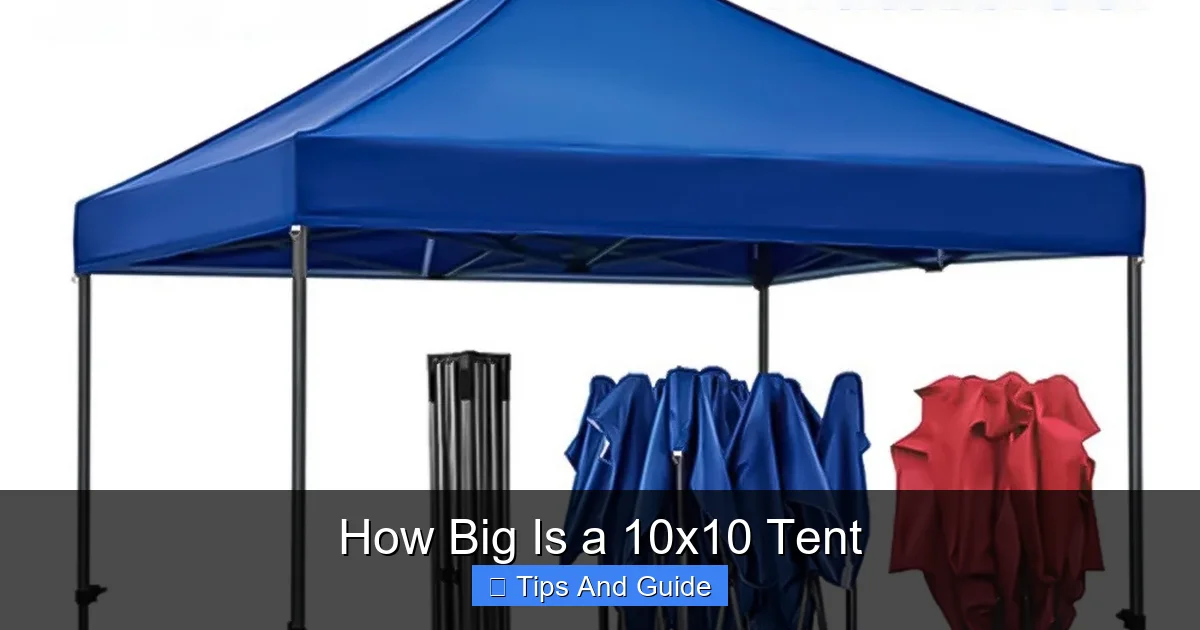
How Big Is a 10×10 Tent
Wondering “how big is a 10×10 tent”? This comprehensive guide clarifies the exact dimensions and what that space truly means. We’ll explore its capacity for people, furniture, and activities, helping you make an informed decision for your next event or camping trip. Discover the versatility and space of a 10×10 tent.
# How Big Is a 10×10 Tent? Your Ultimate Space Guide
Have you ever seen a tent advertised as 10×10 and wondered what that *actually* means in terms of real, usable space? It’s a common question, and the answer is more nuanced than just a simple measurement. Whether you’re planning a backyard party, setting up a booth at a farmer’s market, or looking for a comfortable camping shelter, understanding the dimensions of a 10×10 tent is crucial.
In this guide, we’ll break down exactly how big a 10×10 tent is, what that space can realistically hold, and how you can best utilize it. We’ll cover everything from square footage to potential arrangements, helping you make the most of your tent rental or purchase. Get ready to visualize your perfect setup!
## Understanding Tent Dimensions: The 10×10 Standard
When a tent is described as 10×10, it generally refers to its *footprint* or its *base dimensions*. This means the tent, when fully set up, will occupy a rectangular area that is 10 feet wide by 10 feet long.
### What 100 Square Feet Looks Like
The most straightforward way to understand the size is to calculate the area:
10 feet * 10 feet = 100 square feet.
So, a 10×10 tent offers 100 square feet of floor space. To put this into perspective, imagine a small room. It’s roughly the size of a queen-size bed laid out with some walking space around it, or a small dining area. This is a very versatile size, popular for many applications.
### Beyond the Footprint: Peak Height and Wall Angles
While the 10×10 measurement tells you the floor dimensions, it’s also important to consider the height of the tent. Most standard 10×10 pop-up tents have a peak height that allows most adults to stand comfortably inside, often ranging from 8 to 10 feet. Some models offer higher peaks for a more spacious feel.
It’s also worth noting that the walls of some tents, particularly canopy-style ones, might not be perfectly vertical. They might angle inwards slightly as they go up. This can subtly reduce the usable interior space near the edges, though the 10×10 measurement usually refers to the maximum span at the base.
## What Can You Fit Inside a 10×10 Tent?
Now that we know it’s 100 square feet, let’s visualize what that means in practical terms. The capacity of a 10×10 tent depends heavily on its intended use.
### Seating Arrangements
* **For Events and Parties:**
* **With Chairs Only:** You can comfortably fit 8 to 10 folding chairs around the perimeter of the tent, leaving a decent amount of space in the center for mingling.
* **With Tables and Chairs:**
* **One Large Table:** A 6-foot rectangular table in the center can accommodate 6 to 8 people. You’ll have space for walkways around the table.
* **Multiple Smaller Tables:** You could fit two 4-foot round tables, each seating 4 people, with room to move between them.
* **High-Top Tables:** If you’re going for a cocktail vibe, you could fit 4-5 high-top tables.
* **For Outdoor Markets/Vendors:** A 10×10 tent is a popular size for vendor booths. You can easily fit a standard 6-foot table along one side or back, with space for your products, inventory, and a chair for yourself. You might also have space for a display rack.
* **For Camping (Small Group):**
* **Sleeping Capacity:** While not typically advertised as a multi-person sleeping tent, a 10×10 tent *could* technically sleep 4-6 people on sleeping pads or camping cots, depending on their size and how much gear you have. However, for comfort and gear storage, it’s more realistically a cozy setup for 2-3 adults with ample space for gear.
* **Comfortable Camping for 2-4:** For a more comfortable camping experience, a 10×10 tent can easily accommodate 2-4 people with their sleeping bags and significant gear storage. This allows for more personal space and easier movement inside. You could even fit a small camping table and chairs for inside dining or relaxation.
### Furniture and Equipment
* **Backyard Lounging:** You could set up a small loveseat or a couple of comfortable chairs with a small coffee table in the center, creating a cozy outdoor living space.
* **Kid’s Play Area:** A 10×10 tent can be a fantastic shaded play area for children, fitting a few small tables, chairs, and plenty of toys.
* **Storage:** Need temporary storage for an event or during a move? A 10×10 tent can hold a surprising amount of boxes and smaller furniture items.
### Important Considerations for Space Utilization
* **Doorways and Entrances:** Remember to account for where the doors are located. You’ll need clear paths to enter and exit.
* **Leg Room:** Ensure there’s adequate legroom, especially if using tables and chairs. You don’t want people bumping knees constantly.
* **Aisle Space:** If you’re hosting an event or setting up a booth, clear aisles are essential for guest flow and safety. Aim for at least 3 feet of walkway space.
* **Gear Storage:** If using it for camping or as a vendor, factor in where you’ll store your equipment. Many tents have peak roofs that can help with vertical storage.
## Types of 10×10 Tents and How Size Matters
The “10×10” measurement applies to various types of tents, and the actual usable space can vary slightly based on the design.
### Pop-Up Canopy Tents
These are the most common type you’ll see at events, markets, and backyards. They are designed for quick setup and offer a straightforward 10×10 footprint. The interior is usually open, with the legs providing the primary support. Their versatility makes them a popular choice, and there are many options available, such as the popular best pop up tent 10×10 guides you can find.
### Event Tents / Frame Tents
These are often more robust and can have different sidewall configurations. While still a 10×10 footprint, their internal structure might involve more poles, slightly reducing unobstructed space compared to a simple pop-up canopy. They are excellent for more formal gatherings.
### Camping Tents (Less Common as 10×10)
While less common to be *exactly* advertised as 10×10 for sleeping tents, some larger dome or cabin-style camping tents might approach this size. If a camping tent is listed as 10×10, it will likely feel very spacious for 2-4 people, offering ample room for sleeping gear and a standing-height interior. For those looking for specific camping solutions, comparing different sizes like the large 3 vs 10×10 beach tent can highlight how this size translates to outdoor comfort.
### Beach Tents
Some beach tents also come in 10×10 sizes, offering significant shade for a family or group. These are designed to be lightweight and portable but still provide that 100 square feet of shaded area. Comparing these with other beach options, like the Shibumi Shade 3.0 vs 10×10 beach tent, can further clarify how this size performs in specific environments.
## Practical Tips for Maximizing Your 10×10 Tent Space
Once you understand the dimensions, here’s how to make the most of your 100 square feet.
### Strategic Layout
* **Center vs. Perimeter:** Decide if you want a central focal point (like a table) or if you prefer to keep the center open for movement. For vendor booths, placing the table along the back or side is often most efficient.
* **Vertical Space:** Utilize the height! Hang lights, display signs, or store items on shelves that reach upwards, provided the tent structure can support them safely.
* **Furniture Choice:** Opt for furniture that is appropriately scaled for the space. Avoid bulky items that will overcrowd the tent. Consider foldable or stackable furniture for easy setup and storage.
### Lighting and Ambiance
* **Camping:** If using for camping, consider camping lights for your tent to make the space functional and cozy after dark. Battery-powered lanterns or string lights can transform the interior.
* **Events:** For parties or markets, strategic lighting can enhance the ambiance and visibility.
### Flooring and Comfort
* **Ground Protection:** If your tent is on grass or uneven ground, consider a tarp or ground cloth to protect the tent floor and provide a smoother surface.
* **Comfort Enhancements:** For camping, a good camping mat for your tent or a comfortable mattress is key. For events, adding a rug can make the space feel more inviting.
### Weather Considerations
* **Wind:** Always use the provided stakes and ropes to secure your tent, especially in windy conditions. Ensure your layout doesn’t catch excessive wind.
* **Rain:** Many 10×10 tents are water-resistant, but not fully waterproof. Ensure any valuable items are protected, and consider the positioning of doors. Some tents offer waterproof options, which can be crucial for certain uses.
## Troubleshooting Common 10×10 Tent Issues
Even with a clear understanding of the size, setting up and using a tent can sometimes present challenges.
### Problem: Tent feels smaller than expected.
* **Solution:** Re-evaluate your layout. Are you using too much furniture? Can you rearrange items to create more open space? Ensure you’re not placing bulky items against the tent walls, which can make it feel cramped. Consider the angle of the walls if present.
### Problem: Difficulty fitting specific items.
* **Solution:** Measure your key items (tables, chairs, coolers, inventory) and compare them to the tent’s internal dimensions. Sometimes, a slight adjustment in the items you bring can make a big difference. For vendor setups, think about vertical displays.
### Problem: Tent setup is taking too long.
* **Solution:** Practice setting up your tent *before* you need it. Most pop-up tents are designed for quick assembly, but unfamiliarity can slow you down. Familiarize yourself with the mechanism and ensure all parts are present. For more complex event tents, planning extra time is always wise.
### Problem: Tent isn’t stable in wind.
* **Solution:** Ensure you are using all the provided tie-down ropes and stakes, anchoring them securely to the ground. If the ground is hard, consider using sandbags or weights on the tent legs. Some tents also come with optional sidewalls that can add stability.
## Conclusion: The Versatile 10×10 Tent
So, how big is a 10×10 tent? It’s 100 square feet of adaptable space. This measurement translates into a highly practical size that can serve a multitude of purposes. Whether you’re aiming for a cozy gathering, an efficient market stall, or a comfortable outdoor retreat, a 10×10 tent offers a solid foundation.
By understanding its dimensions, considering its intended use, and applying smart layout strategies, you can truly maximize the potential of this popular tent size. Don’t underestimate the power of 100 square feet – it’s a surprisingly capable space!
Key Takeaways
- A 10×10 tent provides 100 square feet of usable floor space, which is the most common and practical interpretation of its dimensions.
- This space is equivalent to a small room, comfortably accommodating 4 to 6 people in chairs or a picnic table setup.
- It’s large enough for a variety of uses, from outdoor events and market stalls to small camping trips or as a backyard shelter.
- While the tent’s footprint is 10×10 feet, the actual usable interior space can be slightly less due to poles, ropes, and wall angles.
- Proper setup and furniture arrangement are key to maximizing the available space within a 10×10 tent.