
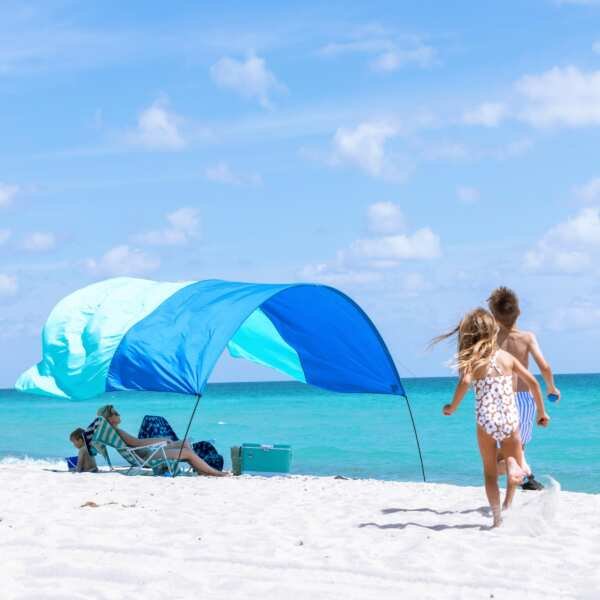
Shibumi Shade 3.0 Version

Neso Portable Beach Tent
Ah, the age-old quest for the perfect beach shelter! We’ve all been there, wrestling with unwieldy umbrellas that flip at the slightest gust or flimsy tents that offer more frustration than shade. This year, we’re diving deep into two popular contenders that promise to make your beach days more enjoyable: the Shibumi Shade 3.0 Version and the Neso Portable Beach Tent. These aren’t your average beach accessories; they’re designed with innovation and user experience in mind, aiming to solve those common beach-day woes.
Choosing the right beach shelter can significantly impact your day under the sun. A good one provides ample shade, is easy to set up, and can withstand the elements. A bad one can lead to a sandy, shaded mess and a whole lot of aggravation. That’s why we’ve put these two to the test, looking at their unique features, how they perform in real-world conditions, and what their users are saying. Whether you’re a solo beachcomber, a family with young children, or a group of friends looking for a comfortable spot to relax, understanding the nuances between these two options will help you make the best choice for your next seaside adventure.
In this comprehensive comparison, we’ll break down everything you need to know. From their wind-powered technology to their portability and sun protection capabilities, we’ll give you an honest assessment. By the end, you’ll have a clear picture of which beach shelter best suits your needs and budget, ensuring your next trip to the coast is shaded in comfort and style.
In-Depth Look: Shibumi Shade 3.0 Version
Let’s start by talking about the Shibumi Shade 3.0 Version. This product truly stands out because of its unique approach to beach shade. Instead of relying on heavy poles and a complex structure, it’s designed to harness the power of the wind itself. Imagine a shade that wants to be on the beach, dancing with the breeze rather than fighting it. That’s the magic of the Shibumi.
Its core feature, the “ORIGINAL WIND-POWERED STABILITY,” is a game-changer. It’s engineered to catch even the gentlest breeze, as little as 3 mph, and use it to create a stable, upright canopy. This means no more wrestling with poles trying to find the perfect angle or worrying about your shade taking flight. This wind-powered system is a marvel of engineering and really sets it apart from traditional beach tents. One of the most impressive aspects is its “ULTRA-LIGHTWEIGHT & 3 MINUTE SETUP.” Weighing in at just 4 pounds, it’s incredibly easy to carry. The company boasts a setup time of just 3 minutes for one person, which is a dream come true for anyone who’s ever struggled with bulky beach gear. It folds down into a compact carrying bag, making it a breeze to transport.
For sun protection, the Shibumi Shade 3.0 Version offers a generous 150 square feet of UPF 50+ coverage. This is ample space to comfortably shade a group of up to 8 people, along with all your beach essentials like coolers, chairs, and bags. It’s designed to provide substantial shade without being an eyesore on the beach. And for those days when the wind decides to take a break, there’s the “WIND ASSIST TECHNOLOGY INCLUDED.” This clever accessory attaches to the canopy corners with sandbags, allowing you to create a stable, tent-like shape even when there’s minimal wind. This adaptability ensures you’re covered, literally, no matter the weather conditions.
Beyond its practical features, the Shibumi Shade 3.0 Version also scores points for its commitment to sustainability. The canopy is made from 40% ocean-bound recycled plastic bottles, earning it the title “BETTER FOR THE BEACH.” This eco-conscious approach is a significant draw for those who care about preserving the natural beauty of our coastlines.
### Key Features Analysis of the Shibumi Shade 3.0 Version:
Wind-Powered Stability: This is the headline feature. It’s not just marketing; it’s a fundamental design principle. By using the wind, it minimizes reliance on heavy, obstructive poles, creating a more open and breezy feel. It’s fascinating to see how it stays put with such minimal wind. This technology is key to its unique selling proposition.
Ultra-Lightweight & 3 Minute Setup: At only 4 pounds, this is one of the lightest full-size beach shelters available. The claimed 3-minute setup time is incredibly appealing. This is a massive advantage for families with young children or anyone who dislikes lengthy setup processes. The compact size when packed also means it won’t take up much space in your car or beach bag.
Maximum Sun Protection: 150 square feet of UPF 50+ shade is substantial. It comfortably accommodates a group and their gear, providing a large, protected area from the sun’s harsh rays. This coverage area is impressive for its lightweight design and easy setup.
Wind Assist Technology Included: This is a thoughtful addition. It addresses the potential drawback of a wind-dependent shade. The sandbag anchors ensure you still get a stable setup on calmer days, making it more versatile than a purely wind-powered system.
Better for the Beach (Sustainability): The use of recycled ocean-bound plastic is a significant plus for environmentally conscious consumers. It adds a layer of appeal beyond just functionality, allowing users to feel good about their purchase.
### Pros and Cons of the Shibumi Shade 3.0 Version:
Pros:
Innovative wind-powered design offers excellent stability in breezy conditions.
Extremely lightweight and portable (4 lbs).
Very quick and easy setup, often achievable in under 3 minutes.
Generous shade coverage for groups up to 8 people.
Includes Wind Assist for low-wind days.
Eco-friendly materials contribute to sustainability.
Unique and eye-catching design that often draws compliments.
Cons:
Performance is heavily reliant on wind; may not be ideal for completely still days without the Wind Assist.
The cost can be higher than traditional beach tents.
The “flappy noise” in stronger winds, though often drowned out by waves, is noted by some users.
May require a learning curve for optimal pole placement in varying wind conditions.
### Customer Reviews: Shibumi Shade 3.0 Version
“I’ve done my homework and looked and scouted all the options out there. This one is well worth the investment. Lightweight and smallest compact size for the biggest shade area. Easy to assemble if solo and with 2 people. It’s durable and the design is conducive for a windy day. Only 3 points of contact. Pole can go directly into sand (when beach rules allow) OR poles can go in a bucket of sand if beach rules prohibit for eco safety of the environment. I purchased this in the large size and return” – This review highlights the value proposition of the Shibumi Shade 3.0 Version, emphasizing its lightweight nature, ample shade, and ease of assembly, especially in windy conditions. The flexibility in pole placement is also a practical consideration.
“Very much worth it! Day one was a light breezy and the Shibumi did great on the beach. Was easy to put up and only had to adjust for a shift in this wind once. Was super quiet. Day two was WINDY and it provided the perfect shade again. Not super quiet in stronger winds but the ocean waves drowned out the flappy noise. Lots of people commented on it as they walked by, some taking pictures of the label. Much better shade than the old beach umbrella we have always used. It is nice and tall so I ca'” – This user’s experience perfectly encapsulates the Shibumi’s performance. It handles both light and strong winds effectively, offering superior shade compared to traditional umbrellas. The social aspect of it attracting attention is a fun bonus. The mention of noise in stronger winds is noted but deemed manageable.
“Have had this for 3 summers now and would absolutely recommend. I was initially hesitant based on the price, but this is lightweight and is BY FAR the easiest shade to set up. Over the years I’ve used umbrellas, party tents, tailgating canopies and none are as easy as this. It relies on wind, so don’t expect to use this somewhere other than the beach, like at a kids soccer game, for example, unless you have constant wind. Haven’t had any issues with it staying up while at the beach, as there’s al” – This long-term review is a testament to the Shibumi’s durability and ease of use. The user explicitly points out that its wind-dependent nature makes it best suited for the beach, which is an important consideration for potential buyers. The ease of setup is a recurring theme, even over years of use.
### Best for (Shibumi Shade 3.0 Version):
The Shibumi Shade 3.0 Version is ideal for beachgoers who frequently visit windy beaches and prioritize speed and ease of setup above all else. It’s perfect for individuals, couples, and small to medium-sized families (up to 8 people) who want a lightweight, portable, and innovative shade solution. If you’re tired of fighting with traditional beach gear and appreciate eco-friendly designs, this is a strong contender. It’s also great for those who want a shade that doesn’t obstruct their view of the ocean.
In-Depth Look: Neso Portable Beach Tent
Now, let’s turn our attention to the Neso Portable Beach Tent. This is a more traditional beach tent in its overall structure, but with some thoughtful design choices that make it stand out. It aims to provide reliable sun protection and stability through a system of anchors and poles.
The “Perfect Shade for Any Adventure” tagline speaks to its versatility. It’s designed to be suitable for a wide range of outdoor activities, from family beach days to camping trips. Weighing in at a manageable 4 lbs, similar to the Shibumi, it’s also highly portable. The breathable nylon/lycra fabric blend is a key feature, designed to allow airflow while still providing effective shade and keeping you cool. This fabric choice is important for comfort on hot days.
Durability is a major focus for the Neso Portable Beach Tent, highlighted by its construction from a premium nylon/lycra blend, rust-proof aluminum poles, and “patented reinforced corners.” This suggests a product built to withstand the rigors of regular beach use. All Neso shades offer UPF 50+ protection, and they boast impressive testing results, indicating a UPF rating between 185-500, far exceeding the standard. It even carries the Seal of Recommendation from the Skin Cancer Foundation, which adds a significant layer of trust regarding its sun protection capabilities.
The “Versatile, Easy-to-Anchor Beach Canopy Tent” feature emphasizes its anchor-based stability. It’s designed to be secured using natural elements like sand or rocks, making it adaptable to different beach terrains. The company states it performs well in winds up to 20 MPH, which is a higher wind tolerance than the Shibumi’s primary wind-powered mode. The setup process is described as simple: lay it flat, fill the anchor bags, stretch the fabric, and prop it up with poles. While it says “ready-in-minutes,” some reviews suggest it might take a bit longer than the Shibumi, especially if you’re figuring it out for the first time. The “We Got You Covered” promise from Neso reinforces their commitment to providing quality, portable, and lightweight products for outdoor enthusiasts.
### Key Features Analysis of the Neso Portable Beach Tent:
Anchor-Based Stability: Unlike the Shibumi, the Neso relies on anchoring with sand or rocks. This is a more conventional method but proven effective. The use of four anchor points (with sandbags) provides a robust system, especially in higher winds.
Lightweight and Portable: Matching the Shibumi at 4 lbs, it’s also very easy to carry. The fabric blend and included bag make it convenient for transport, fitting easily into a carry-on.
Durable Construction: The use of premium nylon/lycra, rust-proof aluminum poles, and reinforced corners suggests a product built for longevity. This is a good sign for those who invest in gear they expect to last for multiple seasons.
Exceptional Sun Protection: The UPF 50+ rating is standard, but the additional testing showing UPF 185-500 is remarkable. The Skin Cancer Foundation’s recommendation is a strong endorsement of its protective qualities.
Wind Resistance up to 20 MPH: This is a significant advantage over the Shibumi’s reliance on wind. If you often encounter stronger winds on the beach, the Neso might offer more consistent stability.
Breathable Fabric Blend: The nylon/lycra mix is designed to balance airflow with sun protection, crucial for staying cool and comfortable in intense heat.
### Pros and Cons of the Neso Portable Beach Tent:
Pros:
Excellent sun protection with a high tested UPF rating and Skin Cancer Foundation endorsement.
Good wind resistance, rated for up to 20 MPH.
Lightweight and easy to carry (4 lbs).
Durable construction with quality materials.
Versatile use for various outdoor activities.
Can be used in various beach conditions due to anchor system.
Cons:
Setup can be more involved than the Shibumi, especially for first-time users, and may take longer than “minutes.”
Smaller shade coverage area (approx. 49 sq ft) compared to the Shibumi’s 150 sq ft.
Relies on having suitable anchor points (sand, rocks) and potentially carrying extra weight in sandbags.
Some users report the elastic in the fabric can degrade over time, leading to a less taut canopy.
* May require purchasing additional poles for increased sturdiness and better shade coverage, as suggested by some reviews.
### Customer Reviews: Neso Portable Beach Tent
“This is my second Neso Tent, and I’m still a big fan. I’ve taken it to Hawaii for the past four years, and it’s held up beautifully, lightweight, easy to set up, and perfect for travel. I highly recommend getting the second set of poles; it makes the tent sturdier and gives you better shade coverage. Great quality and worth every penny.” – This customer highlights the longevity and quality of the Neso tent, having used it for four years in Hawaii. The recommendation to buy a second set of poles is a common theme and suggests that while good, it might need an accessory to reach its full potential for some users.
“I purchased this tent in 2017. I thought others might appreciation a long-term review of how this holds up over time. We have used this tent many times, but we are not daily beach goers. It has probably been used at least 5 times per year, give or take. After all of this time, the bag, poles, lines, and sandbags are all still in good shape. The tent fabric elastic is starting to get shot, so you can see ruffled/thinned fabric where the poles normally push against the fabric. This is causing me t” – This is a valuable long-term review indicating the durability of most components. The fabric elasticity degrading after many years of use is a common wear-and-tear issue for many fabric products, but the fact that other parts are still in good shape speaks to the overall build quality.
“This is a great tent. I live in Florida and we have had semi windy beach days this summer. I was half tempted to buy a different tent, but decided to give this a try. Setting it up was a bit of a challenge as there are no instruction with it, but once we figured it out, it was simple. The tent kept collapsing in the wind, so we again had to figure out a setup that worked well with wind and once we figured it out, it was very easy to set up and keep up. We have used it a few times now and set up ” – This review captures some of the setup challenges some users face, particularly without clear instructions. It also points out that initial wind collapses can happen, but once the user figures out the optimal setup for wind, it becomes easy to manage. This suggests a slight learning curve.
### Best for (Neso Portable Beach Tent):
The Neso Portable Beach Tent is a solid choice for beachgoers who need a reliable, durable sun shelter that can handle moderate to strong winds. It’s great for families or groups who value comprehensive sun protection and don’t mind a slightly more involved setup process. If you appreciate a product with strong endorsements like the Skin Cancer Foundation’s Seal of Recommendation, and you’re looking for a tent that can potentially last for many years, the Neso is a strong contender. It’s also good for those who prefer a more traditional tent structure with clear anchor points. If you’re looking for a shade solution for diverse outdoor activities, this tent’s versatility is a big plus.
Head-to-Head Comparison
Now that we’ve taken a detailed look at each product individually, let’s put them side-by-side to see how they stack up against each other in key areas. This direct comparison should help clarify which one might be the better fit for your specific needs.
Setup Speed and Ease
The Shibumi Shade 3.0 Version truly shines here. Its wind-powered design and minimalist structure allow for an incredibly fast setup, often quoted as around 3 minutes. This is a massive advantage for busy families or anyone who just wants to get to relaxing quickly. The Neso Portable Beach Tent, while still relatively easy to set up, generally takes a bit longer, especially if you’re new to it. Users often mention needing to adjust the anchor points and pole positions for optimal stability, which can add a few minutes to the process. If setup speed is your absolute top priority, the Shibumi has a clear edge.
Wind Performance and Stability
This is where the two diverge significantly. The Shibumi Shade 3.0 Version is engineered to thrive in windy conditions, using the wind itself for stability. It’s designed to work with as little as 3 mph of wind. However, in very calm conditions, it relies on the included Wind Assist accessory. The Neso Portable Beach Tent, on the other hand, is built for more general wind resistance, advertised to handle winds up to 20 MPH using its anchor system. While the Shibumi is innovative in light to moderate winds, the Neso might offer more predictable stability in a wider range of wind speeds, particularly stronger gusts, as it doesn’t solely depend on the breeze.
Shade Coverage and Size
The Shibumi Shade 3.0 Version offers significantly more shade coverage, boasting 150 square feet that can accommodate up to 8 people. This is a substantial area, ideal for larger groups or families who need ample space for everyone and all their gear. The Neso Portable Beach Tent, with its 7×7 ft dimensions, provides approximately 49 square feet of shade. This is sufficient for smaller families or couples but might feel a bit cramped for larger gatherings. If maximizing shaded space is crucial, the Shibumi is the clear winner.
Portability and Weight
Both products are impressively lightweight, coming in at 4 pounds each. This makes them highly portable and easy to carry to and from the beach. They both pack down into compact carrying bags, fitting easily into car trunks or even larger beach totes. In terms of portability, it’s a tie.
Sun Protection
Both the Shibumi Shade 3.0 Version and the Neso Portable Beach Tent offer excellent UPF 50+ sun protection. However, the Neso takes it a step further with tested UPF ratings between 185-500 and the Seal of Recommendation from the Skin Cancer Foundation. This additional validation suggests a slightly superior level of assured protection from harmful UV rays. While both are highly protective, the Neso has a slight edge in this category due to its advanced testing and endorsements.
Durability and Construction
The Neso Portable Beach Tent appears to have an edge in terms of traditional durability. Its construction with premium nylon/lycra, rust-proof aluminum poles, and reinforced corners suggests a product built for long-term, heavy use. Customer reviews often speak to the longevity of Neso tents. The Shibumi Shade 3.0 Version is also described as durable, but its innovative design means its wear and tear might differ. The fabric’s reliance on wind could potentially lead to different types of stress over time compared to a tensioned tent structure.
Value and Price Point
The cost is often a significant factor. While specific prices fluctuate on Amazon, the Shibumi Shade 3.0 Version is generally positioned as a premium product with a higher price tag, reflecting its unique technology and innovative design. The Neso Portable Beach Tent often falls into a more moderate price range, offering excellent value for its durability and sun protection. If budget is a primary concern, the Neso might be the more accessible option, though both are investments in your beach comfort.
Environmental Impact
The Shibumi Shade 3.0 Version has a clear advantage with its use of 40% ocean-bound recycled plastic bottles in its canopy. This commitment to sustainability is a compelling feature for environmentally conscious consumers. Neso also mentions a commitment to the planet, but it doesn’t highlight specific recycled materials in its primary product construction in the same way.
Frequently Asked Questions
Q: Which beach shelter is easier to set up?
A: The Shibumi Shade 3.0 Version is generally considered easier and faster to set up, often taking around 3 minutes thanks to its wind-powered design. The Neso Portable Beach Tent is also relatively easy to set up, but may require a bit more time to adjust anchors and poles for optimal stability.
Q: Which one is better for windy beach days?
A: Both are designed for wind, but they approach it differently. The Shibumi Shade 3.0 Version excels in moderate to strong breezes where it uses the wind for stability. For very calm days, it includes a Wind Assist. The Neso Portable Beach Tent is rated for winds up to 20 MPH and uses a robust anchor system, making it a reliable choice for a wider range of wind conditions, potentially including stronger gusts where the Shibumi might require more adjustment.
Q: Do I need to buy extra accessories for either shelter?
A: The Shibumi Shade 3.0 Version comes with its Wind Assist accessory for low-wind days. The Neso Portable Beach Tent comes with sand anchors and poles. However, some Neso users recommend purchasing a second set of poles to enhance stability and shade coverage, so this might be an optional additional purchase.
Q: Which one offers more shade coverage?
A: The Shibumi Shade 3.0 Version offers significantly more shade coverage, providing 150 square feet, which is ideal for larger groups of up to 8 people. The Neso Portable Beach Tent offers approximately 49 square feet of shade, suitable for smaller families or couples.
Q: Are these shelters good for travel?
A: Yes, both are excellent for travel. They are both lightweight (4 lbs) and pack down into compact carrying bags. The Neso Portable Beach Tent is specifically mentioned as being packable in a carry-on, making it a great option for air travel. The Shibumi’s compact size also makes it very travel-friendly.
Q: Which shelter is more environmentally friendly?
A: The Shibumi Shade 3.0 Version has a stronger environmental claim, as its canopy is made from 40% ocean-bound recycled plastic bottles. This makes it a more sustainable choice for eco-conscious consumers.
Q: Which offers better sun protection?
A: Both offer excellent UPF 50+ protection. However, the Neso Portable Beach Tent has undergone further testing, showing UPF ratings between 185-500 and has received the Seal of Recommendation from the Skin Cancer Foundation, suggesting a slightly more validated level of sun protection.
Final Verdict: Which One Should You Choose?
After dissecting the Shibumi Shade 3.0 Version and the Neso Portable Beach Tent, it’s clear that both are fantastic options, but they cater to slightly different beachgoing priorities.
If your top priorities are an incredibly fast and effortless setup, maximum shade coverage for a larger group, and an innovative, wind-harnessing design, then the Shibumi Shade 3.0 Version is likely your winner. It’s a marvel of modern beach gear, perfect for those who want to spend less time wrestling with equipment and more time enjoying the sun and sea, especially if you frequent breezy beaches. Its eco-friendly aspect is a significant bonus for the environmentally conscious. You can explore the innovative design of the Shibumi Shade 3.0 Version here: View Shibumi Shade 3.0 Version on Amazon.
On the other hand, if you’re looking for a highly durable, versatile beach shelter with robust wind resistance (up to 20 MPH), exceptional, scientifically validated sun protection, and a more traditional but reliable anchoring system, the Neso Portable Beach Tent is an excellent choice. It might require a bit more effort during setup and offers less coverage, but its build quality and strong sun safety credentials make it a dependable long-term investment for various outdoor adventures. Check out the trusted protection of the Neso Portable Beach Tent here: View Neso Portable Beach Tent on Amazon.
Ultimately, the “best” choice depends on your personal needs and beach habits. Both products represent significant improvements over traditional beach umbrellas and offer a fantastic way to enhance your outdoor experiences.
For those looking for a deeper dive into specific comparisons, you might find these articles helpful:
– For a more detailed comparison with other tents, check out: Shibumi Shade Vs Neso Tent Beach Shelter Guide.
– If you’re comparing different sizes or models, consider: Large 3 Vs Neso Beach Tent Buying Guide.
