
Guy ropes are crucial for tent stability, especially in windy or rainy conditions. This guide explains how to use them effectively, from proper attachment to tensioning techniques. Mastering guy ropes ensures your tent stays secure and protected, allowing you to enjoy your camping trip with peace of mind.
Welcome, campers! You’ve picked out a fantastic tent, maybe one of the best pop-up tents on the market. You’ve got your camping mattress ready, your camping lights are charged, and you’re excited about your adventure. But have you thought about the often-overlooked heroes of tent setup: the guy ropes?
These simple cords might seem insignificant, but they are your tent’s best friends when the wind picks up or the rain starts to fall. Using tent guy ropes correctly can be the difference between a comfortable night’s sleep and a stressful, potentially damaging, tent disaster. This guide will walk you through everything you need to know about how to use tent guy ropes, ensuring your shelter stays put, no matter what nature throws your way. We’ll cover why they’re important, how to attach them, how to tension them, and some handy tips to make your tent setup rock-solid.
## Why Are Tent Guy Ropes So Important?
Before we dive into the “how,” let’s understand the “why.” Tent guy ropes, also known as guy lines, serve a few critical purposes:
* **Stability:** They anchor your tent to the ground, preventing it from shifting or collapsing under wind pressure. Imagine a boat without mooring ropes – it would drift away! Your tent needs the same secure anchoring.
* **Strength:** Guy ropes distribute the forces of wind and rain away from the tent’s seams and poles. This significantly reduces the stress on your tent, prolonging its life and preventing tears.
* **Shape Maintenance:** For tents with external pole structures or flysheets, guy ropes help maintain the tent’s intended shape, ensuring optimal ventilation and water runoff.
* **Extra Space:** In some cases, guy ropes can be used to extend the awning or create extra sheltered space outside your main tent.
Without properly tensioned guy ropes, even a sturdy tent can become a sail in a strong breeze, or worse, be damaged beyond repair. So, let’s get them set up right!
## Understanding Your Tent’s Guy Rope System
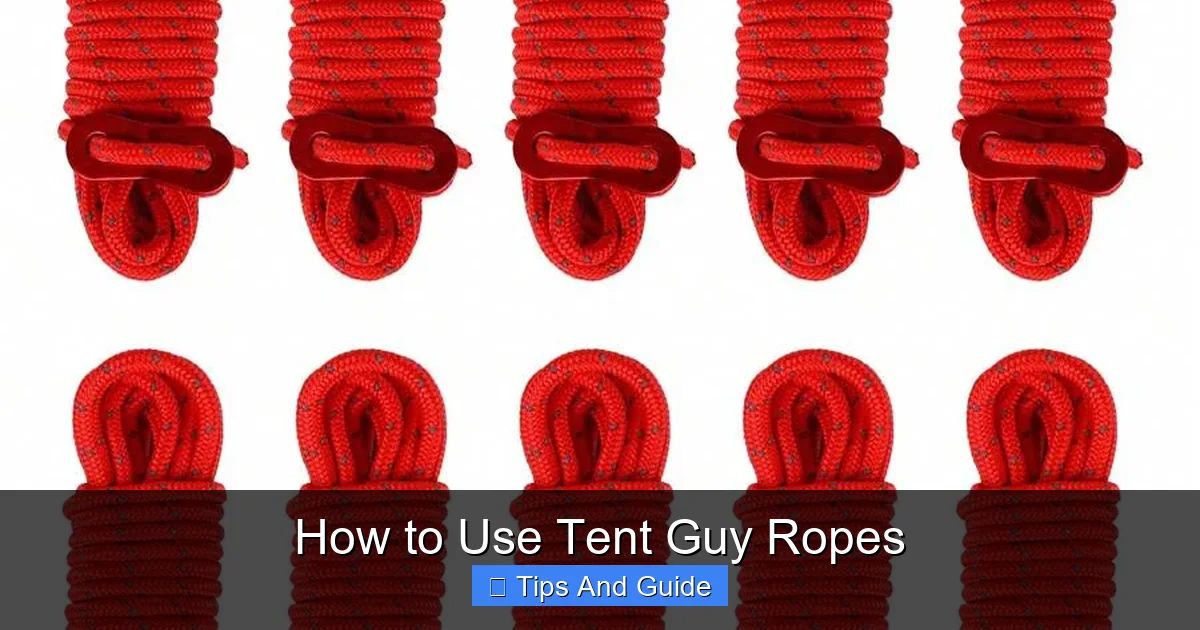
Most modern tents come with a set of guy ropes. These are typically made from strong, durable nylon or polyester cord. They usually have a reflective element for visibility at night, which is a great safety feature.
### What’s Included?
* **The Ropes:** These are the main cords. They are usually a few meters long.
* **Attachment Loops:** Your tent will have small loops or webbing points around its base and along the flysheet seams. These are where the guy ropes attach.
* **Tensioners/Adjusters:** Many guy ropes come with small plastic or metal adjusters. These allow you to easily tighten or loosen the rope. If yours don’t, you’ll learn some useful knots later.
## Step-by-Step Guide to Using Tent Guy Ropes
Let’s get down to business. Setting up your guy ropes is a straightforward process once you know the steps.
### Step 1: Prepare Your Tent Setup
This step happens before you even think about the guy ropes.
#### H3: Choose Your Campsite Wisely
Before pitching, consider the prevailing wind direction. If possible, pitch your tent so that the narrowest end faces the wind. This offers the least resistance. Think of it like an aerodynamic design. Look for natural windbreaks like trees or large rocks, but avoid pitching directly under large, dead branches.
#### H3: Pitch the Tent Body First
For most tents, especially those with an inner tent and a separate flysheet, pitch the inner tent first. This gives you a clear structure to work with before adding the flysheet. If you have a dome tent, the poles often go through sleeves or attach to clips on the inner tent.
#### H3: Attach the Flysheet
Drape the flysheet over the inner tent. Ensure it’s oriented correctly – there’s usually a specific front and back, often indicated by door zippers or logos. Secure the flysheet to the tent poles using the provided clips or buckles.
### Step 2: Attach the Guy Ropes to the Tent
Now it’s time to connect the ropes to your tent.
#### H3: Locate Attachment Points
Your tent will have designated points for guy ropes, usually on the flysheet. These are typically reinforced loops or grommets strategically placed to provide maximum support. For tents that are best pop-up tent for wind, these points are crucial for stability.
#### H3: Connect the Rope
Each guy rope will have a loop at one end. Slip this loop through the attachment point on your tent. Then, thread the other end of the rope through the loop to secure it. This is often called a girth hitch or a larks head knot if you’re familiar with them. Make sure the knot is snug but can still slide for adjustment.
### Step 3: Stake Out the Guy Ropes
This is where the guy ropes start doing their job.
#### H3: Position the Stakes
Now, extend the guy rope outwards from the tent. The ideal angle for a guy rope is approximately 45 degrees to the ground. This provides the best leverage for stability. Imagine forming a triangle with the tent, the stake, and the ground.
#### H3: Insert the Stakes
Use a hammer or a sturdy rock to drive the tent stakes into the ground at the position you’ve chosen. Make sure the stakes are driven in at an angle pointing away from the tent, which helps them hold better. If the ground is soft, you might need wider or longer stakes, or even use rocks to weigh them down.
### Step 4: Tension the Guy Ropes
This is a critical step for maximizing stability.
#### H3: Use the Tensioners
If your guy ropes have plastic or metal tensioners, this makes the job easy.
1. Pull the rope taut, so the flysheet is firm and not flapping loosely.
2. Slide the tensioner down the rope towards the stake to tighten it.
3. To loosen, slide the tensioner up the rope, away from the stake.
Experiment with the tension. You want the rope to be snug, creating a firm line, but not so tight that it’s pulling the tent out of shape or straining the seams. It should feel firm like a guitar string.
#### H3: Using Knots (If No Tensioners)
If your guy ropes don’t have built-in tensioners, you’ll need to use knots. The two most common and useful knots for this are:
* **The Taut-Line Hitch:** This is a sliding loop knot that allows you to adjust the tension of the guy rope without untying it.
1. Wrap the rope around the stake once.
2. Bring the rope back towards the stake and wrap it around itself, going *under* the standing part of the rope (the part going to the tent).
3. Create a loop and pass the end of the rope through it.
4. Pull the loop to tighten. You can then slide this loop up or down the main rope to adjust tension.
* **The Bowline Knot (for attaching to the tent):** While you might use a pre-made loop on the rope, if you need to create a secure loop on the flysheet or a pole, the bowline is excellent. It forms a strong, non-slipping loop.
1. Form a small loop (an “eye”) in the rope.
2. Pass the working end of the rope up through the eye.
3. Wrap the working end around the standing part.
4. Pass the working end back down through the eye.
5. Pull both ends to tighten.
**Tip:** Practice these knots at home before your trip! It’s much easier to learn them on your sofa than in a windy campsite.
### Step 5: Repeat for All Guy Lines
Most tents have multiple guy line attachment points. Don’t skip any! Ensure you attach and stake out every guy line provided. Pay special attention to the corners and any points that seem to be pulling the flysheet taut.
### Step 6: Final Adjustments and Checks
Once all guy lines are set up, take a step back and assess.
#### H3: Check for Slack
Walk around your tent. Gently push on the flysheet. Does it feel firm and stable? Are there any areas where the fabric is flapping loosely? If so, adjust the tension on the corresponding guy rope.
#### H3: Ensure Even Tension
Try to achieve a consistent level of tension across all guy ropes. This helps the tent maintain its shape and distributes stress evenly.
#### H3: Consider the Weather
If you anticipate strong winds or heavy rain, you might want to tension your guy ropes a little tighter than you would on a calm day. However, be careful not to overtighten, which can damage your tent. If you have a best pop-up tent for rain, ensuring the flysheet is taut is crucial for effective water shedding.
## Practical Tips for Using Guy Ropes
Here are some extra tips to make your guy rope experience even better:
* **Use the Right Stakes:** Standard tent stakes are fine for most ground. However, if you’re camping on sand, snow, or very loose soil, you’ll need specialized stakes (like sand anchors or snow stakes) or large rocks to secure your guy lines properly.
* **Reflective Guy Ropes:** Many guy ropes are reflective. This is brilliant for spotting them in the dark and avoiding tripping. If yours aren’t, consider adding reflective cord or tape.
* **Keep Them Tidy:** When packing up, coil your guy ropes neatly. This prevents tangles and makes setup next time much quicker. You can tie them with a simple figure-eight knot or use velcro straps.
* **Spare Cord:** Always carry a few meters of spare cord and maybe an extra stake or two. You never know when a rope might fray or a stake might bend.
* **Multiple Tent Anchor Points:** Some larger tents, like family camping tents or gazebos, might have additional anchor points for extra guy ropes. Utilize these in windy conditions for maximum security. For example, if you’re using a camping canopy tent, additional guy lines are essential.
* **Protect Your Tent Poles:** If your guy ropes attach directly to poles, ensure they don’t chafe the material. Sometimes a small piece of tape can prevent damage.
## Troubleshooting Common Guy Rope Issues
Even with the best intentions, you might run into a few problems.
* **Problem: My guy ropes keep slipping.**
* **Solution:** Ensure you are using a knot that is designed to hold tension, like the taut-line hitch. If using tensioners, make sure they are properly engaged and the rope is fed through them correctly. Check that the stake is securely in the ground.
* **Problem: The guy rope is putting too much strain on the tent fabric.**
* **Solution:** Loosen the guy rope slightly. Remember, the goal is taut, not stretched to its limit. The tent should feel firm, not pulled out of shape.
* **Problem: The stakes are pulling out of the ground.**
* **Solution:** Try a different location for the stake, at a steeper angle away from the tent. Use longer or wider stakes if the ground is soft. For very loose ground, consider using rocks or logs to weigh down the stakes.
* **Problem: I can’t get the flysheet to stay taut.**
* **Solution:** Ensure all guy lines are attached and tensioned. Check that the flysheet is correctly attached to the poles. Sometimes, you might need to re-tension all the guy lines simultaneously to achieve an even pull.
* **Problem: My tent is flapping wildly in the wind.**
* **Solution:** This is a clear sign that your guy lines are not adequately tensioned or positioned. Re-tension all lines, ensuring they are angled at approximately 45 degrees. If the wind is extreme, consider adding extra guy lines if your tent design allows, or using heavier-duty stakes.
## Conclusion
Mastering the art of using tent guy ropes is a fundamental camping skill that pays dividends in comfort and safety. By understanding their purpose, correctly attaching and tensioning them, and following practical tips, you can ensure your tent stands strong against the elements. A well-secured tent provides shelter, keeps you dry, and allows you to relax and enjoy the great outdoors. So, the next time you set up camp, give your guy ropes the attention they deserve. Happy camping!
- Guy ropes add crucial stability to your tent, preventing it from collapsing or tearing in adverse weather.
- Proper attachment points are key; always connect guy ropes to the designated loops or grommets on your tent and flysheet.
- Tensioning is vital; the ropes should be taut but not so tight they damage the tent fabric.
- Use guy line tensioners or knots to easily adjust tension and secure the ropes.
- Positioning matters; angle guy ropes away from the tent at roughly 45 degrees to the ground.
- Guy ropes protect your tent by distributing wind forces and reducing stress on seams and poles.
- Regular checks are recommended, especially during long trips or changing weather conditions.
