
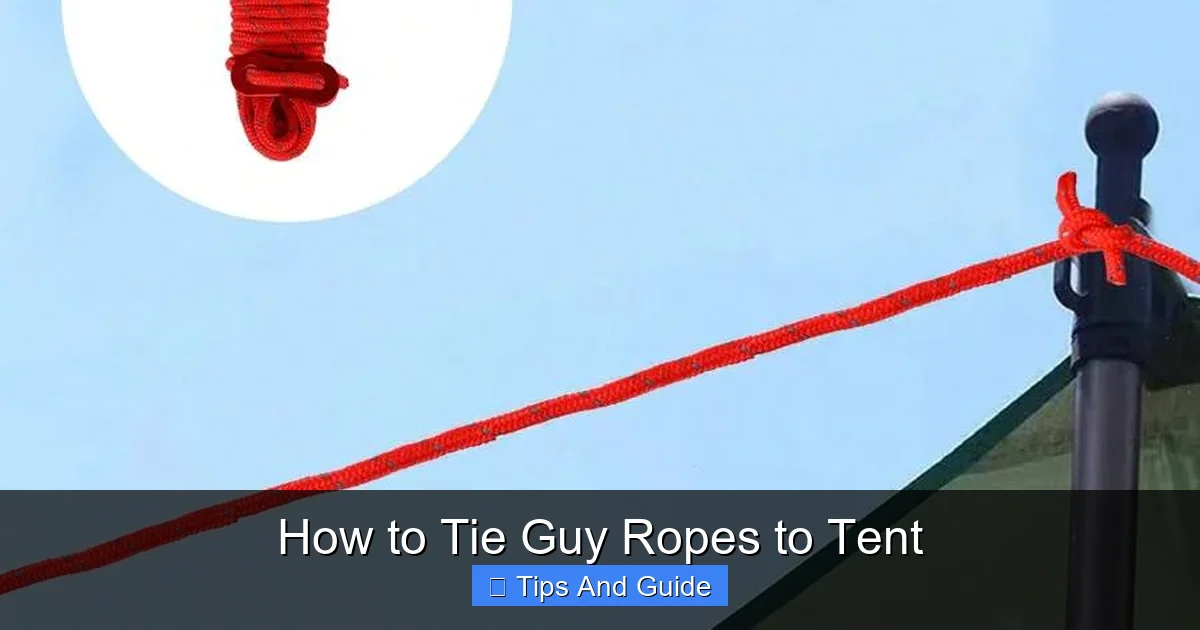
Properly tying guy ropes is crucial for tent stability and weather resistance. This guide provides clear, step-by-step instructions on how to attach and tension your tent’s guy lines, ensuring a secure and comfortable camping experience. By following these simple techniques, you can greatly improve your tent’s performance in windy or rainy conditions.
# How to Tie Guy Ropes to Tent
Welcome, campers! Setting up a tent is more than just popping it open. To truly make your shelter a secure and comfortable home away from home, you need to understand the importance of guy ropes. These seemingly simple cords are your tent’s best friend when it comes to facing the elements. They are the unsung heroes that keep your tent standing firm against wind, rain, and even snow.
In this comprehensive guide, we’ll walk you through everything you need to know about tying guy ropes to your tent. From understanding their purpose to mastering the essential knots and achieving the perfect tension, you’ll be equipped to set up your tent with confidence, no matter where your adventures take you. We’ll cover the basic setup, common challenges, and practical tips to ensure your tent stays put.
## Why Are Guy Ropes So Important?
Before we dive into the “how,” let’s talk about the “why.” Guy ropes, also known as guy lines, are lengths of cordage that extend from the tent’s flysheet or poles to the ground. Their primary function is to provide:
* Stability: They act as anchors, preventing your tent from collapsing or blowing away in windy conditions. A well-tensioned guy line system is crucial for preventing wind damage.
* Weather Resistance: By keeping the tent fabric taut, guy ropes help water run off effectively, preventing pooling and leaks. They also prevent the flysheet from flapping excessively in the wind, which can be noisy and compromise waterproofing.
* Ventilation: Proper guy rope tension can help maintain airflow within the tent, reducing condensation buildup.
Think of your tent as a sail. Without guy ropes, even a moderate breeze could turn your shelter into a kite! Ensuring your tent is stable, especially if you’re considering a more robust option like a best pop-up tent for wind, is paramount.
## Preparing for Guy Rope Attachment
A successful guy rope setup starts before you even tie the first knot. Proper preparation ensures a sturdy and effective anchoring system.
### Choose the Right Location
This might seem obvious, but the ground you choose to pitch your tent on makes a big difference.
* Flat Ground: Always aim for a flat, level surface. This prevents your tent from shifting and ensures even tension on all guy ropes.
* Clear Area: Remove any sharp objects, rocks, or debris that could damage your tent or make it difficult to stake out your guy ropes.
* Consider Wind Direction: If possible, pitch your tent so that the main entrance is facing away from the prevailing wind. This minimizes direct wind impact on the most vulnerable part of your tent.
### Identify Guy Rope Attachment Points
Your tent will have designated loops or grommets where the guy ropes are meant to be attached.
* Flysheet Loops: Most tents have small fabric loops sewn onto the flysheet, usually positioned at strategic points like corners or along seams.
* Pole Sleeves/Clips: Some tents have integrated points on the poles or clips that the guy ropes attach to.
* Reflective Guy Points: Many modern tents feature bright or reflective points for guy ropes, making them easier to see at night and improving safety.
### Inspect Your Guy Ropes and Stakes
Before you head out, check your equipment.
* Guy Ropes: Ensure they are free from frays, cuts, or damage. If they are tangled, take the time to untangle them.
* Stakes: Make sure you have enough stakes for all your guy ropes and that they are suitable for the terrain. Hard-ground stakes are different from soft-ground stakes.
## The Taut-Line Hitch: Your Go-To Knot
The most common and versatile knot for adjusting guy ropes is the taut-line hitch. This knot is brilliant because it’s adjustable, meaning you can tighten or loosen your guy rope without untying it. It’s perfect for maintaining the right tension as conditions change.
Here’s how to tie a taut-line hitch:
### Step-by-Step Taut-Line Hitch Instructions
1. **Pass the rope:** Thread the end of your guy rope through the attachment point on your tent.
2. **Form a loop:** Create a small loop in the guy rope a few inches from the tent.
3. First wrap: Wrap the working end of the rope around the standing part (the part going towards the stake) twice, going in the same direction each time.
4. Second wrap: Now, bring the working end over the standing part and under itself, creating a second loop.
5. Third wrap: Finally, wrap the working end around the standing part one more time, this time going in the opposite direction of the first two wraps. This is the crucial step for creating the friction that holds the knot.
6. Tighten the knot: Pull the working end to snug up the knot against the first two wraps. Then, slide the knot along the standing part until it’s close to the tent.
### How to Adjust the Taut-Line Hitch
The beauty of this knot is its adjustability.
* To tighten: Slide the knot towards the tent.
* To loosen: Slide the knot away from the tent.
Practice this knot a few times at home before your trip. It might seem tricky at first, but it quickly becomes second nature. Mastering this knot is key to a stable setup, especially if you have a larger tent like a best camping kitchen tent that needs extra support.
## Attaching and Staking Your Guy Ropes
Now that you know the knot, let’s get to the actual attachment process.
### Step 1: Attach the Guy Rope to the Tent
* **Thread the rope:** Pass the end of your guy rope through the designated loop or grommet on your tent’s flysheet.
* **Tie a secure knot:** Use a simple overhand knot or a bowline knot to create a secure loop at the end of the guy rope, attaching it firmly to the tent. The taut-line hitch is tied further down the rope, after it’s anchored to the ground.
### Step 2: Position the Stake
* Angle is key: With the guy rope attached to the tent, pull it outwards and away from the tent at roughly a 45-degree angle. This angle provides the best leverage for stability.
* Choose your spot: Identify a firm spot on the ground to place your stake. This should be far enough away from the tent to provide good tension without putting undue stress on the tent fabric. Aim for the guy rope to be roughly perpendicular to the tent seam it’s attached to.
### Step 3: Stake the Guy Rope
* Hammer it in: Using a rock or a mallet, drive the stake into the ground at your chosen spot. Ensure the stake is driven in at a similar 45-degree angle as the guy rope, pointing away from the tent. This helps it resist pulling out.
* Test the firmness: Give the stake a gentle tug to ensure it’s firmly embedded in the ground. If it feels loose, try a different spot or a different type of stake.
### Step 4: Tie Your Taut-Line Hitch
* Connect the rope: Once your stake is secure, bring the loose end of the guy rope to the stake.
* Tie the knot: Tie your taut-line hitch around the stake, leaving enough slack for initial adjustment. You’ll likely be tying the knot onto the stake itself, or a loop on the stake if it has one.
### Step 5: Tension the Guy Rope
* Adjust for tautness: Use your taut-line hitch to adjust the tension. The guy rope should be taut enough to keep the tent fabric firm and smooth, but not so tight that it distorts the tent’s shape or puts excessive strain on the seams.
* Check the tent: Step back and look at your tent. Are the walls straight? Is the flysheet smooth? Adjust tension as needed.
## Attaching Guy Ropes to Different Tent Types
While the basic principles remain the same, the application might vary slightly depending on your tent type.
### Dome Tents and Backpacking Tents
These tents often rely heavily on their poles for structure, but guy ropes are still essential for wind stability.
* Flysheet attachments: Focus on the loops on the flysheet. These are usually located at the top of the tent and along the sides.
* Windward side: Pay extra attention to guy ropes on the side of the tent facing the wind. You might need to use multiple guy ropes on longer sections of the flysheet for maximum support.
### Tunnel Tents
Tunnel tents have a more elongated shape and rely significantly on guy ropes for their structural integrity.
* Multiple attachment points: These tents often have numerous guy rope attachment points along their length. Use as many as needed for a taut setup.
* Consistent tension: It’s crucial to achieve consistent tension across all guy ropes to maintain the arch shape of the tent.
### Cabin Tents and Larger Family Tents
These larger structures benefit immensely from well-placed guy ropes to prevent swaying.
* Corner anchors: Ensure the guy ropes at the corners are securely anchored.
* Mid-point supports: Many larger tents have additional guy rope points along the sides. Use these to prevent sagging and add rigidity. If you have a particularly large setup, consider the best camping canopy tent for extra space and support.
## Practical Tips for Guy Rope Mastery
* Use all available guy points: Don’t skimp! The more points you anchor your tent with, the more stable it will be.
* Reflective guy ropes: Consider upgrading to reflective guy ropes or adding reflective tracers. This makes them visible at night, preventing tripping hazards. This is especially useful when you have multiple camping accessories like a best camping lights for tent.
* Carry spare cordage: It’s always a good idea to have a bit of extra cordage on hand in case one of your guy ropes gets damaged or you need to improvise.
* Ground conditions matter: In very soft or sandy ground, you might need specialized sand stakes or a “deadman” anchor (burying a stake or rock with the rope). In rocky ground, you might need to find creative solutions like using rocks to weigh down the rope loop.
* Regularly check tension: Weather can change rapidly. Periodically check the tension on your guy ropes and adjust them as needed. For instance, after a night of heavy rain, the fabric might loosen slightly.
## Troubleshooting Common Guy Rope Issues
Even with the best intentions, you might encounter a few snags.
### Problem: Stakes Pulling Out of the Ground
* Solution 1: Angle adjustment: Ensure your stakes are driven in at a 45-degree angle away from the tent.
* Solution 2: Deeper insertion: Try driving the stakes deeper into the ground.
* Solution 3: Different stakes: Use stakes designed for the terrain (e.g., longer stakes for soft ground, screw-in stakes for hard ground).
* Solution 4: Create a better anchor: In very loose soil, you can tie the guy rope to a heavy rock or a buried object (a “deadman anchor”).
### Problem: Guy Ropes Are Too Loose (Sagging)
* Solution: Adjust the taut-line hitch: Simply slide the knot towards the tent to increase tension. Ensure the tent fabric is smooth and taut.
### Problem: Guy Ropes Are Too Tight (Distorting Tent)
* Solution: Adjust the taut-line hitch: Slide the knot away from the tent to loosen the tension. The tent should be firm but not strained.
### Problem: Guy Rope Attachment Loop on Tent is Damaged
* Solution: Repair or reinforce: If the loop is torn, you can try to repair it with strong tape or needle and thread. In a pinch, you can tie the guy rope directly to a sturdy part of the tent frame or a seam, but this is not ideal for long-term use.
## Conclusion
Mastering the art of tying guy ropes is a fundamental camping skill that significantly enhances your tent’s performance and your overall camping comfort. By understanding their purpose, learning the essential taut-line hitch, and practicing proper attachment and tensioning techniques, you can ensure your tent remains a secure haven, even when the weather turns.
Remember, a well-tied guy rope system is your first line of defense against wind and rain. So, take a few minutes to practice these steps before your next trip. Happy camping, and may your tent always stand tall and strong!
Key Takeaways
- Understand Guy Rope Purpose: Guy ropes are essential for adding stability and tension to your tent, helping it withstand wind and rain.
- Prepare Your Tent Site: Choose a flat, clear area and orient your tent correctly before attaching guy ropes.
- Master the Tensioning Knot: The taut-line hitch is the most common and effective knot for adjusting guy rope tension.
- Strategic Guy Rope Placement: Attach guy ropes to designated loops or points on your tent and stake them out at an angle away from the tent.
- Achieve Optimal Tension: Guy ropes should be taut but not so tight that they distort the tent fabric.
- Troubleshoot Common Issues: Learn how to address sagging ropes or stakes pulling out for a secure setup.
