
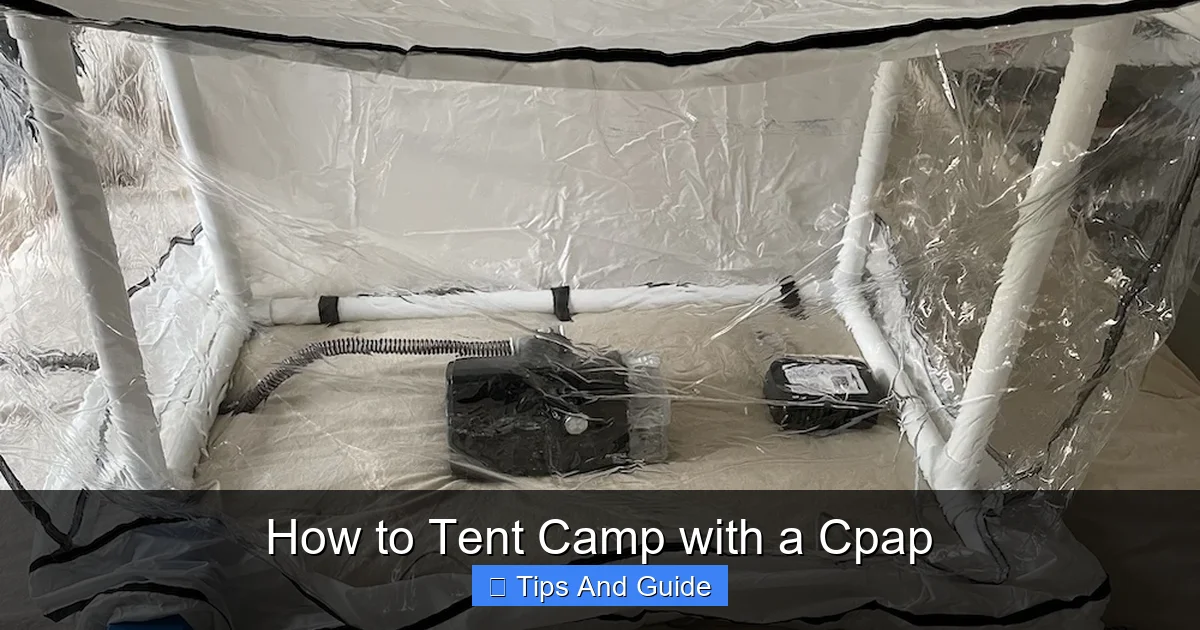
Camping with a CPAP machine is entirely achievable! This guide provides essential steps and tips for powering your device, ensuring a comfortable setup within your tent, and troubleshooting common issues. Enjoy the outdoors without sacrificing your sleep therapy with our practical advice.
## How to Tent Camp with a CPAP
Camping is a fantastic way to reconnect with nature, de-stress, and create lasting memories. For many, however, the idea of sleeping outdoors can bring up concerns, especially if you rely on a Continuous Positive Airway Pressure (CPAP) machine for sleep apnea. The good news is that with a little planning and the right gear, tent camping with a CPAP is not only possible but can be just as comfortable and restful as sleeping at home.
This comprehensive guide will walk you through everything you need to know to successfully tent camp with your CPAP machine. We’ll cover power solutions, tent selection and setup, essential accessories, and how to troubleshoot common challenges. Get ready to embrace the wilderness without compromising your sleep therapy!
### Understanding Your CPAP Needs While Camping
Before diving into the “how-to,” it’s crucial to understand what your CPAP machine requires to function optimally: a consistent power source, a stable environment, and proper setup to avoid interruptions. Your machine needs electricity to run its motor and, if applicable, its humidifier. The duration of your camping trip, the type of camping you’re doing (car camping vs. backpacking), and the availability of power at your campsite will all influence your choices.
### Section 1: Powering Your CPAP Machine Off-Grid
The biggest hurdle for many when considering tent camping with a CPAP is the power source. Campgrounds often lack electrical outlets, especially in more remote areas. Fortunately, several reliable options exist to keep your CPAP running all night and throughout your trip.
#### H3: Portable Power Stations (Power Banks)
Portable power stations are essentially large rechargeable batteries that can power various devices, including your CPAP. They come in different capacities, measured in watt-hours (Wh).
* Choosing the Right Size: To determine the size you need, find the wattage of your CPAP machine (usually listed on the device or its power adapter) and multiply it by the number of hours you’ll need it to run each night. Add a buffer of at least 20-30% for safety. For example, a 60W CPAP running for 8 hours needs at least 480Wh. Look for a power station with 500Wh or more for a single night. For multi-night trips, you’ll need a larger capacity or a way to recharge the power station.
* Recharging Options: Most portable power stations can be recharged at home before your trip. Some larger units can also be recharged using a car’s 12V outlet while driving or, more conveniently for extended trips, via solar panels.
* Practical Tip: Always check the power station’s output voltage and type (AC or DC) to ensure it’s compatible with your CPAP’s power adapter. Many CPAP machines can run on 12V DC power, which can be more efficient than using an inverter for AC power.
#### H3: Deep-Cycle Batteries and Inverters
For the more adventurous or those planning extended camping trips, a deep-cycle battery system can be a robust solution. These batteries are designed for repeated deep discharge and recharge cycles, unlike car batteries.
* Battery Types: Lead-acid (AGM or gel) and lithium-ion are common. Lithium-ion batteries are lighter and offer more usable capacity but are generally more expensive.
* Inverters: If your CPAP uses an AC adapter, you’ll need a power inverter to convert the battery’s DC power to AC power. Choose an inverter that can handle the continuous wattage of your CPAP, plus a surge capacity for startup.
* Charging the Battery: You can recharge deep-cycle batteries using your car’s alternator (with proper wiring and a battery isolator to prevent draining your car battery), a solar panel setup, or a shore power connection if available at a campground.
* Important Note: Setting up a deep-cycle battery system requires some basic electrical knowledge and careful wiring to ensure safety. If you’re not comfortable with this, a portable power station is a simpler alternative.
#### H3: Solar Chargers
Solar charging is an excellent option for eco-conscious campers and those on longer trips. Solar panels can recharge portable power stations or directly charge some battery systems.
* Panel Size and Output: The size and wattage of solar panels determine how quickly they can recharge your power source. Larger panels with higher wattage will charge faster but are also bulkier.
* Connecting to Your Power Source: Ensure your solar panel is compatible with your portable power station or battery charge controller.
* Placement is Key: To maximize solar gain, panels need to be positioned in direct sunlight, facing south (in the Northern Hemisphere). You may need to reposition them throughout the day as the sun moves.
* Tip: Consider a folding solar panel kit for portability. Many come with built-in charge controllers and are designed for ease of use.
#### H3: Battery-Powered CPAP Machines
Some CPAP manufacturers offer battery-powered CPAP machines or specific battery packs designed to work with their devices. These are often the most integrated and straightforward solution, though they can be an additional expense.
* Check Compatibility: Ensure the battery pack is specifically designed for your CPAP model.
* Battery Life: Understand the expected battery life for your specific machine and mask usage. This will help you plan for recharging or spare batteries.
### Section 2: Choosing and Setting Up Your Tent
Your tent is your home away from home in the wilderness, and choosing the right one is crucial for CPAP camping comfort.
#### H3: Tent Size and Layout
* More Space is Better: A larger tent provides more room to set up your CPAP machine comfortably and store your accessories without feeling cramped. Look for tents with good headroom and floor space. A four-person tent for two people, for instance, can offer a lot of flexibility. Consider exploring options like the best cabin tent with screen room or a spacious cabin tent with screen porch if ample living space is a priority.
* Dedicated Area: Ideally, you want a spot inside the tent that is relatively flat and free from drafts for your CPAP. This might be next to your sleeping pad or cot.
* Ventilation: Good ventilation is vital to prevent condensation buildup inside the tent, which can be an issue for CPAP users. Look for tents with multiple mesh windows and vents.
#### H3: Tent Placement at the Campsite
* Level Ground: Always pitch your tent on level ground. This ensures your CPAP machine sits stable and prevents it from being bumped or falling over.
* Away from Direct Airflow: Avoid pitching your tent directly in the path of strong winds or near open tent flaps where direct airflow could disturb your sleep or affect your CPAP’s performance.
* Consider Proximity to Power (if applicable): If you are using a battery pack connected to your car, or a solar charger, consider placing the tent where it might receive some ambient light if needed, or where it’s convenient to manage cords.
#### H3: Interior Setup for Your CPAP
* Stable Surface: Your CPAP needs a stable surface. A small camping table, a sturdy storage bin, or even a thick book placed on your camping cot with tent can work. Avoid placing it directly on the tent floor.
* Elevated Position: If possible, elevate your CPAP slightly. This can help prevent it from being affected by any minor condensation on the tent floor.
* Cord Management: Keep CPAP cords tidy and out of the way to prevent tripping hazards. Use cable ties or Velcro straps. Ensure cords are not stretched taut.
* Keep it Dry: Position your CPAP away from potential water sources like damp gear or the tent entrance, especially if rain is expected.
### Section 3: Essential CPAP Camping Accessories
Beyond the machine itself and a power source, a few accessories can significantly enhance your CPAP camping experience.
#### H3: Humidifier Use
* Pros: A humidifier can make CPAP therapy more comfortable, especially in dry environments, by moistening the air and preventing nasal or throat irritation.
* Cons: Humidifiers use a significant amount of power and can contribute to condensation within the tent.
* Tips for Camping:
* Use Sparingly: Consider using the humidifier only during the coolest parts of the night or if you experience significant dryness.
* Minimal Water: Don’t fill the humidifier chamber completely. Use just enough water to provide comfort.
* Monitor Condensation: If you notice excessive condensation, turn off the humidifier or reduce its setting.
* Alternative: Heated tubing can help prevent rain-out (condensation in the tube) without the power draw of a humidifier.
#### H3: Mask Fit and Comfort
* Secure Fit: Ensure your mask fits snugly and comfortably before your trip. Leaks can reduce therapy effectiveness and waste air.
* Backup Mask: Consider bringing a spare mask in case your primary one gets damaged or needs cleaning.
* Mask Liners: Soft mask liners can improve comfort and help reduce skin irritation, especially if you’re sleeping in a new environment.
#### H3: Tubing Management
* Preventing Snags: Use a CPAP tube management system or clip to keep the tubing from tangling or snagging on your sleeping bag or bedding.
* Heated Tubing: As mentioned, heated tubing can significantly reduce condensation in the tube, making your therapy more comfortable, especially in cooler or humid conditions. This is often a worthwhile investment for CPAP campers.
#### H3: CPAP Accessories Bag
* Organization: Designate a sturdy bag or case for all your CPAP supplies: the machine, mask, tubing, power cords, battery pack, charger, spare parts, and cleaning supplies. This keeps everything together and protected.
* Easy Access: Keep this bag readily accessible within your tent.
### Section 4: Packing and Preparation Checklist
Thorough preparation is key to a successful and stress-free camping trip with your CPAP.
#### H3: Before You Leave Home
* Test Your Power Setup: Before your trip, conduct a full test run of your CPAP machine with your chosen power source (battery, power station) for an entire night. This identifies any potential issues with power duration or output.
* Fully Charge Everything: Ensure your portable power station, battery packs, and any rechargeable devices are fully charged.
* Clean Your Equipment: Clean your CPAP mask, tubing, and water chamber (if using) before you leave. Bring cleaning wipes or solution for on-the-go cleaning.
* Pack Spares: Bring spare filters for your CPAP, a spare mask cushion or entire mask, and any necessary adapters or cords.
* User Manual: Pack a copy of your CPAP machine’s user manual.
#### H3: At the Campsite
* Set Up Camp First: Before setting up your CPAP, get your tent pitched, sleeping gear arranged, and other campsite essentials organized.
* Familiarize Yourself with Your Tent: If you’re using a new tent, practice setting it up at home. For CPAP camping, consider a tent like the best camp tent that offers good ventilation and is easy to manage. Some larger tents, like a best pop up tent you can stand up in, can make interior setup much easier.
* Monitor Power Levels: Keep an eye on your power source’s remaining charge throughout the night.
### Section 5: Troubleshooting Common CPAP Camping Issues
Even with the best planning, occasional issues can arise. Here’s how to handle them:
#### H3: Power Issues
* Problem: Battery dies unexpectedly.
* Solution: Check connections, ensure the power output is sufficient for your CPAP, and reduce humidifier use if possible. Next time, bring a larger battery or a secondary power source.
* Problem: Device won’t turn on.
* Solution: Verify all connections are secure. Check the power source charge. Ensure the correct power adapter is being used. If using an inverter, check its power switch and overload indicators.
#### H3: Mask and Air Pressure Issues
* Problem: Mask leaks.
* Solution: Adjust the straps for a snugger fit. If the mask is old, the seal may be compromised, and it might be time for a replacement. Ensure your mask is clean.
* Problem: Air pressure feels off.
* Solution: This could be due to leaks. Ensure your power source is providing consistent power. If you’re using a travel CPAP, some models have different pressure settings.
#### H3: Condensation and Humidity
* Problem: Excessive condensation inside the tent.
* Solution: Reduce or turn off the humidifier. Increase tent ventilation by opening windows and vents. Ensure your sleeping bag is not obstructing vents.
* Problem: “Rain-out” in the tubing.
* Solution: Use heated tubing, or try to keep the tubing from dipping below the level of your CPAP machine.
### Section 6: Maintaining Hygiene While Camping
Keeping your CPAP equipment clean is crucial for your health.
* Daily Cleaning: Wipe down your mask and tubing with a CPAP wipe or a damp cloth daily.
* Water Chamber: If using a humidifier, empty and rinse the water chamber daily with clean water. If possible, allow it to air dry.
* Deep Cleaning: When you return home, perform a thorough cleaning of all your CPAP equipment.
### Conclusion
Tent camping with a CPAP machine is a rewarding experience that opens up a world of outdoor adventure to those who rely on this essential therapy. By understanding your power needs, choosing the right tent, packing smart, and preparing for potential challenges, you can ensure comfortable, uninterrupted sleep under the stars. Embrace the freedom to explore and enjoy the tranquility of nature, knowing that your sleep therapy can come with you. Happy camping!
Key Takeaways
- Powering Your CPAP: Explore options like portable power stations, deep-cycle batteries, and solar chargers to ensure your CPAP runs throughout the night.
- Choosing the Right Tent: Select a tent with enough space for your CPAP and accessories, good ventilation, and a flat surface for your device. Consider a larger family tent or a cabin-style tent for extra room.
- Setting Up Your CPAP: Find a stable, elevated spot for your CPAP machine inside the tent, away from direct airflow and potential moisture.
- Managing Humidity and Comfort: Use a humidifier cautiously, ensure proper mask fit, and consider accessories like heated tubing to maintain comfort in varying temperatures.
- Packing Smart: Organize your CPAP supplies, chargers, and accessories in a dedicated bag to keep them accessible and protected.
- Troubleshooting Common Issues: Be prepared for power outages, mask leaks, and condensation with simple backup plans and adjustments.
