
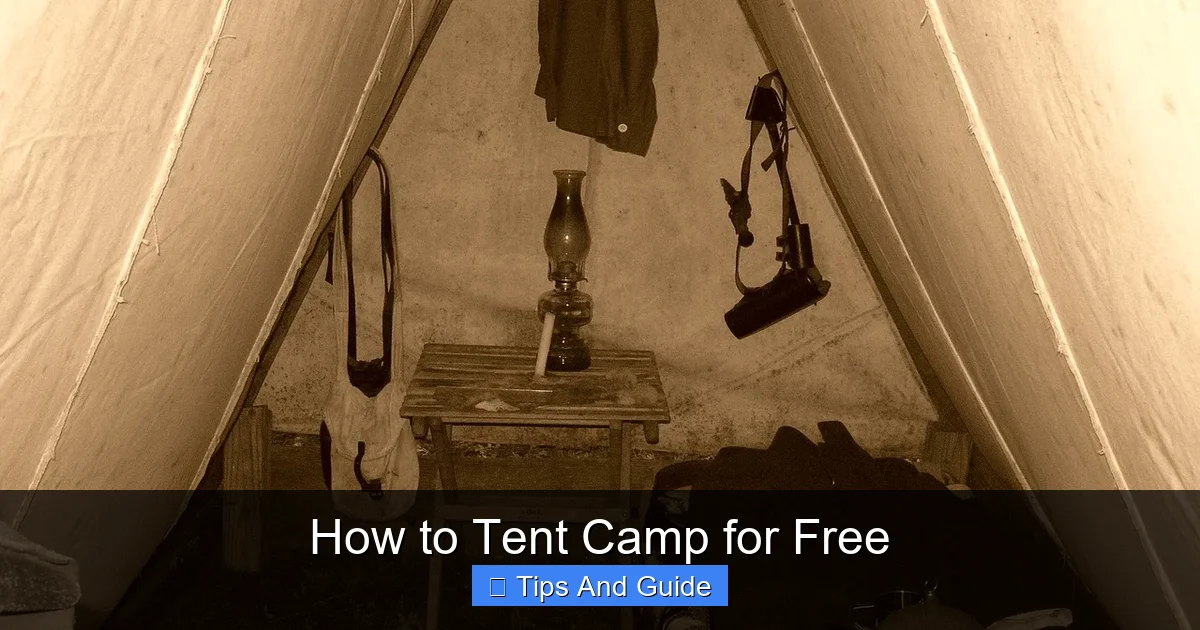
Embark on an adventure without spending a dime! This guide reveals the secrets to free tent camping, from locating hidden spots to packing efficiently. Learn how to enjoy the outdoors and the thrill of camping by following our practical, step-by-step advice for a truly budget-friendly experience.
# How to Tent Camp for Free
Dreaming of sleeping under the stars, surrounded by nature, without the cost of a campsite reservation? Tent camping for free is an achievable and incredibly rewarding way to experience the great outdoors. It’s about embracing simplicity, being resourceful, and connecting with nature on a deeper level. This guide will walk you through everything you need to know to plan and execute a successful free tent camping trip. You’ll learn how to find legal places to camp for free, what essential gear to pack, and how to stay safe and comfortable while respecting the environment.
## Understanding Free Camping
Before we dive into the “how-to,” it’s crucial to understand what “free camping” generally entails. It’s not about pitching your tent anywhere you please. Free camping usually refers to camping on public lands where overnight stays are permitted without a fee. This often falls into categories like dispersed camping, boondocking (more common for RVs but applicable to tent camping), or designated primitive camping areas.
### Legal vs. Illegal Camping
* Legal Free Camping: This is camping on lands managed by agencies like the U.S. Forest Service, Bureau of Land Management (BLM), or in state forests where dispersed camping is allowed. These areas typically have no facilities like toilets, picnic tables, or fire rings. You must follow Leave No Trace principles strictly.
* Illegal Camping: This includes camping on private property without permission, in city parks overnight, or in areas explicitly marked as “no camping.” This can lead to fines and a negative reputation for free campers.
## Step 1: Finding Your Free Campsite
This is arguably the most exciting and critical part of free tent camping. The key is research and knowing where to look.
### Utilizing Public Lands
The United States, in particular, has vast tracts of public land managed by federal agencies. These are your prime hunting grounds for free camping.
* U.S. Forest Service (USFS) Lands: Many National Forests allow dispersed camping. You can usually camp anywhere off designated roads as long as you are a certain distance (often 100-200 feet) from water sources and established trails. Check the specific USFS district website for regulations.
* Bureau of Land Management (BLM) Lands: Similar to the Forest Service, BLM lands often permit dispersed camping. These areas can be more rugged and remote. Again, local BLM field office websites are your best resource.
* State Forests and Parks: Some states allow dispersed camping in their state forests. It’s less common in state parks, but some may have primitive or walk-in sites that are free or very low cost.
### Online Resources and Apps
Several tools can help you pinpoint free camping opportunities:
* FreeCampsites.net: A popular crowdsourced website listing free camping spots, including dispersed camping, boondocking, and primitive sites. User reviews are invaluable for understanding conditions.
* iOverlander: An app and website used by overlanders and backpackers, it features a wealth of user-submitted locations, including free camping, water sources, and points of interest.
* Campendium: Another excellent resource that categorizes campsites by price, including free options. It has robust filtering and user reviews.
* AllTrails / Gaia GPS: While primarily for navigation, these apps often show forest service roads and potential areas for dispersed camping if you zoom in and cross-reference with land management maps.
### Local Knowledge and In-Person Scouting
Sometimes, the best information comes from local sources.
* Ranger Stations: Visit or call the local ranger station for the area you plan to visit. Rangers are the best source for up-to-date information on permitted camping areas, road conditions, and any closures.
* Local Outdoor Stores: Staff at local outdoor gear shops can sometimes offer informal advice on good camping spots.
* Scouting: If you have the time, drive around potential areas before your trip. Look for existing fire rings or signs of previous campers to find established dispersed sites.
### Important Considerations When Choosing a Site
* Proximity to Water: While you can’t camp right next to water sources, being reasonably close makes carrying water easier. However, never camp within 200 feet of a lake, river, or stream to protect the watershed.
* Level Ground: Find a flat spot for your tent. It makes sleeping much more comfortable.
* Shelter and Shade: Consider natural windbreaks (trees, rock formations) and shade from the sun.
* Accessibility: Ensure you can reach the spot with your vehicle (if applicable) and that it’s not too far to carry your gear.
* Leave No Trace: Choose a spot that shows minimal impact. Avoid setting up camp in meadows or sensitive vegetation. Aim for durable surfaces like dirt or gravel.
## Step 2: Packing for Free Camping Success
When camping for free, amenities are usually non-existent. This means you need to be self-sufficient and pack everything you’ll need.
### The Essentials: Shelter, Sleep, and Safety
* Tent: A reliable tent is your home. Make sure it’s waterproof and appropriately sized. For solo or two-person trips, a lightweight backpacking tent is ideal. Consider something like a pop-up tent for sports if you’re looking for quick setup and portability in a compact size.
* Sleeping Bag: Choose a bag rated for the expected temperatures.
* Sleeping Pad/Mattress: Crucial for comfort and insulation from the cold ground. Options range from simple foam pads to inflatable air mattresses. A comfortable setup is key, and exploring the best camping mattress for tent or a best camping mat for tent can make a big difference. For ultimate comfort, you might even consider a best camp bed for tent.
* First-Aid Kit: A comprehensive kit is non-negotiable.
* Navigation: Map, compass, and/or GPS device. Don’t rely solely on your phone.
* Headlamp/Lantern: Essential for navigating in the dark. Pack extra batteries. Good camping lights for tent are a must-have.
### Food and Water
* Water Bottles/Reservoir: Carry enough water or have a plan to purify water from a natural source.
* Water Filter/Purification Tablets: Essential if you plan to use natural water sources.
* Food: Non-perishable, easy-to-prepare meals. Think dehydrated meals, canned goods, pasta, rice, jerky, nuts, and dried fruit.
* Cookware: A small camp stove, fuel, pot, and utensils.
* Bear Canister/Bag: If camping in bear country, proper food storage is vital.
### Clothing and Personal Items
* Layers: Pack moisture-wicking base layers, insulating mid-layers, and a waterproof/windproof outer shell.
* Extra Socks: Dry feet are happy feet.
* Appropriate Footwear: Sturdy hiking boots or shoes.
* Sun Protection: Hat, sunglasses, sunscreen.
* Insect Repellent: Depending on the season and location.
* Toiletries: Biodegradable soap, toothbrush, toothpaste, toilet paper.
### Tools and Miscellaneous
* Multi-tool or Knife: Always handy.
* Duct Tape and Cordage: For repairs.
* Trash Bags: Pack it in, pack it out – absolutely everything.
* Shovel: For digging a cathole for human waste.
* Fire Starter: Waterproof matches, lighter, ferro rod. (Check fire restrictions!)
## Step 3: Setting Up Camp
Once you’ve found your spot and arrived, setting up camp is straightforward but requires attention to detail.
### Choose Your Tent Site
* Durability: Select a spot on a durable surface like bare earth, gravel, or dry grass. Avoid setting up on vegetation or in areas that look like they could erode easily.
* Level Ground: As mentioned, a level spot is crucial for comfort.
* Drainage: Avoid low-lying areas that might collect water if it rains.
* Wind Protection: Position your tent to take advantage of natural windbreaks.
### Pitching Your Tent
* Clear the Area: Remove any sharp rocks, sticks, or debris from where the tent will go.
* Lay Out the Footprint: If you have one, place it down first. This protects the tent floor.
* Assemble Tent Poles: Follow your tent’s instructions.
* Drape Tent Over Poles: Connect the tent to the poles.
* Stake It Down: Secure the tent with stakes. Angle stakes away from the tent for maximum holding power. Use guylines for added stability, especially in windy conditions. If you’re concerned about your tent’s wind resistance, research pop-up tent for wind options.
### Organizing Your Camp
* Designated Areas: Set up distinct areas for sleeping, cooking, and storing gear.
* Food Storage: Keep all food, scented items, and trash secured away from your tent, ideally in a bear canister or hung from a tree (if permitted and safe).
## Step 4: Living Sustainably: Leave No Trace
This is the cornerstone of free tent camping. If we want to continue enjoying these wild spaces for free, we must be responsible stewards.
### The Seven Principles of Leave No Trace
1. Plan Ahead and Prepare: Know the regulations, weather, and area.
2. Travel and Camp on Durable Surfaces: Stick to established trails and campsites.
3. Dispose of Waste Properly: Pack out everything, including food scraps and toilet paper. Dig catholes 6-8 inches deep and at least 200 feet from water, camp, and trails for human waste.
4. Leave What You Find: Do not disturb plants, rocks, or historical artifacts.
5. Minimize Campfire Impacts: Use a stove for cooking. If you must have a fire, use existing fire rings, keep it small, and ensure it is completely out. Check for fire bans.
6. Respect Wildlife: Observe animals from a distance. Never feed them.
7. Be Considerate of Other Visitors: Keep noise levels down and be mindful of others’ experiences.
### Managing Waste
* Pack It In, Pack It Out: This cannot be stressed enough. Bring sturdy trash bags and pack out every single piece of trash, including food scraps, wrappers, and hygiene products.
* Human Waste: Use designated outhouses if available. If not, dig a cathole 6-8 inches deep and at least 200 feet from water, camp, and trails. Pack out toilet paper. Wag bags are an excellent option for packing out all waste.
### Water and Sanitation
* Water Sources: Always treat water from natural sources using a filter, purifier, or by boiling.
* Washing: Use biodegradable soap sparingly and 200 feet away from any water source. Wash yourself and your dishes away from water.
## Step 5: Safety and Emergency Preparedness
Camping for free often means being further from help. Your safety is your responsibility.
### Staying Aware of Your Surroundings
* Wildlife: Be aware of the local fauna. Store food properly to avoid attracting animals. Make noise while hiking to avoid surprising them.
* Weather: Check the forecast before you go and be prepared for sudden changes. Have a plan for severe weather.
* Navigation: Always know where you are and how to get back. Don’t rely solely on a smartphone, as service can be spotty and batteries die.
### Emergency Contacts and Communication
* Inform Someone: Let a trusted friend or family member know your exact location, when you plan to leave, and when you expect to return.
* Emergency Devices: Consider a satellite messenger or personal locator beacon (PLB) for areas with no cell service.
### First Aid Skills
* Know Your Kit: Familiarize yourself with the contents of your first-aid kit and basic first-aid procedures. Consider taking a wilderness first-aid course.
## Troubleshooting Common Free Camping Challenges
* No Designated Spots: If you can’t find a specific dispersed camping area, look for established forest service roads that pass through large tracts of public land. Look for signs of previous camping (fire rings, flattened ground) but avoid creating new impact.
* Unexpected Rain: Ensure your tent is properly seam-sealed and your rainfly is taut. Camp on higher ground to avoid pooling water. Have dry clothes ready.
* Bugs: Use insect repellent, wear long sleeves and pants, and consider a head net if insects are particularly bad. Proper tent ventilation can also help.
* Cold Nights: Layer your sleeping clothes, use a sleeping pad with a good R-value, and ensure your sleeping bag is warm enough. A small, safe camp tent heater can be considered, but always prioritize ventilation and fire safety.
* Finding Firewood: In many areas, gathering firewood is permitted. Look for dead and down wood. Never cut live trees. Check fire regulations before starting a fire.
## Conclusion
Tent camping for free is an incredible way to connect with nature, challenge yourself, and experience the freedom of the open road and wilderness without the financial burden. It requires planning, resourcefulness, and a deep respect for the environment. By understanding how to find legal camping spots, packing smartly, and adhering to Leave No Trace principles, you can unlock a world of free adventure. So, do your research, pack your bag, and get ready to explore the beauty of the outdoors, one free campsite at a time!
Key Takeaways
- Discover Free Camping Locations: Explore various methods for finding designated free camping areas, dispersed camping zones, and other public lands open for overnight stays.
- Master Essential Gear: Learn what basic, lightweight, and affordable gear you need for a comfortable and safe free camping trip, focusing on essentials.
- Pack Smart and Light: Understand how to pack only what you need to minimize weight and bulk, making your free camping experience more enjoyable and accessible.
- Prioritize Safety and Ethics: Familiarize yourself with Leave No Trace principles and essential safety precautions to ensure a positive impact on the environment and your own well-being.
- Plan for Basic Needs: Get practical advice on managing food, water, sanitation, and shelter when camping for free, where amenities are often scarce.
- Embrace Flexibility and Resourcefulness: Develop a mindset that allows you to adapt to different situations and utilize natural resources responsibly when amenities are not available.
