
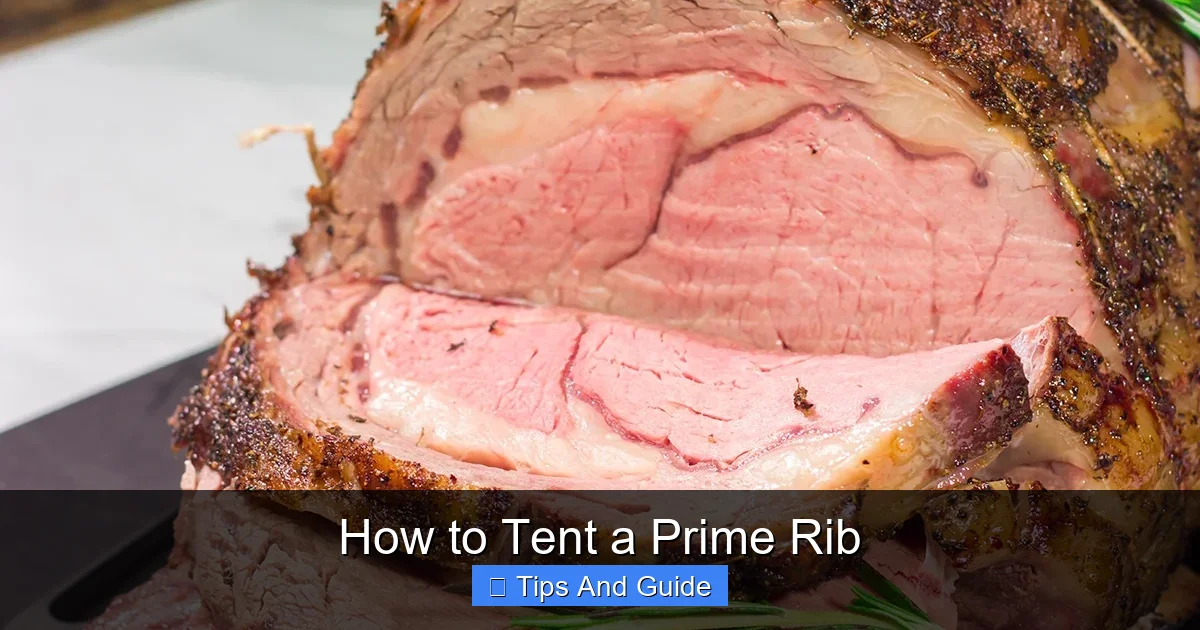
Learn how to tent a prime rib for a culinary triumph! This guide breaks down the simple yet effective technique of tenting prime rib with foil. Discover how this method ensures even cooking and locks in moisture, resulting in a tender, flavorful roast that will impress. We cover everything from prep to resting, ensuring your prime rib is cooked to perfection.
# How to Tent a Prime Rib
Prime rib is a showstopper. It’s a cut of beef that practically screams “special occasion.” But achieving that perfect, juicy, tender roast can feel a little intimidating. One of the simplest yet most effective techniques for ensuring prime rib perfection is “tenting” it with aluminum foil. You might have seen this done before, or perhaps you’re wondering what it is and why it’s so important. Well, wonder no more! In this comprehensive guide, we’re going to walk you through everything you need to know about how to tent a prime rib. We’ll cover why it’s beneficial, how to do it step-by-step, and share some expert tips to make your prime rib the star of any meal.
## Why Tent Your Prime Rib?
Before we dive into the “how,” let’s talk about the “why.” Tenting your prime rib with aluminum foil is a technique that offers several significant advantages:
* **Even Cooking:** Prime rib is a large, thick cut of meat. Without proper heat management, the outside can cook much faster than the inside, leading to a well-done exterior and a rare interior, or vice-versa. Tenting creates a more even cooking environment by reflecting some of the heat, allowing the roast to cook through more uniformly.
* **Moisture Retention:** The foil acts as a barrier, trapping steam and moisture released during cooking. This prevents the surface of the roast from drying out, resulting in a more succulent and tender final product.
* **Preventing Over-Browning:** While a nice crust is desirable, you don’t want the exterior to burn before the interior is cooked. Tenting helps to manage the intense heat, especially in the initial stages of cooking or if you’re using a higher temperature.
* **Flexibility in Cooking Time:** If your roast is taking a little longer than expected, tenting provides a forgiving method. It allows you to continue cooking without worrying as much about the surface becoming too dry or burnt.
## The Step-by-Step Guide to Tenting Prime Rib
Tenting a prime rib is a straightforward process. Follow these steps for a perfectly cooked roast:
## Step 1: Choose and Prepare Your Prime Rib
The success of your prime rib starts long before you even think about the oven.
### Selecting the Right Cut
* Look for a prime rib roast with good marbling (flecks of fat within the muscle). This fat will render during cooking, adding flavor and moisture.
* Choose a roast with a good cap of fat on one side, typically about 1/2 to 1 inch thick.
* Prime rib is often sold as a standing rib roast, meaning the ribs are still attached. This can help protect the meat during cooking. You can ask your butcher to “French” the ribs (trim off the meat between the ribs and wrap the exposed bones in foil) to make them look more appealing and prevent scorching.
### Bringing to Room Temperature
* This is a crucial step for even cooking. Take your prime rib out of the refrigerator at least 1 to 2 hours before you plan to cook it. For larger roasts, you might need up to 3 hours.
* Placing a cold roast into a hot oven is like giving it a shock. The outside will cook rapidly while the inside remains chilled, leading to uneven results. Allowing it to reach room temperature helps the heat penetrate more evenly.
### Patting Dry
* Once your roast is at room temperature, thoroughly pat it dry with paper towels.
* A dry surface is essential for developing a good sear and a flavorful crust. Moisture on the surface will steam the meat rather than allowing it to brown.
## Step 2: Season Generously
Now it’s time to add flavor.
### Simple Seasoning
* For a classic prime rib, a simple yet effective seasoning is salt and freshly ground black pepper. Be generous with both.
* You can also add other herbs and spices like garlic powder, onion powder, rosemary, or thyme. Some people like to rub their roast with a mixture of softened butter and seasonings.
### Rubbing it In
* Gently massage the seasonings into the meat, ensuring all surfaces are covered.
* If you’re using herbs, you can tuck sprigs of rosemary or thyme around the roast, or even under it.
## Step 3: The Searing (Optional but Recommended)
Many chefs swear by searing prime rib before roasting to develop a beautiful crust. If you choose to sear, here’s how:
### High Heat Sear
* Preheat your oven to a high temperature, typically 450-500°F (230-260°C).
* Place the seasoned roast, fat-side up, in a sturdy roasting pan.
* Sear for about 15-20 minutes, or until the exterior is nicely browned.
### Reduce Temperature and Prepare to Tent
* Once seared, reduce the oven temperature to your desired roasting temperature, usually around 325°F (160°C).
* Now, it’s time to tent.
## Step 4: Tent the Prime Rib
This is the main event!
### Preparing the Foil
* You’ll need a large sheet of heavy-duty aluminum foil. If you don’t have heavy-duty, you can use two layers of regular foil.
* The foil should be large enough to completely cover the prime rib, creating a tent that allows air to circulate.
### Creating the Tent
* Gently place the foil over the roast. The goal is to create a loose tent, not to wrap it tightly like a package.
* You want to leave space between the foil and the meat so that air can circulate and steam can escape.
* If you seared your roast, you’ll tent it now before reducing the oven temperature. If you’re not searing, you’ll likely tent it earlier in the roasting process, as described in the next section.
## Step 5: Roast to Perfection
Now, let the oven do its magic.
### Roasting with Tenting
* **Method 1: Sear then Tent:** If you seared your roast at high heat, after searing, reduce the oven to 325°F (160°C). Then, tent the roast loosely with foil. Continue roasting until the internal temperature reaches your desired doneness.
* **Method 2: Low and Slow with Tenting:** For a more gradual approach, you can start at a lower temperature (around 300-325°F or 150-160°C) from the beginning. Season your roast, place it in the pan, and tent it loosely with foil before putting it in the oven. You might remove the foil for the last 30-60 minutes of cooking to allow the exterior to brown, depending on your preference.
### Using a Meat Thermometer
* This is non-negotiable for prime rib success. Invest in a good instant-read meat thermometer.
* Insert the thermometer into the thickest part of the roast, avoiding any bones or large pockets of fat.
* Here are general temperature guidelines (remember the temperature will rise a few degrees as it rests):
* Rare: 120-125°F (49-52°C)
* Medium-Rare: 130-135°F (54-57°C) – *Most recommended for prime rib*
* Medium: 135-140°F (57-60°C)
* Medium-Well: 140-145°F (60-63°C)
* Start checking the temperature about two-thirds of the way through the estimated cooking time. Cooking times will vary greatly depending on the size of your roast and your oven. A general guideline is about 12-15 minutes per pound for a 325°F oven, but always rely on your thermometer.
## Step 6: Rest the Prime Rib
This is arguably as important as the cooking itself!
### Why Resting Matters
* When meat cooks, the muscle fibers contract, pushing juices toward the center. If you cut into it immediately, all those delicious juices will run out onto the cutting board, leaving you with dry meat.
* Resting allows the muscle fibers to relax and redistribute the juices back throughout the roast.
### How to Rest
* Once your prime rib reaches the desired internal temperature, remove it from the oven.
* Transfer the roast to a clean cutting board.
* Tent it loosely with a fresh piece of aluminum foil. This will help keep it warm while it rests.
* Let it rest for at least 20-30 minutes for a standard roast. For very large roasts, you might need up to 45 minutes. Don’t skip this step!
## Step 7: Carve and Serve
The moment of truth!
### Carving
* Use a sharp carving knife.
* If your roast has ribs attached, start by slicing between the ribs and the meat.
* Then, slice the roast against the grain into your desired thickness.
### Serving
* Serve your perfectly tented prime rib immediately.
* It’s often served with au jus (the pan drippings), horseradish sauce, or a red wine reduction.
## Practical Tips for Tenting Prime Rib
* **Use Heavy-Duty Foil:** It’s more durable and less likely to tear than regular foil, preventing leaks.
* **Don’t Seal it Tightly:** Remember, it’s a tent. Airflow is important. If you seal it too tightly, you’ll essentially be steaming the roast, which can result in a less desirable texture and less browning.
* **Adjust Foil Placement:** If you notice one side of the roast is browning too quickly, you can adjust the foil to cover that area more.
* **Consider a Roasting Pan with a Rack:** Elevating the roast on a rack allows air to circulate underneath, promoting even cooking.
* **Know Your Oven:** Ovens can vary in temperature. If you know your oven runs hot or cold, adjust accordingly. Using an oven thermometer can be helpful.
## Troubleshooting Common Prime Rib Issues
* **My prime rib is dry:**
* Did you let it come to room temperature?
* Did you tent it properly?
* Did you overcook it? Always use a thermometer and pull it out at the correct temperature.
* Did you let it rest? This is critical.
* **My prime rib didn’t brown well:**
* If you didn’t sear it, you might need to remove the foil for the last 30-60 minutes of cooking to allow browning.
* Ensure your oven is at the correct temperature.
* Make sure the roast isn’t too wet before you put it in the oven.
* **My prime rib is cooked unevenly:**
* This is often due to not letting the roast come to room temperature or not tenting it effectively to manage heat.
* Ensure the roast is centered in the oven for even heat distribution.
## Conclusion
Tenting a prime rib is a simple yet incredibly effective technique that can elevate your roast from good to absolutely spectacular. By understanding why and how to tent, you ensure your prime rib cooks evenly, stays incredibly moist, and develops a beautiful, flavorful exterior. So, the next time you’re planning a special meal that calls for this magnificent cut of beef, don’t hesitate to employ the art of the foil tent. It’s a small step that makes a world of difference, leading to a tender, juicy, and unforgettable prime rib that will have your guests singing your praises. Happy cooking!
Key Takeaways
- Proper Preparation is Key: Allowing your prime rib to come to room temperature and patting it dry are crucial first steps before tenting.
- Achieve Even Cooking: Tenting with foil creates a controlled environment, promoting gentle, even heat distribution around the roast.
- Lock in Moisture and Juices: The foil acts as a barrier, preventing the exterior from drying out and keeping the internal juices contained.
- Monitor Internal Temperature: Use a meat thermometer to track the roast’s temperature and achieve your desired level of doneness.
- Resting is Essential: Allowing the prime rib to rest after cooking is vital for redistributing its juices, ensuring maximum tenderness and flavor.
- Adaptability for Different Sizes: The tenting method can be adjusted for various sizes of prime rib roasts.
