
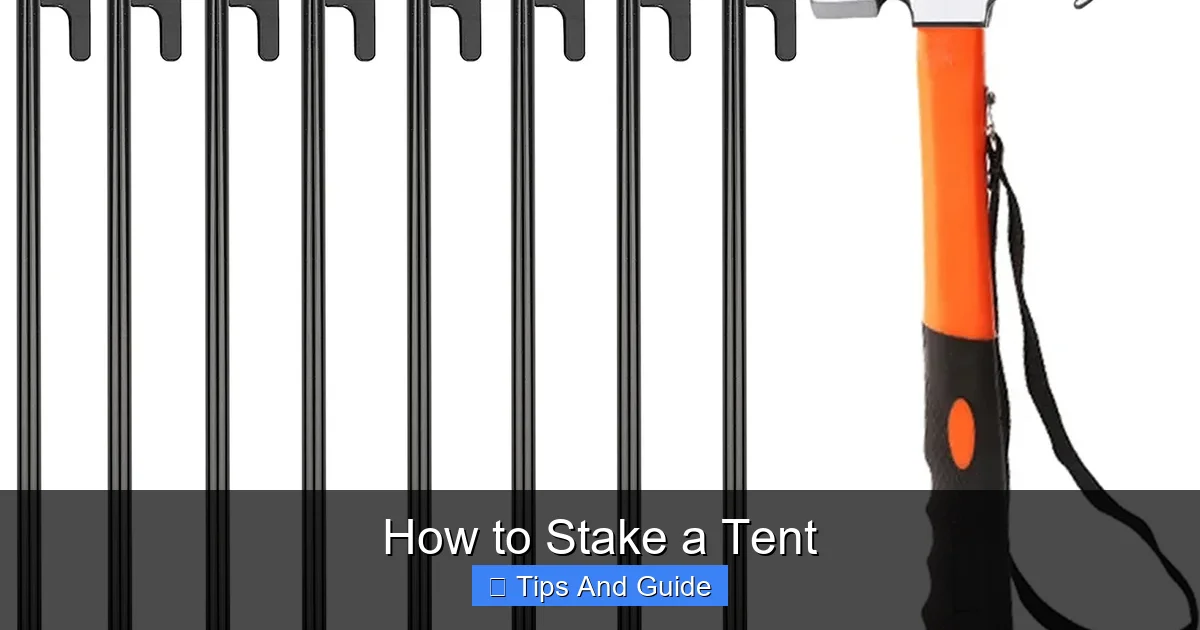
Properly staking your tent is crucial for a secure and comfortable outdoor experience. This guide covers everything you need to know, from choosing the right stakes to advanced techniques for various terrains. Follow these steps to ensure your tent stays put in wind and rain, protecting you and your gear.
# How to Stake a Tent
Camping is an incredible way to connect with nature. Whether you’re embarking on a weekend getaway or a long backpacking trip, your tent is your home away from home. But what happens when the wind picks up, or a sudden downpour hits? A poorly staked tent can quickly become a frustrating, or even dangerous, situation. That’s where learning how to properly stake your tent comes in.
This comprehensive guide will walk you through everything you need to know to ensure your tent is securely anchored, no matter the conditions. We’ll cover the basics of tent stakes, essential techniques, how to adapt to different terrains, and even some troubleshooting tips. By the end of this guide, you’ll be a tent-staking pro, ready to enjoy your outdoor adventures with confidence.
## Why Proper Tent Staking Matters
Before we dive into the “how,” let’s quickly touch on the “why.” Proper tent staking is more than just an aesthetic choice; it’s fundamental for a safe and comfortable camping experience.
* **Wind Resistance:** A securely staked tent will withstand wind gusts much better than one that’s loosely anchored. This prevents your tent from collapsing, blowing away, or damaging your gear inside.
* **Water Management:** When staked correctly, your tent’s flysheet will be taut and shed water effectively. This helps prevent puddles from forming and water from seeping into the tent.
* **Structural Integrity:** Staking keeps your tent’s poles in place and maintains its shape, ensuring the fabric isn’t flapping excessively and that ventilation remains optimal.
* **Comfort and Peace of Mind:** Knowing your shelter is secure allows you to relax and enjoy your trip without worrying about the elements.
## Understanding Tent Stakes
Tent stakes are your primary tools for anchoring your shelter. They come in various shapes, sizes, and materials, each designed for specific purposes and ground types.
### Common Types of Tent Stakes
* **J-Hooks/Shepherd’s Hooks:** These are common with older or simpler tents. They’re easy to insert but offer minimal holding power in soft ground. They are best for dry, calm conditions on well-maintained campsites.
* **Nails/Rebar Stakes:** These are robust, heavy-duty stakes often used for larger tents, canopies, or in very firm ground. They offer excellent holding power but can be difficult to drive into hard or rocky soil and can damage tent fabric if not used carefully.
* **Y-Beam Stakes:** These have a triangular or Y-shaped cross-section. They offer a good balance of strength and weight, providing decent holding power in a variety of soil types. They are a popular choice for many backpackers and campers.
* **T-Stake/Groundhog Stakes:** These are shaped like a T and are designed to be hammered or pushed into the ground. They have a wider surface area, offering good grip in softer soils.
* **Screw-In Stakes:** These stakes resemble large screws and are excellent for soft ground like sand or snow. They offer superior holding power by screwing directly into the earth.
* **Sand/Snow Anchors:** These are typically wide, flat plates or bags that can be filled with sand or snow. They distribute the load over a large area, preventing them from pulling out in loose conditions.
### Materials
* **Aluminum:** Lightweight and durable, a common choice for Y-beam and some nail stakes.
* **Steel:** Strong and sturdy, often used for heavier-duty stakes like rebar or some nail stakes. Heavier than aluminum.
* **Titanium:** Extremely strong, lightweight, and corrosion-resistant. Often the premium choice for backpackers, but more expensive.
* **Plastic:** Lightweight and inexpensive, but generally less durable and may break in hard ground or extreme weather. Best for casual camping in good conditions.
## Essential Tent Staking Techniques
The way you insert and orient your stakes significantly impacts their holding power.
### The 45-Degree Rule
This is the golden rule of tent staking.
* **How to do it:** When driving your stakes into the ground, angle them at approximately 45 degrees away from the point where the guy line or tent loop attaches.
* **Why it works:** This angle creates a more horizontal pull on the stake, allowing the surrounding soil to resist it more effectively. If you drive stakes straight down, they are much more likely to pull out under tension.
### Using Guy Lines Correctly
Guy lines are the extra cords that attach to your tent or flysheet and extend to anchor points. They are essential for stability, especially in windy conditions.
* **Attachment Points:** Most tents have pre-attached loops or webbing for guy lines. If yours doesn’t, you can often create them using the tent’s fabric or add them yourself.
* **Tensioning:** Guy lines should be taut but not so tight that they distort the shape of your tent. Use the tension adjusters on the lines (often a small plastic buckle or a knot you can tie) to achieve the right tension.
* **Anchoring Guy Lines:** Stake out your guy lines away from the tent, ensuring they have a clear path to the ground. Again, remember the 45-degree rule. If you’re camping on a surface where stakes won’t hold well, you might need to use rocks or other heavy objects to anchor your guy lines.
## Step-by-Step Guide to Staking Your Tent
Let’s break down the process into manageable steps.
### Step 1: Choose Your Location Wisely
Before you even unpack your stakes, pick a good spot.
* **Level Ground:** A flat surface is essential for comfortable sleeping and prevents water from pooling.
* **Protection from Elements:** Consider natural windbreaks like trees or hills, but avoid setting up directly under dead branches or in potential flood zones.
* **Drainage:** Look for slightly elevated ground to ensure rainwater drains away from your tent.
### Step 2: Lay Out Your Tent and Identify Anchor Points
* **Unpack and Orient:** Lay your tent flat on the chosen spot. Identify the main corners and any additional guy line attachment points on the flysheet.
* **Pole Placement:** Assemble and insert your tent poles according to the manufacturer’s instructions. This will give your tent its basic structure.
### Step 3: Stake Down the Tent Corners
This is your first line of defense against movement.
* **Initial Stake:** Start by staking the four main corners of your tent. Insert a stake through the grommet or loop at each corner.
* **Apply the 45-Degree Rule:** Drive each stake into the ground at a 45-degree angle, pointing away from the tent. Use a rubber mallet, a rock, or the heel of your boot to push them in firmly. Ensure the stake is fully embedded in the ground.
* **Check Tension:** Gently pull on each corner to ensure the stakes are holding securely. The fabric should be taut.
### Step 4: Deploy and Stake Guy Lines
This is crucial for stability, especially in windy conditions.
* **Locate Guy Line Points:** Find the loops or tabs on your tent and flysheet designated for guy lines.
* **Attach Guy Lines:** Attach the guy lines to these points.
* **Extend and Stake:** Extend each guy line away from the tent, aiming to create a taut, angled line that provides tension to the tent fabric.
* **Angle Your Stakes:** As with the corner stakes, drive your guy line stakes at a 45-degree angle away from the tent for maximum holding power.
* **Adjust Tension:** Once all guy lines are staked, go around and adjust the tension. You want the tent fabric to be smooth and wrinkle-free, but not so tight that it’s distorting the tent’s structure. If you have a good sleeping pad like a quality camping mat, you’ll appreciate a stable tent floor.
### Step 5: Stake Down the Rainfly (If Applicable)
Many tents have a separate rainfly that needs to be staked out to create a waterproof barrier and provide ventilation.
* **Position the Fly:** Drape the rainfly over your tent, aligning it with the doors and poles.
* **Secure Attachment Points:** Most rainflies have loops or buckles that attach to the tent poles or the tent body. Secure these first.
* **Stake Out the Edges:** The rainfly will often have additional loops along its hem or at corners. Stake these out firmly, using the 45-degree rule, to keep the fly taut and away from the inner tent. This is critical for preventing condensation and rain from getting inside.
### Step 6: Final Inspection and Adjustments
* **Walk Around:** Do a complete circuit of your tent.
* **Check for Slack:** Look for any loose fabric or guy lines. Re-stake or adjust tension as needed.
* **Test Stability:** Gently push on the tent walls. It should feel solid and not sway excessively.
* **Clear Obstructions:** Ensure no rocks or debris are pressing against the tent fabric from the outside.
## Adapting to Different Terrains
Not all campsites are created equal. Here’s how to handle different ground conditions:
### Sandy or Loose Soil
Sand offers little resistance, so standard stakes can easily pull out.
* **Use Wider Stakes:** Y-beam or T-stakes can offer more surface area than thin pegs.
* **Screw-In Stakes:** These are ideal for sand, as they “bite” into the loose material.
* **Sand Anchors:** If you have them, fill sandbags or use specialized sand anchors.
* **Improvise:** Use large rocks or heavy logs as anchors for your guy lines if stakes won’t hold. Burying stakes in sand can also increase their holding power.
### Rocky Ground
Driving stakes into rocky ground can be challenging.
* **Find Gaps:** Look for natural cracks or softer patches of earth between rocks.
* **Use Rocks as Anchors:** If you can’t drive stakes, use heavy rocks to secure your guy lines and tent corners. Tie the guy lines directly to the rocks or loop them around sturdy boulders.
* **Specialized Rock Stakes:** Some mountaineering stakes are designed for use in rock crevices.
* **Carry a Small Trowel:** This can help you dig small pits in softer patches of soil.
### Hard-Packed Ground or Clay
This can be difficult to drive stakes into.
* **Mallet or Rock:** A rubber mallet or a substantial rock is essential.
* **Pre-Drill (Carefully):** If the ground is extremely hard, you might use a trekking pole tip or another stake to carefully create a pilot hole before inserting your main stake.
* **Hammering:** Drive stakes straight down if angled insertion is impossible, but ensure they are fully seated.
* **Consider Alternative Anchors:** If stakes are proving impossible, be prepared to use heavy objects.
### Snow
Winter camping presents unique staking challenges.
* **Snow Anchors:** Use specialized snow stakes (which are wider and flatter) or create your own by digging trenches and burying stakes horizontally.
* **Trenching:** Dig a trench in the snow, lay your guy line in it, and then cover it with snow, packing it down firmly.
* **Bags:** Fill stuff sacks or stuff them with snow and bury them horizontally to act as anchors.
* **Trees:** If trees are available, use them to anchor your guy lines.
### Hard Surfaces (Wooden Platforms, Gravel)
Some campsites have pre-built platforms or are covered in gravel.
* **Drill Holes:** If you have permission and the equipment, you might be able to drill holes in wooden platforms.
* **Gravel Bags:** Some dedicated camping systems include weighted bags for gravel.
* **Tie-Down Straps:** Use heavy-duty tie-down straps around structural elements if available.
* **Heavy Weights:** Large rocks or sandbags are your best bet if no other anchoring method is possible.
* **Consider a Groundsheet/Footprint:** This can add a layer of protection if you need to stake into rough surfaces.
## Troubleshooting Common Staking Issues
Even with the best intentions, problems can arise.
### Stakes Pulling Out
* **Re-stake at an Angle:** Ensure you are using the 45-degree rule.
* **Deeper Insertion:** Drive stakes further into the ground.
* **Add Weight:** Use rocks or logs to secure guy lines.
* **Change Stake Type:** If possible, switch to a stake better suited for the terrain.
### Difficult Ground to Stake In
* **Use a Mallet or Rock:** For hard ground.
* **Improvise Anchors:** For very soft or rocky ground.
* **Digging:** Use a trowel or sturdy stick to loosen soil.
### Guy Lines Too Loose or Too Tight
* **Adjust Tensioners:** Most guy lines have adjusters.
* **Re-tie Knots:** If using knots, adjust their position.
* **Shorten/Lengthen Lines:** If necessary, you may need to adjust the length of your guy lines.
## Advanced Tips for Ultimate Security
* **Extra Stakes:** Always carry a few extra stakes, especially if you’re venturing into varied terrain or expecting challenging weather. It’s better to have them and not need them.
* **Cordage:** Bring extra cordage (like paracord) for improvising guy lines or creating anchor points.
* **Duct Tape:** A roll of duct tape can be surprisingly useful for temporary repairs or reinforcing anchor points.
* **Check Your Tent Manual:** Your tent’s manufacturer may have specific recommendations for setup and staking.
* **Consider the Wind Direction:** If you know the prevailing wind direction, orient your tent so the most sheltered side faces the wind. Stake out the windward side more securely.
## Conclusion
Mastering the art of tent staking is a fundamental camping skill that will significantly enhance your comfort and safety in the outdoors. By understanding the purpose of your stakes, choosing the right tools for the job, and applying basic techniques like the 45-degree rule, you can ensure your tent remains a secure sanctuary against the elements.
Remember to adapt your approach to the terrain you encounter, from sandy beaches to rocky mountainsides. With a little practice and attention to detail, you’ll gain the confidence to set up your tent in any condition, allowing you to fully relax and enjoy your adventures. So, next time you head out, take a moment to stake your tent properly – it’s the foundation for a great camping trip.
Key Takeaways
- Understand the Importance of Staking: Well-staked tents resist wind, rain, and shifting, ensuring safety and comfort.
- Choose the Right Stakes: Different stake types are suited for various ground conditions, from soft soil to rocky terrain.
- Master Basic Staking Techniques: Angle stakes at 45 degrees away from the tent for maximum holding power.
- Utilize Guy Lines Effectively: Guy lines provide extra stability, especially in windy conditions, and should be tensioned correctly.
- Adapt to Different Terrains: Learn how to stake in sand, snow, rocky ground, and hard surfaces.
- Troubleshoot Common Issues: Address problems like loose stakes or difficult ground to maintain a secure setup.
