
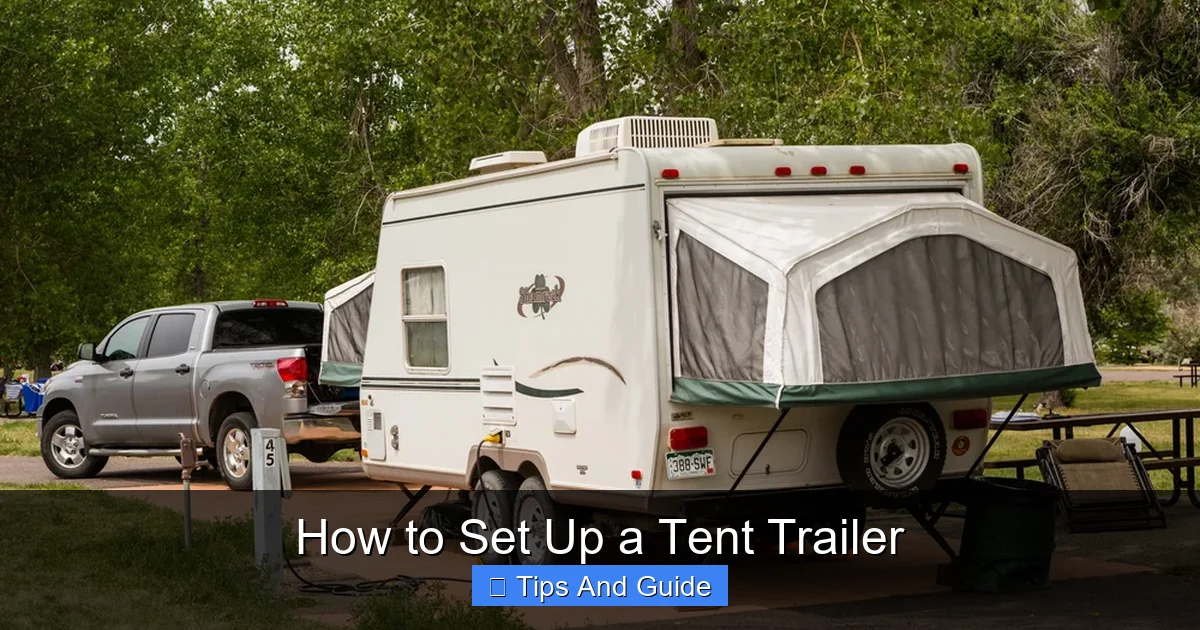
Setting up a tent trailer is straightforward with the right steps. This guide walks you through finding the perfect campsite, leveling your trailer, deploying the tent sections, and securing everything for a comfortable stay. Follow these easy instructions to quickly enjoy your camping adventure.
## How to Set Up a Tent Trailer
Welcome to the wonderful world of tent trailers! These versatile campers offer the adventure of tent camping with the convenience of a solid base. If you’ve just bought your first tent trailer or are looking to refine your setup process, you’re in the right place. This guide will take you step-by-step through everything you need to know to set up your tent trailer quickly and efficiently, so you can spend more time enjoying the great outdoors. We’ll cover choosing your spot, leveling, unfolding the canvas, and securing your new home away from home. Let’s get started!
### Step 1: Arriving at Your Campsite and Choosing a Spot
The first step to a successful tent trailer setup is selecting the right location within your campsite. This might seem obvious, but a good spot makes a world of difference.
#### Finding the Ideal Location
* Level Ground is Key: Look for the flattest area available. An unlevel trailer can be uncomfortable, and it can put undue stress on the trailer’s frame and canvas.
* Consider Drainage: Avoid low-lying areas that could flood if it rains. You don’t want your sleeping area to become a temporary swimming pool!
* Check for Overhead Hazards: Look up for dead branches or trees that could fall. Safety first!
* Proximity to Amenities: Think about how close you want to be to restrooms, water sources, or fire pits.
* Privacy and Views: Consider your preferences for solitude or scenic vistas.
* Sun and Shade: In hot weather, a spot with afternoon shade is a lifesaver. In cooler weather, morning sun can be welcome.
#### Positioning Your Trailer
Once you’ve identified a suitable area, carefully back your tent trailer into the chosen spot. Take your time and use a spotter if you’re not comfortable backing up. Aim to have the trailer’s door facing the direction you’ll most likely enter and exit the campsite.
### Step 2: Leveling Your Tent Trailer
Leveling is crucial for comfort, stability, and proper operation of your tent trailer. A wobbly trailer is not only annoying, but it can also cause issues with appliances and prevent canvas from sealing correctly.
#### Using the Tongue Jack
* Lower the Tongue Jack: Most tent trailers have a tongue jack at the front. Lower it until the trailer is close to level. You can use a small spirit level on the trailer frame to check.
* Adjusting Height: Crank the jack up or down to achieve a near-level position. Don’t worry about perfection at this stage; we’ll fine-tune it.
#### Stabilizing the Trailer
* Insert Wheel Chocks: Once the trailer is roughly level, place wheel chocks on both sides of the wheels. This prevents the trailer from rolling while you’re working.
* Extend Stabilizer Jacks: Most tent trailers have four stabilizer jacks at the corners. Lower these jacks until they make firm contact with the ground. These are for stabilizing, *not* for lifting the trailer. They prevent rocking when you walk inside.
* Fine-Tuning with the Tongue Jack: Now, use the tongue jack to make the trailer perfectly level from front to back. Use your spirit level on the floor inside or on the trailer frame.
* Final Check: Ensure all stabilizers are snug and the trailer doesn’t rock when you push on it.
### Step 3: Unfolding the Tent and Setting Up Sleeping Areas
This is where your tent trailer truly transforms into a cozy living space. The exact process varies by model, so always consult your owner’s manual. However, the general principles are the same.
#### Releasing the Latches and Lifting
* Open the Trailer: Most tent trailers flip open. You’ll typically need to release latches that secure the top to the base.
* Lift the Top: Carefully lift the top half of the trailer. Some have gas struts to help, while others might require a bit of muscle. If it feels very heavy, double-check that all latches are fully released.
* Unfold Tent Sections: As you lift the top, the canvas tent sections will begin to unfold. Gently guide them out.
#### Deploying Bed Platforms
* Slide Out Bed Platforms: Many tent trailers have beds that slide out from under the top section. Gently pull these platforms out until they lock into place. You might need to lift them slightly to engage the locking mechanism.
* Set Up Support Poles: Once the bed platforms are extended, you’ll often need to install support poles underneath them for stability. These poles usually have a telescoping design.
#### Preparing the Sleeping Areas
* Lay Out Bedding: Unroll your sleeping bags or place your mattress pads and blankets onto the extended bed platforms. It’s much easier to do this before the main tent canvas is fully set up.
### Step 4: Erecting the Tent Canvas and Living Space
With the sleeping areas ready, it’s time to set up the main tent structure.
#### Extending Support Poles and Raising the Tent
* Unfold and Connect Poles: Your tent canvas will have various poles that need to be unfolded and connected, often using elastic cords.
* Insert Poles into Sleeves/Clips: Guide these poles into the designated sleeves or attach them to clips along the tent fabric.
* Raise and Secure the Tent: As you insert the poles, the tent walls will begin to take shape. You’ll need to raise the roof section and secure it. This usually involves fitting poles into specific slots or brackets on the trailer’s frame.
* Tighten Tensioners: Many tent trailers have straps or tensioners to pull the canvas taut. Make sure these are snug to create a well-defined interior space and to help with water runoff. If you’ve recently purchased a new tent trailer, you might be interested in our guide on the best pop-up tent waterproof options to ensure you stay dry.
#### Setting Up the Awning (If Equipped)
* Roll Out the Awning: If your tent trailer has a retractable awning, carefully roll it out.
* Insert Support Arms: Most awnings have support arms that need to be extended and locked into place. Some may require stakes to secure them to the ground.
* Adjust Angle: Adjust the awning arms to your desired height and angle for shade.
### Step 5: Securing the Tent and Exterior
This is a critical step for wind resistance and keeping bugs out.
#### Staking Down the Tent
* Locate Stake Loops: Your tent canvas will have loops or grommets around the bottom edges.
* Drive Stakes: Use the provided stakes and a hammer or mallet to secure the tent to the ground. Drive the stakes at an angle away from the trailer for maximum holding power. Ensure the stakes are driven in deep enough.
* Tensioning Guys Lines: If your tent has guy lines, attach them to the tent and stake them out. These provide extra support and stability, especially in windy conditions. For those concerned about the elements, researching the best pop-up tent for wind can offer valuable insights into durable designs.
#### Closing Windows and Zippers
* Secure all Openings: Ensure all windows, vents, and doors are zipped up and latched. This is essential for keeping out insects and preventing drafts. If you have mesh screens, make sure they are intact.
### Step 6: Interior Setup and Final Checks
With the exterior structure in place, it’s time to make the inside comfortable and do a final check.
#### Interior Setup
* Unpack Essentials: Bring in your gear, food, and personal items.
* Set Up Kitchenette (If Applicable): If your trailer has a slide-out or built-in galley, set it up. Ensure propane tanks are connected safely if you have a stove or heater. For colder weather adventures, consider a best pop-up tent heater to stay warm.
* Connect Power (If Available): If you’re at a powered campsite, connect your shore power cord. Check your trailer’s electrical system.
#### Final Walk-Around
* Inspect Everything: Do a complete walk-around of your tent trailer.
* Check Stability: Gently push on the walls and roof to ensure everything is firm and secure.
* Confirm Level: Re-check that the trailer is still level.
* Look for Gaps: Ensure there are no obvious gaps where water or insects could enter.
* Test Zippers: Make sure all zippers operate smoothly.
### Troubleshooting Common Issues
Even with careful setup, you might encounter a few snags. Here are some common issues and how to address them:
* Tent Canvas Won’t Stay Taut: This could be due to uneven stakes, loose tensioners, or missing support poles. Re-adjust your stakes, tighten all straps, and ensure all poles are correctly installed.
* Trailer Rocks When You Walk: Your stabilizer jacks might not be firmly on the ground, or they may need to be extended further. Ensure they are making solid contact and providing good support.
* Water Pooling on Roof: The trailer might not be perfectly level, or the tent fabric isn’t properly tensioned. Re-level the trailer and re-tension the canvas.
* Struggling to Lift the Top: Check for any obstructions or remaining latches. If it’s a new trailer, the seals might be tight, requiring a bit more effort initially. Consult your manual or a dealer if concerned.
* Difficulty Extending Bed Platforms: Make sure the locking mechanism is disengaged before pulling. Sometimes a gentle wiggle can help. Ensure no canvas is caught underneath.
### Conclusion
Setting up a tent trailer is a rewarding process that opens the door to many camping adventures. By following these steps—from choosing the perfect spot and ensuring your trailer is level, to carefully unfolding the canvas and securing everything firmly—you’ll create a comfortable and safe haven for your outdoor excursions. Remember to always consult your specific tent trailer’s manual for model-specific instructions. With a little practice, you’ll be setting up your tent trailer like a pro in no time, ready to relax and enjoy the beauty of nature. Happy camping!
Key Takeaways
- Choose the Right Campsite: Select a flat, well-drained spot away from hazards like dead trees or flood-prone areas.
- Level Your Trailer: Use the tongue jack and wheel chocks to ensure your tent trailer is perfectly level for stability and proper function.
- Deploy Tent Sections: Carefully unfold and extend the sleeping areas and living spaces according to your trailer’s specific design.
- Secure All Components: Properly stake down the tent, secure support poles, and ensure all zippers and windows are closed or secured.
- Check Water Systems (If Applicable): If your trailer has a water system, ensure tanks are full and lines are properly connected and purged.
- Final Inspection: Do a walk-around to confirm everything is secure, stable, and ready for your enjoyment.
