
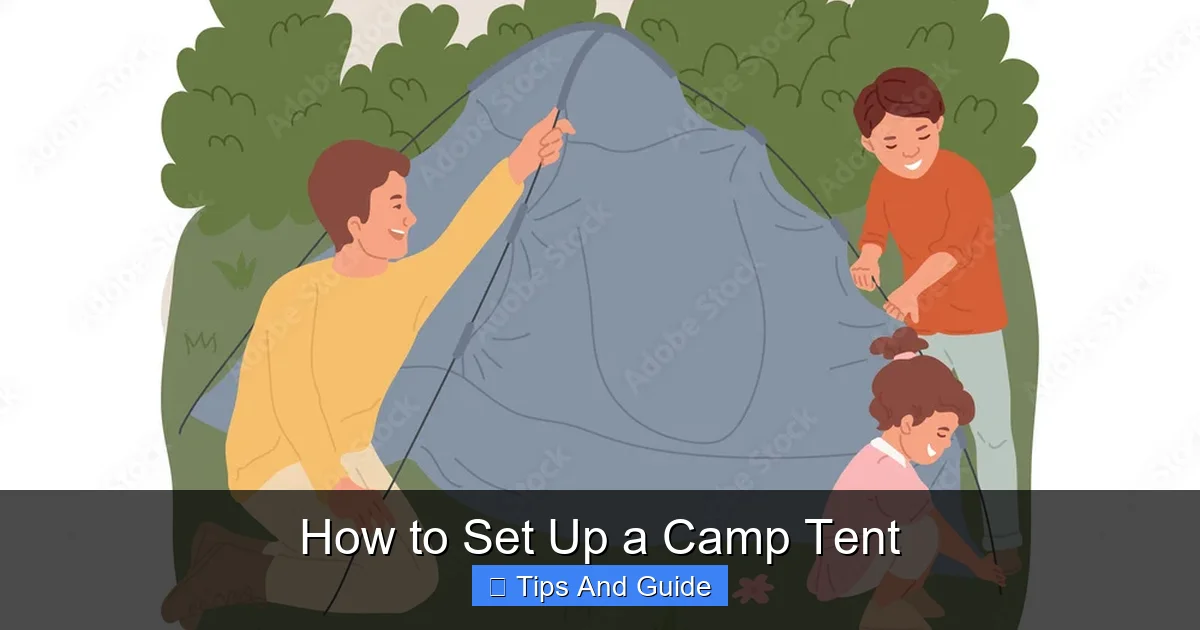
Setting up a camp tent doesn’t have to be daunting! This guide provides clear, step-by-step instructions to help you pitch your tent efficiently and securely. We cover everything from choosing the right spot to properly staking your tent, ensuring a comfortable and protected outdoor experience. With a little practice, you’ll be a tent setup pro in no time, ready for any adventure.
## How to Set Up a Camp Tent
So, you’ve got a new tent and you’re itching to get out into the great outdoors. That’s fantastic! But before you can enjoy the stars and the fresh air, you need to set up your shelter. For many, this can seem like a confusing puzzle, especially with unfamiliar parts and a lengthy instruction manual. But don’t worry! This comprehensive guide will walk you through setting up your camp tent, step-by-step. We’ll cover everything from choosing the perfect spot to the final stakes, ensuring your tent is sturdy, secure, and ready for your adventure. By the end of this guide, you’ll feel confident pitching your tent, no matter what type you have.
### Before You Begin: Preparation is Key
The secret to a smooth tent setup is proper preparation. A few minutes spent here can save you a lot of frustration later.
#### 1. Understand Your Tent
Every tent is a little different. Take some time to familiarize yourself with your specific tent before you even head to the campsite.
* Read the Instructions: Yes, really! Your tent came with instructions for a reason. Read them carefully.
* Lay Everything Out: At home, in your backyard or living room, unpack all the components: the tent body, rainfly, poles, stakes, and guylines. Identify each part.
* Practice Pitching: If possible, try setting up your tent once at home. This is the best way to learn how your specific tent goes together and to discover any missing or damaged parts.
#### 2. Gather Your Tools and Supplies
While most tents come with everything you need, a few extra items can make the process even easier.
* Mallet or Hammer: For driving stakes into hard ground.
* Ground Tarp or Footprint: To protect the bottom of your tent from abrasion and moisture. This is a crucial accessory for extending the life of your tent.
* Extra Stakes: Especially if you know you’ll be camping in windy conditions.
* Duct Tape: For emergency repairs.
### Step 1: Choosing the Perfect Campsite
Where you set up your tent can make a big difference in your comfort and safety. Here’s what to look for:
#### 1. Find a Flat Surface
A level spot is essential for comfortable sleeping. Lying on a slope is never fun, and in heavy rain, it can lead to water pooling.
* Look for level ground: Avoid areas with significant dips or humps.
* Check for rocks and roots: Clear away any sharp objects that could puncture your tent floor or make sleeping uncomfortable.
#### 2. Consider Drainage
You don’t want to wake up in a puddle.
* Avoid low-lying areas: These spots tend to collect water during rain.
* Observe the terrain: Look for higher ground if heavy rain is expected.
#### 3. Assess the Surroundings
Safety and convenience are important.
* Look up: Avoid pitching your tent directly under dead trees or large branches (widowmakers) that could fall.
* Consider wind direction: If possible, position your tent so the main entrance isn’t facing directly into the prevailing wind.
* Proximity to amenities: Think about how close you want to be to restrooms, water sources, or other campers.
#### 4. Use a Ground Tarp or Footprint (Optional but Recommended)
If you have a ground tarp or a custom-fit footprint for your tent, lay it down now. This layer protects your tent’s floor from rocks, roots, and moisture, significantly extending its lifespan. Ensure the tarp is the same size or slightly smaller than your tent floor, with the waterproof side facing up.
### Step 2: Laying Out the Tent Body
Once you’ve chosen your spot and laid down your footprint, it’s time to unfold the main part of your tent.
#### 1. Unpack and Unfold
Carefully remove the tent body from its stuff sack. Unfold it and spread it out flat on top of your ground tarp or footprint.
* Orient the door: Position the tent so the main door faces your desired entrance, perhaps towards a view or away from the wind.
* Smooth out wrinkles: Try to get the tent floor as flat and smooth as possible.
### Step 3: Assembling the Tent Poles
Tent poles are the backbone of your shelter. Most modern tents use shock-corded poles, which makes assembly a breeze.
#### 1. Identify the Pole Sections
Your tent poles will likely come in several sections connected by elastic cord.
* Uncoil them carefully: Don’t let them snap together forcefully, as this can damage the ends.
* Connect the sections: Gently push the sections together until they fit snugly. The elastic cord inside will help hold them in place.
#### 2. Ensure Poles are Fully Seated
It’s crucial that each pole section is fully inserted into the next.
* Check for gaps: Make sure there are no visible gaps between connected sections.
* Feel the connection: A well-connected pole will feel solid and smooth.
### Step 4: Inserting Poles and Raising the Tent
This is where your tent starts to take shape. The method for attaching poles varies by tent design.
#### 1. Sleeve-Type Tents
Many dome tents have fabric sleeves sewn into the tent body.
* Feed the poles through the sleeves: Carefully slide each pole through its designated sleeve. Be gentle to avoid snagging the fabric.
* Gently bend the poles: As you reach the end of a sleeve, gently bend the pole and insert its end into the grommet or pocket located at the corner of the tent.
* Work with a partner: Having someone help you bend and insert the poles makes this step much easier.
#### 2. Clip-Type Tents
Some tents use plastic clips that attach to the outside of the tent body.
* Attach the poles to the clips: Start at one corner, insert the pole end into the grommet, and then attach the clips along the length of the pole as you go.
* Work your way around: Continue this process for all poles.
#### 3. Raise the Tent
Once the poles are inserted and secured, the tent will naturally want to stand up.
* Gently lift: With all poles in place, carefully lift the tent into its upright position.
* Secure ends: Ensure the ends of the poles are firmly seated in their respective grommets or pockets.
### Step 5: Staking Down Your Tent
This is a critical step for stability and wind resistance. Proper staking can be the difference between a secure shelter and a collapsed mess during a storm.
#### 1. Position the Tent
Make sure the tent is where you want it. The poles should be holding it taut.
#### 2. Anchor the Corners
Start with the corners of the tent.
* Insert the stakes: Drive a stake through the webbing loop at each corner of the tent.
* Angle the stakes: For maximum holding power, drive stakes into the ground at a 45-degree angle away from the tent.
* Use a mallet or hammer: This is especially helpful in hard or rocky soil.
#### 3. Stake Out the Guylines
Guylines are essential for providing extra stability, especially in windy conditions. If your tent has them, attach them now.
* Identify guyline points: Locate the loops on the outside of your tent where the guylines attach.
* Attach and tension: Connect the guylines and stake them out at a distance from the tent that allows them to be taut. Adjust the tensioners to keep them snug. This provides extra support and helps keep the rainfly from flapping in the wind. A good rule of thumb is to stake guylines at a 45-degree angle away from the tent, opposite the tent attachment point.
#### 4. Secure the Rest of the Tent
If your tent has additional stake-out points along the bottom edges, use them. This further tightens the tent fabric and helps prevent wind from getting underneath.
### Step 6: Attaching the Rainfly
The rainfly is your tent’s primary protection against rain and dew.
#### 1. Orient the Rainfly
Make sure you have the rainfly oriented correctly. Most rainflys have a specific front and back, often indicated by the door or vent placement.
* Drape it over the tent: Carefully spread the rainfly over the tent body.
* Align the openings: Match the rainfly’s door and vent openings with those on the tent body.
#### 2. Secure the Rainfly
There are several ways to attach a rainfly, depending on your tent model.
* Buckles or Clips: Many tents have buckles or clips on the rainfly that attach to corresponding points on the tent poles or the tent body.
* Velcro Straps: Some rainflys have Velcro straps that wrap around the tent poles for a secure fit.
* Tie-downs: You might also have ties that connect the rainfly to the tent poles or stake points.
#### 3. Tension the Rainfly
A properly tensioned rainfly is crucial for preventing water from pooling and for optimal ventilation.
* Ensure it’s taut: The rainfly should be snug, with no major sagging.
* Check for airflow: Ensure there’s a small gap between the rainfly and the tent body for ventilation. This prevents condensation buildup inside your tent. If your tent is one of the best pop-up tent waterproof options, a well-tensioned rainfly is essential for its performance.
### Step 7: Final Adjustments and Checks
You’re almost there! A few final checks will ensure your tent is perfectly set up.
#### 1. Inspect Everything
Walk around your tent and look for any issues.
* Check pole connections: Ensure all poles are firmly seated.
* Verify stake security: Make sure all stakes are driven in well and are holding firmly.
* Tension guylines: Give your guylines a final tug to ensure they are taut.
#### 2. Open Vents (If Applicable)
If your tent has mesh vents, open them to allow for airflow and reduce condensation.
#### 3. Set Up Your Interior
Once the exterior is secure, you can start setting up the inside of your tent.
* Bring in your sleeping gear: Unroll sleeping bags and place sleeping pads.
* Organize your belongings: Put away any gear you don’t need immediately.
### Troubleshooting Common Tent Setup Issues
Even experienced campers run into snags sometimes. Here are a few common problems and how to solve them.
#### 1. Tent Poles Won’t Fit into Grommets
* Problem: The pole tip is too large, or the grommet is slightly misshapen.
* Solution: Gently twist the pole as you push. If it’s a tight fit, try wiggling it slightly. Ensure you have the correct pole for that location, as some tents have different lengths.
#### 2. Tent Fabric is Sagging Excessively
* Problem: The tent isn’t taut, leading to poor water runoff and potential instability.
* Solution: Check that all poles are fully inserted and seated. Re-stake the tent, ensuring stakes are at a good angle. Adjust guylines for added tension.
#### 3. Stakes Won’t Go into the Ground
* Problem: The ground is too hard, rocky, or sandy.
* Solution:
* Hard Ground: Use a rock to carefully tap stakes in, or find a slightly softer spot if possible.
* Sandy Ground: For sandy soil, try using longer, wider stakes or “deadman anchors” (burying the stake horizontally and covering it with sand/soil).
* Carry extra stakes that are designed for different ground conditions.
#### 4. Rainfly is Not Fitting Correctly
* Problem: The rainfly is on backward, or not aligned with the tent doors.
* Solution: Detach the rainfly and reorient it. Ensure the buckles or clips are attached to the correct points. If it still doesn’t seem right, double-check your tent’s instructions. For example, if you’re considering a best pop-up tent for shade, proper rainfly setup is key to its sun-blocking capabilities.
### Taking Down Your Tent
Packing up is just as important as setting up. A clean and dry tent lasts longer.
#### 1. Remove Gear and Unstake
* Clear out all belongings: Make sure nothing is left inside.
* Remove stakes: Gently pull out the stakes. You might need to wiggle them or use the hook on a mallet to lever them out.
#### 2. Remove the Rainfly and Poles
* Detach the rainfly: Unclip or unbuckle it and fold it roughly.
* Remove the poles: Carefully take the poles out of the sleeves or clips. Let them collapse gently.
#### 3. Fold and Pack the Tent
* Fold the tent body: Lay the tent body flat and fold it systematically. Aim for a size that fits back into the stuff sack. Many people fold it lengthwise, then widthwise.
* Stuff the poles and stakes: Place the collapsed poles and stakes inside the folded tent or in their designated bag.
* Insert into the stuff sack: Roll the tent tightly and stuff it into its sack. Don’t be afraid to use a bit of force to get it in – this helps compress it for easier packing.
* Ensure it’s dry: If possible, let your tent air dry completely before packing it away for long-term storage to prevent mildew.
### Conclusion
Setting up a camp tent is a fundamental skill for any outdoor enthusiast. By following these steps, understanding your tent’s specific features, and practicing a little, you can confidently pitch your shelter in any situation. Remember to choose your campsite wisely, assemble and insert poles carefully, stake your tent securely, and properly attach the rainfly. A well-pitched tent is more than just shelter; it’s your cozy home away from home, protecting you from the elements and providing a comfortable base for your adventures. So, next time you head out, you’ll be ready to set up camp like a pro, enjoying the peace of mind that comes with a sturdy and reliable shelter. Happy camping!
### FAQs
What is the best way to store my tent?
The best way to store your tent is loosely in its stuff sack or a larger breathable bag, in a cool, dry place. Avoid storing it tightly packed for long periods, as this can damage the fabric and coatings over time.
How do I clean my tent?
For minor dirt, use a soft brush and water. For more stubborn stains, use a mild soap like pure camp soap and water. Always rinse thoroughly and let your tent air dry completely before storing it to prevent mildew.
Do I need a footprint for my tent?
While not strictly essential, a footprint or ground tarp is highly recommended. It protects the tent floor from abrasion and punctures, extending the life of your tent and providing an extra barrier against moisture.
How do I make my tent more wind-resistant?
Ensure all stakes are driven in at a 45-degree angle away from the tent, and use all available guylines, keeping them taut. Consider using longer or stronger stakes if you anticipate high winds.
What if I lose a tent pole or stake?
Check your tent manufacturer’s website or contact them directly. Most companies sell replacement parts, or you can often find universal pole repair kits and replacement stakes at outdoor gear stores.
How long does a tent typically last?
With proper care and maintenance, a good quality tent can last anywhere from 5 to 10 years or even longer. Factors like frequency of use, storage conditions, and exposure to harsh weather can affect its lifespan.
Key Takeaways
- Choose the Right Campsite: Select a flat, well-drained area away from potential hazards like dead trees or low-lying water.
- Inspect Your Tent: Before you begin, unpack all components and check for any damage or missing parts.
- Lay Out the Tent Body: Spread the tent body flat on your chosen site, orienting the door towards your desired entrance.
- Assemble the Poles: Connect all pole sections carefully, ensuring they are fully seated to prevent bending or breaking.
- Insert Poles and Raise the Tent: Thread the poles through the designated sleeves or attach them to clips, then gently raise the tent.
- Stake Down Your Tent: Securely anchor your tent using stakes, angled away from the tent, to withstand wind and weather.
- Attach the Rainfly: Drape the rainfly over the tent, aligning it correctly, and secure it to the tent poles and stakes.
