
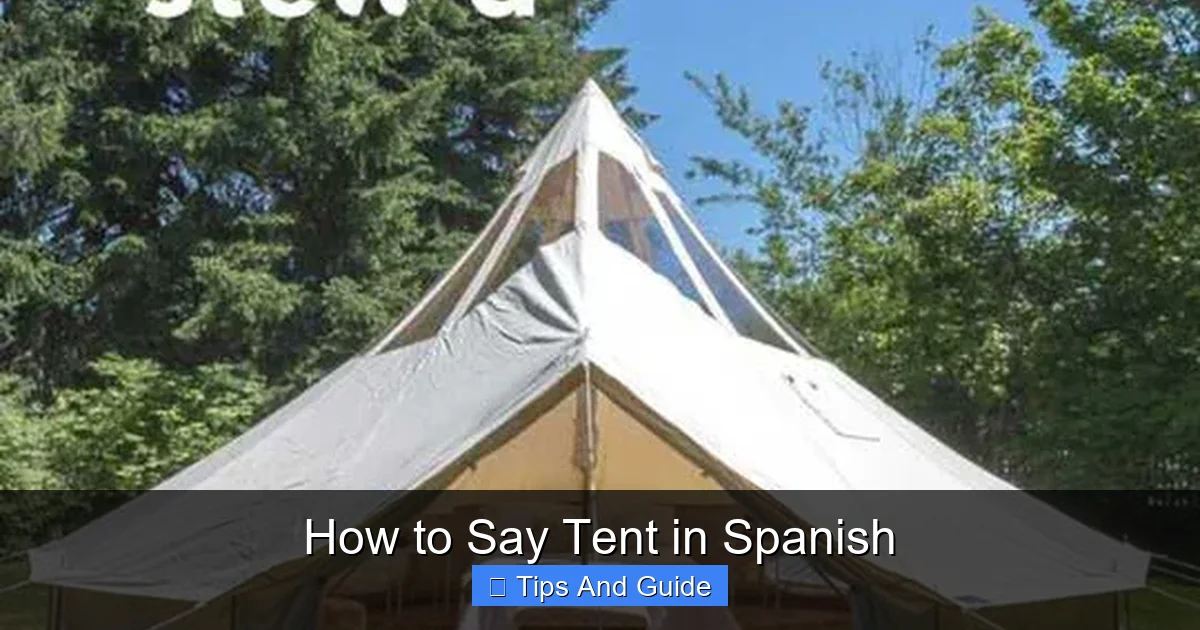
Learning to say “tent” in Spanish is easy! The most common words are “tienda de campaña” and “carpa.” This guide will help you understand the nuances of each word, how to pronounce them correctly, and when to use them. Whether you’re planning a camping trip in a Spanish-speaking country or just want to expand your vocabulary, you’ll be speaking like a local in no time.
So, you’re heading out on an adventure, perhaps planning some camping in a beautiful Spanish-speaking country, or maybe you’re just curious about languages. You’ve got your gear, your enthusiasm, and one crucial question: How do you say “tent” in Spanish? Don’t worry, it’s not as complicated as it might seem! This guide is your perfect companion to learning the Spanish words for “tent,” understanding their differences, and using them with confidence. We’ll explore the most common terms, dive into their pronunciation, and give you practical examples so you can sound like a pro.
Get ready to pack your linguistic bags, because we’re about to embark on a fun journey into the world of Spanish camping vocabulary!
- The primary Spanish word for “tent” is “tienda de campaña,” which literally translates to “campaign tent.” This is the most widely understood term across Spanish-speaking regions.
- “Carpa” is another common word for “tent,” especially in Latin America. It’s shorter and often used in more informal contexts.
- Pronunciation is key: practice saying “tee-EN-dah deh kahm-PAHN-yah” for “tienda de campaña” and “CAR-pah” for “carpa.” Pay attention to the stressed syllables.
- Context matters: “tienda de campaña” is generally more formal and universally understood, while “carpa” might be more common in certain regions or for specific types of tents.
- Regional variations exist: While “tienda de campaña” and “carpa” are dominant, some areas might have unique local terms.
- Using descriptive phrases can also help: For example, “una carpa para acampar” (a tent for camping) clarifies meaning.
- Familiarize yourself with related vocabulary: Knowing words like “acampar” (to camp) and “dormir” (to sleep) will enhance your communication.
📑 Table of Contents
The Main Word: “Tienda de Campaña”
When you’re looking for the most standard and widely understood term for “tent” in Spanish, look no further than **”tienda de campaña.”**
Let’s break this down:
- Tienda: This word primarily means “shop” or “store.” However, in this context, it takes on a different meaning, referring to a temporary shelter. Think of it like a “tent shop” or a “storehouse” for camping.
- De: This is a preposition that means “of” or “from.”
- Campaña: This word means “campaign.” In a historical or military context, it refers to a military operation or expedition. When combined with “tienda,” it evokes the idea of a shelter used during an expedition or outdoor venture.
So, literally, “tienda de campaña” translates to “campaign tent.” It’s a descriptive term that paints a clear picture of what it is: a shelter for outdoor activities and campaigns.
Pronunciation of “Tienda de Campaña”
Getting the pronunciation right can make all the difference. Let’s sound it out syllable by syllable:
- Tienda: Tee-EN-dah. The ‘ti’ sounds like “tee” in “tea.” The stress is on the second syllable, “en.”
- De: deh. This is a simple, short sound, like the “de” in “depend.”
- Campaña: Kahm-PAHN-yah. The ‘ca’ sounds like “kah.” The stress is on the second syllable, “pañ.” The “ñ” sound is crucial; it’s similar to the “ny” in “canyon.”
Put it all together: Tee-EN-dah deh Kahm-PAHN-yah.
Pro Tip: Many people find it helpful to listen to native Spanish speakers say the word. You can find audio clips online through translation websites or language learning apps.
When to Use “Tienda de Campaña”
This is your go-to phrase in most situations. It’s formal enough for any context and will be understood by virtually every Spanish speaker, regardless of their region.
Examples:
- “Necesito comprar una tienda de campaña para mi viaje de senderismo.” (I need to buy a tent for my hiking trip.)
- “¿Podemos montar la tienda de campaña aquí?” (Can we set up the tent here?)
- “La tienda de campaña es impermeable y muy resistente.” (The tent is waterproof and very durable.)
If you’re unsure which word to use, **”tienda de campaña”** is always the safest bet.
The Alternative: “Carpa”
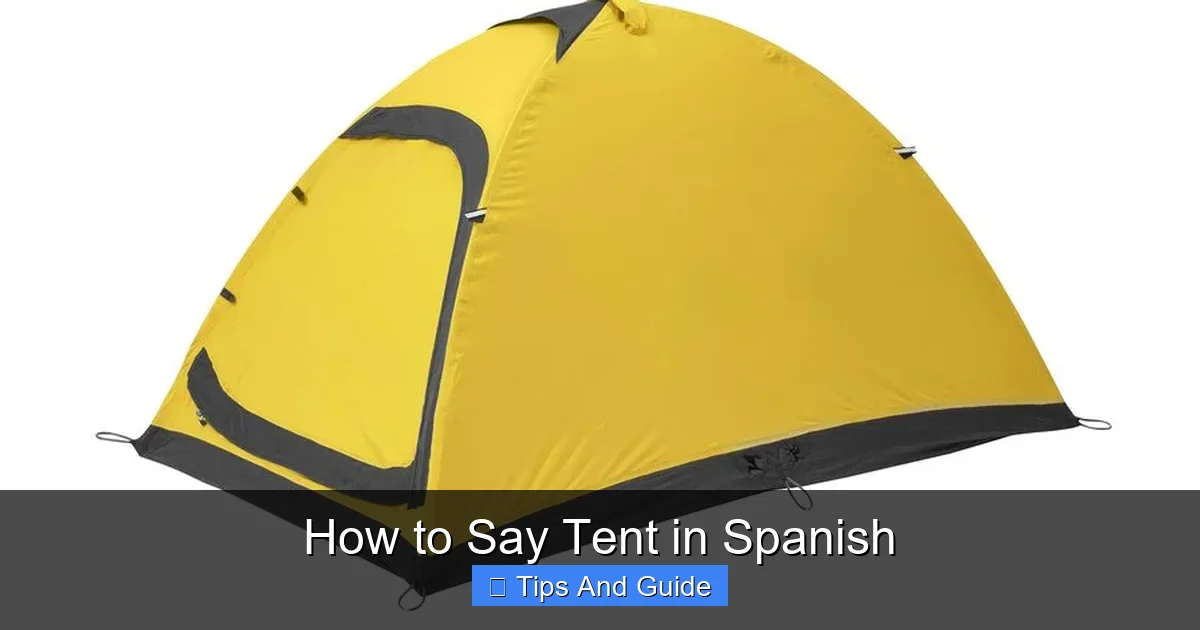
While “tienda de campaña” is the most formal and universal term, you’ll frequently hear **”carpa”** used to mean “tent,” especially in many parts of Latin America.
Carpa is a shorter, simpler word, and it’s very common in everyday conversation.
Visual guide about How to Say Tent in Spanish
Image source: dispill-usa.com
Pronunciation of “Carpa”
This one is even simpler to pronounce!
- Carpa: CAR-pah. The ‘ca’ sounds like “car” in English. The stress is on the first syllable, “car.”
So, CAR-pah. Easy, right?
When to Use “Carpa”
Think of “carpa” as the more informal, everyday word for tent. You’ll hear it frequently in countries like Mexico, Argentina, Chile, and others.
Examples:
- “Vamos a acampar, ¿trajiste la carpa?” (We’re going to camp, did you bring the tent?)
- “Mi primera carpa era muy pequeña.” (My first tent was very small.)
- “Compramos una carpa nueva para ir a la playa.” (We bought a new tent to go to the beach.)
It’s important to note that “carpa” can also mean “circus tent” or “awning” in some contexts. However, when talking about camping or outdoor shelters, it’s almost always understood as a tent. If you want to be extra clear, you can say “carpa de camping” (camping tent) or “carpa para acampar” (tent for camping).
Consider the context. If someone is talking about a circus, “carpa” means a circus tent. But if you’re discussing outdoor gear or planning a trip, “carpa” refers to a camping tent.
Regional Variations and Other Terms
While “tienda de campaña” and “carpa” are the most prevalent, the Spanish language is rich with regional differences. You might encounter other words or phrases, although they are less common.
For instance, in some regions, you might hear:
Visual guide about How to Say Tent in Spanish
Image source: d25rq8gxcq0p71.cloudfront.net
- Armazón: This literally means “framework” or “structure.” While not a direct translation for “tent,” in some very specific, perhaps older or more rural contexts, it might refer to a tent structure. However, this is quite rare for modern camping tents.
- Cobertizo: This generally means “shed” or “lean-to,” but again, in very old or specific contexts, it might have been used for rudimentary shelters. Stick to the main two words!
The best advice is to stick with “tienda de campaña” and “carpa.” These are the most universally understood and will serve you well.
Tips for Using Your New Vocabulary
Now that you know the words, how do you use them effectively?
Practice Your Pronunciation
The more you say the words out loud, the more natural they will sound. Try repeating them:
Visual guide about How to Say Tent in Spanish
Image source: wordscr.com
- “Tienda de campaña” (Tee-EN-dah deh Kahm-PAHN-yah)
- “Carpa” (CAR-pah)
Imagine you are talking to someone who needs a tent for an outdoor adventure. You could say: “Necesito una tienda de campaña.” Or, if you’re in a more casual setting in Mexico, you might ask a friend: “¿Tienes una carpa extra?”
Context is King
As we’ve discussed, context helps. If you’re talking about camping, both “tienda de campaña” and “carpa” work. If you’re in a shop and see a display of camping gear, you’ll likely hear or see “tienda de campaña” used for a more formal description, perhaps in a product catalog. If you’re at a campsite and someone is setting up their shelter, they might casually say, “Voy a montar mi carpa.”
Learn Related Words
To truly enhance your camping communication in Spanish, learn a few related words:
- Acampar: To camp.
- Campamento: Campsite or camp.
- Dormir: To sleep.
- Exterior/al aire libre: Outdoors.
- Montar/armar: To set up or assemble (a tent).
- Desmontar/desarmar: To take down or dismantle (a tent).
For example, instead of just saying “I need a tent,” you can say “Necesito una tienda de campaña para acampar.” (I need a tent for camping.)
Consider the Type of Tent
While “tienda de campaña” and “carpa” cover most situations, specific types of tents might have more descriptive names. For instance:
- Tienda de campaña automática / Tienda de campaña pop-up: Automatic tent / Pop-up tent. These are very convenient, and understanding terms like those found in our guide on the best pop-up tent on the market can be helpful in Spanish too!
- Tienda de campaña familiar: Family tent.
- Tienda de campaña de dos personas: Two-person tent.
If you’re looking for a specific kind of shelter, like the best camping kitchen tent, you might need to be more descriptive, like “una tienda para usar como cocina en el camping.”
Troubleshooting Common Mix-ups
The main potential mix-up comes from the word “carpa” also meaning “circus tent” or “awning.”
When in Doubt, Clarify
If you’re talking about a camping structure and you say “carpa,” and the person you’re speaking with looks confused, or if the context could genuinely be ambiguous, you can always add clarifying words. For example:
- “Una carpa para dormir en la montaña.” (A tent for sleeping in the mountains.)
- “¿Es esa una carpa de circo o una carpa para acampar?” (Is that a circus tent or a camping tent?)
Listen to Native Speakers
The best way to avoid confusion and master these terms is to immerse yourself. If you have the opportunity to travel or interact with native Spanish speakers, pay close attention to how they use these words. You might even find them discussing the best campgrounds in Ohio for tents and using these very terms!
Conclusion: Your Spanish Tent Vocabulary Is Ready!
Congratulations! You’ve successfully learned how to say “tent” in Spanish. You now know that **”tienda de campaña”** is the most common and universal term, while **”carpa”** is a popular and often shorter alternative, especially in Latin America. You’ve practiced your pronunciation and learned when to use each word.
Whether you’re asking for directions to the nearest camping supply store, discussing your camping plans with friends, or simply trying to understand a Spanish dialogue, you are now equipped with the right words. Remember to practice, listen, and don’t be afraid to try out your new vocabulary. Happy camping and happy Spanish speaking!
