
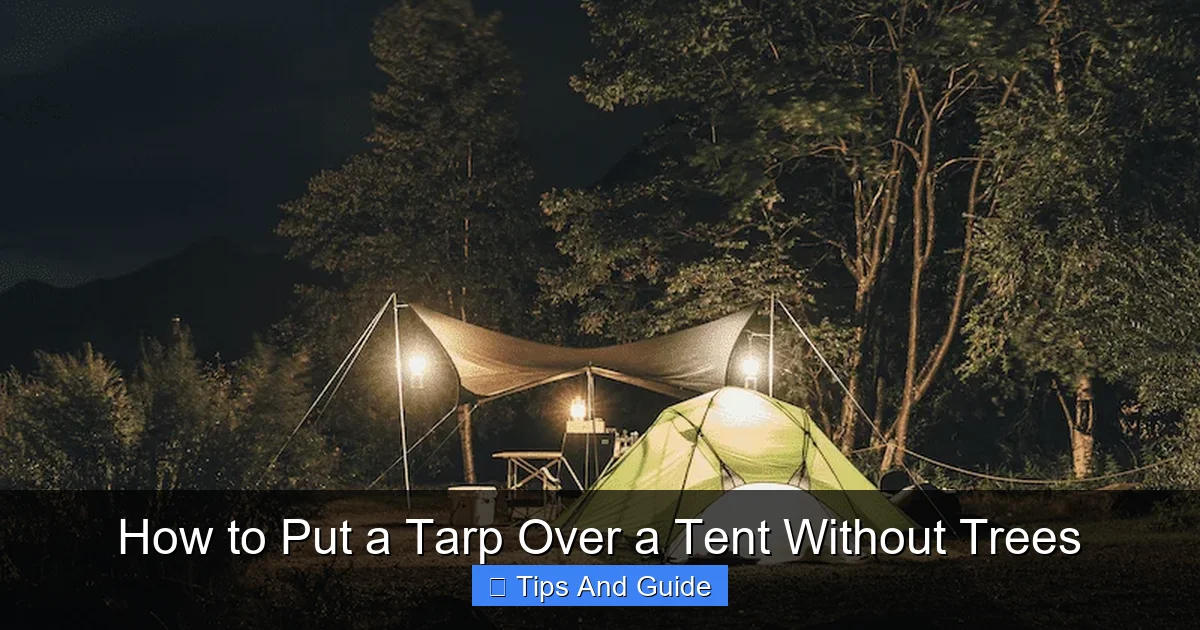
Learn how to create essential shelter for your tent without relying on trees. This guide provides clear, actionable steps for setting up a tarp for protection against rain, sun, and wind, even in open camping areas. Discover how to use your gear effectively to create a comfortable and secure outdoor experience.
## How to Put a Tarp Over a Tent Without Trees
Camping is an incredible way to connect with nature. But what happens when you find yourself in a beautiful, open campsite with no trees to string up a protective tarp? Don’t let a lack of trees deter your adventure! A tarp is an invaluable piece of gear, offering crucial protection from sun, rain, and wind, and it can be effectively deployed in many open areas. This guide will walk you through everything you need to know about putting a tarp over your tent when trees aren’t an option.
You’ll learn how to choose the right tarp, gather your essential equipment, select the ideal location, and master various tarp-pitching techniques. We’ll cover how to secure your tarp so it stays put, even in challenging weather, and offer practical tips to ensure your camping experience is comfortable and safe.
## Understanding the Benefits of a Tarp
Before we dive into the “how-to,” let’s quickly recap why a tarp is such a smart addition to your camping setup.
* **Weather Protection:** A tarp acts as a second layer of defense against the elements. It can significantly reduce the amount of rain that hits your tent, keeping you drier and warmer. It also provides much-needed shade on hot, sunny days, making your tent a more comfortable retreat. For those camping in exposed areas, a tarp can even break the force of wind, preventing your tent from being buffeted.
* **Extended Living Space:** A well-pitched tarp can create a covered outdoor living area. This is perfect for cooking, eating, storing gear, or simply relaxing out of the sun or light rain. Many campers find this extra space invaluable, especially when camping with a family or a group.
* **Tent Longevity:** By shielding your tent from direct sun and heavy rain, a tarp can help prolong its lifespan. UV rays and constant moisture can degrade tent fabric over time, so a tarp acts as a protective barrier.
## Essential Gear for Tarp Pitching Without Trees
You can’t create a sturdy shelter without the right tools. Here’s what you’ll need:
### The Tarp Itself
* Size: The size of your tarp depends on the size of your tent and how much extra coverage you want. For a standard 2-4 person tent, a tarp around 8×10 feet or 10×12 feet is usually sufficient. If you want to create a large communal area, opt for a larger tarp.
* Material: Most camping tarps are made from nylon or polyester, often with a polyurethane (PU) coating for waterproofing. Look for a hydrostatic head rating of at least 1500mm for good water resistance. For extra durability, consider a heavier-duty tarp.
* Eylets and Grommets: Ensure your tarp has reinforced grommets or tie-out loops around its perimeter. These are crucial for attaching ropes and stakes.
### Support Structures
Since you won’t have trees, you’ll need alternative ways to elevate your tarp.
* Adjustable Tarp Poles: These are telescoping poles specifically designed for setting up tarps. They are lightweight, adjustable to different heights, and incredibly versatile.
* Trekking Poles: If you hike, your trekking poles can double as tarp poles. Many trekking poles have adaptable tips that can be used to support grommets.
* Sticks and Branches: In a pinch, you can find sturdy sticks and branches to prop up your tarp. Ensure they are strong enough to bear the weight and won’t snap.
* Your Vehicle: If car camping, you can sometimes use your vehicle as an anchor point or support. This requires careful consideration to avoid damaging your car.
### Fasteners and Securing Gear
* Rope or Cordage: You’ll need plenty of strong, lightweight rope or paracord. 50-100 feet is a good amount to start with.
* Stakes: Bring a variety of sturdy tent stakes. For rocky or hard ground, you might need stronger, thicker stakes.
* Guy Lines: These are short lengths of rope used to anchor the tarp away from the main support points, creating tension and stability.
* Optional: Carabiners, tensioners, and small sandbags (if camping on sand) can also be helpful.
## Choosing Your Campsite and Tarp Location
Selecting the right spot is the first critical step to a successful tarp setup.
### Tent Placement
* Level Ground: Always choose a flat, level spot for your tent. This ensures comfortable sleeping and prevents water from pooling inside your tent.
* Drainage: Avoid low-lying areas that might collect water if it rains. Look for slightly elevated ground if possible.
* Wind Direction: Consider the prevailing wind direction. You’ll want to orient your tent and tarp to offer maximum protection. If possible, use the tarp to create a windbreak for your tent entrance.
### Tarp Placement
* Coverage Area: Think about what you want to cover. Do you need to shield your tent from rain coming from a specific direction? Do you want a shaded area for cooking or relaxing?
* Anchor Points: Identify potential anchor points for your tarp’s guy lines. These could be rocks, large bushes, or even weighted objects if you’re in an open field. If using tarp poles, ensure you have enough space around your tent to set them up without obstruction.
* Height and Slope: Plan how high you want your tarp to be and what kind of slope you’ll create. A steeper slope helps water run off more effectively.
## Step-by-Step: Pitching Your Tarp Without Trees
Now, let’s get to the action! We’ll cover a few common and effective methods.
### Method 1: The Lean-To (Simple and Effective)
This is a straightforward setup that provides excellent rain and sun protection.
#### Step 1: Set Up Your Tent First
Pitch your tent in your chosen location. This will serve as one of your primary anchor points.
#### Step 2: Position Your Tarp Pole or Support
* Using Tarp Poles: Place one or two adjustable tarp poles at the desired height at the edge of your campsite, away from your tent. The height will determine the amount of headroom and the slope of your tarp.
* Using Trekking Poles: Extend your trekking poles to the desired height and position them.
#### Step 3: Drape the Tarp
* Drape the tarp over the top of your tarp pole or poles. The idea is to create a single sloping surface. One edge of the tarp should be higher (supported by the pole) and the other edge lower, closer to the ground.
#### Step 4: Secure the High Edge
* Attach a rope to the grommet or loop at the highest point of the tarp.
* Tie this rope securely to the top of your tarp pole. If using trekking poles, you might be able to loop the rope directly through the handle or use a carabiner.
* Ensure the tarp is taut and the pole is stable.
#### Step 5: Secure the Low Edge
* Pull the lower edge of the tarp taut towards the ground.
* Use stakes to secure the corners and edges of the tarp. Drive stakes into the ground at an angle away from the tarp for maximum holding power.
* If the ground is soft, consider using larger rocks or logs to weigh down the edges.
#### Step 6: Add Guy Lines for Stability
* Use additional ropes (guy lines) attached to the side grommets of the tarp.
* Run these guy lines out away from the tarp and secure them to the ground with stakes. This adds tension and prevents the tarp from flapping in the wind. The number and placement of guy lines will depend on the size of your tarp and the expected wind conditions.
### Method 2: The A-Frame (Classic Shelter)
This method creates a more enclosed shelter, similar to a traditional tent. It’s great for offering protection from multiple directions.
#### Step 1: Set Up Your Tent First
As always, pitch your tent securely.
#### Step 2: Position Your Support Structures
* Using Tarp Poles: Place two tarp poles at equal distances from your tent, on opposite sides. The height of these poles will determine the peak height of your A-frame.
* Using Trekking Poles: Position your trekking poles similarly.
* Using Sticks/Branches: Find two sturdy, Y-shaped sticks or branches that can support the peak of your tarp. Plant them firmly in the ground.
#### Step 3: Drape the Tarp
* Drape the tarp evenly over the two support structures, creating an “A” shape. The center of the tarp should be resting on the tops of the poles or sticks.
#### Step 4: Secure the Peak
* Attach ropes to the grommets or loops at the peak of the tarp (where it touches the support structures).
* Tie these ropes securely to the tops of your poles or sticks.
* Ensure the tarp is centered and the peak is stable.
#### Step 5: Secure the Sides
* Pull the sides of the tarp down towards the ground on both sides, creating the “legs” of the “A”.
* Use stakes to secure the corners and edges of the tarp to the ground. Drive stakes at an angle away from the tarp.
#### Step 6: Add Guy Lines
* For this configuration, guy lines are essential for stability. Attach guy lines to the grommets along the sides of the tarp, about midway down its length.
* Run these guy lines out at an angle and secure them with stakes. This will pull the sides taut and create a strong, stable shelter. You might need several guy lines on each side depending on wind.
### Method 3: Using Your Vehicle as Support (Car Camping Only)
This method can be very effective for creating a large covered area when car camping.
#### Step 1: Position Your Vehicle
* Park your car so that one side is parallel to where you want to set up your tarp. Leave enough space between your car and your tent for safe passage and ventilation.
#### Step 2: Attach the Tarp to Your Vehicle
* Option A (Rooftop Tent/Rack): If you have a rooftop tent or a sturdy roof rack, you can often tie the tarp directly to it.
* Option B (Through Doors/Windows): Carefully run a rope through a slightly opened window or door, securing the tarp to the interior of your car. **Crucially, ensure no doors or windows are forced shut on the rope, as this can cause damage.** You can also use suction cup mounts designed for car camping tarps.
#### Step 3: Secure the Other Side
* Run the opposite edge of the tarp out to the ground.
* Use tarp poles, trekking poles, or sturdy sticks to create height.
* Secure the edge to the ground with stakes and guy lines as described in the previous methods.
#### Step 4: Adjust and Tension
* Ensure the tarp is pulled taut and securely attached at all points. The angle of the tarp will be dictated by the height of your vehicle and your support structures.
**Important Considerations for Vehicle Support:**
* Protection: Be mindful of where your vehicle’s exhaust is located. You don’t want it blowing directly under your tarp.
* Ground Stability: Ensure the ground around your vehicle is stable if you’re staking guy lines.
* Paint Protection: Use soft materials or dedicated car camping accessories to avoid scratching your vehicle’s paint.
## Practical Tips for Tarp Mastery
* Practice at Home: Before your trip, set up your tarp in your backyard. This is the best way to familiarize yourself with the process and identify any missing gear.
* Knot Tying: Learn a few essential knots. The bowline, taut-line hitch, and rolling hitch are incredibly useful for securing tarps and adjusting tension.
* Water Pooling: If you notice water pooling on your tarp, it means the slope isn’t steep enough. Adjust your poles or guy lines to create a better runoff. You can also strategically place a small pebble under the center of a sag to encourage water to break surface tension and flow off.
* Wind Management: In high winds, lower your tarp as much as possible. Reduce the surface area exposed to the wind by bringing the edges closer to the ground. Use plenty of stakes and guy lines, and consider using rocks to anchor them. If the wind is too severe, it might be safer to take down the tarp temporarily.
* Ventilation: Even with a tarp, good ventilation is key to preventing condensation inside your tent. Ensure your tent’s vents are open.
* Tarp for Gear: Your tarp can also be used as a standalone rain or sun shelter for your cooking area or a place to store muddy boots.
## Troubleshooting Common Tarp Issues
* Tarp Sagging: This usually means not enough tension. Re-tighten your ropes and guy lines. Ensure your stakes are driven firmly into the ground.
* Water Leaking: Check your tarp for holes or worn seams. Ensure the fabric is properly coated. If it’s an older tarp, you might need to re-waterproof it.
* Stakes Pulling Out: If the ground is soft or sandy, stakes won’t hold well. Use larger stakes, more guy lines, or anchor points like heavy rocks or logs. If on sand, consider sand stakes or bags filled with sand.
* Tarp Noisy in Wind: This is often due to flapping fabric. Increase the tension on your guy lines and ensure all edges are pulled taut. You can also use cordage to tie down loose corners.
## Conclusion
Putting a tarp over your tent without trees is not only possible but also a highly recommended camping skill. With the right preparation, gear, and a little practice, you can create a comfortable and protected living space in almost any open campsite. From simple lean-tos to more robust A-frames, these setups provide vital defense against the elements, extend your usable space, and enhance your overall camping enjoyment. So, pack a versatile tarp, a good set of stakes and ropes, and embrace the freedom of camping wherever you choose! Remember to always practice your setup before you go, and you’ll be a tarp-pitching pro in no time.
- Assess Your Needs: Determine the primary purpose of the tarp (shade, rain, wind) to choose the right setup.
- Gather Essential Gear: You’ll need a tarp, stakes, rope/cordage, and potentially adjustable poles or trekking poles.
- Choose the Right Location: Select a level spot for your tent and plan the tarp’s placement for optimal protection.
- Secure the Tarp Properly: Use strong knots and stakes driven at an angle to ensure your tarp withstands the elements.
- Consider Tarp Configurations: Learn different pitching methods like the lean-to or A-frame for varied weather conditions.
- Troubleshoot Common Issues: Be prepared for wind, pooling water, and other challenges with practical solutions.
