
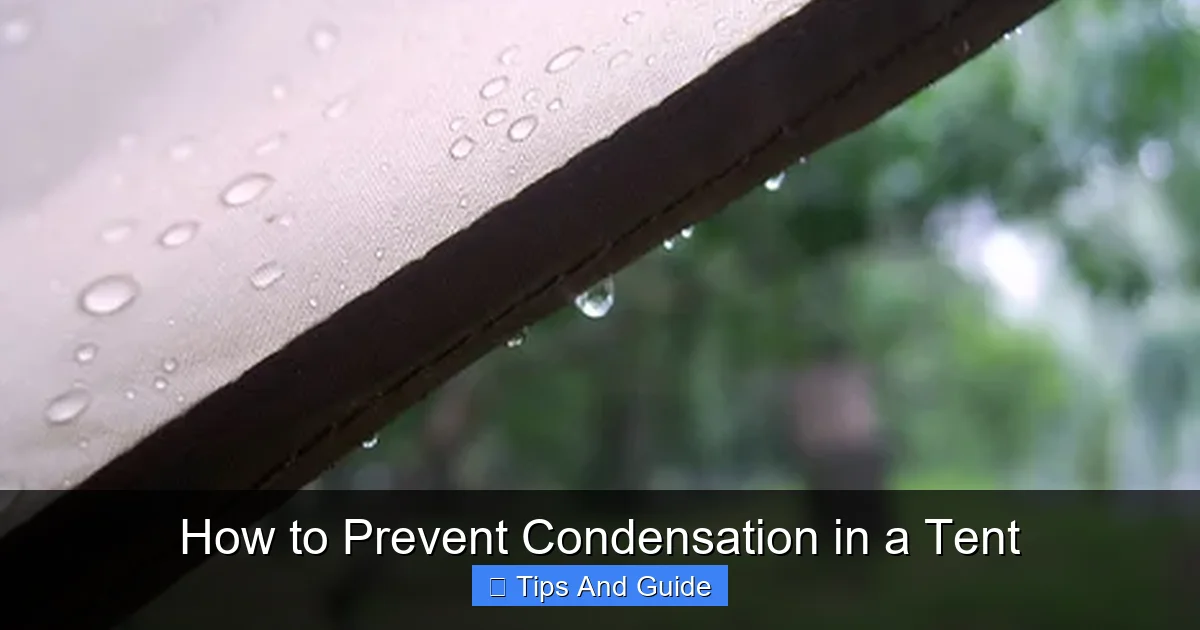
Condensation inside a tent can be a real nuisance, making your gear damp and your camping experience less enjoyable. This guide provides practical, easy-to-follow steps to prevent condensation from forming and to manage it effectively when it does. By focusing on ventilation, managing your internal environment, and understanding the science behind condensation, you can ensure a drier, more comfortable night’s sleep under the stars.
# How to Prevent Condensation in a Tent
There’s nothing quite like waking up in a tent to find a fine mist coating your sleeping bag, clothes, and the inside walls of your shelter. This unwelcome phenomenon, known as condensation, can quickly turn a cozy camping trip into a damp and uncomfortable ordeal. But don’t let condensation dampen your spirits! With a little knowledge and some simple strategies, you can significantly reduce or even eliminate this moisture problem.
This guide is your comprehensive resource for understanding why condensation happens and, more importantly, how to prevent it. We’ll walk you through everything from choosing the right tent and campsite to managing the conditions inside your tent that lead to moisture buildup. Get ready to enjoy drier, more comfortable nights in the great outdoors.
## Understanding Condensation
Before we dive into solutions, let’s quickly understand what causes condensation in a tent. It’s a natural process that occurs when warm, moist air comes into contact with a colder surface. Think of it like the dew on your lawn in the morning or the fogged-up windows in your car on a cold day.
Inside your tent, several factors contribute to this moist air:
* Breathing: Every time you exhale, you release water vapor into the air. In a closed tent, this moisture accumulates.
* Humidity: The natural humidity of the outdoor air can enter your tent.
* Wet Gear: Bringing in damp clothes, towels, or camping equipment can introduce significant moisture.
* Cooking: If you cook inside your tent (which is generally not recommended for safety reasons, but if you do), the steam produced adds a lot of moisture.
When this warm, moist air inside your tent touches the cooler fabric of the tent walls, especially at night when the outside temperature drops, the water vapor in the air condenses into tiny water droplets. These droplets can then drip down, making everything feel wet.
## Prevention Strategies: Step-by-Step
Preventing condensation is a multi-faceted approach. It involves preparation, smart choices at the campsite, and mindful practices inside your tent.
## Step 1: Choose the Right Tent
The design of your tent plays a significant role in its ability to manage condensation.
### H3: Ventilation Features
Look for tents with ample ventilation. This typically includes:
* Mesh Panels: Large mesh sections on the inner tent walls and roof allow for excellent airflow.
* Ventilation Ports: Strategically placed vents, often near the top and bottom of the tent, facilitate a natural convection current (cool air in, warm moist air out).
* Dual-Layer Construction: Most modern tents have an inner mesh tent and an outer rainfly. The gap between these layers is crucial for ventilation. Ensure this gap is sufficient.
While a good pop-up tent can be convenient, some designs might prioritize quick setup over optimal ventilation, so always check the specifications. For ultimate comfort in various conditions, consider a tent designed for breathability.
### H3: Tent Size and Occupancy
While you might want a spacious tent, an overly large tent with only a few occupants can sometimes exacerbate condensation issues. The smaller the air volume relative to the moisture sources (like people breathing), the faster humidity can build up. Conversely, a tent that’s too small might mean your body or gear is constantly touching the tent walls, hindering airflow.
## Step 2: Select a Suitable Campsite
Where you pitch your tent is almost as important as the tent itself.
### H3: Avoid Low-Lying, Damp Areas
Areas like hollows, valleys, or near bodies of still water tend to trap cold, moist air, especially in the morning. This creates a microclimate where condensation is more likely to form.
* Tip: Look for slightly elevated ground that allows air to circulate freely around your tent.
### H3: Consider Wind Exposure
A gentle breeze can be your best friend when it comes to preventing condensation. Pitching your tent in a spot that allows for natural airflow will help whisk away moist air.
* Example: If camping in a forest, try to pitch your tent in a clearing rather than deep within dense trees where air movement is restricted. If you’re looking for the best campground in Yosemite for tent camping, for instance, research sites that offer good air circulation.
### H3: Be Mindful of Ground Cover
Pitching your tent directly on wet grass or damp soil can contribute to moisture buildup from the ground up.
* Tip: If possible, pitch on a patch of dry, well-drained ground. Using a footprint or ground tarp can also create a barrier.
## Step 3: Optimize Ventilation During Setup and Overnight
Once you’ve chosen your tent and campsite, it’s time to set up for success.
### H3: Open All Vents
Before you even get inside, open every vent, window, and door flap that your tent offers, weather permitting. This establishes a baseline for airflow.
### H3: Stake Out the Rainfly Properly
The rainfly is designed to protect you from the elements while allowing air to circulate between it and the inner tent. Ensure it’s taut and properly staked out, creating a good air gap.
* Tip: Many tents have adjustable guy-out points on the rainfly. Use these to ensure maximum space between the fly and the inner tent.
### H3: Crack the Doors (When Appropriate)
If the weather is calm and dry, leaving tent doors slightly unzipped (but still protected by the rainfly vestibule) can provide excellent ventilation.
* Caution: Only do this if rain or strong winds are not a concern.
### H3: Adjust Ventilation as Needed
* Morning: As the sun rises and temperatures increase, condensation can become more pronounced as trapped moisture starts to vaporize. Open up vents even further or crack the doors.
* Evening: As the temperature drops, your breathing will contribute more moisture. Ensure your vents are open to allow this to escape.
## Step 4: Manage Moisture Sources Inside the Tent
Controlling what goes into your tent and how you manage your activities can make a huge difference.
### H3: Dry Gear Before Entering
This is a simple but often overlooked step.
* Wet Clothes and Towels: Hang them outside the tent, in the vestibule, or use a clothesline.
* Damp Footwear: Leave your boots or shoes in the vestibule. If they are particularly wet, consider stuffing them with newspaper to absorb moisture.
* Rain Gear: If you must bring wet rain gear inside, put it in a waterproof stuff sack or hang it in the vestibule.
### H3: Minimize Breathing Moisture
While you can’t stop breathing, you can manage its impact.
* Tip: Avoid breathing directly into your sleeping bag. Turning your face away from the opening of your sleeping bag can help reduce the amount of moisture that gets trapped.
### H3: Cooking Considerations
* Avoid Cooking Inside: The steam from cooking is a major source of condensation. Use a separate cooking area or a camping kitchen tent if available.
* Ventilate if You Must: If you absolutely must cook inside a tent, ensure it’s a well-ventilated tent and open all vents and doors to the maximum extent possible.
### H3: Control Internal Temperature
Sudden temperature changes inside the tent can cause condensation.
* Don’t Overheat: While it’s tempting to use a heater in a cold tent (especially a pop-up tent heater for winter camping), excessive heat can lead to a higher internal temperature. As this air cools rapidly when the heater is off or you go to sleep, condensation will form. Aim for a moderate, stable temperature.
* Cool Down Before Bed: If you’ve been active or the tent has warmed up during the day, allow it to cool down slightly before zipping up for the night.
### H3: Use a Ground Tarp or Footprint
As mentioned earlier, a footprint or ground tarp placed underneath your tent creates a barrier between your tent floor and damp ground, preventing moisture from seeping up.
* Tip: Ensure the footprint is slightly smaller than your tent floor. If it extends beyond the tent floor, it can collect rainwater and channel it *under* your tent.
## Step 5: Drying and Maintenance
Proper care of your tent after each use is essential for long-term condensation prevention.
### H3: Always Dry Your Tent
This is non-negotiable.
* At Home: Upon returning from a trip, set up your tent in your backyard, a garage, or even a large room and let it air dry completely. This means drying the inner tent, the rainfly, and the poles.
* Damp Storage is a No-Go: Never pack away a damp tent. This is a fast track to mildew, mold, and persistent moisture issues. If you absolutely must pack it wet, unpack and dry it as soon as you get home.
### H3: Inspect for Damage
While drying, take the opportunity to inspect your tent for any rips, tears, or seam leaks. Repairing these promptly can prevent more significant problems down the line.
## Troubleshooting Common Condensation Issues
Even with the best preventative measures, you might still encounter some condensation. Here’s how to deal with it:
### H3: Waking Up to Dampness
* Immediate Action: Open all vents and doors. If the sun is out, let it help dry the tent.
* Wipe Down: Use a dry towel or sponge to wipe down the inside walls of the tent. Wring out the towel outside.
* Hang Gear: If your sleeping bag or clothes are damp, hang them outside to air out.
### H3: Persistent Dripping
* Check Ventilation: Are all vents truly open and unobstructed? Is the rainfly staked out correctly?
* Reduce Internal Moisture: Ensure all gear brought inside is as dry as possible. Double-check that you aren’t breathing directly into your sleeping bag.
* Consider a Dehumidifier (for car camping): In very humid conditions and with car access, small battery-powered dehumidifiers are available, though this is a more advanced solution.
### H3: Condensation in Specific Conditions
* Cold Weather Camping: This is when condensation is most challenging. Focus heavily on ventilation, even if it means it’s a bit cooler inside. A tent designed for winter camping with superior ventilation is a good investment. Using a camping heater for a tent can help, but moderation is key to avoid a rapid temperature swing.
* Humid Climates: Even with good ventilation, high external humidity makes condensation more likely. Prioritize drying your tent religiously.
## Conclusion
Condensation in a tent is a common camping challenge, but it doesn’t have to ruin your trip. By understanding the science behind it and implementing the strategies outlined in this guide, you can significantly reduce moisture buildup.
Remember, the key elements are:
* Smart tent selection: Choose a tent with excellent ventilation.
* Strategic campsite placement: Avoid damp, still areas.
* Consistent ventilation: Keep those vents and doors open!
* Moisture management: Keep wet gear out and dry things thoroughly.
* Diligent maintenance: Always dry your tent completely after each use.
With these practices, you can ensure your tent remains a dry, comfortable haven, no matter what the weather or your activities bring. Happy camping!
Key Takeaways
- Proper Ventilation is Crucial: Always ensure adequate airflow by opening tent vents, doors, and windows to allow moist air to escape.
- Choose the Right Tent and Site: Opt for a tent with good ventilation features and pitch your tent in a location that promotes airflow, avoiding damp, low-lying areas.
- Manage Internal Moisture Sources: Minimize the introduction of moisture from breathing, cooking, and wet gear by drying items before they enter the tent and using a vestibule for wet gear.
- Temperature Management is Key: Avoid drastic temperature changes within the tent, as this is a primary driver of condensation formation.
- Understand the Science: Condensation occurs when warm, moist air inside the tent cools and releases its water vapor onto colder surfaces.
- Regular Maintenance and Drying: Always dry your tent thoroughly after each use, both inside and out, to prevent moisture buildup over time.
