
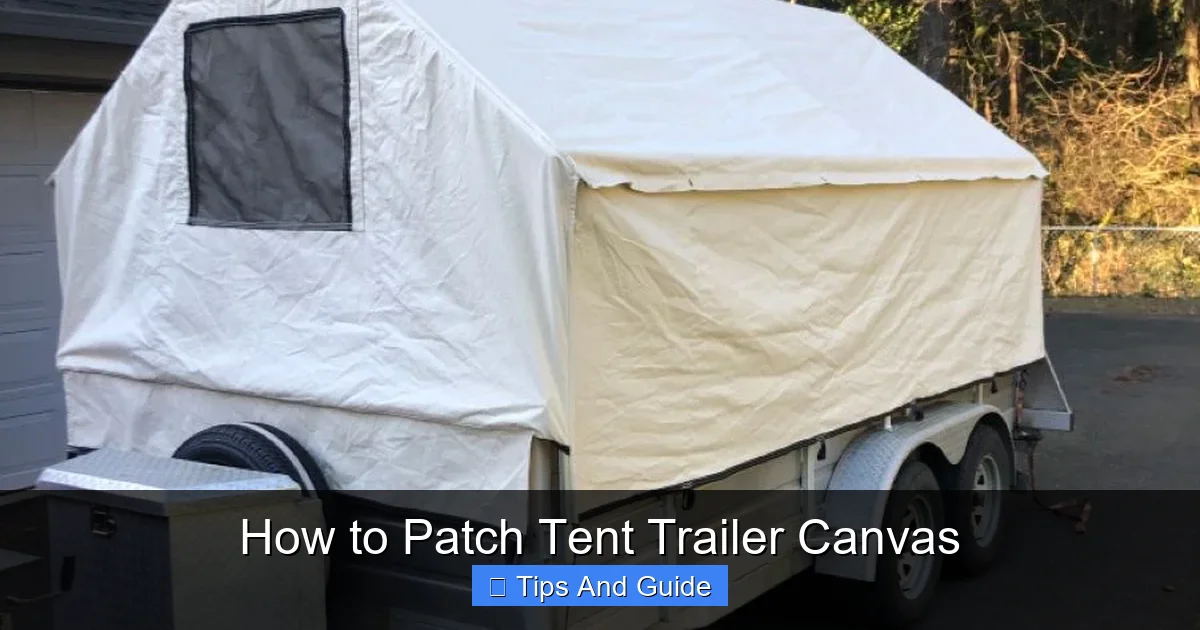
Keep your tent trailer canvas in great shape with this comprehensive guide. You’ll learn how to identify damage, choose the right materials, and apply effective patches. Proper repairs will extend the life of your canvas and ensure your adventures are dry and comfortable.
Going on camping trips in your tent trailer is a fantastic way to experience the outdoors. However, the canvas material of your tent trailer is exposed to the elements and can sometimes get damaged. Tears, rips, or worn spots can happen. Don’t worry! Patching tent trailer canvas is a manageable DIY task that can save you money and keep your trailer ready for your next adventure. This guide will walk you through everything you need to know to successfully patch your tent trailer canvas.
### Understanding Tent Trailer Canvas Damage
Before you can patch your tent trailer canvas, it’s important to understand the types of damage that can occur and what causes them.
#### Common Types of Canvas Damage
* Rips and Tears: These are often caused by sharp objects, branches, or general wear and tear. They can range from small punctures to large gashes.
* Seam Separation: Over time, the stitching holding seams together can weaken and break, creating openings.
* Mildew and Mold: If canvas is stored while damp, it can develop unsightly and damaging mildew and mold spots. These can weaken the fabric.
* Fraying Edges: Edges that are constantly rubbed or exposed can fray, leading to weak spots.
* UV Damage: Prolonged exposure to sunlight can degrade the canvas fibers, making them brittle and prone to tearing.
#### Causes of Damage
* Weather: Strong winds, heavy rain, hail, and even extreme sun can stress the canvas.
* Animal Activity: Rodents or birds might chew at the canvas, especially if it’s been left unattended or if there are food scraps nearby.
* Improper Storage: Storing the tent trailer while wet or dirty significantly increases the risk of mildew and fabric degradation.
* Physical Abrasion: Rubbing against trees, rocks, or other objects during setup or takedown can cause tears.
* Age and Wear: Like any fabric, tent trailer canvas will eventually wear out.
### Preparing for the Repair
Proper preparation is key to a successful patch. This involves gathering your supplies and cleaning the damaged area.
#### Gathering Your Supplies
Having the right tools and materials on hand will make the patching process smoother and more effective.
* Canvas Patch Material: You can use specialized tent repair patches, heavy-duty canvas fabric, or even a piece of an old, sturdy tent or tarp. Ensure it’s waterproof or water-resistant.
* Adhesive or Sealant:
* For Adhesive Patches: Often, the patches come with their own adhesive. If not, a strong, flexible fabric glue or seam sealer designed for outdoor fabrics will work. Look for products like Gear Aid Seam Grip or Aquaseal.
* For Sewing: Heavy-duty polyester thread, a strong needle (preferably a curved upholstery needle if sewing by hand), and a sewing machine capable of handling thick canvas.
* Cleaning Supplies:
* Mild soap or a dedicated tent cleaner.
* Clean water.
* Clean cloths or sponges.
* Rubbing alcohol (for final cleaning before patching).
* Cutting Tools: Sharp scissors or a rotary cutter for precise cuts.
* Measuring Tools: A ruler or measuring tape.
* Optional:
* Sandpaper (fine-grit) for slightly roughing up the area around a tear if using strong adhesive.
* Clamps or heavy objects to hold the patch in place while it dries.
* A hairdryer or heat gun (used with extreme caution) to speed up drying or activate certain adhesives.
#### Cleaning the Damaged Area
A clean surface is essential for any patch to adhere properly and effectively seal out water.
1. Inspect the Damage: First, carefully examine the rip or tear. Note its size, location, and whether it goes through one or both layers of canvas.
2. Remove Debris: Gently brush away any loose dirt, leaves, or debris from the damaged area, both inside and outside the tent trailer.
3. Wash the Area: Using mild soap and water, gently wash the area around the damage. Avoid harsh detergents, which can degrade the canvas. Rinse thoroughly to remove all soap residue.
4. Allow to Dry Completely: This is a critical step. The canvas must be bone dry before you proceed. You can let it air dry in the sun, or if you’re in a hurry, use a hairdryer on a low setting.
5. Final Clean with Alcohol: Once completely dry, wipe the area with rubbing alcohol on a clean cloth. This removes any lingering oils or residues that could prevent the patch from sticking. Let the alcohol evaporate completely.
### Patching Methods: Step-by-Step Instructions
There are two primary methods for patching tent trailer canvas: using adhesive patches and sewing.
#### Method 1: Using Adhesive Patches (No-Sew Repair)
This is a quick and effective method for most tears and small holes.
1. Measure and Cut Your Patch:
* Measure the damaged area.
* Cut your patch material so that it is at least 1-2 inches larger than the damaged area on all sides. This overlap is crucial for a good seal.
* Round off the corners of your patch. Sharp corners are more likely to peel up over time.
2. Prepare the Patch:
* If your patch material doesn’t have adhesive, apply a thin, even layer of fabric adhesive or seam sealer to the back of the patch. Follow the product’s instructions carefully regarding drying time before application.
* If using a pre-adhesive patch, peel back the backing paper from the center, being careful not to touch the adhesive.
3. Apply the Patch:
* Carefully position the patch over the damaged area, ensuring it covers the tear completely and the edges extend well beyond it.
* Press down firmly from the center outwards, smoothing out any wrinkles or air bubbles. Work towards the edges to ensure a tight seal.
* For maximum adhesion, apply pressure for several minutes. You can use a roller tool if you have one, or simply use your hands.
4. Secure the Patch (if needed):
* If you’re concerned about the patch lifting while the adhesive cures, you can place a heavy object or use clamps (with a soft cloth to protect the canvas) over the patch.
* Some adhesives recommend applying heat to activate them fully. If your product does, use a hairdryer on a low to medium setting, moving it constantly to avoid overheating one spot. Check the adhesive’s instructions.
5. Allow to Cure:
* Let the patch cure completely according to the adhesive’s instructions. This is usually 24-48 hours. Do not disturb it during this time.
#### Method 2: Sewing a Patch (Durable Repair)
This method is ideal for larger tears, seam repairs, or for those who prefer a more permanent solution.
1. Measure and Cut Your Patch:
* Similar to the adhesive method, measure the damaged area.
* Cut your patch material about 1-2 inches larger than the tear on all sides. Again, round the corners.
2. Prepare the Edges (Optional but Recommended):
* To prevent fraying, you can fold over the edges of your patch material by about 1/4 inch and iron them down (if the material allows) or stitch a quick hem around the edge.
3. Position the Patch:
* Place the patch on the inside of the tent trailer canvas, covering the tear. For a more robust repair, you can use two patches, one on the inside and one on the outside, overlapping the tear.
* Pin the patch securely in place.
4. Sewing the Patch:
* By Hand: Use a strong, doubled-up polyester thread. Start sewing from one edge of the patch, using a tight, overlapping stitch (like a whipstitch or a zigzag stitch) to go around the entire perimeter of the patch. Ensure your stitches go through both the patch and the original canvas. Aim for stitches about 1/4 inch from the edge of the patch.
* By Machine: Use a heavy-duty needle and strong polyester thread. Set your machine to a zigzag stitch. Sew around the perimeter of the patch, overlapping your stitches for strength. You may want to do two rows of stitching for extra security. Backstitch at the beginning and end to secure your stitches.
5. Reinforce Large Tears: For very large or complex tears, consider sewing a few lines of stitches across the tear itself, in addition to sewing the patch down. This adds extra support.
6. Finishing:
* Trim any excess thread.
* If you used two patches, repeat the sewing process for the second patch on the other side of the canvas.
### Applying Sealant to Stitched Patches
If you’ve sewn a patch, especially if the canvas is older or the tear was significant, applying seam sealer to the stitched edges will greatly improve its water resistance.
1. Clean the Stitched Area: Ensure the area is clean and dry.
2. Apply Seam Sealer: Carefully apply a thin bead of seam sealer along the stitching lines and the edges of the patch.
3. Smooth and Distribute: Use a small brush or your finger to spread the sealer evenly, pushing it into the stitches and ensuring complete coverage.
4. Allow to Cure: Let the seam sealer cure completely, as per the product’s instructions.
### Troubleshooting Common Patching Issues
Even with careful work, you might encounter problems. Here’s how to address them.
* Patch Not Sticking:
* Cause: Surface not clean, adhesive too old, wrong type of adhesive, or not enough pressure applied.
* Solution: Carefully peel off the patch if possible. Re-clean the area thoroughly with alcohol. Ensure your adhesive is fresh and suitable for canvas. Apply the patch again with firm, consistent pressure. If using a fabric glue, consider trying a stronger, flexible adhesive.
* Patch Peeling at Edges:
* Cause: Edges not rounded, insufficient overlap, or adhesive not fully cured.
* **Solution:** Try to press the edges back down firmly. If it still lifts, you may need to trim the peeling edge and apply a smaller “patch over patch” to secure the lifting edge. Ensure you allow full curing time.
* Patch Leaks After Repair:
* Cause: Tear was too large for the patch, patch wasn’t large enough, stitching has holes, or sealant wasn’t applied correctly.
* Solution: You might need to apply a larger patch, overlapping the original one. If stitched, ensure your stitches are close enough to prevent water seepage. Reapply seam sealer if necessary, ensuring it fully penetrates the stitching.
* Canvas Material Degradation:
* Cause: Old, brittle canvas.
* **Solution: For very old or degraded canvas, patching might be a temporary fix. You may need to consider professional repair or eventual replacement of the canvas section.
### Testing Your Repair
Once your patch has fully cured or stitching is complete, it’s vital to test its effectiveness.
1. Water Test:
* The best way to test is with water. You can use a hose on a gentle spray setting, or if possible, wait for rain.
* Thoroughly wet the patched area from the outside.
* Inside the tent trailer, check for any signs of moisture or drips. Use a dry cloth to dab the area and check for dampness.
2. Address Any Leaks: If you find any leaks, you’ll need to go back and reinforce the repair, potentially by adding another layer of patch or sealant.
### Maintaining Your Tent Trailer Canvas
Preventative care can significantly reduce the need for frequent patching.
* Always Dry Thoroughly: Before storing your tent trailer, ensure the canvas is completely dry. This is the most important step to prevent mildew.
* Clean Regularly: Brush off dirt and debris after trips. Periodically clean the canvas with mild soap and water.
* Protect from UV Rays: If your trailer is stored outdoors, consider a cover to shield the canvas from direct sunlight.
* Inspect Periodically: Make it a habit to inspect your canvas for small issues before they become big ones. This is also a great time to check your tent trailer for general maintenance, perhaps ensuring you have the best pop up tent trailer for your needs.
### Conclusion
Patching tent trailer canvas might seem daunting, but with the right preparation and techniques, it’s a repair you can confidently handle yourself. By following these steps, you can mend tears, reinforce weak spots, and ensure your tent trailer canvas remains waterproof and resilient for many adventures to come. Regular inspection and proper maintenance will further extend the life of your canvas, allowing you to enjoy the great outdoors without worry. Happy camping!
- Identify canvas damage early: Regularly inspect your tent trailer canvas for rips, tears, or worn areas before they become major problems.
- Gather the right supplies: Having the correct canvas patch material, strong adhesive or sewing kit, and cleaning supplies is crucial for a successful repair.
- Clean the area thoroughly: A clean surface ensures the patch adheres well and the repair lasts.
- Choose the appropriate patching method: Select between adhesive patches for quick fixes or sewing for a more durable, long-term solution.
- Apply the patch carefully: Whether gluing or sewing, precise application is key for a watertight and secure repair.
- Test for leaks: After the patch has set or the stitching is complete, a water test will confirm the repair’s effectiveness.
