
Packing your tent efficiently is key to a comfortable backpacking trip. This guide provides step-by-step instructions on how to fold, compress, and organize your tent within your backpack, ensuring optimal weight distribution and space utilization. Learn techniques to make your tent packing process quick and hassle-free, so you can focus on enjoying the outdoors.
# How to Pack a Tent in a Backpack
Embarking on a backpacking adventure is an exhilarating experience, but it often involves carrying all your essential gear, and perhaps the most significant item is your tent. A well-packed tent can make the difference between a comfortable hike and a strenuous struggle. This comprehensive guide will walk you through the entire process of packing your tent into your backpack, from the initial setup to the final compression. You’ll learn how to make your tent as compact as possible, distribute its weight effectively, and protect it from the elements, ensuring you’re ready for any trail.
## Why Proper Tent Packing Matters
Before we dive into the “how,” let’s briefly touch upon the “why.” Packing your tent correctly isn’t just about fitting it in; it’s about optimizing your backpacking experience.
*
Comfort: A bulky, poorly packed tent can create awkward pressure points and throw off your balance, leading to fatigue and discomfort on the trail.
*
Space Efficiency: Backpacking requires careful space management. A properly packed tent frees up valuable room for other essentials like your sleeping bag and food.
*
Gear Longevity: Correct packing can prevent damage to your tent, its poles, and stakes, extending its lifespan.
*
Weight Distribution: The way you pack your tent significantly impacts how the weight is distributed in your backpack. Proper placement contributes to better balance and reduced strain on your body.
## Preparing Your Tent for Packing
The first step to efficient tent packing is thorough preparation. Don’t just stuff it in your bag straight from the campsite. Take a few moments to ensure it’s ready.
### 1. Dry and Clean Your Tent
This is arguably the most crucial preparatory step. After your camping trip, or before repacking, always ensure your tent is completely dry. Moisture can lead to mildew, which is not only unsightly but can also degrade the fabric and create an unpleasant odor. If you can’t dry it thoroughly at the campsite, find a way to air it out at home or at a park before packing it away for storage.
Also, take a moment to shake out any dirt, leaves, or debris from the tent and its fly. Small particles can wear down the fabric over time and are harder to remove once compressed.
### 2. Inspect for Damage
While your tent is laid out, it’s a good time to quickly inspect it for any rips, tears, or loose seams. Address any minor damage before it becomes a bigger problem. Small patches or seam sealer can work wonders.
## The Packing Process: Step-by-Step
Now, let’s get down to the actual packing. We’ll break this down into packing the main tent body, the rainfly, poles, and stakes.
### Step 1: Pack the Tent Body and Rainfly Separately
Most backpackers find it easier and more efficient to pack the tent body and the rainfly in separate stuff sacks. This not only helps with compression but also allows for more versatile packing within your backpack. Sometimes, you might only need the rainfly for temporary shelter, and having it separate makes this easy.
#### Folding the Tent Body
The goal here is to create a consistent, manageable shape. There are a few common methods:
-
The Accordion Fold: Lay the tent body flat. Fold it in half lengthwise, then in half again, creating a long, narrow rectangle. Then, fold this rectangle into thirds or quarters, depending on its length and your desired packed size.
-
The Roll: Lay the tent flat. Starting from one of the shorter ends, tightly roll the tent up. This method can be very effective for compressing air out.
Tip: Whichever folding method you choose, try to be consistent. This will help you achieve a uniform shape that fits predictably into your backpack.
#### Folding the Rainfly
The rainfly can usually be folded in a similar manner to the tent body. You might find that folding it into a slightly different shape or size can help it nestle better alongside the tent body within your backpack.
### Step 2: Pack the Poles and Stakes
These are often the most awkward items to pack. Most tents come with a dedicated stuff sack for the poles. If yours doesn’t, or if you want extra protection, use a small stuff sack or even wrap them in a piece of spare fabric.
#### Storing Tent Poles
Option 1: Inside the Tent Stuff Sack: Many tent stuff sacks are designed to accommodate the poles alongside the folded tent body. This is the simplest method.
Option 2: Separate Stuff Sack: If your poles are long and unwieldy, or if you prefer to keep them separate, place them in their own stuff sack. This can help them lie flatter against the inside of your backpack.
Option 3: Strapped to the Outside (Use with Caution): In a pinch, some backpackers strap their tent poles to the outside of their pack. However, this is generally not recommended as they can snag on branches, break, or get lost. If you do this, ensure they are securely fastened and protected.
#### Storing Tent Stakes
Tent stakes can be sharp and can also damage other gear if not packed carefully. They often come with their own small bag. If not, a small, sturdy stuff sack or even a dedicated pocket in your backpack is ideal.
Tip: Consider grouping your stakes by size or type if your tent has different kinds for different purposes. This can make setup easier.
### Step 3: Compression is Key
Once your tent body, rainfly, poles, and stakes are folded and in their respective stuff sacks, it’s time to compress them. This is where compression sacks or compression straps on your existing stuff sacks come into play.
-
Compression Sacks: These are specialized bags with extra straps that allow you to significantly reduce the volume of your gear. Place your folded tent body or rainfly into a compression sack and systematically tighten the straps. You’ll be amazed at how much smaller your tent becomes!
-
Compression Straps on Backpack: Many backpacks have external compression straps. While you can use these to cinch down a bulky item, it’s generally better to pack items inside for protection.
Note: If you’re using a waterproof stuff sack, ensure you’ve squeezed out as much air as possible before sealing it. For non-waterproof stuff sacks, compression will naturally push out much of the air.
### Step 4: Strategic Placement within Your Backpack
This is where the real magic of efficient packing happens. The placement of your tent within your backpack is crucial for comfort and balance.
The “Core” Placement Rule
The general rule for packing heavy items like your tent is to place them close to your back, in the middle of your pack’s depth. This keeps the weight centered and close to your body’s center of gravity, preventing the pack from pulling you backward.
-
Bottom of the Pack: Lighter, bulkier items like your sleeping bag often go at the bottom. This creates a stable base.
-
Middle Zone (Against Your Back): This is the prime real estate for your tent. Place your compressed tent stuff sack(s) here. If you have a single large tent stuff sack, it fits perfectly. If you have separate sacks for the tent body and rainfly, you can place them here side-by-side or stacked vertically against your back.
-
Top of the Pack: Frequently needed items or lighter gear that you want to access easily go here.
-
External Pockets: Water bottles, snacks, and rain gear are good candidates for external pockets.
Specific Scenarios
-
Lightweight Backpacking Tents: These are often quite compact. You might be able to fit your tent in a side pocket or an external strap if it’s very small and rigid.
-
Larger or More Complex Tents: If you have a larger tent, like a pop-up tent you can stand up in or a family-sized tent, you might need to get creative. Consider distributing the components if necessary. For example, the poles could go down one side of your pack’s internal frame, and the tent body and fly could be compressed into the main compartment.
Protecting Your Tent from the Elements
Even with careful packing, you can’t control the weather. To ensure your tent stays dry and ready for use, consider using a waterproof layer:
-
Waterproof Stuff Sack: Invest in high-quality waterproof stuff sacks for your tent body and rainfly. Ensure they have a durable water-repellent (DWR) coating and fully sealed seams.
-
Pack Liner: A large, waterproof pack liner inside your backpack acts as a final barrier against moisture seeping through your pack’s material.
Packing Different Types of Tents
While the general principles apply to most tents, there are slight variations for different types:
-
3-Season Tents: These are the most common and generally pack down well using the methods described above.
-
4-Season or Winter Tents: These are often bulkier due to reinforced poles and more robust fabric. You might need to employ more aggressive compression techniques or consider if your backpack is large enough for all components.
-
Backpacking Tents: These are designed for lightness and packability, so they typically fold and compress very efficiently.
-
Car Camping Tents: These are usually much larger and heavier and are not intended for backpacking. If you are car camping, you can often pack them more loosely in the trunk or storage bins.
- Preparation is Key: Before you start packing, ensure your tent is completely dry and free of debris to prevent mildew and damage.
- Master the Fold: Learn the most effective folding techniques for your specific tent type to create a compact and manageable shape.
- Utilize Compression Sacks: Compression sacks are invaluable for reducing the volume of your tent, poles, and stakes.
- Strategic Placement: Pack your tent lower and closer to your back for better weight distribution and stability while hiking.
- Protect Your Gear: Use a waterproof stuff sack or liner for your tent to keep it dry in adverse weather conditions.
- Practice Makes Perfect: Take time to practice packing your tent before your trip to refine your technique and ensure it fits comfortably.
Troubleshooting Common Tent Packing Issues
Sometimes, despite best efforts, things don’t go perfectly. Here are a few common issues and how to solve them:
-
Tent Won’t Compress Enough: Ensure you’re squeezing out as much air as possible before sealing your stuff sack. If it’s still too bulky, consider if there are any loose folds or if you could roll it more tightly.
-
Awkward Shape: Try a different folding method for the tent body or rainfly. Sometimes alternating between accordion folds and rolls can yield a better shape.
-
Poles or Stakes Snagging: Make sure all poles and stakes are fully enclosed within their stuff sacks or pockets. If strapping externally, use sturdy straps and consider wrapping them in a tarp or extra fabric for protection.
-
My Tent is Wet and I Can’t Dry It: If you absolutely must pack a damp tent, put it in a waterproof stuff sack and then place that sack inside another dry bag or a garbage bag. Air it out as soon as you can to prevent mildew.
Conclusion
Mastering how to pack a tent in a backpack is a fundamental skill for any backpacker. By following these steps—preparing your tent, folding efficiently, using compression, and strategically placing it in your pack—you can transform a potentially bulky item into a manageable component of your gear. A well-packed tent contributes to a lighter load, better balance, and a more enjoyable journey. Remember, practice makes perfect, so try packing your tent a few times before your next big adventure. Happy trails!
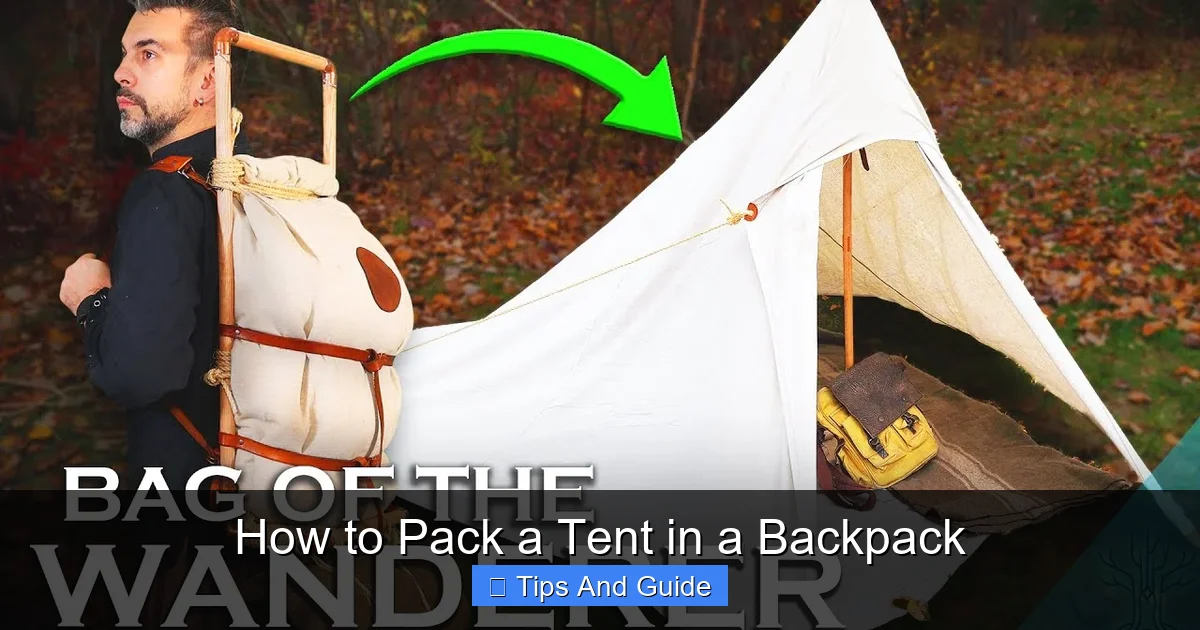
Visual guide about How to Pack a Tent in a Backpack
Image source: i.ytimg.com
