
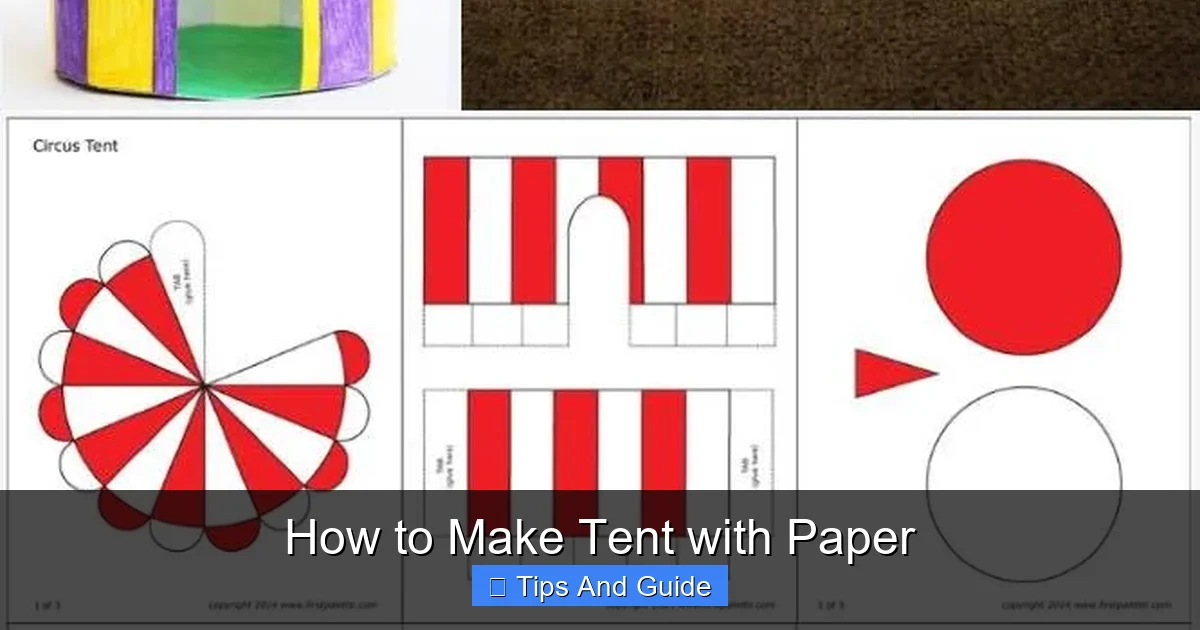
Discover the joy of crafting with this easy-to-follow guide on how to make a tent with paper. You’ll learn to transform simple paper into a charming, miniature tent. This project is perfect for kids, school projects, or even as a unique decorative piece. Get ready to unleash your creativity and build your own paper shelter!
# How to Make Tent with Paper
Have you ever wanted to build your own miniature shelter? Imagine creating a tiny tent right from your desk! Making a tent with paper is a fun and engaging craft activity that’s perfect for all ages. Whether you’re looking for a creative project for kids, a unique addition to a diorama, or just a way to unwind, this guide will walk you through every step. We’ll show you how to transform ordinary paper into a charming, sturdy little tent. Get ready to fold, cut, and stick your way to a fantastic paper tent!
This guide will teach you the fundamental techniques for constructing a basic paper tent. We’ll cover the materials you’ll need, how to build the main structure, and some simple ways to add those special touches that make your tent come alive. Let’s get started on your paper crafting adventure!
## Gathering Your Supplies
Before we begin building, it’s essential to have all your materials ready. This makes the crafting process smooth and enjoyable.
### Essential Materials
* **Paper:** The star of the show! You can use various types of paper.
* **Cardstock:** This is a thicker paper that will make your tent more durable and able to stand on its own. It’s great for a more robust structure.
* **Construction Paper:** This comes in many vibrant colors, allowing for a more visually appealing tent. It’s a bit thinner than cardstock but still works well.
* **Printer Paper:** Lighter and easier to fold, but might require extra support or thicker tape to stand up.
* **Patterned Paper:** For a more decorative touch, consider using scrapbook paper or wrapping paper.
* **Cutting Tool:**
* **Scissors:** Standard craft scissors work perfectly.
* **Craft Knife (Optional):** For more precise cuts, especially for windows or intricate details, a craft knife can be helpful. Always use with adult supervision.
* **Adhesive:**
* **Glue Stick:** Easy to use and less messy, good for general assembly.
* **White Craft Glue:** Provides a stronger bond, especially for heavier paper like cardstock.
* **Tape:** Clear tape or masking tape can be used for quick fixes or to reinforce seams.
* **Measuring Tool:**
* **Ruler:** Essential for making straight lines and accurate measurements, which leads to a neater tent.
* **Scoring Tool (Optional but Recommended):**
* **Bone Folder or the back of a butter knife:** Scoring the paper before folding creates crisp, clean creases, making your tent look much more professional.
### Optional Decorative Materials
* **Markers, Crayons, or Colored Pencils:** To draw details like windows, doors, or even patterns on your tent.
* **Stickers:** For quick and easy decoration.
* **Fabric Scraps:** To create tiny curtains or a flag.
* **Small twigs or craft sticks:** To add realistic tent poles or supports.
## Building the Basic Tent Structure
We’ll start with a simple A-frame tent design, which is classic and easy to construct.
### Step 1: Create the Tent Base and Walls
The simplest way to make an A-frame tent is by folding a single piece of paper.
#### H3: The Single-Sheet Method
This is the easiest way to make a small, effective paper tent.
1. **Choose Your Paper:** Select a rectangular piece of paper. For a medium-sized tent, an A4 or letter-sized paper is a good start.
2. **Fold in Half:** Fold the paper in half lengthwise. Crease it well. This forms the peak of your tent.
3. **Create the Tent Shape:** Open the paper slightly. Now, take the two long edges and bring them inwards to meet at the center crease. This will create a triangular prism shape.
4. **Secure the Sides:** Use tape or glue to secure the overlapping edges. Make sure the seam is neat and the tent holds its shape.
5. **Form the Base:** You now have the basic triangular shape of your tent. To make it stand, you might need to create a flat base. You can do this by cutting small flaps at the bottom edges and folding them outwards, then taping them down. Alternatively, you can cut a separate rectangular piece of cardstock to be the floor and glue your tent structure onto it.
### Step 2: Reinforcing and Stabilizing
A paper tent can be quite delicate. Here’s how to make it a bit sturdier.
#### H3: Adding Support
* **Internal Supports:** For larger tents, you can add small cardboard “tent poles” or even rolled-up paper cylinders inside to help maintain the shape.
* **Base Reinforcement:** As mentioned, attaching your tent to a sturdy cardboard base will significantly improve its stability. If you are making a tent for imaginative play, consider using a thicker paper base or even a lightweight cardboard box lid.
* **Seam Taping:** Go over all the glued seams with a thin strip of clear tape. This adds strength and prevents the paper from tearing.
## Adding Details and Decoration
Now for the fun part – making your paper tent look like a real one!
### Step 1: Creating an Entrance
Every tent needs a way in!
#### H3: Designing the Doorway
* **Simple Cut:** On one of the triangular sides, draw a rectangle or an arch. Carefully cut along three sides of the shape, leaving one side attached to act as a hinge. This creates a flap door.
* **Cut-Out Door:** For a more open look, you can cut the entire door shape out.
* **Adding a Doorway:** You can also cut a separate piece of paper for a door and attach it with a small piece of tape on one edge to create a hinge.
### Step 2: Adding Windows
Windows can make your tent feel more realistic and add a nice touch.
#### H3: Window Placement and Design
* **Draw and Cut:** Similar to the door, draw window shapes on the tent walls and carefully cut them out. You can make them square, rectangular, or even circular.
* **Window Frames:** For a more detailed look, cut out thin strips of paper to create window frames. Glue these around the cut-out windows.
* **Curtains (Optional):** You can glue small pieces of fabric or even colored paper behind the windows to create the illusion of curtains.
### Step 3: Decorative Touches
This is where you can let your creativity shine!
#### H3: Personalizing Your Tent
* **Coloring and Drawing:** Use markers, crayons, or colored pencils to draw patterns, logos, or even the name of your tent. You could draw the texture of canvas or add little flags.
* **Adding a Roof Texture:** You can glue on small squares of paper to mimic shingles, or draw overlapping lines to give the roof a textured appearance.
* **Guy Lines and Stakes:** Use thin string or yarn for “guy lines” attached to the sides of the tent, and small paper cones or even tiny pebbles for “stakes” to hold them down on your base.
* **Campfire Scene:** If you’re making a diorama, you can add a tiny paper campfire in front of the tent.
* **Interior Comforts:** For a more elaborate model, you can even add tiny furniture inside, like a rolled-up sleeping bag or a small paper mattress. For inspiration on actual camping comfort, you might find articles on the best camping mattress for tent helpful.
## Variations and Advanced Techniques
Once you’ve mastered the basic A-frame, you can explore other tent designs.
### Step 1: The Pyramid Tent
This design is similar to the A-frame but has a square base.
#### H3: Constructing a Pyramid Tent
1. **Base:** Cut a square from cardstock for the base.
2. **Walls:** Cut four identical triangles. The base of each triangle should match the side length of your square base. The height of the triangle will determine the steepness of your tent.
3. **Assembly:** Glue the sides of the triangles together to form a pyramid shape.
4. **Attach to Base:** Glue the bottom edges of the pyramid to the edges of your square base.
### Step 2: The Dome Tent
Dome tents are popular for their spacious interiors and stability. This is a bit more complex but very rewarding.
#### H3: Making a Simple Dome Tent
1. **Base:** Cut a circle from cardstock for the base.
2. **Sections:** You’ll need to create curved panels. A simple way is to cut multiple long, thin, slightly curved rectangular strips. The more strips you use, the smoother the dome will look.
3. **Assembly:** Glue the long edges of the strips together, curving them upwards. As you add more strips, they will naturally form a dome shape.
4. **Attach to Base:** Glue the bottom edges of your assembled dome onto the circular base.
### Step 3: Larger Scale Paper Tents
If you want to make a tent large enough for a child to sit inside, you’ll need to scale up significantly.
#### H3: Scaling Up Your Design
* **Use Large Cardboard:** For a play tent, you’ll want to use large pieces of cardboard, perhaps from appliance boxes.
* **Simplified Shapes:** Focus on creating the main structural shapes (triangles for A-frames, rectangles for walls and roofs) and securely joining them with strong tape like duct tape.
* **Ventilation:** Ensure there are openings for air circulation if it’s a play tent.
* **Door and Windows:** Cut out large openings for easy access and ventilation.
* **Consider a Tent Frame:** For very large structures, you might need to create an internal frame from lighter wood or PVC pipes and then attach the cardboard or thick paper to it. This is a more advanced project, but it allows for much larger, more durable play structures. You might also look into resources for building larger camping structures, such as articles on the best cabin tent with screen room, for inspiration on structural elements.
## Troubleshooting Common Paper Tent Issues
Even the best crafters run into little snags. Here are some common problems and how to fix them.
### Problem: My tent won’t stand up.
* **Solution:** Ensure your folds are crisp and clean. Using a scoring tool helps immensely. If using lighter paper, reinforce the seams with tape or glue it to a sturdy base. For A-frame tents, ensure the bottom edges are flat and form a stable base.
### Problem: The paper is tearing at the folds or seams.
* **Solution:** Score the paper before folding to prevent tearing. If you’re using a glue stick on heavier paper, you might need to switch to white craft glue for a stronger bond. For very stressed areas, a small piece of tape can reinforce the paper.
### Problem: The glue isn’t holding well.
* **Solution:** Make sure the surfaces you are gluing are clean and free of dust or oils. For smooth paper, a light roughening with sandpaper can improve adhesion. If using a glue stick, let the glue dry completely before putting stress on the joint. White craft glue often requires a short drying time to set properly.
### Problem: My decorations are falling off.
* **Solution:** Ensure you are using enough adhesive for your decorations. For heavier items, a stronger glue like craft glue might be necessary. You can also try attaching decorations with small pieces of tape.
## Conclusion
Making a tent with paper is a wonderfully versatile craft. From simple folded designs to more intricate structures, the possibilities are endless. You’ve learned how to gather your materials, build a sturdy structure, and add those personal touches that bring your paper tent to life.
Whether this paper tent is for a school project, a delightful toy for a child, or a unique decorative piece, the process is rewarding. Remember that practice makes perfect, and don’t be afraid to experiment with different paper types, sizes, and decorations. For those dreaming of larger, real-world shelters, exploring options like the best pop-up tent waterproof can offer insights into structural design and material choices.
So, grab your paper and let your imagination build! Happy crafting!
- Materials Needed: You’ll primarily need paper, scissors, tape or glue, and a ruler.
- Basic Structure: The foundation of the paper tent involves creating a base and then forming the tent walls.
- Shaping Techniques: Learn how to fold and secure paper to create the characteristic triangular or A-frame shape of a tent.
- Adding Details: Discover simple ways to enhance your paper tent with doors, windows, and decorative elements.
- Durability Tips: Simple methods can make your paper tent sturdier and longer-lasting for play or display.
- Creative Variations: Explore how to adapt the basic design to create different tent styles and sizes.
