
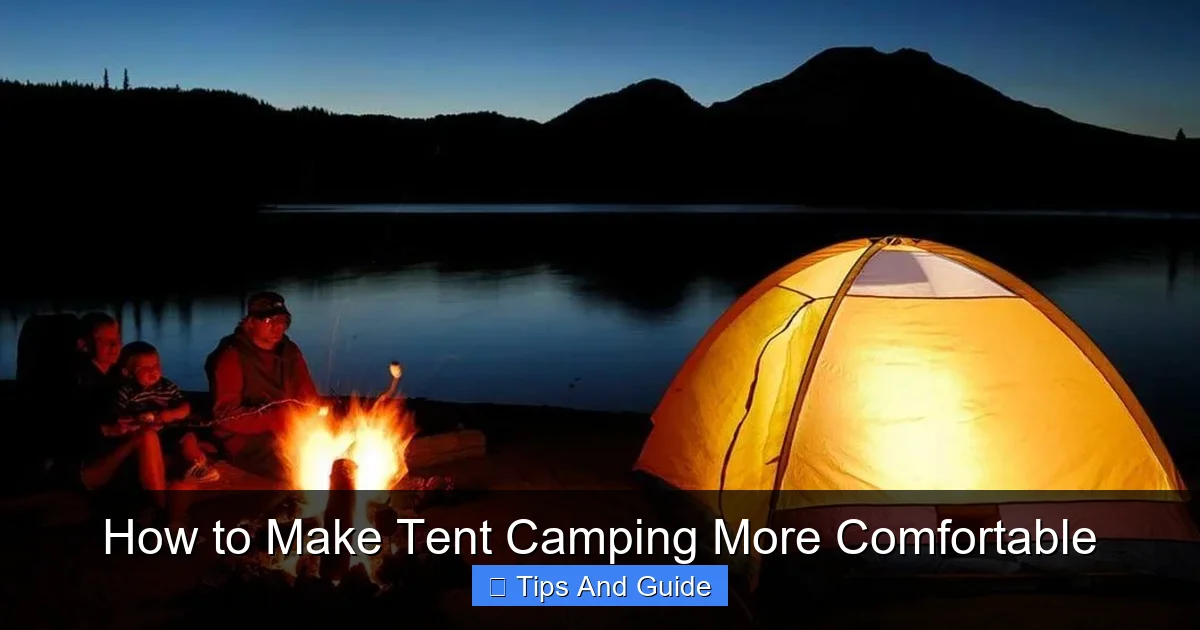
Ready to upgrade your tent camping experience? This guide provides essential tips for making your outdoor adventures more comfortable. Learn how to choose the right gear, set up a cozy sleeping area, manage temperature, and stay organized to ensure you get a great night’s sleep and fully enjoy your time in nature.
## How to Make Tent Camping More Comfortable
Tent camping is an incredible way to connect with nature, explore new places, and enjoy simple pleasures. However, if you’ve ever shivered through a cold night, tossed and turned on uneven ground, or felt cramped and disorganized in your tent, you know that comfort isn’t always a given. But it doesn’t have to be that way! With a few smart choices and practical tips, you can transform your tent camping experience from potentially uncomfortable to wonderfully cozy.
This guide is designed to help you achieve peak comfort in your tent, no matter your experience level. We’ll cover everything from selecting the right gear to optimizing your sleeping setup and managing the elements. Get ready to learn how to make your next camping trip your most comfortable one yet!
### 1. Choosing the Right Tent: Your Home Away From Home
The foundation of a comfortable camping trip starts with your tent. It’s your shelter, your sanctuary, and your primary defense against the elements. Choosing wisely is crucial for a pleasant experience.
#### Sizing Matters: Don’t Skimp on Space
A common mistake is buying a tent that’s just big enough for the number of people it needs to hold. While this might save on weight and cost, it often leads to discomfort. You need space to move around, store gear, and avoid feeling claustrophobic.
* Tip: For a truly comfortable experience, aim for a tent that is rated for one or two more people than you actually have. For example, if you’re camping with two people, consider a three or four-person tent. This extra space is invaluable for storing bags, laying out sleeping gear, and simply having room to breathe.
#### Consider the Season and Weather
Are you camping in the summer heat, the crisp autumn air, or facing potential rain? Your tent’s design should match the conditions.
* Four-Season Tents: These are built for extreme weather, offering robust protection against heavy snow, strong winds, and cold temperatures. They are often heavier and more expensive, best suited for serious winter campers.
* Three-Season Tents: The most common type, designed for spring, summer, and fall. They offer good ventilation to manage heat and adequate protection from rain and moderate winds. Look for good mesh panels for airflow.
* Rainfly and Waterproofing: Ensure your tent has a good quality rainfly that extends far down the sides. Check the waterproof rating (hydrostatic head) of the tent fabric and floor. Higher numbers mean better waterproofing.
#### Ease of Setup
Especially if you’re car camping or setting up camp after a long day of hiking, a tent that’s easy to pitch is a comfort multiplier.
* Pop-Up Tents: These are incredibly quick to set up, often unfolding in seconds. They are fantastic for casual campers or those who prioritize speed and simplicity. Many options are available, from best pop-up tent for family camping to smaller, more portable versions.
* Color-Coded Poles and Clips: Many modern tents feature color-coded poles and clips, making assembly intuitive and faster.
### 2. Creating a Comfortable Sleeping Haven
A good night’s sleep is paramount to enjoying your camping trip. Discomfort can stem from the ground, the cold, or inadequate bedding.
#### The Importance of a Sleeping Pad or Air Mattress
Direct contact with the cold, hard ground will leach body heat and be incredibly uncomfortable. A good sleeping pad or air mattress is non-negotiable for comfort.
* Sleeping Pads:
* Closed-cell foam pads: Lightweight, durable, and inexpensive, but offer less cushioning. Great for backpacking where every ounce counts.
* Self-inflating pads: Offer a good balance of comfort, insulation, and packability. They inflate partially on their own and can be topped up manually.
* Inflatable air mattresses: Provide the most cushioning and comfort, feeling most like a bed. However, they can be prone to punctures and may require a pump. For car camping, a high-quality best camping mattress for tent can make a world of difference.
* Tip: Always check the R-value of your sleeping pad. This indicates its thermal resistance – the higher the R-value, the better it insulates you from the cold ground.
#### Pillows: Don’t Forget Them!
A small, compressible camping pillow can significantly improve your sleep quality. If you don’t have one, stuffing your extra clothes into a stuff sack can work in a pinch.
#### Sleeping Bags: Choose Wisely
Your sleeping bag is your personal microclimate. Its temperature rating is crucial.
* Temperature Ratings: Sleeping bags are rated for different temperature ranges (e.g., 0°F, 20°F, 30°F, 50°F). Choose a bag rated for temperatures lower than you anticipate encountering. It’s easier to vent a warm bag than to warm up a cold one.
* Fill Type: Down offers excellent warmth-to-weight ratio and compressibility but loses insulation when wet. Synthetic fill is bulkier but insulates even when damp.
* Tip: Consider a sleeping bag liner for an extra layer of warmth and to keep your bag cleaner.
### 3. Mastering Temperature Control: Staying Cozy or Cool
Whether you’re battling the chill or the heat, managing your tent’s temperature is key to comfort.
#### Staying Warm
* Layer Up: Wear moisture-wicking base layers, an insulating mid-layer (like fleece), and a protective outer layer inside your sleeping bag.
* Ventilation is Still Key: Even when it’s cold, some ventilation is necessary to prevent condensation buildup inside the tent, which can make everything damp and colder. Crack a vent or two.
* Hot Water Bottle: Fill a Nalgene bottle with hot (not boiling) water and place it in your sleeping bag before bed.
* Camping Heaters: For car camping, a safe, propane-powered best camping heater for tent can provide significant warmth. Always follow safety instructions and ensure proper ventilation.
#### Staying Cool
* Ventilate, Ventilate, Ventilate: Open all windows and doors, and utilize mesh panels to allow for maximum airflow.
* Shade is Your Friend: Set up your tent in the shade of trees if possible. A tarp or canopy can also be rigged over your tent to provide additional shade.
* Cooling Towels: Wet a bandana or small towel with cool water and tie it around your neck.
* Portable Fans: A battery-powered best camping fan for tent can create a much-needed breeze inside your tent. Look for models designed for camping, as they are typically quiet and energy-efficient.
### 4. Organization and Ambiance: A Tidy and Welcoming Space
A cluttered tent is an uncomfortable tent. Keeping your space organized makes it feel more like a home and less like a storage unit.
#### Smart Storage Solutions
* Gear Loft: Many tents come with a gear loft, a mesh pocket near the ceiling, perfect for storing small items like headlamps, books, or phones.
* Entryway Storage: Use the vestibule area outside your tent to store muddy boots and wet gear, keeping the inside clean.
* Hanging Organizers: Fabric organizers with multiple pockets can hang from tent poles, providing easy access to smaller items.
* Footprint/Ground Tarp: Place a footprint or tarp *under* your tent to protect the floor and provide a clean surface to remove shoes before entering.
#### Lighting for Function and Mood
Good lighting is essential for navigating your tent after dark and creating a pleasant atmosphere.
* Headlamps: Hands-free lighting is a must for setting up camp, cooking, or visiting the restroom at night.
* Tent Lanterns: Battery-powered LED lanterns are safe, bright, and long-lasting. Many have dimming features to adjust the ambiance. Best camping lights for tent come in various sizes and styles, from compact and portable to larger, room-filling options.
* String Lights: For a touch of coziness, battery-operated LED string lights can transform the inside of your tent into a magical retreat.
### 5. Site Selection and Setup: Setting the Stage for Comfort
Where you choose to pitch your tent and how you set it up has a significant impact on your comfort.
#### Choosing the Perfect Spot
* Level Ground: Always look for the flattest possible spot. Sleeping on a slope can lead to rolling into your tent mate or sliding down all night.
* Drainage: Avoid low-lying areas that might collect water if it rains. Check for signs of previous puddles.
* Protection from Elements: Pitch your tent facing away from the prevailing wind. Consider natural windbreaks like trees or rocks. Be mindful of falling branches or rocks.
* Proximity to Amenities: For car camping, consider how close you are to restrooms, water sources, and your car. Too close to a busy path can mean constant foot traffic and noise.
#### Proper Tent Pitching
* Stake It Down Securely: Use all the guy lines and stakes to ensure your tent is stable, especially if wind is a possibility.
* Use the Rainfly: Even if the forecast is clear, deploying the rainfly provides an extra layer of protection against dew and can help with insulation.
* Check for Obstructions: Before pitching, clear the area of sharp rocks, roots, or pinecones that could puncture your tent floor or create uncomfortable bumps.
### 6. Other Comfort Enhancers
Beyond the basics, a few extra touches can elevate your camping comfort.
* Camp Chairs: A comfortable camp chair makes relaxing around the campfire or at your campsite infinitely more enjoyable.
* Camp Kitchen Setup: If you’re cooking, having a designated, organized cooking area, perhaps with a best camping kitchen tent, can make meal prep much easier and cleaner.
* Bug Protection: No one enjoys being bitten by mosquitoes. Bring insect repellent, consider a bug tent or screen house for dining and lounging, and ensure your tent’s mesh is in good condition.
* Earplugs and Eye Masks: If you’re sensitive to noise or light, these simple items can be lifesavers for a good night’s sleep.
### Troubleshooting Common Comfort Issues
* “My tent floor is cold and damp.”
* Solution: Ensure you are using a sleeping pad with an adequate R-value. You can also place an extra blanket or tarp on the floor inside the tent. Check that your rainfly is properly deployed.
* “I’m sweating all night.”
* Solution: Increase ventilation by opening more vents or doors. Consider a lighter sleeping bag or just using a liner. In extreme heat, a portable fan is your best friend.
* “I feel like I’m sleeping on rocks.”
* Solution: Re-evaluate your sleeping pad. Is it thick enough? Is it properly inflated? If you’re car camping, consider a thicker air mattress or even a best camping bed for tent.
* “My tent is too small.”
* Solution: For future trips, invest in a larger tent. For the current trip, do your best to organize gear outside the sleeping area and keep it minimal inside.
### Conclusion
Making tent camping more comfortable is all about thoughtful preparation and smart gear choices. By focusing on a good shelter, a cozy sleeping system, effective temperature management, and smart organization, you can ensure that your time spent outdoors is relaxing and enjoyable, not a battle against discomfort. Embrace these tips, and you’ll be well on your way to achieving the ultimate comfortable camping experience, making you eager to return to the great outdoors again and again. Happy camping!
Key Takeaways
- Choose the Right Tent: Select a tent that’s appropriately sized for your group and intended use, considering weather conditions.
- Prioritize Sleep Comfort: Invest in a quality sleeping pad or air mattress, comfortable pillows, and appropriate sleeping bags.
- Manage Temperature: Use layers of clothing, strategic ventilation, and consider portable fans or heaters to stay comfortable in varying weather.
- Organize Your Space: Keep your tent tidy with storage solutions, keeping essentials accessible and the floor clear.
- Illuminate Your Tent: Utilize camping lights for visibility and ambiance, making navigating and relaxing easier after dark.
- Enhance Durability: Proper site selection and setup can prevent discomfort from uneven ground, moisture, and wind.
