
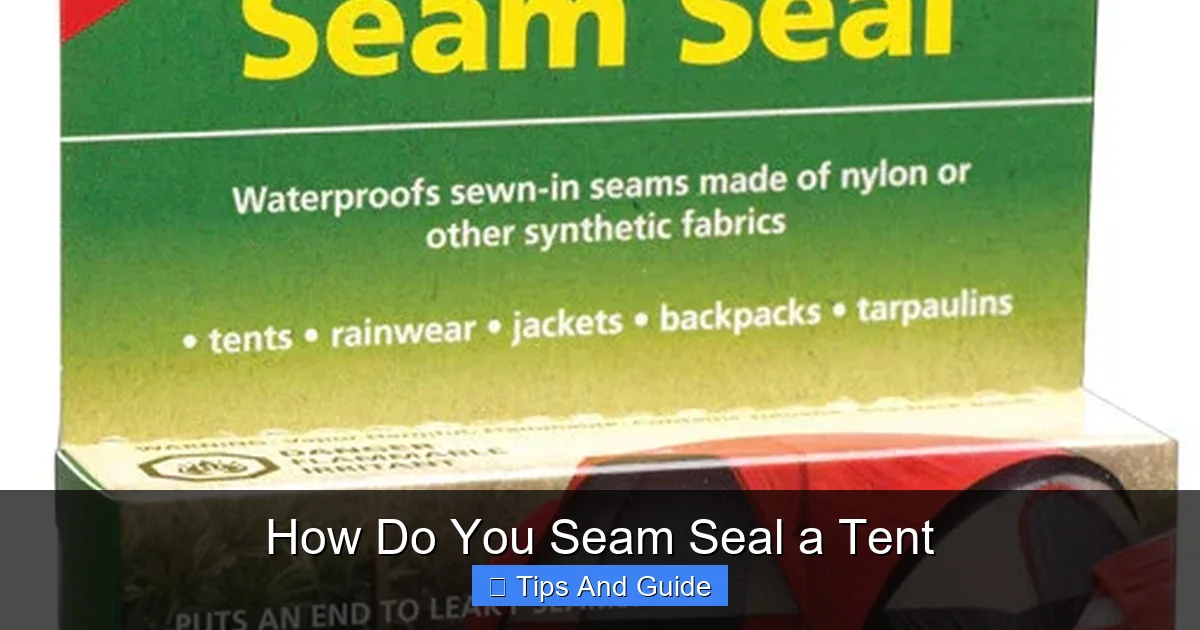
Don’t let a leaky tent ruin your camping trip! This guide provides a comprehensive walkthrough on how to seam seal a tent, ensuring it stays waterproof and comfortable. Learn about the best seam sealing products, preparation steps, and application techniques for a durable, weather-resistant shelter. Proper seam sealing is crucial for extending your tent’s lifespan and enjoying your outdoor adventures.
## How Do You Seam Seal a Tent? A Complete Guide to Waterproofing
A tent is your shelter from the elements when you’re out exploring the great outdoors. But what happens when those elements decide to make their way inside your tent? Water ingress through seams can quickly turn a cozy campsite into a soggy nightmare. That’s where seam sealing comes in. This guide will walk you through everything you need to know to effectively seam seal your tent, ensuring you stay dry and comfortable on all your adventures.
You’ll learn what seam sealing is, why it’s important, what materials you’ll need, and most importantly, a detailed, step-by-step process for applying seam sealer to your tent. We’ll also cover common mistakes to avoid and how to maintain your newly waterproofed seams. By the end of this guide, you’ll have the confidence and knowledge to tackle this essential tent maintenance task.
## Understanding Tent Seam Sealing
Before we dive into the “how,” let’s briefly cover the “why.” Tent seams are created by stitching fabric together. While strong, these stitches create tiny holes that water can easily penetrate, especially under pressure from rain or when the fabric is saturated. Seam sealing is the process of applying a waterproof coating along these stitched seams to fill those microscopic holes and create a continuous barrier against moisture.
A well-seam-sealed tent means a dry tent. This is particularly important for the flysheet and the bathtub-style floor of your tent. If you’ve ever woken up to find damp patches on your sleeping bag or condensation that feels more like a drip, your seams might be the culprit. Regularly seam sealing your tent is a proactive way to ensure its longevity and your comfort.
## When Should You Seam Seal Your Tent?
There are a few key times when seam sealing your tent is a good idea:
* **When it’s new:** Many manufacturers apply a factory seam seal, but it can wear off over time or might not be as thorough as you’d like. A proactive seal on a new tent can offer extra protection.
* **Before a long trip or in a wet climate:** If you’re heading into an area known for heavy rain or embarking on an extended camping trip, a fresh coat of seam sealer is a smart move.
* **After repairs:** If you’ve had to repair a seam or patch a hole, sealing the repaired area is crucial.
* **When you notice leaks:** This is the most obvious sign. If you’re experiencing water ingress through seams, it’s time to reapply.
* **Periodically:** Even without obvious leaks, the seam sealer can degrade over time due to UV exposure, friction, and general wear and tear. A yearly inspection and possible reapplication is recommended.
## Gathering Your Seam Sealing Supplies
Having the right tools and materials makes the job much easier and more effective. Here’s what you’ll typically need:
* **Seam Sealer:** This is the most important item. There are different types, so choose wisely.
* **Silicone-based sealers:** Best for tents made with silicone-coated nylon or polyester. They are flexible and durable. Examples include Gear Aid Seam Grip.
* **Polyurethane-based sealers:** Good for tents with PU-coated fabrics or canvas. They create a strong, waterproof bond. Examples include Gear Aid Seam Grip + WP or McNett Tent Sure.
* **Water-based sealers:** Often suitable for a wider range of fabrics but may not be as durable as silicone or PU options.
* **Consult your tent manufacturer’s recommendations** if you’re unsure which type to use. The wrong type can damage your tent fabric.
* **Rubbing Alcohol (Isopropyl Alcohol):** For cleaning the seams thoroughly.
* **Clean Cloths or Paper Towels:** For applying alcohol and wiping away excess sealer.
* **Gloves:** To protect your hands from the seam sealer and alcohol.
* **Masking Tape or Painter’s Tape (Optional):** To help create a neat edge if you’re worried about getting sealer on the tent fabric itself.
* **A Soft Brush or Applicator (often included with sealer):** For precise application.
* **A Flat, Well-Ventilated Area:** Work outdoors or in a garage with open doors.
* **A Bucket of Water (Optional):** For rinsing tools.
* **Patience:** This is a task that requires care and time.
## Step-by-Step Guide to Seam Sealing Your Tent
Let’s get to it! Follow these steps for a successful seam sealing job.
### Step 1: Prepare Your Workspace and Tent
* **Find a Suitable Location:** Choose a flat, clean, and well-ventilated area. Direct sunlight can cause the seam sealer to dry too quickly, leading to a poor bond. A shaded spot outdoors or a spacious garage is ideal.
* **Set Up Your Tent:** Pitch your tent completely, both the inner tent and the flysheet. This allows you to access all the seams easily and ensures you’re sealing them in their “stressed” state, as they will be when in use. If you have a single-wall tent, pitch it and work on the internal seams.
* **Inspect All Seams:** Carefully examine every seam on your tent, especially the flysheet and the floor. Look for any areas that appear worn, cracked, or are already showing signs of leakage. Pay close attention to stress points like corner seams, guy-out points, and around zippers.
### Step 2: Clean the Seams Thoroughly
This is a critical step often overlooked. Seam sealer won’t adhere well to dirt, grime, or old, degraded sealer.
* **Wipe Down the Seams:** Using a clean cloth dampened with rubbing alcohol, gently wipe down each seam you intend to seal. The alcohol will evaporate quickly and remove oils and residues.
* **Remove Old Sealer (If Necessary):** If there’s old, flaking seam sealer, you’ll need to remove it. You can often peel or scrape it off gently with a dull knife or your fingernail. If it’s stubborn, a bit more rubbing alcohol might help loosen it.
* **Ensure Seams are Dry:** After cleaning, allow the seams to dry completely. This usually only takes a few minutes with alcohol.
### Step 3: Apply the Seam Sealer
Now for the main event! Apply the seam sealer with care and precision.
* **Read the Product Instructions:** Different seam sealers have slightly different application methods and drying times. Always read and follow the manufacturer’s instructions.
* **Apply a Thin, Even Coat:** Using the applicator provided (or a small brush), apply a thin, even bead of seam sealer directly onto the seam line. Aim to cover the stitching and the fabric directly next to it.
* **For Silicone-Based Sealers:** These often come in a tube. Squeeze a consistent bead along the seam. You can then use the applicator tip or a gloved finger to gently spread it slightly, ensuring it seeps into the stitching.
* **For Polyurethane-Based Sealers:** Some come in a bottle with a brush. Dip the brush and apply a smooth, thin layer.
* **Work in Small Sections:** Don’t try to do a whole seam at once if it’s very long. Work in manageable sections, applying the sealer and then spreading it before it starts to skin over.
* **Avoid Thick Globbing:** Applying too much sealer can create a thick, unsightly, and potentially less effective seal. Thin, even coats are better than thick, lumpy ones. The goal is to fill the microscopic holes, not to create a visible rubbery line.
* **Use Tape (Optional for Neatness):** If you’re concerned about getting seam sealer on the main body of the tent fabric, you can carefully apply masking tape along both sides of the seam, leaving only the stitching exposed. Apply the sealer, let it dry slightly, then carefully remove the tape. This is more time-consuming but can result in a very clean finish.
### Step 4: Let it Dry
This is where patience is key. Proper drying is crucial for a strong, durable bond.
* **Check Drying Times:** Refer to your seam sealer’s instructions for recommended drying times. This can vary significantly.
* **Tack-Free Dry:** This means the surface is no longer sticky to the touch. It might be a few hours.
* **Full Cure:** This is when the seam sealer reaches its maximum strength and waterproofing. This can take 24 hours or even longer, depending on the product and humidity.
* **Allow Ample Airflow:** Ensure the tent can air out during the drying process. Don’t pack it away while the sealer is still tacky or wet.
* **Avoid Stressing the Seams:** Try not to move or fold the tent in a way that puts stress on the newly sealed seams while they are drying.
### Step 5: Apply a Second Coat (If Necessary)
For critical seams or if you feel the first coat wasn’t sufficient, a second thin coat can enhance waterproofing.
* **Wait for the First Coat to be Tack-Free:** Ensure the first coat is dry to the touch before applying a second.
* **Apply the Second Coat:** Apply another thin, even layer of seam sealer, following the same process as the first coat.
* **Allow Full Cure:** Again, let the second coat dry completely until fully cured, as per the product instructions.
### Step 6: Final Inspection and Curing
Once the seam sealer is fully cured, give your work a final look.
* **Check for Missed Spots:** Look closely at all the seams you’ve treated. Ensure there are no gaps or areas that look like they were missed. Touch them up if necessary.
* **Ensure Full Cure:** Before packing your tent away, make sure the seam sealer is completely hardened and no longer has any tackiness. If you pack it away too soon, the sealed seams can stick together and peel off.
* **Air Out Your Tent:** Even after curing, it’s a good idea to let your tent air out for a day or two before storing it to ensure any lingering odors from the sealer dissipate.
## Common Mistakes to Avoid
Even with careful planning, mistakes can happen. Here are a few common pitfalls to steer clear of:
* **Using the Wrong Seam Sealer:** As mentioned, using a silicone sealer on a PU-coated tent (or vice-versa) can degrade the fabric or simply not stick. Always check compatibility.
* **Not Cleaning Properly:** This is a big one! Dirt, oils, and old residue are the enemies of good adhesion.
* **Applying Too Much Sealer:** Thick, gloppy applications are harder to work with, look messy, and can be less durable than thin, even coats.
* **Not Letting it Dry Fully:** Impatience can lead to peeled-off seam sealer and a compromised waterproof barrier.
* **Sealing Seams That Don’t Need It:** Focus on the seams that are likely to leak – flysheet seams, floor seams, and high-stress areas. Sealing every single seam on the inner tent, for example, is usually unnecessary and a waste of time and product.
## Maintaining Your Seam-Sealed Tent
To keep your tent waterproof for as long as possible:
* **Store Your Tent Properly:** Always dry your tent completely before storing it. Store it loosely in a breathable bag in a cool, dry place. Avoid storing it in a damp basement or a hot car trunk.
* **Clean Your Tent Regularly:** After trips, especially if you camped in dusty or muddy conditions, give your tent a gentle clean. Use mild soap and water, and always rinse thoroughly.
* **Inspect Annually:** Make it a habit to inspect your tent seams at least once a year, preferably before your camping season begins. Look for any signs of wear, cracking, or peeling sealer.
* **Reapply as Needed:** Don’t wait for leaks to appear. If you notice the seam sealer looking dull, cracked, or you suspect it’s not as waterproof as it used to be, reapply a fresh coat. It’s easier to add more than to deal with a leak in the middle of a storm.
## Troubleshooting Common Issues
### My Seam Sealer Isn’t Sticking
* **Cause:** The seam wasn’t clean enough, or you used the wrong type of sealer for your fabric.
* **Solution:** Remove the failed sealer, clean the seam thoroughly with rubbing alcohol, and ensure you’re using the correct type of seam sealer for your tent material. Reapply.
### My Seam Sealer Dried Too Quickly and Looks Uneven
* **Cause:** Applied in direct sunlight or very hot conditions.
* **Solution:** Try to work in the shade or on a cooler day. If it’s already applied, you might be able to gently spread it slightly with a gloved finger while it’s still wet. For significant issues, you may need to remove it and reapply.
### My Tent Still Leaks After Seam Sealing
* **Cause:** The leak might not be from the seams, but from the fabric itself (pinholes, abrasion) or the zippers. It’s also possible a specific seam was missed or poorly sealed.
* **Solution:** Conduct a more thorough leak test by spraying the tent with a hose. Identify the exact source of the leak. If it’s fabric, you might need a fabric repair patch or spray. If it’s a zipper, you may need a zipper treatment. If it is a specific seam, carefully re-seal that area.
## Conclusion
Seam sealing your tent is a straightforward but vital maintenance task that significantly extends the life of your gear and ensures your comfort on camping trips. By understanding the process, choosing the right products, and following these steps diligently, you can transform a potentially leaky shelter into a reliable waterproof haven. Remember to prepare your tent, clean your seams meticulously, apply the sealer with care, and allow ample drying time. With regular inspection and maintenance, your seam-sealed tent will be ready to face whatever the weather throws at you, trip after trip. Happy camping!
Key Takeaways
- Proper seam sealing is essential for preventing water from entering your tent through its weakest points.
- Choose the right seam sealer product based on your tent’s fabric type and material.
- Thorough cleaning and preparation of the tent seams are crucial for optimal adhesion.
- Apply the seam sealer evenly and in thin, consistent coats for the best results.
- Allow adequate drying time between coats and before packing your tent away.
- Regular inspection and reapplication of seam sealer will maintain your tent’s waterproofing over time.
