
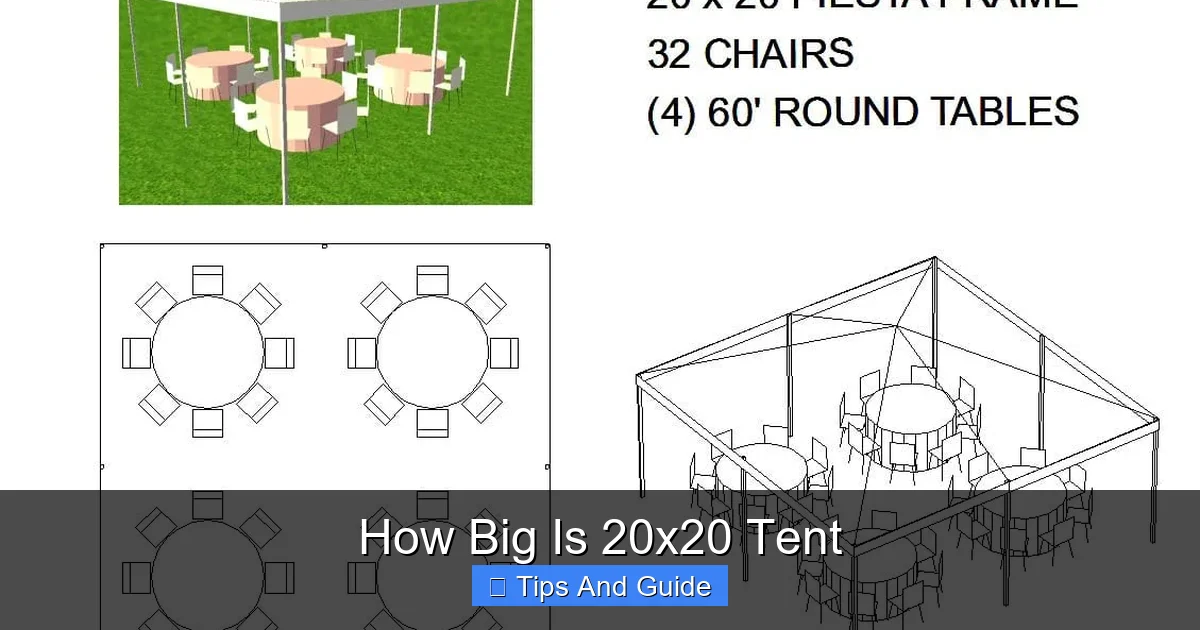
A 20×20 tent offers a substantial 400 square feet of versatile space, making it ideal for various events and gatherings. This guide breaks down its exact dimensions, capacity for seating and standing, and practical applications. You’ll learn how to visualize its size and maximize its potential for your next event.
## How Big Is a 20×20 Tent? Understanding Your Space
So, you’re looking at a 20×20 tent and wondering, “Just how big is that, really?” It’s a question that comes up often, and for good reason! Knowing the exact dimensions and capacity of a tent is crucial for planning any event, whether it’s a backyard birthday bash, a wedding reception, a company picnic, or even a bustling farmers market booth. A 20×20 tent is a popular size for a reason – it offers a fantastic balance of ample space without being overwhelmingly massive.
In this guide, we’ll break down exactly what a 20×20 tent means in terms of square footage, how many people it can hold, and what kinds of events it’s best suited for. We’ll help you visualize this space so you can make informed decisions for your next gathering. Get ready to understand the true potential of a 20×20 tent!
## The Math: Calculating the Square Footage
Let’s get down to the basics. When we talk about a 20×20 tent, we’re referring to its footprint – the dimensions of the ground it covers.
### The Simple Calculation
It’s a straightforward multiplication:
20 feet (width) x 20 feet (length) = 400 square feet
So, a 20×20 tent provides a grand total of **400 square feet** of usable floor space. This is a significant area, offering plenty of room to move around, set up furniture, and create different zones for your event. To put this into perspective, 400 square feet is roughly the size of a one-bedroom apartment!
### Visualizing the Space
Sometimes, numbers alone don’t paint the full picture. Imagine a large, open room. That’s essentially what you’re getting with a 20×20 tent. You can picture it as a perfect square, with ample room in the center and along the edges.
## Capacity: How Many People Can Fit?
This is where things get interesting, and where the answer becomes less about a single number and more about how you plan to use the space. The capacity of a 20×20 tent depends heavily on whether people will be seated or standing, and what other items you plan to include.
### Seated Capacity: Tables and Chairs
When planning for an event with meals or formal seating, the number of people you can comfortably seat is a primary concern. This is largely determined by the type and arrangement of tables.
#### Using Round Tables
Round tables are often favored for banquets and weddings as they encourage conversation.
* 10-Person Round Tables: If you plan to use 60-inch round tables that seat up to 10 guests each, you can typically fit 8 to 10 of these tables within a 20×20 tent. This would accommodate approximately 80 to 100 guests seated. You’ll need to factor in space for chairs and aisleways between tables.
* 8-Person Round Tables: If you opt for slightly smaller 48-inch round tables that seat 8 people, you could potentially fit more tables, perhaps 10-12, bringing your seated capacity to around 80 to 96 guests.
#### Using Rectangular Tables
Rectangular tables, like the common 6-foot or 8-foot banquet tables, offer a different layout.
* 6-Foot Rectangular Tables: You can typically fit about 10-12 six-foot banquet tables (seating 6-8 people each) within a 20×20 tent. This could seat around 60 to 96 guests. The layout might feel more linear, and you’ll need to ensure enough space for guests to get to their seats.
* 8-Foot Rectangular Tables: Fitting 8-foot tables might reduce the overall number. You might get 8-10 tables, seating around 64 to 80 guests.
Important Considerations for Seated Capacity:
* Aisleways: Ensure there’s enough room for guests and servers to move comfortably. A main aisle of at least 3-4 feet is recommended.
* Buffet Tables: If you’re having a buffet, you’ll need to dedicate space for those tables, which will reduce the number of guest tables you can fit.
* Dance Floor: If a dance floor is a must, you’ll need to allocate a significant portion of the 400 square feet to it, thereby reducing seating capacity.
* Centerpieces and Service Items: Factor in the space taken by table decorations, water pitchers, and bread baskets.
### Standing Capacity: Mingling and Cocktail Events
For events where guests will be standing and mingling, like cocktail parties, receptions, or vendor fairs, the capacity is much higher.
* Comfortable Standing Room: For a comfortable standing experience where guests can mingle freely, a 20×20 tent can typically host around 150-175 people. This allows for plenty of elbow room and easy movement.
* Crowded Standing Room: If you’re aiming for maximum capacity and don’t mind a more bustling atmosphere, you could potentially fit up to 200 people standing. However, this would feel quite crowded, especially if there are any obstructions like bars or small seating areas.
Factors Affecting Standing Capacity:
* Layout: Are there lounge areas, high-top tables, or a bar? These elements will take up space and reduce the number of people who can stand comfortably.
* Event Flow: For a smooth flow of guests, especially around entrances and exits, you’ll want to keep some areas clear.
* Entertainment: If you have a DJ or a small band, you’ll need to account for their setup area.
## Beyond Square Footage: Other Important Dimensions
While the 20×20 footprint is the most critical number, other dimensions of the tent can impact its usability.
### Height
Tent height is often overlooked but is crucial for comfort and aesthetics.
* Center Height (Peak Height): This is the highest point of the tent, usually in the center of a pole tent or frame tent. For a 20×20 tent, the center height can typically range from 10 to 14 feet or even higher, depending on the specific model. This provides ample headroom, especially in the middle of the tent.
* Side Wall Height (Eave Height): This is the height at the edges of the tent. A good eave height, often around 7 feet, ensures that most people can stand comfortably without hitting their heads on the tent fabric, even near the walls. This is especially important if you’re using side walls.
The height contributes to the overall feeling of spaciousness. A taller tent will feel more open and airy, even with the same footprint.
### Frame Structure
The type of frame can also influence the usable interior space.
* Pole Tents: These tents rely on tension and poles to stay upright. They often have a center pole or multiple poles that run up the middle of the tent. This means there’s an obstruction in the center of the space. For a 20×20 pole tent, you might have one or two center poles.
* Frame Tents: These tents are freestanding and do not require a center pole. They are supported by an external framework of poles. This means the interior space is completely clear, offering maximum flexibility for furniture arrangement. A 20×20 frame tent provides an unobstructed 400 square feet.
When considering a 20×20 tent, it’s worth clarifying whether it’s a pole tent or a frame tent, as this directly impacts the clear span interior.
## Ideal Uses for a 20×20 Tent
Given its 400 square feet of space and versatile capacity, a 20×20 tent is a workhorse for many types of events.
### Celebrations and Parties
* Backyard Parties: A fantastic option for birthday parties, anniversaries, graduations, or family reunions. It can provide shade or shelter for guests, allowing the party to continue rain or shine. You can set up tables for food, a designated area for gifts, and still have room for guests to mingle.
* Small Weddings and Receptions: For intimate wedding ceremonies or receptions, a 20×20 tent can comfortably seat around 80-100 guests for a seated dinner, or host 150+ for a standing reception. It’s a great choice for garden weddings or events where you want a touch of elegance.
* Engagement Parties and Showers: Plenty of room for guests, food stations, and perhaps a small dance area.
### Corporate and Community Events
* Company Picnics and Outdoor Meetings: Provides a comfortable gathering space for employees, offering protection from the elements. You can set up presentation areas, dining tables, or recreational spaces.
* Farmers Markets and Craft Fairs: A popular size for individual vendor booths. The 20×20 space can accommodate a generous display of products, with room for customers to browse. If you are looking for vendor-specific tents, you might explore options similar to a Commouds Tent Vs Beach Canopy Which Is Best, though a 20×20 is significantly larger.
* Community Festivals: Can be used for information booths, food vendors, or smaller performance areas.
### Other Practical Applications
* Outdoor Dining: A perfect solution for restaurants looking to expand their outdoor seating capacity, especially in cooler weather when side walls might be used.
* Event Entryways and Lounges: Can serve as a welcoming entrance area, a stylish lounge space, or even a dedicated bar area at larger events.
* Storage: For events that require temporary storage for equipment or supplies, a 20×20 tent offers ample, protected space.
## Setting Up and Planning
Once you know the size, the next step is planning the setup.
### Measure Your Space
Before you even consider renting or buying, measure the area where you intend to set up the tent. Ensure you have at least 20×20 feet of clear, level ground. Remember to account for any obstacles like trees, patios, or uneven terrain. It’s also a good idea to have a little extra space around the perimeter for access and safety.
### Sketch Your Layout
Grab some graph paper or use an online tool to sketch out your desired layout. Place your tables, chairs, dance floor, bar, and any other key elements. This will help you visualize if everything will fit and how the flow of the event will work. This is especially important when comparing different tent sizes, for instance, if you were deciding between a larger option and this size, perhaps considering something like a Best Camping Gazebo Tent for a smaller, more specific purpose.
### Consider the Weather
A 20×20 tent is great for protection, but consider the elements.
* Sun Protection: The fabric itself will provide shade. You might also consider adding side walls with windows for a brighter feel while still blocking wind and sun.
* Rain Protection: Ensure the tent is properly staked and any side walls are securely attached. Check that the ground slopes away from the tent to prevent water pooling.
* Wind Protection: The way the tent is anchored is critical. For a 20×20 tent, especially if it’s a frame tent, proper anchoring with stakes and potentially ballasts is essential to prevent it from lifting or moving. You might look into a Best Pop Up Tent For Wind if your primary concern is high winds, although professional event tents are designed for stability.
## Troubleshooting Common Issues
Even with thorough planning, you might encounter a few hiccups.
* Tent Doesn’t Fit the Space: Double-check your measurements! If it’s too big, you might need to consider a smaller tent size or reconfigure your event space. If it’s too small, it’s better to know now than on the day of the event.
* Layout Feels Cramped: Revisit your sketch. Can you reduce the number of tables slightly? Can you rearrange aisleways? Sometimes removing one table can make a significant difference in comfort.
* Uneven Ground: Most tent rentals have solutions for slightly uneven ground, but significant slopes can be problematic. Ensure your chosen site is as level as possible, or discuss options with your rental company.
* Weather Concerns: If heavy rain or high winds are predicted, have a backup plan. For smaller events, this might mean moving indoors if possible. For larger events, it might involve ensuring robust anchoring and communication with your guests about potential weather impacts.
## Conclusion: Your 400 Square Feet of Potential
A 20×20 tent offers a versatile and substantial 400 square feet of space. It’s large enough to host a comfortable seated dinner for up to 100 guests or a lively standing reception for 150-200 people. This makes it an excellent choice for a wide array of events, from intimate weddings and family gatherings to corporate functions and vibrant market stalls.
By understanding the exact dimensions, visualizing the space, and considering how you plan to use it, you can confidently determine if a 20×20 tent is the right fit for your needs. Remember to plan your layout carefully, factor in seating versus standing capacity, and always double-check your available space. With this knowledge, you’re well on your way to creating a successful and memorable event under your 20×20 tent!
Key Takeaways
- A 20×20 tent covers a total of 400 square feet of floor space. This is a significant area that can accommodate a variety of setups.
- Seated capacity varies greatly depending on table arrangements. For example, 10-person round tables could fit around 100-120 guests, while smaller rectangular tables might fit more.
- Standing capacity is much higher. You can comfortably host 150-200 people mingling, depending on the flow and any additional elements like bars or dance floors.
- Consider the tent’s height and frame. While the footprint is 20×20 feet, the usable interior space is also influenced by the peak height and the structure of the frame.
- It’s perfect for medium-sized events. Think backyard parties, small weddings, corporate gatherings, or vendor booths.
- Visualize the space before renting or buying. Measure your intended location and sketch out furniture layouts to ensure it fits your needs.
