
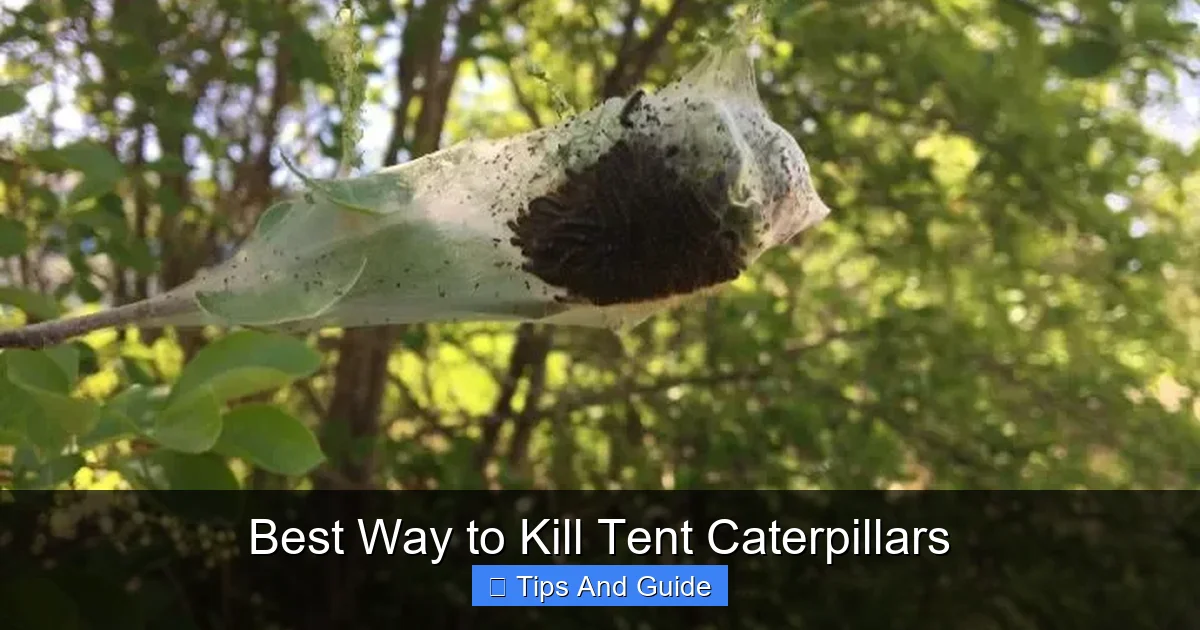
Dealing with tent caterpillars doesn’t have to be a battleground. This guide explores the most effective and environmentally sound methods for their removal and control. Learn how to identify them, understand their lifecycle, and implement solutions that protect your trees and garden without harsh chemicals.
## Best Way to Kill Tent Caterpillars
Ah, tent caterpillars. They’re one of nature’s less welcome visitors, especially when they decide your beloved trees are their personal buffet. You might have noticed these fuzzy critters munching away, leaving behind silky tents that spread across branches. It’s a common problem for many homeowners and gardeners, and it can be disheartening to see your trees looking stripped and unhealthy. But don’t despair! There are plenty of effective ways to deal with tent caterpillars, and many of them are surprisingly simple and even eco-friendly.
This isn’t about waging war on nature; it’s about smart, targeted action to protect your trees and garden. Whether you’re dealing with a small patch or a widespread infestation, understanding these pests is the first step to getting rid of them. We’ll dive into the signs to look for, how they operate, and then, most importantly, the best ways to kill tent caterpillars and prevent them from returning.
## Understanding Tent Caterpillars: Know Your Enemy
Before you can effectively tackle tent caterpillars, it’s crucial to understand who you’re dealing with. They aren’t just random bugs; they have a life cycle and habits that make them predictable, and therefore, manageable. The two most common types in North America are the Eastern tent caterpillar and the Forest tent caterpillar. While their names sound similar, they have slightly different habits and preferred trees.
### Eastern Tent Caterpillars
These are probably the ones you’re most familiar with. They typically infest fruit trees like apple, cherry, and plum, as well as other deciduous trees such as maple and birch. Eastern tent caterpillars are known for building large, silken tents in the crotches of branches. These tents serve as shelter during the day and in bad weather. The caterpillars emerge in early spring, often as soon as the leaves begin to bud, and feed voraciously. Their presence is usually quite obvious due to the conspicuous tents.
### Forest Tent Caterpillars
Despite their name, forest tent caterpillars don’t typically build large, communal tents like their Eastern counterparts. Instead, they often create a small silken mat on branches or tree trunks from which they feed. They prefer hardwood trees like aspen, poplar, maple, and oak. Forest tent caterpillars are a bit more scattered in their feeding habits and can be harder to spot until they’ve caused significant defoliation. They also have a distinctive row of pale oval spots along their backs.
### The Tent Caterpillar Lifecycle: Timing is Everything
Understanding their lifecycle is key to the best way to kill tent caterpillars. The entire process is a cycle that begins and ends with the adult moth.
* Egg Masses: Adult moths lay their eggs in the late summer or fall. These are typically laid in masses that look like frothy, dark-colored bands encircling small twigs. These egg masses overwinter and hatch the following spring.
* Larval Stage (Caterpillars): This is the stage where they cause all the damage. Young caterpillars hatch from the egg masses in early spring and immediately begin to spin their silken tents. They feed on young leaves, growing rapidly. They go through several molts (shedding their skin) as they grow. This is the most vulnerable stage for control efforts.
* Pupal Stage: Once fully grown, the caterpillars leave their host trees to find a sheltered spot to spin a cocoon. This is often in leaf litter, under loose bark, or in protected nooks. Inside the cocoon, they transform into pupae.
* Adult Moth Stage: After a period of development within the cocoon, the adult moths emerge. These moths are nocturnal and their primary goal is to reproduce and lay eggs for the next generation. They do not feed and live only for a few days.
Knowing this cycle helps us target them when they are most susceptible. Early spring, when the caterpillars are young and concentrated around their tents, is the prime time for action.
- Identify the enemy: Recognize the signs of tent caterpillar infestations early to act before they cause significant damage.
- Understand their lifecycle: Knowing when they are most vulnerable is key to effective eradication.
- Mechanical removal is effective: Physically removing tents and caterpillars, especially when young, is a safe and direct approach.
- Harness natural predators: Encourage beneficial insects and birds that prey on tent caterpillars to help control populations.
- Consider organic pesticides: For severe infestations, use targeted, eco-friendly insecticides as a last resort.
- Prevent future outbreaks: Employ sanitation and pruning techniques to make your trees less attractive to egg-laying moths.
Effective Methods for Tent Caterpillar Removal
Now that we understand the enemy and their habits, let’s get to the core of it: the best way to kill tent caterpillars. There are several approaches, ranging from simple manual removal to more targeted treatments. The best method for you will depend on the severity of the infestation, your comfort level with different techniques, and your preference for organic or chemical solutions.
### Manual Removal: The Most Direct Approach
For many homeowners, the most effective and environmentally friendly way to deal with tent caterpillars is good old-fashioned manual removal. This is especially true when dealing with Eastern tent caterpillars and their visible tents.
#### Removing Tents and Caterpillars
If you can spot the silken tents, grab a pair of gloves and a sturdy stick or pole. You can often use the stick to snag the tent and pull it away from the branch. It’s best to do this on a sunny day when the caterpillars are most likely to be inside their tents. Once the tent is removed, you can crush the caterpillars or collect them in a bucket of soapy water.
Important Tip: Be gentle when removing the tents. You don’t want to damage the branches or the tree itself. If the tent is very large or hard to reach, a long-handled tool can be helpful.
#### Handpicking Caterpillars
If the tents are gone or you’re dealing with forest tent caterpillars that don’t build large communal structures, you can simply pick the caterpillars off the leaves and branches by hand. Again, wear gloves to avoid any potential skin irritation. Dispose of them in soapy water or a sealed bag.
This method is most effective when the caterpillars are young and haven’t spread out too far. As they grow larger, they become more mobile and harder to find.
### Harnessing Nature: Biological Control
Nature often provides its own solutions, and tent caterpillars are no exception. Encouraging natural predators can be a highly effective and sustainable way to manage their populations.
#### Birds are Your Friends
Many bird species are voracious eaters of caterpillars. Encouraging birds to visit your yard can significantly help in controlling tent caterpillar populations. You can attract birds by providing bird feeders, bird baths, and native plants that offer shelter and food. Species like cuckoos, orioles, and chickadees are known to consume large quantities of caterpillars.
#### Beneficial Insects
There are also a number of beneficial insects that prey on tent caterpillars. For example, some parasitic wasps lay their eggs inside tent caterpillar eggs or larvae. When the wasp larvae hatch, they feed on the host caterpillar, killing it. Encouraging these natural enemies can help keep caterpillar populations in check over time. Avoiding broad-spectrum insecticides will help preserve these beneficial populations.
### Water and Soap: Simple Home Remedies
For smaller infestations or as a supplement to other methods, a simple solution of water and dish soap can be effective.
#### Soapy Water Spray
A mixture of water and mild dish soap can be sprayed directly onto the caterpillars. The soap breaks down their outer protective layer, causing them to dehydrate. Mix about 2 tablespoons of mild dish soap with a gallon of water. Spray this mixture directly on the caterpillars, especially in the morning or late afternoon when they are more active.
Caution: While generally safe, test this mixture on a small area of foliage first to ensure it doesn’t harm the plant. Avoid spraying during the hottest part of the day, as it can scald the leaves.
## Chemical and Biological Control Options
When manual removal and natural methods aren’t enough to tackle a severe infestation, you might consider other control options. It’s always recommended to start with the least toxic methods and escalate only if necessary.
### Organic Insecticides
Several organic insecticides can be effective against tent caterpillars. These are often derived from natural sources and are generally considered safer for the environment than synthetic pesticides.
#### Bacillus thuringiensis (Bt)
This is a naturally occurring soil bacterium that produces toxins that are harmful to the larvae of caterpillars. When caterpillars ingest Bt, the toxin damages their digestive system, leading to their death. Bt is highly specific to certain insect groups, meaning it is generally safe for beneficial insects, birds, and pets. It is most effective when caterpillars are young and actively feeding.
#### Spinosad
Spinosad is another organic insecticide derived from a soil bacterium. It works by disrupting the nervous system of the caterpillars. Like Bt, it is effective against young larvae and is considered relatively safe for beneficial insects when applied according to label instructions.
#### Neem Oil
Neem oil is extracted from the neem tree and has insecticidal, fungicidal, and acaricidal properties. It can disrupt the growth and development of caterpillars, act as a repellent, and interfere with their feeding. It’s important to use cold-pressed neem oil and apply it according to the product’s instructions, usually in the evening to avoid harming pollinators.
### Chemical Insecticides (Use with Caution)
Synthetic chemical insecticides should be considered a last resort. They can be effective but often come with risks to beneficial insects, wildlife, and even human health. If you choose to use chemical insecticides, always follow the label instructions precisely and wear appropriate protective gear.
Commonly used chemical insecticides include carbaryl, malathion, and permethrin. These products are potent and can quickly kill caterpillars. However, their use can also harm the environment and other non-target organisms. Always opt for targeted applications and consider the potential impact on your garden ecosystem.
## Preventing Future Tent Caterpillar Infestations
The best way to kill tent caterpillars is, in many ways, to prevent them from becoming a problem in the first place. Proactive measures can significantly reduce the likelihood of future infestations.
### Sanitation and Pruning
* Inspect for Egg Masses: In late fall and winter, carefully inspect your trees for the tell-tale dark, frothy egg masses on twigs. You can scrape these off with a knife or pruners and destroy them (e.g., by dropping them in soapy water or burning them safely). This is a highly effective preventative measure.
* Prune Infested Branches: If you notice small infestations early in the season, pruning away the affected branches can be an effective way to remove the caterpillars and their tents before they spread. Dispose of the pruned material properly.
* Keep Trees Healthy: Healthy, vigorous trees are generally more resistant to pest infestations. Ensure your trees are properly watered, fertilized (if needed), and have good air circulation. This might involve learning about the best way to care for your specific tree species.
### Create an Uninviting Environment
Tent caterpillars are attracted to certain conditions. Making your trees less appealing can help deter egg-laying moths.
* Remove Debris: Clean up leaf litter and other garden debris around the base of your trees. This removes potential overwintering sites for pupae and can reduce overall pest habitat.
* Proper Watering and Fertilization: Over-fertilizing, especially with nitrogen, can sometimes lead to overly lush growth that attracts certain pests. Ensure a balanced approach to tree care.
## When to Seek Professional Help
While most tent caterpillar issues can be managed by homeowners, there are times when calling in the professionals is the wisest course of action.
### Severe Infestations
If your trees are heavily infested, or if the infestation covers a large area, a professional arborist or pest control service might have the expertise and equipment to deal with the problem efficiently and safely. They can assess the situation and recommend the most appropriate treatment plan.
### Large or Mature Trees
Dealing with tent caterpillars on very large or mature trees can be difficult and potentially dangerous. Professionals have the tools and safety measures to access high branches and treat the infestation effectively. They can also advise on the long-term health of the tree.
### Persistent Problems
If you’ve tried various methods and the tent caterpillars keep returning year after year, a professional might be able to identify underlying issues contributing to the problem and offer more comprehensive solutions. They can also help you understand the best way to manage specific pests common to your region.
## Conclusion: A Balanced Approach to Tent Caterpillar Control
Dealing with tent caterpillars is a common challenge, but it doesn’t have to be an overwhelming one. By understanding their lifecycle and employing a combination of methods, you can effectively manage these pests and protect your trees. The best way to kill tent caterpillars often involves a multi-pronged approach that prioritizes manual removal and natural controls before resorting to chemical treatments.
Remember, early detection and intervention are key. Regularly inspecting your trees, especially in early spring, will give you the best chance to nip the problem in the bud. By using targeted strategies and respecting the role of beneficial insects and natural predators, you can maintain the health and beauty of your trees while keeping tent caterpillars at bay. It’s about working with nature, not against it, to achieve a healthy, pest-free environment.
Frequently Asked Questions
What is the quickest way to kill tent caterpillars?
The quickest way to kill tent caterpillars, especially when they are young and concentrated, is through physical removal. Destroying their tents and the caterpillars within by hand or with a tool and disposing of them in soapy water is very effective.
Are tent caterpillars harmful to humans?
Tent caterpillars are generally not harmful to humans. While they don’t sting or bite, some people can experience mild skin irritation or an allergic reaction from touching their irritating hairs. It’s always best to wear gloves when handling them.
When is the best time to treat for tent caterpillars?
The best time to treat for tent caterpillars is in early spring, shortly after they hatch from their egg masses. They are most vulnerable at this stage, and their tents are smaller and easier to manage.
Can I just burn the tent caterpillar nests?
Burning tent caterpillar nests is generally not recommended. It can be dangerous, potentially damaging the tree’s bark and surrounding areas, and may not effectively kill all the caterpillars within. It’s safer to use manual removal or other methods.
Do tent caterpillars harm fruit trees permanently?
While tent caterpillars can cause significant defoliation, they typically do not cause permanent harm to healthy, mature fruit trees. Trees can usually regrow their leaves. However, repeated or severe infestations can weaken trees, making them more susceptible to other diseases and pests.
What is the best organic way to kill tent caterpillars?
The best organic ways include manual removal of tents and caterpillars, encouraging natural predators like birds, and using organic sprays such as Bacillus thuringiensis (Bt) or neem oil, especially when caterpillars are young and actively feeding.
