
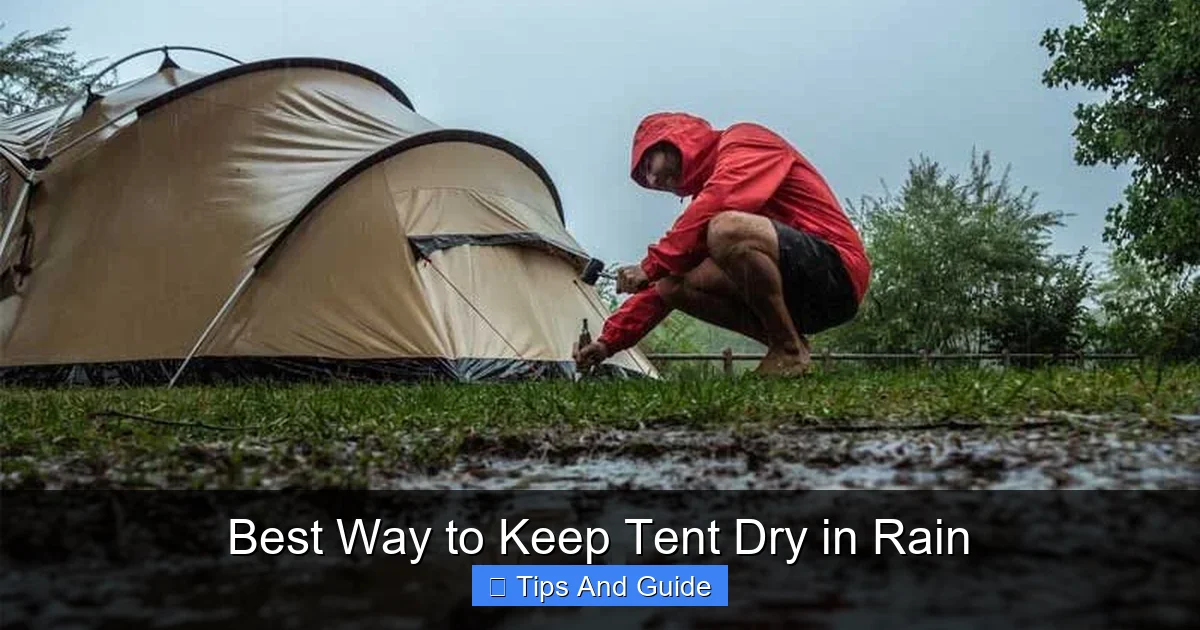
Don’t let rain ruin your camping trip! This guide covers everything you need to know about keeping your tent dry, from choosing the right gear to smart setup and maintenance. Learn essential tips for a comfortable and dry camping experience, no matter the weather.
## Best Way to Keep Tent Dry in Rain
Camping is an incredible way to connect with nature, breathe in fresh air, and escape the everyday hustle. However, nature can sometimes throw a curveball, and the most common one is rain. There’s nothing quite like the cozy sound of rain drumming on your tent, but that cozy feeling quickly turns into a soggy nightmare if your tent isn’t equipped to handle the downpour. Knowing the best way to keep your tent dry in rain is not just about comfort; it’s about protecting your gear and ensuring a safe, enjoyable outdoor experience.
We’ve all heard the horror stories: campers waking up to puddles inside their tents, sleeping bags becoming sodden masses, and the overall misery of a wet camping trip. But it doesn’t have to be this way! With a little preparation, the right gear, and some smart techniques, you can significantly increase your chances of staying bone dry, even during a torrential downpour. This guide will walk you through everything you need to know, from selecting the right tent to setting it up like a pro and maintaining it for future adventures.
### Choosing the Right Tent: Your First Line of Defense
The most critical step in keeping your tent dry is starting with a tent that’s designed for it. Not all tents are created equal, and some are much better at shedding water than others. When you’re shopping for a new tent, or evaluating the one you already own, pay close attention to its waterproof capabilities. This isn’t just about the outer fabric; it’s a combination of factors that work together to keep the water out.
#### Waterproofing Ratings: What Do They Mean?
Tents are often rated for their waterproofness using a hydrostatic head test. This test measures how much water pressure a fabric can withstand before it starts to leak. The rating is given in millimeters (mm).
* Low-end: Tents with ratings below 1,500 mm are generally considered water-resistant, not waterproof. They might be okay for light showers but won’t hold up in heavy rain.
* Mid-range: Tents with ratings between 1,500 mm and 3,000 mm offer good waterproofing for most camping situations.
* High-end: Tents with ratings above 3,000 mm are highly waterproof and suitable for serious backcountry expeditions or persistent rainy weather.
Both the rainfly (the outer cover) and the tent floor should have good waterproof ratings. A tent floor with a rating of 3,000 mm or higher is ideal, as it’s the part most likely to be in contact with wet ground.
#### Material Matters: Fabric Types and Treatments
The type of fabric used in your tent also plays a role. Nylon and polyester are common. Look for tents with coatings like polyurethane (PU) or silicone (silnylon) which enhance their water-repellent properties. Higher denier fabrics (the thickness of the yarn) are generally stronger and more durable, which can also contribute to better long-term waterproofing.
#### Seam Sealing: The Unsung Hero
Even the best waterproof fabric will leak if the seams aren’t properly sealed. In heavy rain, water can seep through the tiny holes created by stitching. High-quality tents will have factory-sealed seams, often indicated by a tape that’s heat-bonded over the stitches. If your tent doesn’t have sealed seams, or if the factory sealant is wearing off, you can purchase seam sealer and apply it yourself. This is a crucial step for any tent you plan to use in wet conditions.
When looking for a tent that can handle the elements, consider options like a best cabin tent for wind and rain, or investigate the best cabin tent for rain specifically. For those who prefer a quick setup, the best pop up tent waterproof models are also worth exploring.
### Site Selection: Location, Location, Location!
You’ve got a great tent, but where you pitch it can make all the difference. Even the most waterproof tent can become a swimming pool if it’s placed in a natural water trap. Choosing the right campsite is a fundamental skill for staying dry.
#### Avoiding Low-Lying Areas
The most common mistake campers make is setting up in a depression or a spot where water naturally flows. Always look for higher ground. Observe the surrounding terrain for signs of where water might collect after a downpour. If you see a natural ditch or a dip in the land, steer clear. Even a slight slope can help water run away from your tent.
#### Under the Drip Line: Avoid Overhanging Trees
While a large tree can offer shade and shelter from light rain, it can become a hazard in a heavy storm. Large branches can drip for a long time after the rain stops, and in high winds, falling branches are a real danger. If you do choose to camp near trees, ensure they are healthy and avoid pitching your tent directly under large, potentially unstable branches.
#### Consider the Ground Beneath
Ideally, you want to pitch your tent on a surface that drains well. Avoid areas that are particularly compacted or are known to become muddy and waterlogged easily. A grassy area or a spot with some natural drainage is preferable.
### The Power of the Footprint: Ground Tarps and Protection
A ground tarp, often called a footprint, is an essential accessory for keeping your tent dry, especially from ground moisture. It’s a sheet of waterproof material that you place under your tent. Its primary purpose is to protect the tent floor from abrasion and punctures, but it also provides an invaluable extra layer of waterproofing.
#### How to Use Your Footprint Correctly
The most important rule when using a footprint is that it should be smaller than your tent’s floor. If the footprint extends beyond the edges of your tent, it will catch rainwater and funnel it directly underneath your tent, defeating its purpose. The edges of the footprint should be tucked under the tent’s floor or be precisely the same size.
#### Types of Ground Protection
* Manufacturer-Specific Footprints: Many tent manufacturers offer custom-fit footprints for their models. These are usually the best option as they are designed to match the exact dimensions of your tent.
* Generic Tarps: You can also use a heavy-duty tarp from a hardware store. Just make sure to cut it down to the correct size so it doesn’t extend beyond your tent’s perimeter.
* DIY Options: Some campers opt for lightweight, waterproof sheeting for minimal weight.
Using a footprint is particularly important if your tent floor has a lower waterproof rating or if you’re camping on particularly damp ground. It’s a simple but highly effective way to keep the bottom of your tent dry.
### Ventilation: Combating Condensation
This might seem counterintuitive, but good ventilation is crucial for keeping your tent dry, even when it’s raining. The enemy here is condensation. When the air inside your tent is warmer and more humid than the air outside, moisture can form on the inner walls of your tent. This is especially true if you’re breathing inside the tent, cooking, or if there’s a significant temperature difference.
#### Maximizing Airflow
Most modern tents are designed with ventilation systems, often including mesh panels, vents in the rainfly, and ground vents.
* Open Vents: Even in the rain, try to keep as many vents open as possible without letting rain directly into the tent. This allows humid air to escape and drier air to enter.
* Leave the Rainfly Slightly Ajar: If your tent design allows, you might be able to slightly open the bottom edge of the rainfly in a way that doesn’t allow rain in but permits air circulation.
* Avoid Touching the Tent Walls: Try not to let your sleeping bags or gear touch the inner walls of the tent, as this can transfer moisture and potentially lead to leaks.
#### Using a Ground Tarp for Moisture Management
While the footprint protects from ground moisture, good ventilation helps manage airborne moisture. The combination of both is your best bet for a dry interior. If you’re using a double-wall tent (which has an inner mesh tent and an outer rainfly), the gap between the two layers is designed to promote airflow and prevent condensation.
### Setting Up and Packing Away for Dryness
The way you set up and take down your tent can also impact its dryness. Even the most robust waterproofing can be compromised by poor handling.
#### Strategic Setup in the Rain
If you have to set up your tent in the rain, speed and efficiency are key.
1. Lay Down Your Footprint First: Get your footprint down as quickly as possible to create a dry surface to work on.
2. Assemble Poles and Attach Tent: Assemble your tent poles and attach the tent body to them. This can often be done while the tent is still packed or partially packed, keeping the interior drier.
3. Drape the Rainfly: With practice, you can often drape the rainfly over the tent body before you fully erect it. This provides a protective cover while you finish the setup.
4. Stake it Down Securely: Make sure all guy lines are taut and stakes are firmly in the ground. This prevents the tent from flapping, which can compromise its structure and water-shedding capabilities.
#### Packing Up a Wet Tent
Packing up a wet tent is often unavoidable. The goal is to do it without making everything else in your backpack soak wet, and to ensure the tent dries properly once you get home.
1. Shake Off Excess Water: Before packing, give the tent a good shake to remove as much water as possible.
2. Roll it Up Tightly: Roll the tent up as tightly as you can, ideally with the waterproof side of the rainfly facing outwards. This helps keep your other gear dry inside your pack or car.
3. Use a Waterproof Stuff Sack: If your tent came with a waterproof stuff sack, use it. Alternatively, place the rolled-up tent inside a dry bag.
4. Dry it at Home Immediately: As soon as you get home, unpack your tent and hang it up to dry completely. This is crucial to prevent mildew and damage to the fabric and coatings. Even a few days of dampness can start the process.
### Tent Maintenance: Keeping it in Top Shape
Regular maintenance is essential for ensuring your tent continues to perform optimally, especially in challenging weather. A well-maintained tent is a dry tent.
#### Cleaning Your Tent
After a trip, especially a wet one, your tent needs a good clean.
* Gentle Cleaning: Use a mild soap (like biodegradable camp soap or diluted dish soap) and a soft brush or sponge. Avoid harsh detergents, bleach, or abrasive cleaners, as they can damage the waterproof coatings.
* Rinse Thoroughly: Make sure to rinse off all soap residue. Soap left on the fabric can attract dirt and reduce its waterproofness.
* Spot Cleaning: For stubborn stains, you might need to use a slightly stronger cleaner, but always test it on an inconspicuous area first.
#### Re-Waterproofing and Seam Sealing
Over time, the DWR (durable water repellent) finish on your tent’s fabric will wear off, and seam sealants can degrade.
* Reapply DWR Treatment: You can purchase spray-on or wash-in DWR treatments to restore the fabric’s ability to shed water. Follow the product instructions carefully.
* Re-seal Seams: If you notice any leaks along the seams, or if the factory sealant looks cracked or peeling, apply a fresh coat of seam sealer. This is a relatively easy DIY task that can save your tent.
#### Proper Storage
Store your tent in a cool, dry place. Always ensure it is completely dry before storing it long-term. Storing a damp tent can lead to mildew, which is difficult to remove and can permanently damage the fabric. Avoid storing it in plastic bags for long periods, as this can trap moisture. Mesh storage sacks are often preferred.
By following these steps, you can significantly improve your chances of keeping your tent dry in the rain. It’s all about a combination of choosing the right gear, setting up smartly, and taking care of your equipment. Don’t let the weather forecast deter you from your next adventure; with the right knowledge, you can be prepared for anything nature throws your way. Happy camping!
Key Takeaways
- Choose a Tent with Excellent Waterproofing: Look for tents with high waterproof ratings (measured in mm) for both the rainfly and floor.
- Proper Seam Sealing is Crucial: Ensure all seams are factory-sealed or apply your own seam sealer to prevent leaks.
- Site Selection Matters: Always pick a campsite that’s on higher ground and avoids depressions where water can collect.
- Utilize a Ground Tarp Effectively: A footprint or ground tarp placed under your tent protects the floor and adds an extra layer of water resistance.
- Ventilation is Key to Avoiding Condensation: Proper airflow helps minimize interior moisture build-up, even in the rain.
- Regular Maintenance is Important: Clean and dry your tent thoroughly after each use, and reapply waterproofing treatments as needed.
- Invest in Quality Gear: Durable, well-maintained equipment is your best defense against the elements.
Frequently Asked Questions
What is the most important factor for keeping a tent dry in rain?
The most important factor is choosing a tent with excellent waterproof ratings for both the rainfly and the floor, coupled with properly sealed seams. This forms your primary barrier against the elements.
How can I prevent water from pooling under my tent?
Always select a campsite on higher ground that doesn’t have any depressions. Using a footprint that is the same size or smaller than your tent floor is also crucial to prevent water from being channeled underneath.
Is it better to have a tent with more or fewer mesh panels for rain?
For rain, it’s generally better to have a tent with a robust rainfly that covers most of the tent body, minimizing mesh exposure on the inner tent. However, you still need good ventilation, so look for tents with adjustable vents on the rainfly to manage airflow without letting rain in.
What should I do if my tent leaks?
If your tent leaks, first identify the source of the leak. If it’s a seam, you can often re-seal it with seam sealer. If the fabric itself is damaged or the waterproof coating has failed, you may need to use a patch or consider re-waterproofing treatments.
Can I use a regular tarp under my tent instead of a footprint?
Yes, you can use a regular tarp, but it’s essential to ensure it is cut to be the same size or slightly smaller than your tent’s floor. If the tarp extends beyond the tent, it will collect rainwater and funnel it directly under your tent, making the situation worse.
How do I dry a wet tent after camping?
As soon as you get home, unpack your tent and hang it up to dry completely in a well-ventilated area, ideally outdoors or in a large room. Ensure all parts are dry before storing it to prevent mildew.
