
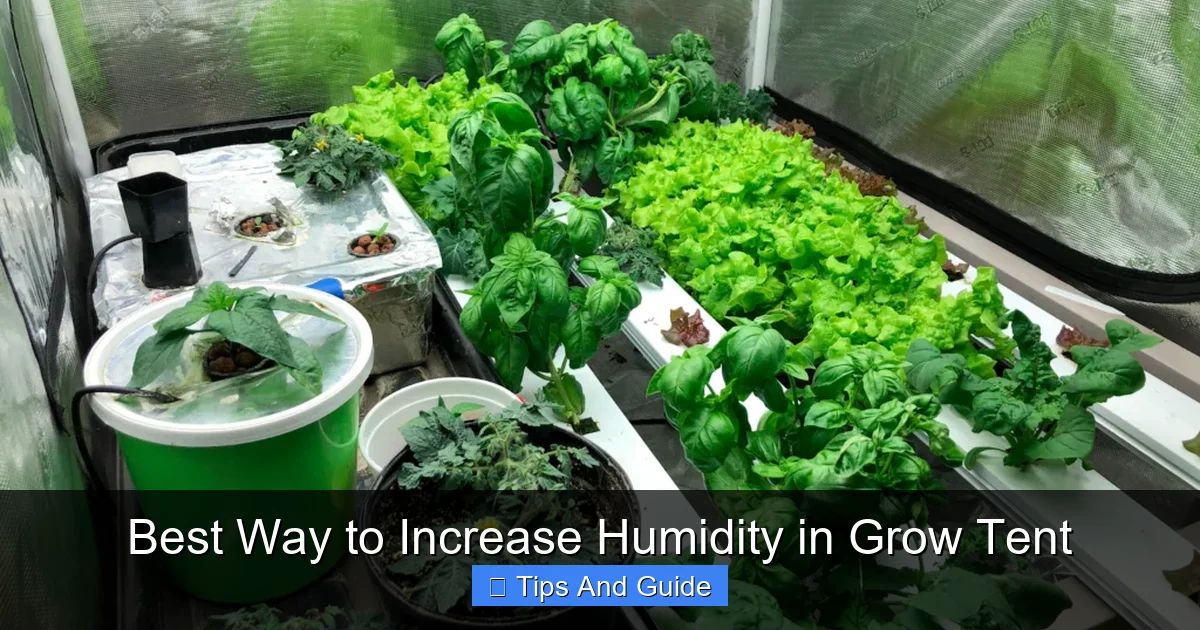
Struggling with low humidity in your grow tent? This guide reveals the best methods to boost moisture levels for optimal plant growth. From simple hacks to advanced solutions, discover how to create the perfect humid environment. Achieve thriving plants by mastering your grow tent’s humidity.
Hey fellow growers! Ever feel like your plants are a little… thirsty, even when you’re watering them perfectly? If you’re growing indoors, especially in a dedicated grow tent, the humidity level can be a real game-changer. It’s not just about water in the soil; the air around your plants plays a massive role in their health and development.
Many new growers overlook the importance of humidity, focusing solely on light and nutrients. But trust me, getting the humidity right can be the difference between a mediocre harvest and a truly spectacular one. If your seedlings are struggling to unfurl or your plants look a bit droopy, low humidity might be the culprit. So, let’s dive into how to effectively increase humidity in your grow tent and give your green buddies the lush environment they deserve.
## Why Humidity Matters in Your Grow Tent
Humidity, in simple terms, is the amount of water vapor in the air. For cannabis plants and many other types of flora, the right humidity level is critical, especially during certain growth stages. Think of it like this: a seedling is like a newborn baby. It needs a very specific, protected environment to thrive. In nature, young plants often sprout in environments with higher humidity, helping them retain moisture and develop their root systems without drying out too quickly.
### Seedling and Vegetative Stages
During the seedling and early vegetative stages, plants are more vulnerable. They have underdeveloped root systems and are highly susceptible to drying out. High humidity (often between 60-70%) helps them absorb water through their leaves, reducing the stress on their roots. This is often referred to as “transpiration,” and controlling it with proper humidity is key. As plants mature and enter the flowering stage, they generally prefer slightly lower humidity levels to prevent mold and mildew.
### Flowering Stage Considerations
While you want high humidity for young plants, you’ll typically want to decrease it as your plants begin to flower. This is because dense buds can be a prime target for fungal diseases like bud rot. Aiming for around 40-50% humidity during flowering is usually a good target. This balance is what makes understanding how to increase humidity in your grow tent so important – it’s not a one-size-fits-all situation; it’s about adapting to your plants’ needs.
## Measuring and Monitoring Humidity
Before you can effectively increase humidity, you need to know where you stand. Guessing is not a strategy when it comes to plant care. The best way to increase humidity in your grow tent starts with accurate measurement.
### The Essential Tool: The Hygrometer
A hygrometer is your best friend for monitoring humidity. These devices measure the relative humidity (RH) in the air. You can find them as standalone units or often integrated into digital thermometers. For the most accurate readings within your grow tent, place the hygrometer at plant canopy level. Don’t just rely on a reading from a corner or near the ceiling, as humidity can vary within the tent.
### Understanding Your Readings
Once you have your hygrometer, make it a habit to check it daily, especially when you first set up your tent or implement new humidity-boosting strategies. Note the readings at different times of the day. Are they consistently too low? Are they fluctuating wildly? This data will help you pinpoint the problem and choose the best solution. Many digital hygrometers also track minimum and maximum readings, which can be super helpful for understanding daily trends.
## Simple and Budget-Friendly Humidity Boosters
Sometimes, you don’t need fancy equipment to make a difference. For minor humidity boosts or as a starting point, these methods are excellent.
### The Damp Cloth Method
This is about as basic as it gets. Soak a clean cloth (or a few) in water and wring them out so they are damp but not dripping. Hang these damp cloths inside your grow tent. As the water evaporates, it will increase the humidity in the air. You can hang them from the tent poles or the fabric walls. This method is temporary, as the cloths will dry out, but it’s a quick fix.
### Shallow Water Trays
Similar to the damp cloth method, placing shallow trays filled with water inside your grow tent allows for passive evaporation. The larger the surface area of the water, the faster it will evaporate, and the more humidity it will add. You can use baking trays, old plastic containers, or even purpose-made humidity trays. Placing these near your fans can help circulate the moist air, making the increase more noticeable.
### Misting Your Plants (Use with Caution)
Misting your plants with plain water can provide a temporary humidity boost, especially during the seedling stage. Use a fine mist spray bottle and gently spray the leaves. However, be cautious. Over-misting, especially during the flowering stage, can encourage mold growth. Also, ensure your water is free of minerals that could leave spots on your leaves. Distilled or RO water is best. It’s a quick, temporary fix but not a sustainable solution for significant humidity increases.
## Effective Electronic Solutions for Humidity
When simple methods aren’t enough, or you need a consistent and significant increase in humidity, it’s time to look at electronic solutions. These are generally the most reliable ways to increase humidity in your grow tent.
### Humidifiers: The Gold Standard
Humidifiers are designed specifically to add moisture to the air. There are several types, each with its pros and cons:
#### Ultrasonic Humidifiers
These use ultrasonic vibrations to create a cool mist. They are very quiet and efficient. The fine mist they produce can be easily absorbed by your plants. They are a popular choice for grow tents because they don’t add significant heat to the environment. Make sure to use distilled or demineralized water to prevent white dust (mineral deposits) from settling on your plants and equipment.
#### Evaporative Humidifiers
These work by blowing air through a wet wick or filter. They are generally less prone to over-humidifying and are energy-efficient. They tend to be a bit noisier than ultrasonic models due to the fan. They are also a good option if you are concerned about mineral dust.
#### Choosing the Right Size
When selecting a humidifier, consider the size of your grow tent. A small tent (like a 2×2) might only need a small tabletop unit, while a larger tent (like a 4×4) or bigger will require a more powerful one. Many humidifiers have adjustable settings, allowing you to fine-tune the output. Remember, it’s easier to add more humidity than it is to remove it, so start with a slightly smaller unit if you’re unsure. Setting up a budget-friendly grow tent doesn’t mean you have to skimp on essential environmental controls!
### Control Systems for Precision
For advanced growers who want maximum control, consider pairing your humidifier with a controller.
#### Humidistats
A humidistat is like a thermostat, but for humidity. You set your desired humidity level, and the humidistat turns the humidifier on and off automatically to maintain it. This prevents wild fluctuations and ensures your environment stays stable, which is crucial for plant health. Many modern humidifiers come with built-in humidistats.
#### Smart Plugs and Timers
Even if your humidifier doesn’t have a built-in humidistat, you can use smart plugs or mechanical timers to control its operation. You can program them to run for specific periods throughout the day, helping to maintain a desired humidity level.
## Optimizing Your Grow Tent Environment for Humidity
Adding a humidifier is a great step, but how you manage your tent’s airflow and other elements can significantly impact how well you increase humidity.
### Ventilation: The Double-Edged Sword
Your exhaust fan is essential for removing heat and stale air, but it can also quickly strip moisture from your tent. This is a balancing act.
#### Fan Speed and Cycling
If your humidity is too low, you might need to reduce the speed of your exhaust fan or run it on a timer for shorter periods. However, you must maintain adequate airflow to prevent heat buildup and the spread of pests and diseases. Some growers use an exhaust fan controller that allows for more precise adjustments to fan speed based on temperature and humidity.
#### Intake Vents
Ensure your intake vents are positioned to allow fresh air in without directly blasting moist air out. Sometimes, simply closing intake vents partially can help retain humidity, but again, balance is key. You don’t want to create a vacuum or starve your plants of CO2.
### Temperature and Humidity Correlation
Temperature and humidity are closely linked. Warmer air can hold more moisture. If your tent is too hot, your humidity will naturally be lower, even with a humidifier running.
#### Managing Temperature
Ensure your grow lights and fans aren’t overheating your tent. If your temperature is consistently too high, address that first. A cooler environment will make it easier to maintain higher humidity levels. This might involve upgrading your lights to cooler-running LEDs or improving your ventilation setup.
### Plant-Based Humidity Contributions
Believe it or not, your plants themselves contribute to the humidity in the tent!
#### Transpiration
As plants transpire (release water vapor from their leaves), they naturally increase humidity. The more plants you have, and the larger their leaf surface area, the more they will contribute to humidity.
#### Grouping Plants
Placing plants closer together can create a microclimate with higher humidity around them. This is especially beneficial for seedlings and smaller plants. However, ensure you still have enough space for good airflow to prevent issues.
## Troubleshooting Common Humidity Problems
Even with the best intentions, you might run into issues. Here are a few common problems and how to fix them.
### Humidity Too High
If your humidifier is too powerful, or your ventilation is insufficient, humidity can spike. This is a fast track to mold and mildew problems.
* **Solution:** Reduce the humidifier’s output or run it for shorter periods. Increase exhaust fan speed or duration. Ensure good airflow around all plant parts.
### Humidity Too Low
This is the more common issue we’re addressing.
* **Solution:** Implement the electronic or simple methods discussed earlier. Check for air leaks in your tent where moist air might be escaping. Make sure your humidifier is adequately sized for your tent.
### Inconsistent Humidity Readings
Fluctuating readings can be frustrating.
* **Solution:** Ensure your hygrometer is placed correctly and calibrated. Check if the fluctuations are tied to your lights cycling on/off or temperature changes. Ensure your humidifier and ventilation systems are working in harmony. A good budget grow tent kit should ideally include tools for environmental monitoring.
### White Dust from Humidifier
This is often seen with ultrasonic humidifiers using tap water.
* **Solution:** Switch to distilled or demineralized water. Clean your humidifier regularly. Consider an evaporative humidifier.
## The Best Way to Increase Humidity: A Holistic Approach
So, what’s the absolute best way to increase humidity in your grow tent? It’s not just one thing; it’s a combination of understanding your plants’ needs, using the right tools, and managing your environment intelligently.
Start by always measuring your humidity with a reliable hygrometer. Then, assess your situation. If you only need a slight boost for seedlings, a simple method like a water tray might suffice. For consistent and significant increases, an ultrasonic or evaporative humidifier is your most effective tool. Pair it with a humidistat for precise control.
Crucially, don’t forget the interplay between ventilation, temperature, and humidity. Adjust your fan speeds and timer settings to retain moisture without compromising airflow. Remember that your plants also contribute to humidity.
By taking a holistic approach, you can create a thriving environment in your grow tent, leading to healthier, happier plants and, ultimately, a more bountiful harvest. Happy growing!
- Understand the Importance: High humidity is crucial for seedling and vegetative growth stages, mimicking natural environments.
- Monitor Your Levels: Consistent monitoring with a hygrometer is essential to identify and address humidity issues promptly.
- Simple Solutions First: Start with easy methods like damp cloths or a shallow water tray before investing in complex equipment.
- Humidifiers Are Key: Ultrasonic and evaporative humidifiers are the most effective tools for significant humidity increases.
- Ventilation Control: Balancing intake and exhaust is vital to retain moisture without stifling airflow.
- Plant-Based Methods: Grouping plants or using larger leaves can passively contribute to higher humidity levels.
Frequently Asked Questions
What is the ideal humidity level for a grow tent?
The ideal humidity level varies by growth stage. For seedlings and vegetative growth, aim for 60-70% relative humidity (RH). During the flowering stage, reduce it to 40-50% RH to prevent mold and mildew on buds.
How often should I check the humidity in my grow tent?
You should check your grow tent’s humidity at least once daily, especially when first setting up your environment or implementing new humidity-boosting methods. Consistent monitoring helps you catch problems early and make necessary adjustments.
Can I use a regular room humidifier in my grow tent?
Yes, a regular room humidifier can be used, but ensure it’s appropriately sized for your tent. Ultrasonic and evaporative types are generally preferred for their effectiveness and ability to add moisture without excessive heat.
Will increasing humidity affect my plants’ temperature?
Yes, there’s a correlation. Warmer air can hold more moisture. While humidifiers generally add little heat, maintaining optimal temperature is crucial for managing humidity effectively. If your tent is too hot, your humidity will likely be lower.
How can I prevent mold and mildew if I increase humidity?
To prevent mold and mildew, ensure good air circulation with adequate ventilation, especially during flowering. Avoid over-misting plants directly, use proper humidity levels for each growth stage, and keep your grow space clean.
Are there any natural ways to increase humidity in a grow tent?
Yes, simple methods like hanging damp cloths, using shallow water trays, and grouping plants can naturally increase humidity. Misting plants with water can also offer a temporary boost, but should be used cautiously.
