
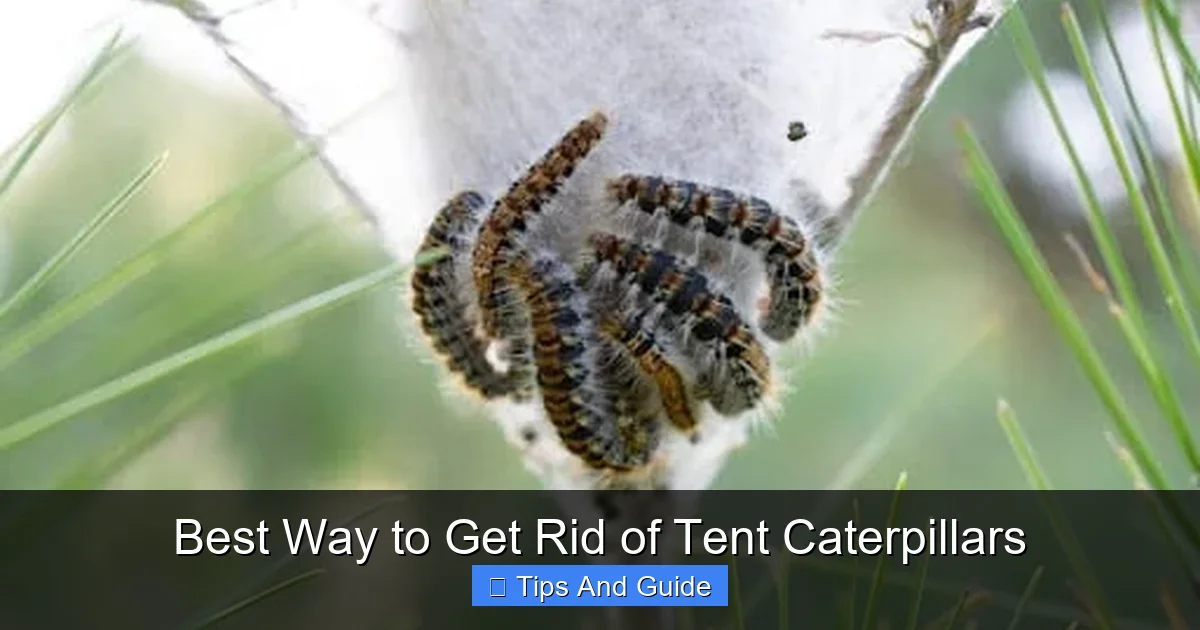
Worried about tent caterpillars? This guide covers the best ways to get rid of them, focusing on identification, manual removal, and eco-friendly methods. Learn how to protect your trees and prevent future infestations.
Oh no! Those tell-tale silken tents are popping up on your trees. You’ve likely got a tent caterpillar infestation on your hands. While they’re a natural part of the ecosystem, a large number of these critters can seriously damage your beloved trees, stripping them of their leaves and leaving them vulnerable to disease and other pests. But don’t despair! Getting rid of tent caterpillars is definitely achievable with the right approach.
This isn’t a battle you have to fight with harsh chemicals. In fact, the best way to get rid of tent caterpillars often involves simple, manual methods that are kind to your trees and the environment. We’ll walk you through everything you need to know, from identifying the problem to implementing effective solutions that will help your trees bounce back.
### Understanding Tent Caterpillars: What Are They and Why Are They a Problem?
Before we dive into the removal process, let’s get acquainted with our unwelcome guests. Tent caterpillars are the larval stage of certain moth species, most commonly the Eastern tent caterpillar and the Western tent caterpillar. While they might look similar, they have slightly different habits and prefer different host trees.
**Eastern Tent Caterpillars:** These are typically found on trees like wild cherry, apple, crabapple, and maple. They create large, prominent silken tents, often in the crotches of branches, from which they venture out to feed. Their caterpillars are hairy, with a light-colored stripe down their backs and blue and white markings on their sides.
**Western Tent Caterpillars:** These tend to favor deciduous trees like poplar, aspen, and willow. While they also build tents, they might be a bit more spread out and less concentrated in branch forks than their Eastern cousins. Their caterpillars are generally darker and have a spotted pattern.
The primary problem with tent caterpillars is their voracious appetite for leaves. A large infestation can completely defoliate a tree, especially young or stressed ones. While most healthy, mature trees can withstand a season of defoliation and regrow their leaves, repeated defoliation year after year can weaken them significantly, making them susceptible to other problems. Plus, those large tents can be quite unsightly!
### The Best Time to Act: Early Intervention is Key
One of the most crucial aspects of managing tent caterpillars is acting early. The earlier you catch an infestation, the easier it will be to control.
#### Spotting the Signs in Late Winter and Early Spring
Tent caterpillar egg masses are laid in the late summer or fall. These masses look like foamy, gray or brown bands wrapped around small twigs. If you can spot and remove these before they hatch in late winter or early spring, you’ll prevent the problem before it even starts. This is a fantastic proactive step if you’ve had issues in the past.
#### Dealing with Young Caterpillars and Small Tents
Once the eggs hatch, usually in early spring (depending on your climate), the tiny caterpillars will begin to build their silken tents. At this stage, their tents are small, and the caterpillars themselves are much smaller and easier to handle. This is the ideal time for manual removal.
As the caterpillars grow, their tents expand, and they become more difficult to eradicate. The larger they get, the more leaves they consume, and the harder it is to get them all. So, keeping an eye on your trees during the early spring is your best bet.
### Manual Removal: The Most Effective and Eco-Friendly Solution
When it comes to the best way to get rid of tent caterpillars, manual removal consistently tops the list for effectiveness and environmental friendliness. It directly targets the problem without harming beneficial insects or introducing unnecessary chemicals into your environment.
#### Destroying the Tents
This is your primary weapon. Arm yourself with a long pole, a stiff brush, or even just your gloved hands.
* **For Tents on Branches:** Use a long pole, like a broom handle or a specialized tent-removal tool, to carefully reach up and hook the tent. Gently pull it down and away from the tree. Try to get as much of the silken material and as many caterpillars inside as possible.
* **For Tents in Branch Forks:** If the tent is within reach, you can often use your hands (wearing gloves!) to carefully pull the silken mass apart and gather the caterpillars.
#### What to Do with the Gathered Caterpillars and Tents
Once you’ve collected the tents and caterpillars, you need to dispose of them properly to ensure they don’t just crawl back onto the tree or infest another.
* **Drowning:** The simplest and most effective method is to plunge the collected material into a bucket of soapy water. The soap breaks the surface tension, and the caterpillars will drown quickly. Leave them in the water for at least 24 hours to be absolutely sure.
* **Bagging and Disposing:** Alternatively, you can seal the collected material in a heavy-duty plastic bag and dispose of it in your outdoor trash bin. Make sure the bag is sealed tightly so no escapees can emerge.
#### Important Considerations for Manual Removal
* **Gloves are a Must:** Tent caterpillars are hairy, and their hairs can cause skin irritation or allergic reactions in some people. Always wear sturdy gloves.
* **Timing is Everything:** As mentioned, tackle this when the caterpillars are young and their tents are small. It’s much easier and less daunting.
* **Be Thorough:** Try to get as much of the tent material and as many caterpillars as you can with each removal. Leaving stragglers means they’ll continue to feed and potentially rebuild.
* **Consider When Caterpillars are Feeding:** Tent caterpillars typically emerge from their tents to feed in the early morning and late afternoon. If you can remove the tent when they are all outside, you’ll catch more of them. However, be careful not to disturb them too much during their feeding times, as they will retreat quickly.
### Encouraging Natural Predators: Nature’s Pest Control
While manual removal is a direct approach, you can also foster a healthier environment for your trees by encouraging natural predators that feed on tent caterpillars. This is a fantastic long-term strategy for keeping populations in check.
#### Inviting the Right Kind of Visitors
Several species of birds and beneficial insects are natural enemies of tent caterpillars.
* **Birds:** Birds like cuckoos, orioles, and chickadees are known to eat tent caterpillars. Planting native plants that attract these birds, providing water sources, and offering nesting sites can help bring them to your yard.
* **Beneficial Insects:** Parasitic wasps and flies are incredibly important in controlling tent caterpillar populations. These insects lay their eggs on or inside the caterpillars, and their larvae consume the host caterpillar. Encouraging these tiny helpers can significantly reduce future infestations.
#### How to Attract Natural Predators
* **Plant Native Species:** Native plants provide the right kind of habitat and food sources for native birds and insects. Research which native plants are best for your region.
* **Avoid Broad-Spectrum Pesticides:** This is crucial. If you use pesticides that kill all insects indiscriminately, you’ll also kill the beneficial ones that are working hard to control your pests. Opting for targeted treatments or manual removal is much better for the ecosystem.
* **Provide Water Sources:** Bird baths and shallow dishes of water can attract birds and beneficial insects, especially during dry periods.
* **Reduce Lawn Area:** While not directly related, reducing manicured lawn space in favor of more naturalized plantings can create better habitats for beneficial insects.
### Targeted Treatments: When Manual Removal Isn’t Enough
In cases of severe infestations or when trees are particularly large or inaccessible, manual removal might not be entirely sufficient. In such situations, targeted treatments can be considered, but always with a focus on minimizing harm to the environment.
#### Bacillus thuringiensis (Bt)
Bacillus thuringiensis (Bt) is a naturally occurring bacterium that is toxic to the larvae of certain insects, including tent caterpillars. It’s a biological control agent, meaning it’s derived from a natural source and is generally considered safe for humans, pets, and beneficial insects when used correctly.
* **How it Works:** When caterpillars ingest Bt, it disrupts their digestive system, leading to paralysis and starvation.
* **Application:** Bt is typically applied as a spray. It’s most effective when applied directly to the leaves where the caterpillars are feeding, and when the caterpillars are young and actively feeding. It’s important to follow the product’s instructions carefully.
* **When to Use:** This is a good option for larger infestations where manual removal is proving difficult.
#### Dormant Oil
Dormant oil sprays are applied during the dormant season (late winter or early spring before bud break) to kill overwintering insect eggs and other pests.
* **How it Works:** The oil smothers the eggs, preventing them from hatching.
* **Application:** It’s applied to the bark and twigs of trees. It’s essential to apply it when temperatures are above freezing but not too warm, as it can damage live buds.
* **When to Use:** This is a preventative measure. If you know you have a history of tent caterpillar infestations, applying dormant oil in late winter can significantly reduce the number of egg masses that hatch in the spring. This is a great way to get a head start on the best way to get rid of tent caterpillars before they even appear.
#### Insecticidal Soaps and Horticultural Oils
These are less harsh than synthetic pesticides and work by disrupting the cell membranes of soft-bodied insects like caterpillars.
* **How they Work:** They dehydrate and suffocate the caterpillars.
* **Application:** They need to be applied directly to the caterpillars and their tents, and they work best on smaller, younger caterpillars. They have little residual effect, meaning they only work on contact.
* **When to Use:** These can be a good option for smaller infestations or for spot treatment when other methods are not feasible. Always test on a small area of the plant first to ensure it doesn’t cause damage.
#### What to Avoid: Synthetic Pesticides
While synthetic pesticides might seem like a quick fix, they are generally not recommended for tent caterpillar control.
* **Harm to Beneficials:** They can kill beneficial insects, birds, and other wildlife that are crucial for a healthy ecosystem.
* **Environmental Impact:** They can contaminate soil and water sources.
* **Resistance:** Over-reliance on synthetic pesticides can lead to the development of pesticide-resistant pest populations.
If you must use a pesticide, choose one specifically labeled for tent caterpillars and follow the instructions meticulously, applying it only to the infested areas and at the appropriate time of day to minimize impact on pollinators.
### Preventing Future Infestations
Once you’ve successfully managed your current tent caterpillar problem, the next step is to focus on prevention. A healthy tree is a more resilient tree, and there are steps you can take to make your trees less attractive to these pests.
#### Tree Health is Paramount
* **Proper Watering and Fertilization:** Ensure your trees are getting adequate water, especially during dry periods, and are properly fertilized to maintain their vigor. Healthy trees are better equipped to withstand minor pest pressures.
* **Pruning:** Remove any dead or damaged branches, as these can be entry points for pests and diseases. Pruning can also help improve air circulation, which can make the tree less susceptible to certain issues.
* **Mulching:** Applying a layer of mulch around the base of your trees helps retain moisture, regulate soil temperature, and suppress weeds.
#### Eliminating Potential Egg-Laying Sites
* **Regular Inspections:** Make it a habit to inspect your trees, especially in the late summer and fall, for those tell-tale egg masses on twigs. Removing them at this stage is the easiest way to prevent an infestation.
* **Sanitation:** Clean up fallen leaves and debris around the base of your trees, as this can sometimes harbor overwintering pests or their eggs.
By maintaining the overall health of your trees and being vigilant about checking for egg masses, you can significantly reduce the chances of future tent caterpillar problems. It’s all about creating an environment where your trees can thrive and resist pests naturally.
### Conclusion: A Greener Approach to a Cleaner Tree
Dealing with tent caterpillars doesn’t have to be a battle waged with harsh chemicals. The best way to get rid of tent caterpillars involves a combination of early detection, diligent manual removal, and fostering a healthy ecosystem that supports natural predators. By understanding the pest, acting at the right time, and opting for eco-friendly solutions, you can protect your trees and maintain the beauty of your landscape. Remember, a healthy tree is your best defense. So, grab those gloves, find a sturdy pole, and get ready to reclaim your trees from these leafy invaders!
Key Takeaways
- Identify the Pest: Recognize the distinctive tents and caterpillar types to confirm you’re dealing with tent caterpillars.
- Manual Removal is Key: The most effective and eco-friendly method is physically removing the tents and caterpillars.
- Timing is Crucial: Address infestations early in the season when caterpillars are small and tents are manageable.
- Beneficial Insects: Encourage natural predators like birds and parasitic wasps to help control populations.
- Dormant Oil Application: Consider dormant oil sprays in late winter/early spring to kill overwintering egg masses.
- Avoid Broad-Spectrum Pesticides: Opt for targeted treatments to protect beneficial insects and the environment.
- Prevention is Better: Maintain tree health and remove potential egg-laying sites to discourage future infestations.
Frequently Asked Questions
What do tent caterpillars eat?
Tent caterpillars primarily feed on the leaves of their host trees. Their diet typically includes species like wild cherry, apple, crabapple, maple, poplar, aspen, and willow, depending on whether they are Eastern or Western tent caterpillars.
Are tent caterpillars dangerous to humans?
Tent caterpillars themselves are not directly dangerous to humans. However, their hairy bodies can cause skin irritation or allergic reactions in some individuals, so it’s advisable to wear gloves when handling them or their tents.
How can I tell if my tree has tent caterpillars?
The most obvious sign is the presence of silken tents, often found in the crotches of branches or on twigs. You may also see the caterpillars themselves, which are hairy and have distinct markings. Defoliated leaves are another indicator of their presence.
Can tent caterpillars kill a tree?
While tent caterpillars can significantly weaken a tree by stripping its leaves, healthy, mature trees can usually survive defoliation and regrow their foliage. However, repeated defoliation over consecutive years can severely stress a tree, making it vulnerable to disease and potentially leading to its demise, especially if the tree is already unhealthy.
When do tent caterpillars hatch?
Tent caterpillars typically hatch in early spring, shortly after the trees begin to bud. The exact timing can vary depending on your geographic location and the local climate conditions.
Are tent caterpillars the same as armyworms?
No, tent caterpillars and armyworms are different pests. Tent caterpillars create distinctive silken tents and are typically found on trees. Armyworms, on the other hand, are the larval stage of moths that feed on grasses and grains in large groups, often in lawns or agricultural fields, and do not build tents.
