
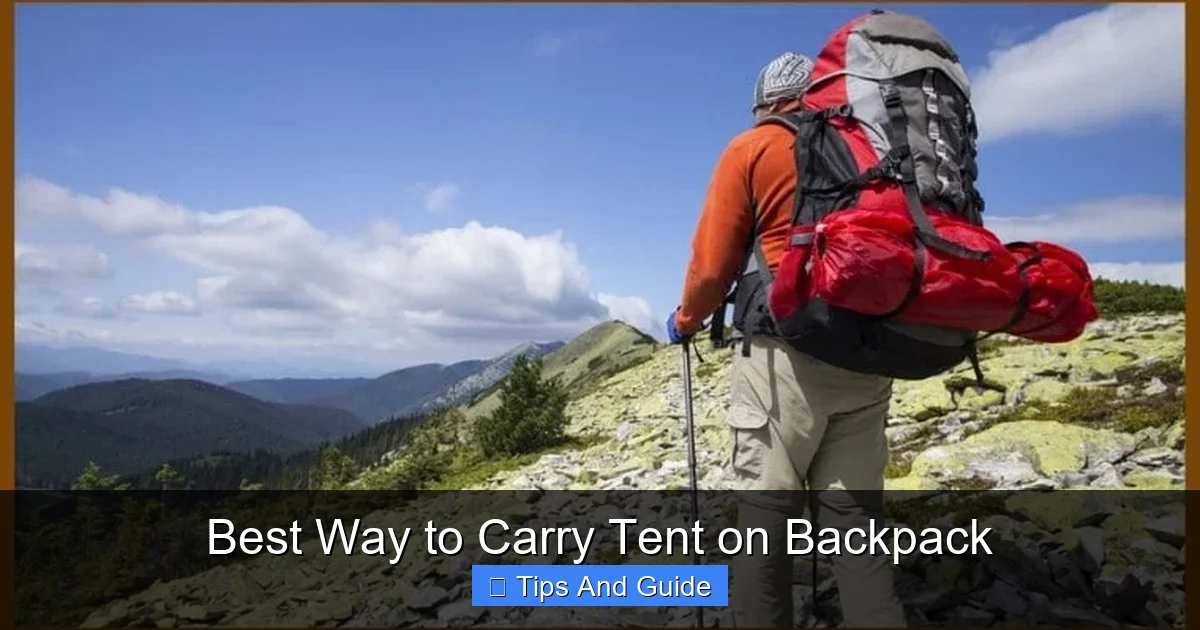
Properly carrying your tent on your backpack is crucial for a comfortable and balanced hike. We’ll explore the best ways to pack your tent, whether it’s inside or outside your pack, focusing on weight distribution, accessibility, and protecting your gear. Learn how to make your tent a manageable part of your load.
Heading out on an adventure? Whether you’re planning a weekend camping trip or a multi-day backpacking expedition, one of the most fundamental — yet often overlooked — aspects of preparation is how you’ll carry your tent. It’s not just about shoving it into your backpack; it’s about strategic packing that impacts your comfort, balance, and overall hiking experience. A poorly packed tent can throw off your center of gravity, create uncomfortable pressure points, and make accessing your shelter a hassle. Let’s dive into the best ways to carry your tent on your backpack, ensuring your shelter is a helpful companion, not a cumbersome burden.
Think of your tent as a critical piece of gear, often one of the heaviest and bulkiest. Its placement and how it’s secured can transform a potentially miserable trek into an enjoyable journey. The goal is always to achieve a stable, balanced load that feels like an extension of yourself, allowing you to navigate trails with ease and confidence. We’ll cover everything from the basic principles of weight distribution to specific techniques for both external and internal packing.
## The Great Debate: Inside or Outside Your Backpack?
This is often the first question hikers grapple with. There’s no single “right” answer, as the best method depends on several factors. Let’s break down the pros and cons of each approach to help you decide what’s best for your setup.
### Packing Your Tent Inside Your Backpack
Many seasoned backpackers prefer to keep their tents inside their pack. This method offers several advantages, primarily related to protection and stability.
* Protection: When your tent is inside your backpack, it’s shielded from the elements – rain, snow, mud, and dust. This is especially important for keeping your tent dry and clean, prolonging its lifespan. If you’ve invested in a good waterproof tent, keeping it dry inside your pack is paramount.
* Weight Distribution: Packing your tent internally allows for more precise control over weight distribution. You can place it close to your back, usually in the middle-to-lower section of your pack, which is ideal for maintaining a stable center of gravity. This prevents the tent from shifting or swaying, which can throw you off balance on uneven terrain.
* Aerodynamics and Snagging: An internally packed tent won’t catch on branches or brush as easily as one strapped to the outside. This leads to a smoother, less snag-prone hiking experience.
* Security: Items packed inside your backpack are generally more secure from accidental loss or theft compared to those strapped externally.
However, packing your tent inside isn’t without its drawbacks. The main challenge is space. Tents, especially larger or more robust models, can be bulky and consume a significant amount of room within your backpack, potentially forcing you to leave other items behind or make difficult choices.
#### Tips for Internal Packing:
* Compression Sacks are Your Friend: Use a waterproof compression sack or stuff sack. This not only protects your tent but also significantly reduces its volume, making it easier to fit into your pack.
* Stuff, Don’t Fold: When packing your tent into its sack, stuff it in rather than folding it precisely. Stuffing can often achieve a smaller, more manageable shape that fits better into irregularly shaped spaces.
* Strategic Placement: Aim to place the tent bag in the main compartment, positioned against your back. For multi-day trips, place it below your heavier items like food and water, or around them, to create a snug, stable core.
* Separate Components: If your tent is large, consider separating the poles and stakes from the tent body and fly. You can then distribute these smaller components in different parts of your pack, such as side pockets or the brain, to optimize space.
### Strapping Your Tent to the Outside of Your Backpack
For many, especially those with smaller packs or larger tents, strapping the tent externally is the most practical solution. This frees up valuable internal space and can offer quick access.
* Space Saver: This is the primary advantage. By carrying your tent outside, you make room for all your other essentials inside your pack. This is particularly beneficial for shorter trips where internal space is at a premium.
* Quick Access: If you anticipate setting up camp quickly upon arrival, or if you might need to make a temporary shelter during the day, an externally carried tent is readily accessible.
* Ventilation: An external tent can air out after a damp pack-up, reducing the chance of mildew.
The downsides of external packing often revolve around comfort and potential damage.
* Balance Issues: A tent strapped to the outside can easily become a pendulum, swinging with every step. This can significantly unbalance you, especially on challenging terrain or when crossing streams.
* Snagging Hazard: As mentioned, external items are prone to catching on branches, rocks, and other trail obstacles, which can be frustrating and potentially damage your tent.
* Exposure to Elements: Without proper protection, your tent is exposed to rain, mud, and sun, which can degrade the fabric and compromise its waterproofing over time.
#### Tips for External Packing:
* Use a Waterproof Bag: Always put your tent inside a durable, waterproof stuff sack or dry bag before strapping it to your pack. This is non-negotiable. Consider a brightly colored bag for easier visibility.
* The Bottom or Top: A common spot is at the bottom of your pack, secured by the compression straps that cinch the main compartment down. Another option is on top, often secured to the pack’s lid or frame.
* Use Existing Straps: Most backpacks are designed with external straps and loops specifically for carrying gear like tents, sleeping pads, or poles. Learn to use these effectively.
* Compression Straps are Key: Use your backpack’s compression straps to tightly secure the tent to the pack. This minimizes movement and reduces the pendulum effect. Ensure the tent is evenly distributed.
* Bungee Cords and Straps: If your backpack lacks sufficient built-in attachment points, you can use separate bungee cords or webbing straps to secure the tent. Be careful not to overtighten, which can damage the tent material.
* Wrap it Tightly: Compress the tent as much as possible within its waterproof sack before attaching it. A tightly wrapped cylinder is easier to secure and less prone to shifting.
## Mastering Weight Distribution for Optimal Comfort
Regardless of whether you pack your tent inside or outside, the principle of good weight distribution remains paramount. The goal is to keep the weight as close to your center of gravity as possible, ideally centered and against your back.
### The Ideal Placement
* Core of the Pack: The heaviest items should be close to your back and in the middle to lower third of your backpack. This includes your tent, food, and water.
* Prevent Sway: Anything strapped externally should be secured tightly to prevent it from swaying. A swaying load is not only tiring but can also lead to ankle twists and falls.
* Balance Left-to-Right: Ensure the weight is balanced evenly from side to side. If you have a tent bag sticking out significantly on one side, try to counterbalance it with something of similar weight on the other.
### Practical Examples:
* Scenario 1: Lightweight Backpacking Tent (Internal): Stuff the tent (in its compression sack) into the bottom of your main compartment, then pack sleeping bag, clothes, and cooking gear around it. This creates a solid base and keeps weight low.
* Scenario 2: Larger Family Tent (External): Pack the tent body and fly inside your pack, close to your back. Then, use the external straps to secure the tent poles and stakes outside, ideally one on each side or both on top, balanced.
* Scenario 3: Minimalist Setup (External): For ultralight hikers with a very compact tent, it might be strapped to the top of the pack, secured tightly to the lid or frame. This keeps it accessible but requires very careful securing to avoid sway.
## Securing Your Tent: Essential Techniques
Properly securing your tent is as important as its placement. A loose tent is a recipe for disaster on the trail.
### Using Compression Straps
Most modern backpacks have multiple compression straps along the sides and sometimes the bottom. These are invaluable for cinching down your load, including an externally strapped tent.
* Wrap and Tighten: Route the straps around the tent (or its stuff sack) and then through the buckles on your pack. Pull them taut to snug the tent against the pack’s frame or body.
* Distribute Pressure: Don’t overtighten one strap and leave another loose. Aim for even pressure all around the tent to prevent it from shifting.
### Bungee Cords and Webbing Straps
If your backpack doesn’t have enough integrated straps, good quality bungee cords or separate webbing straps with quick-release buckles can be very useful.
* Versatile Attachment: These can be used to attach items to daisy chains, loops, or even frame components on your pack.
* Customizable Security: You can create custom attachment points for oddly shaped gear.
### Dedicated Tent Loops and Pockets
Some backpacks feature specific loops or pockets designed for tents or sleeping pads. Familiarize yourself with your pack’s features and use them as intended.
## Protecting Your Tent During Transit
Your tent is your shelter, and protecting it is essential for its longevity and your comfort.
### Waterproofing is Non-Negotiable
* Stuff Sacks and Dry Bags: As reiterated, always use a waterproof stuff sack or dry bag for your tent. This is your first line of defense against moisture. Even if you pack it internally, a waterproof bag adds an extra layer of protection against condensation or leaks from other gear.
* Regular Maintenance: Ensure your tent’s own waterproofing is in good condition by applying seam sealant and waterproofing treatments as needed.
### Avoiding Abrasion
* Smooth Surfaces: When strapping your tent externally, try to place it against smoother parts of your pack or use padding (like a spare piece of clothing) between the tent bag and any rough surfaces on your pack or gear.
* Avoid Dragging: Be mindful of where you set your pack down. Avoid dragging it on rocky or abrasive surfaces, which can quickly damage the tent material.
## Specific Considerations for Different Tent Types
The “best way” to carry your tent can vary depending on its type and size.
### Backpacking Tents
These are designed for portability. They are typically lightweight and pack down into compact stuff sacks.
* Internal Packing: Most backpacking tents pack down small enough to fit comfortably inside your backpack, often into dedicated tent sleeves or the main compartment.
* Compression: Use compression sacks to minimize their volume even further, allowing you to fit them alongside other gear.
### Car Camping Tents
These are generally larger, heavier, and bulkier.
* External is Often Necessary: Due to their size, car camping tents are almost always carried externally, either on a larger expedition-style backpack or in conjunction with a vehicle.
* Strapping Technique: When using a large backpack for car camping, the tent might be strapped to the bottom, top, or sides, requiring robust attachment methods.
### Pop-Up Tents
Pop-up tents have a unique, often circular, packed shape.
* External Strapping: They are almost always carried externally, often strapped to the top or side of a backpack. Their rigid, disc-like shape can make them a bit awkward, so securing them well is crucial to prevent them from becoming a tripping hazard. If you’re looking for the best pop-up tent on the market, consider its packed dimensions for ease of transport.
* Balancing Act: Due to their shape, they can easily affect balance if not secured properly.
### Shelter Tents (e.g., Screen Houses, Gazebos)
These are typically very large and heavy, intended for group camping or specific events.
* Car Camping Essential: These are primarily for car camping or base camps. They are not suitable for carrying on a backpack for any significant distance.
* Vehicle Transport: They are usually transported in vehicles and set up at the campsite. If you’re considering one, check out our guide on the best camping kitchen tent or other shelter options.
## Practice and Experimentation
The absolute best way to figure out how to carry your tent is to practice. Before embarking on your trip, pack your backpack with your tent and all other necessary gear. Go for a short walk around your neighborhood or a local park. Pay attention to:
* Comfort: Are there any pressure points? Does the load feel balanced?
* Stability: Does the tent shift or sway?
* Accessibility: Can you reach your water bottle? Are your essentials easy to get to?
* Ease of Movement: Can you walk, climb, and navigate obstacles without the tent hindering you?
Adjust your packing strategy based on your experience. What works for one person might not work for another, and what works for one type of trip might need modification for another.
## Conclusion
Carrying your tent on your backpack effectively is a skill that enhances your entire outdoor experience. By understanding the principles of weight distribution, protection, and secure fastening, you can transform a potentially awkward load into a manageable and stable part of your gear. Whether you choose to pack it internally for superior protection and balance, or strap it externally to save space and gain quick access, always prioritize security and a balanced feel. Remember to protect your tent from the elements and abrasion, and never underestimate the power of practice. With the right techniques, your tent will be a welcome shelter at the end of a rewarding day on the trail, not a burden that weighs you down.
Key Takeaways
- External vs. Internal Packing: Deciding whether to strap your tent outside or pack it inside your backpack depends on your tent size, backpack type, and personal preference for accessibility and weight distribution.
- Weight Distribution is Key: The best way to carry a tent on a backpack involves keeping the weight balanced and close to your body. Avoid letting it hang too low or sway excessively.
- Protect Your Tent: Always use a waterproof stuff sack or compression sack for your tent, especially when carrying it externally, to shield it from rain, mud, and abrasion.
- Secure Strapping Techniques: Utilize compression straps, bungee cords, or dedicated tent loops on your backpack to firmly secure your tent. Avoid over-tightening, which can damage the tent fabric.
- Accessibility Matters: Consider how easily you’ll need to access your tent. Packing it externally can be convenient for quick setups, while internal packing offers better protection and stability.
- Consider Tent Type: The ideal method for carrying your tent can vary. Lightweight backpacking tents often pack smaller and fit more easily than larger car camping or family tents.
- Practice Makes Perfect: Experiment with different packing methods before your trip to find what works best for your specific gear and body.
Frequently Asked Questions
How do I protect my tent when carrying it externally?
Always place your tent inside a durable, waterproof stuff sack or dry bag before strapping it to the outside of your backpack. This protects it from rain, mud, and abrasion from the trail and your pack.
What’s the best way to distribute the weight of a tent on my backpack?
The best way to carry a tent on a backpack is to keep its weight centered and close to your back, ideally in the middle to lower section of the main compartment. If packed externally, secure it tightly to minimize swaying and maintain balance.
Should I stuff or fold my tent when packing?
For better space efficiency, especially when packing inside your backpack, it’s generally recommended to stuff your tent into its sack rather than folding it precisely. Stuffing can create a more compact and malleable shape.
How do I prevent my externally packed tent from snagging on branches?
While some snagging is inevitable, tightly securing your tent using compression straps and ensuring it’s as close to your pack as possible will minimize protrusions. Additionally, being mindful of your surroundings and path can help avoid branches.
Can I carry tent poles separately from the tent body?
Yes, absolutely. If your tent is bulky, you can often separate the poles and stakes from the main tent body and fly. You can then distribute these smaller items in side pockets or the pack’s brain to optimize space and balance.
Is it better to pack a pop-up tent inside or outside my backpack?
Due to their unique, circular packed shape, pop-up tents are almost always carried externally on a backpack. They are typically strapped to the top or side, requiring careful securing to prevent them from becoming unbalanced or a hazard.
