
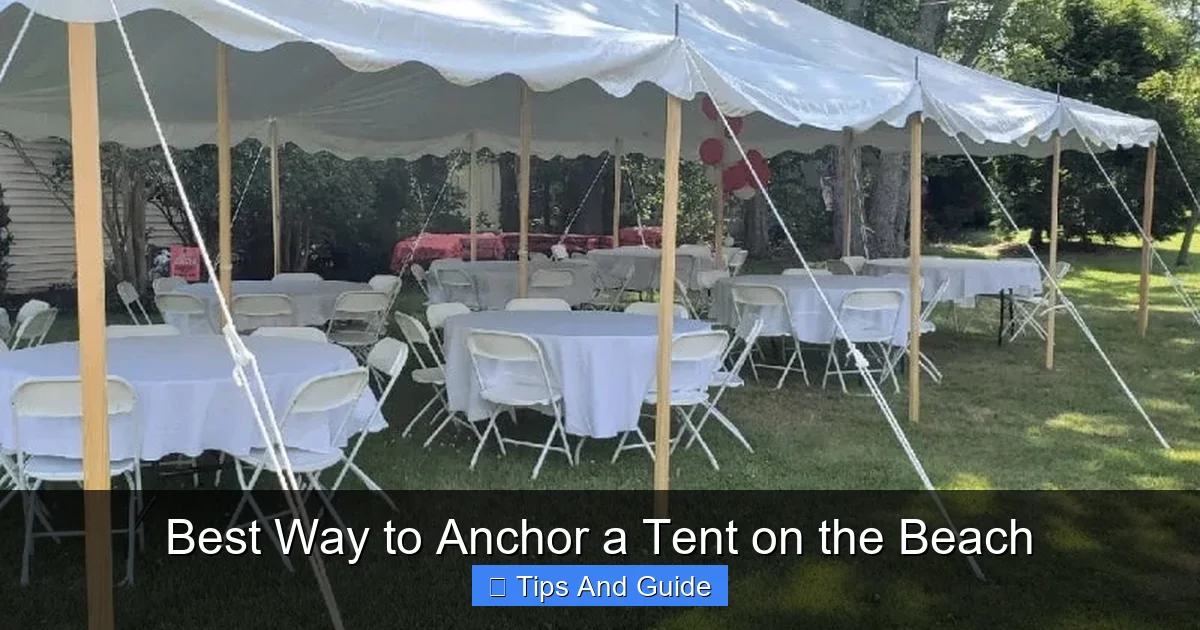
Don’t let a gust of wind ruin your beach day! This guide covers the best way to anchor a tent on the beach, ensuring your shelter stays put. We’ll explore various anchoring methods, from sandbags to specialized stakes, and offer practical tips for a secure and stable setup against wind and waves. Enjoy your protected beach escape with confidence!
Heading to the beach is always a fantastic idea. The sun, the sand, the sound of the waves – it’s pure bliss. But if you’re planning to set up a tent or a shelter for shade and comfort, you know that the beach presents a unique challenge: wind. A beautiful beach day can quickly turn into a frustrating battle with flying fabric if your tent isn’t properly anchored. The best way to anchor a tent on the beach isn’t just about pounding a few stakes into the sand; it’s a strategic approach that takes into account the environment and the specific needs of your shelter.
Many people underestimate the power of beach winds. They can come out of nowhere, strong and relentless, turning a flimsy shelter into a kite. This is where knowing the best way to anchor a tent on the beach becomes crucial. It’s not just about keeping your tent from blowing away; it’s about ensuring your safety and the longevity of your beach gear. We’ve all seen those unfortunate beachgoers chasing after their escaped tents! With the right techniques and gear, you can transform your beach tent into a secure haven, no matter how breezy it gets.
## Choosing the Right Location: Your First Line of Defense
Before you even think about stakes and lines, your choice of location is paramount. The best way to anchor a tent on the beach starts with smart placement. Where you pitch your tent can significantly impact how well it holds up against the elements.
### Assessing the Wind Direction
One of the most straightforward, yet often overlooked, steps is to observe the prevailing wind direction. Are the flags flying in a particular direction? Is the sand blowing in a consistent pattern? Try to position your tent so that its narrowest profile faces the direct onslaught of the wind. This reduces the surface area that the wind can catch, making it less likely to be lifted or pushed. Imagine a sailboat; it’s designed to move with the wind, not fight it head-on. Your tent should, in a way, do the same.
### Considering Tide Levels and Dunes
Always check the tide charts before you set up. You don’t want your wonderfully anchored tent to be slowly engulfed by the incoming tide. Look for a spot that is well above the high tide line. Also, consider natural windbreaks like dunes. Setting up on the leeward side of a dune can offer significant protection from the wind. However, be mindful of any environmental regulations regarding setting up near dunes, as they are often protected ecosystems.
### Proximity to Water and Facilities
While you want protection, you also want convenience. Think about how close you want to be to the water’s edge or public facilities. Balancing these needs with the best spot for anchoring is key to an enjoyable beach experience. Sometimes, a slightly less-than-ideal spot for wind protection is worth it if it offers better access and safety.
## Specialized Beach Anchoring Solutions
Standard tent stakes are designed for soil and grass, not loose sand. They simply don’t have enough surface area or grip to hold firm in shifting beach conditions. The best way to anchor a tent on the beach involves using anchors specifically designed for sand.
### Sand Stakes and Augers
These are your best friends for beach camping. Sand stakes are typically much longer and wider than regular stakes, with a corkscrew or a wide, flat design.
- Sand Stakes: Look for stakes made of durable plastic or metal. Their design allows them to be screwed or pushed deep into the sand, creating a secure anchor point. The longer, the better, as they can penetrate deeper for more holding power.
- Auger Anchors: Similar to a large screw, auger anchors can be twisted into the sand, offering excellent resistance to pulling forces. They are particularly effective in very loose sand.
When using these, don’t just push them in a few inches. Screw or drive them in as deep as you possibly can. The deeper they go, the more sand they displace and compact, creating a much stronger hold.
### DIY Sandbags and Weight Systems
If you can’t get specialized sand anchors, or if you need extra holding power, DIY solutions are fantastic.
- Sandbags: Purchase inexpensive canvas or sturdy plastic bags. Fill them with sand (the heavier, the better) and tie them securely. You can then use these to weigh down the corners or the base of your tent. Some people even create loops on the bottom of their tents to tie these bags directly.
- Water Bottles/Jerricans: Fill large water bottles or small jerricans with water or sand. These can be placed strategically to add weight. Ensure they are secured so they don’t roll away.
- Duct Tape and Rocks: In a pinch, you can use strong duct tape to secure heavy rocks to your tent’s guy lines or loops. Be very careful with this method, as sharp rocks can damage your tent fabric.
The principle here is simple: add significant weight to counteract the lifting force of the wind.
## Mastering the Art of Guy Lines and Pegging
Guy lines are the ropes that connect your tent to the ground, and when used correctly, they are vital to the best way to anchor a tent on the beach. They distribute the stress of the wind across multiple anchor points, making your tent far more stable.
### Proper Tensioning and Angle
Guy lines should be taut but not so tight that they deform your tent. They should be angled away from the tent at roughly 45 degrees. This angle provides the most effective leverage against wind forces. Regularly check the tension, especially if the wind picks up. Loose guy lines are useless and can lead to your tent collapsing.
### Utilizing All Anchor Points
Most tents come with multiple guy line loops and anchor points. Don’t skip any of them! The more points of contact you have with the sand, the more stable your tent will be. Even small loops around the base of the tent can benefit from an anchor.
### Creative Pegging Techniques
When using sand stakes or traditional pegs, consider how you insert them.
- Angle Away from the Tent: Just like guy lines, peg your stakes at an angle that pulls away from the tent. This makes them more resistant to being pulled out.
- Digging a Trench: For extra security, dig a shallow trench where you want to place your stake or anchor. Lay the stake in the trench, then cover it with sand, packing it down firmly. This buries your anchor deeper and provides more sand resistance.
Think of it like anchoring a boat; the deeper the anchor, the more secure the vessel. The same principle applies to your tent on the beach.
## Reinforcement and Backup Strategies
Even with the best anchors and techniques, sometimes the wind is just exceptionally strong. Having backup strategies can be a lifesaver. If you’re looking for the best pop-up tent for the beach, consider models designed with extra robust anchoring systems.
### Using Extra Stakes and Weights
Carry more stakes than you think you’ll need. If you notice a particular anchor point struggling, add a second stake right next to it, or place a sandbag or heavy object on top of the existing stake.
### Strategic Placement of Heavy Items
Once your tent is anchored, use heavy items like coolers, chairs, or even your beach bags to add extra weight inside the tent, particularly around the edges. This helps to keep the floor from lifting.
### Consider a Beach Anchor Kit
Many outdoor retailers sell specialized beach anchor kits. These often include a combination of sand stakes, strong ropes, and sandbags, providing a comprehensive solution for securing your beach shelter. Investing in one of these can save you a lot of hassle. If you’re choosing a new tent, researching the best pop-up beach tent on Amazon or checking out reviews for the best beach tent on Amazon can help you find one that comes with good anchoring capabilities.
## Advanced Techniques for Extreme Conditions
Sometimes, you might be facing particularly windy conditions, or you might be using a larger shelter like a canopy. For these situations, employing advanced techniques for the best way to anchor a tent on the beach is essential.
### The “Deadman’s Anchor” Concept
This is a classic survival technique that works wonders for tents. Bury a long object (like a sturdy stick, a log, or even a securely wrapped bundle of clothes) horizontally in the sand. Attach your tent’s guy line to the middle of this buried object. When the guy line pulls, it tightens the object against the surrounding sand, creating a very strong anchor. This is incredibly effective in loose sand.
### Using Rocks and Natural Features
If you’re near rocky areas, large, stable rocks can be utilized. Tie your guy lines securely around them. However, ensure the rocks are firmly in place and won’t shift. If there are sturdy driftwood logs, they can also serve as excellent anchor points.
### Reinforcing Pole Sleeves and Clips
For tents with external poles or large fabric sleeves for poles, wind can exert significant force. Ensure that the ends of these poles are firmly secured to the ground, or that the sleeves are well-pegged down. Some tents have extra clips or loops specifically for reinforcing pole areas in high winds.
### Securing Extra Fabric
If your tent has a large vestibule or an extended flysheet, ensure these areas are also well-pegged. They can act like sails if left loose, creating a lot of drag and potentially destabilizing the main tent structure.
## Maintaining Your Anchored Tent
Anchoring your tent isn’t a set-it-and-forget-it task. Regular checks are crucial to ensure it remains secure throughout your beach visit.
### Periodic Inspections
As the day progresses, and especially if the wind changes or intensifies, take a few minutes to walk around your tent. Check the tension of your guy lines, ensure your stakes haven’t loosened, and look for any signs of fabric stretching or straining that might indicate an anchor point is failing.
### Adjusting Guy Lines
If you notice any slack in your guy lines, tighten them up. If the wind direction shifts, you might need to adjust the angle of your stakes to provide optimal resistance.
### Preparing for Departure
When it’s time to pack up, carefully remove your anchors. Avoid yanking them out forcefully, as this can damage the sand and make it harder for future visitors to pitch their tents. Gently twist or loosen them before pulling them out. This shows respect for the beach environment.
In conclusion, the best way to anchor a tent on the beach is a multi-faceted approach. It involves choosing your location wisely, using specialized anchoring gear, mastering the use of guy lines and stakes, and employing reinforcement strategies for windy conditions. By following these guidelines, you can create a stable and secure beach shelter, allowing you to fully relax and enjoy your time by the sea without the constant worry of your tent becoming airborne. Happy beach camping!
Key Takeaways
- Location Matters: Choose a spot protected from the main wind direction and consider tide levels to prevent your tent from being swamped.
- Heavy-Duty Anchors are Key: Standard tent stakes won’t cut it. Opt for sand stakes, augers, or even DIY sandbags for effective beach anchoring.
- Multiple Anchor Points: Utilize all guy lines and loops on your tent, distributing the anchor points evenly for maximum stability.
- Digging Deep: Burying anchor points deeper in the sand provides significantly more holding power against wind.
- Reinforce with Extra Stakes/Weights: Even with specialized anchors, consider adding extra weight or stakes at critical points for added security.
- Consider a Windbreak: Position your tent strategically or use natural elements like dunes to create a windbreak.
Frequently Asked Questions
What is the best type of anchor for sand?
The best anchors for sand are specialized sand stakes or auger anchors. These are designed with wider surfaces or screw-like threads that can penetrate deeper and grip more effectively in loose sand compared to standard tent stakes.
How deep should I drive my tent stakes on the beach?
You should drive your tent stakes as deep as possible into the sand, ideally at least a foot or more. The deeper the stake, the more sand it compacts and displaces, providing significantly better holding power against the wind.
Can I use rocks to anchor my tent on the beach?
Yes, you can use heavy rocks, but with caution. Securely tie your tent’s guy lines around large, stable rocks. Be mindful that sharp rocks can damage your tent fabric, and ensure the rocks are too heavy to be moved by the wind.
What should I do if my tent starts to lift in the wind?
If your tent begins to lift, immediately check and re-tighten all guy lines. Add extra stakes or weights to the anchor points that are loosening. If possible, place heavy items like coolers or sandbags inside the tent to add more weight.
Are pop-up tents good for the beach?
Many pop-up tents are excellent for the beach, especially those designed as beach tents. They offer quick setup and good shade. However, their lightweight construction means securing them properly is crucial, making the best way to anchor a tent on the beach particularly important for these models.
How can I prevent sand from getting into my tent?
To minimize sand inside your tent, choose a spot slightly away from the immediate beach path. Use a groundsheet that extends beyond the tent’s footprint. Shake off sand from clothing and gear before entering, and consider bringing a small brush or broom for cleanup.
