
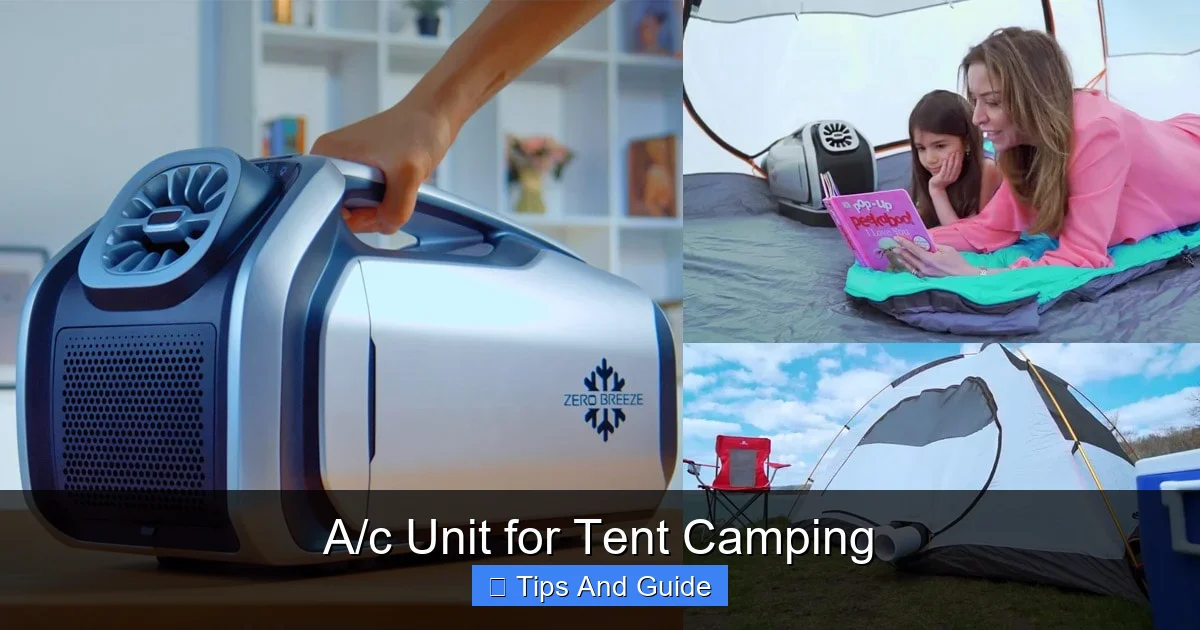
Considering an A/C unit for your tent camping adventures? This comprehensive guide explores the feasibility, types, power requirements, and practical considerations. Learn how to stay cool and comfortable while embracing the outdoors, and determine if this unconventional approach to tent camping is the perfect fit for your needs.
## A/C Unit for Tent Camping: Is it Really Possible?
The call of the wild, the rustling leaves, the crackling campfire – these are the quintessential elements of tent camping. For many, the charm lies in embracing nature in its purest form. But what if your idea of embracing nature includes a cool, refreshing breeze on a sweltering summer night? The thought of an A/C unit for tent camping might sound like a contradiction in terms, a luxury that clashes with the rugged essence of the outdoors. Yet, as camping gear evolves and our desire for comfort grows, this question pops up more frequently. Can you actually bring an air conditioner into your tent and expect it to work? The short answer is yes, but it comes with a significant set of considerations. It’s not as simple as packing your tent and plugging in your home unit, but with the right planning and equipment, enjoying a cooler tent experience is achievable.
This guide is here to demystify the concept of an A/C unit for tent camping. We’ll delve into the practicalities, the challenges, and the solutions, helping you decide if this is a camping upgrade you’re willing to undertake. We’ll explore the types of units that might work, the all-important power requirements, and how to set it all up without turning your campsite into a noisy, power-guzzling spectacle. So, if you’re dreaming of a comfortable night’s sleep without the sweat, let’s dive into the world of air conditioning for your tent.
## Understanding Your Cooling Options for Tent Camping
Before you start shopping for a portable AC, it’s important to understand the spectrum of cooling solutions available for tent camping. Not all “cooling” involves a full-blown compressor. The best A/C unit for tent camping might not be what you initially imagine.
### Evaporative Coolers: The Water-Based Approach
Evaporative coolers, often called swamp coolers, are a popular choice for dry climates. They work by drawing warm air over water-soaked pads. As the water evaporates, it cools the air. They use significantly less energy than traditional air conditioners and don’t require a sealed environment.
* Pros: Energy efficient, adds humidity (good for dry climates), relatively quiet.
* Cons: Less effective in humid conditions, requires a water source, not as powerful as refrigerant-based ACs.
* Best for: Arid camping locations where adding moisture to the air is beneficial.
### Portable Air Conditioners: The Real Deal, But Miniaturized
These are the units most people think of when they hear “air conditioner.” They use refrigerants to actively cool the air. While true home-style AC units are too large and power-hungry for most tent camping scenarios, smaller, specially designed portable ACs exist. These often require an exhaust hose to vent hot air outside the tent.
* Pros: Most effective cooling, can dehumidify the air.
* Cons: High power consumption, heavier and bulkier, requires ventilation, can be noisy.
* Best for: Extreme heat, or for campers who prioritize maximum cooling and are prepared for the power needs. If you’re looking for the absolute best camping AC unit for tent, this category is where you’ll find it.
### High-Powered Fans: The Simpler Solution
Sometimes, the best “cooling” is simply good airflow. Powerful battery-operated or rechargeable fans can make a huge difference in perceived temperature. While they don’t lower the actual air temperature, they create a breeze that helps evaporate sweat, making you feel much cooler.
* Pros: Lightweight, portable, low power consumption, silent operation for many models.
* Cons: Doesn’t actually lower the air temperature, less effective in still, humid air.
* Best for: Most camping situations, especially where electricity is limited or for those seeking a more traditional, low-impact camping experience. Explore options for the best camping fan for tent to see how effective these can be.
## Powering Your Portable Paradise: The Biggest Hurdle
This is where most conversations about an A/C unit for tent camping come to a screeching halt. Air conditioners are notoriously power-hungry appliances. Running one off-grid requires serious thought and investment.
### Generators: The Classic, But Noisy, Solution
A gasoline or propane-powered generator is the most common way to power larger appliances in remote locations. However, generators have significant downsides for camping.
* Noise: They can be incredibly loud, disrupting your peace and potentially annoying fellow campers.
* Fumes: They produce exhaust fumes, which are not healthy to have near your tent and are a fire hazard if not properly managed.
* Weight and Bulk: Generators are heavy and take up considerable space in your vehicle.
* Fuel: You need to carry fuel, which adds weight and another item to manage.
If you opt for a generator, look for models labeled “inverter generators.” These are significantly quieter and more fuel-efficient than traditional generators, often producing cleaner power, which is better for sensitive electronics.
### Portable Power Stations: The Modern, Quieter Alternative
Portable power stations are essentially large rechargeable batteries with built-in inverters. They can power a wide range of devices, from phones to small appliances. For an A/C unit, you’ll need a substantial power station.
* Size Matters: Check the wattage requirements of your chosen A/C unit. You’ll need a power station with a continuous output wattage that exceeds this. Battery capacity (measured in watt-hours) is also crucial; a larger capacity means longer run times.
* Recharging: You’ll need a way to recharge your power station. Solar panels are an eco-friendly option, but they require ample sunlight and time. Alternatively, you can recharge it before your trip or at a campsite with hookups.
* Cost: High-capacity power stations can be expensive, often costing as much as or more than a good generator.
* Example: A small, energy-efficient portable AC might draw 300-500 watts. A power station with a 1000-watt continuous output and a 1500-watt-hour capacity might run it for 3-5 hours, depending on its efficiency and the AC’s actual draw.
### Campsite Electricity: The Easiest Path
If you’re camping at a developed campground with electrical hookups (often called “amped” sites), this is by far the easiest way to power an A/C unit. You can simply plug in your portable AC just like you would at home.
* Check Amp Limits: Be aware of the amperage limit at your campsite. Most sites have 15, 30, or 50 amp service. A portable AC, especially combined with other devices, could trip the breaker if you exceed the limit.
* Extension Cords: Use heavy-duty, outdoor-rated extension cords specifically designed for RV or camping use to ensure safe power delivery.
## Choosing the Right Tent for Your Cool Oasis
Not all tents are created equal when it comes to accommodating an A/C unit. The size, material, and design of your tent play a significant role in its suitability.
### Tent Size and Space
You need space for the A/C unit itself, plus room for it to operate efficiently. If it’s a portable AC with an exhaust hose, you’ll need to position it so the hose can exit the tent without kinks.
* Larger Tents are Better: A spacious cabin tent or a large dome tent will offer more flexibility than a small backpacking tent. Consider models that have vestibules or separate rooms where the unit can be placed to minimize direct noise and heat inside the sleeping area.
* Headroom: Ensure you have enough headroom to comfortably set up the unit and its components without feeling cramped.
### Tent Material and Insulation
The material of your tent affects how well it holds cool air and how much heat it absorbs from the sun.
* Thicker Fabrics: Tents made from thicker, more durable fabrics tend to offer better insulation than ultralight or mesh-heavy tents.
* Darker Colors: Darker colored tents will absorb more heat from the sun, making your A/C work harder. Lighter colors are generally better for hot weather camping.
* Sealed Environment: For refrigerant-based ACs to be effective, your tent needs to be as sealed as possible to prevent cool air from escaping and hot air from entering. This might involve ensuring all zippers are fully closed and that there are no large gaps.
### Ventilation and Exhaust
This is critical for portable ACs. You need a way to vent the hot air produced by the unit outside your tent.
* Window Kits: Some portable ACs come with window kits that can be adapted to tent flaps or windows. You might need to improvise with duct tape and a bit of creativity.
* Dedicated Vents: Some larger tents might have built-in vents that you could potentially modify.
* Moisture Management: Be aware that AC units, especially in humid environments, can produce condensation. Ensure your tent has good floor waterproofing and consider a ground tarp.
## Practical Setup and Usage Tips for an A/C Unit
Once you’ve addressed the power and tent requirements, the actual setup and usage are key to a successful cool camping experience.
### Placement is Everything
Where you position the A/C unit within or near your tent makes a big difference.
* Minimize Noise: If possible, place the unit in a vestibule or a separate screened-in porch area of your tent. This keeps the direct noise away from your sleeping area.
* Maximize Airflow: Ensure the intake and exhaust vents of the A/C unit are not obstructed. Give it space to breathe.
* Power Cord Management: Route power cords safely to avoid tripping hazards. Use cord protectors if necessary.
### Managing the Exhaust
Properly venting the hot air is non-negotiable for portable ACs.
* Secure the Hose: Make sure the exhaust hose is securely connected to the unit and exits the tent firmly. You might need to create a seal around the opening to prevent hot air from re-entering.
* Avoid Kinks: Ensure the exhaust hose is as straight as possible. Kinks restrict airflow and reduce the unit’s efficiency, potentially leading to overheating.
### Water Drainage
Evaporative coolers and dehumidifying AC units produce water.
* Evaporative Coolers: These usually have a reservoir that needs to be refilled. Keep an eye on the water level.
* Portable ACs: Some have internal reservoirs that need to be emptied periodically. Others have continuous drain ports. If you’re using a continuous drain, ensure the drain hose is directed away from your tent and into a suitable collection area or down a slope.
### Conserving Power
Whether you’re using a generator or a power station, conserving energy will extend your run time.
* Set a Moderate Temperature: Don’t aim for arctic temperatures. A 5-10 degree Fahrenheit drop from the outside temperature is often sufficient and much more energy-efficient.
* Use in Conjunction with Other Cooling: Combine your A/C with fans. A fan can help circulate the cool air more effectively, allowing you to set the thermostat slightly higher. Consider the best camping fan for large tent if you have ample space.
* Shade Your Tent: Use tarps or natural shade to keep the sun from beating down directly on your tent. This significantly reduces the cooling load on your A/C unit.
* Limit Opening Doors: Every time you open the tent door, cool air escapes and hot air enters. Try to minimize this.
## Alternatives and When an A/C Unit Might NOT Be For You
While the allure of a cool tent is strong, it’s essential to consider if an A/C unit for tent camping aligns with your camping style and priorities.
### The Camping Ethos
For many, tent camping is about disconnecting from modern conveniences and embracing simplicity. Introducing a noisy, power-hungry appliance can fundamentally change the camping experience. It might detract from the peace and quiet of nature and could be seen as going against the spirit of traditional camping.
### Noise and Environmental Impact
Generators, in particular, can be very noisy and produce emissions. Even quieter power stations rely on electricity that might be generated from fossil fuels. If minimizing your environmental footprint and enjoying the natural soundscape are important to you, an A/C unit might not be the best choice.
### Weight and Portability
The added weight of an A/C unit, power source, and associated accessories can significantly impact the portability of your camping setup. This is especially true for car camping where space and weight are less of a constraint, but for backpacking or motorcycle camping, it’s likely out of the question.
### Simpler Cooling Strategies
Often, effective cooling can be achieved through simpler, more traditional methods:
* **Strategic Site Selection:** Camp in the shade, near water, or at higher elevations where temperatures are naturally cooler.
* Good Ventilation: Ensure your tent has excellent cross-ventilation. Opening vents and doors strategically can create a pleasant breeze.
* Fans: Battery-powered fans are a game-changer for comfort and are far more practical.
* Cooling Towels and Misting Bottles: These simple, low-tech solutions can provide significant relief.
* Timing Your Activities: Hike or engage in strenuous activities during the cooler parts of the day.
* Proper Bedding: Opt for breathable sleeping bags and consider a comfortable camping mattress designed for airflow.
### When It Makes Sense
An A/C unit for tent camping might be a viable option for:
* **Car campers in extreme heat:** When comfort is a high priority and power sources are readily available.
* **Specialized events:** Like music festivals in hot climates where a comfortable tent is desired after a long day.
* **Campers with specific medical needs:** Requiring a consistently cool environment.
* **Those with large, comfortable setups:** Where the added weight and complexity are manageable.
Ultimately, the decision to use an A/C unit for tent camping is a personal one. It requires a careful balance of comfort, practicality, and respect for the camping environment.
### Conclusion: Cool Camping or Overkill?
The idea of an A/C unit for tent camping is no longer just a far-fetched dream. With the availability of smaller, more efficient portable units and powerful portable power stations, it’s technically feasible. However, it’s crucial to go into it with realistic expectations and a thorough understanding of the requirements. Power generation, tent suitability, and careful setup are paramount.
For many traditional campers, the charm lies in the simplicity and immersion in nature. The added bulk, noise, and power demands of an A/C unit might detract from that experience. Yet, for others, particularly car campers looking to extend their camping season into hotter months or those who simply prioritize comfort, it can be a way to make tent camping more enjoyable.
Before you invest in an A/C unit for your tent, weigh the pros and cons carefully. Consider your camping style, the typical weather conditions you’ll encounter, and your budget. Often, a combination of good ventilation, strategic site selection, and a powerful fan or two might be all you need to stay comfortable. If you do decide to go the A/C route, thorough research into the best camping AC unit for tent and a well-planned power strategy will be your keys to success, ensuring your tent becomes a cool, comfortable haven amidst the great outdoors.
- Feasibility: While not traditional, A/C units can be used in tents, especially in milder climates or for shorter durations.
- Types of Units: Options range from portable evaporative coolers to small, compact air conditioners designed for specific camping scenarios.
- Power is Paramount: A significant hurdle is the power source. You’ll need a robust generator, a large portable power station, or a campsite with electricity.
- Ventilation is Key: Proper airflow and exhaust are crucial to prevent moisture buildup and ensure the A/C unit operates effectively.
- Tent Suitability: Larger, more robust tents, or those with separate vestibules, are better suited for housing and running an A/C unit.
- Comfort vs. Camping Ethos: Weigh the desire for modern comfort against the traditional minimalist approach of tent camping.
- Alternatives Exist: Don’t forget simpler, more eco-friendly cooling methods like fans, proper shade, and strategic site selection.
Frequently Asked Questions
Can I use a regular home air conditioner in my tent?
No, it’s highly unlikely and not recommended. Home air conditioners are too large, too heavy, and consume far too much power to be practical for tent camping. They also require a stable, sealed environment that a tent cannot provide.
What is the most crucial factor when considering an A/C unit for tent camping?
The most crucial factor is the power source. Air conditioners require a significant amount of electricity, meaning you’ll need a robust generator, a large portable power station, or an electrical hookup at your campsite.
How much power does a portable camping A/C unit typically use?
Portable air conditioners designed for camping or small spaces usually consume between 300 to 700 watts, depending on their size and efficiency. Always check the specific wattage requirements of the unit you are considering.
Will an A/C unit make my tent too humid?
Refrigerant-based air conditioners actually dehumidify the air as they cool it, which can be a benefit in humid climates. Evaporative coolers, however, add moisture to the air, making them best suited for dry environments.
Are there any alternatives to an A/C unit for cooling a tent?
Yes, absolutely! Many campers find success with powerful battery-operated fans, strategic tent placement in shaded areas, excellent tent ventilation, cooling towels, and by timing activities for cooler parts of the day.
How do I vent the hot air from a portable A/C unit in a tent?
Portable AC units typically come with an exhaust hose. You’ll need to find a way to safely route this hose outside your tent, often through a partially open window or a specially created opening, and ensure it’s sealed to prevent hot air from re-entering.
