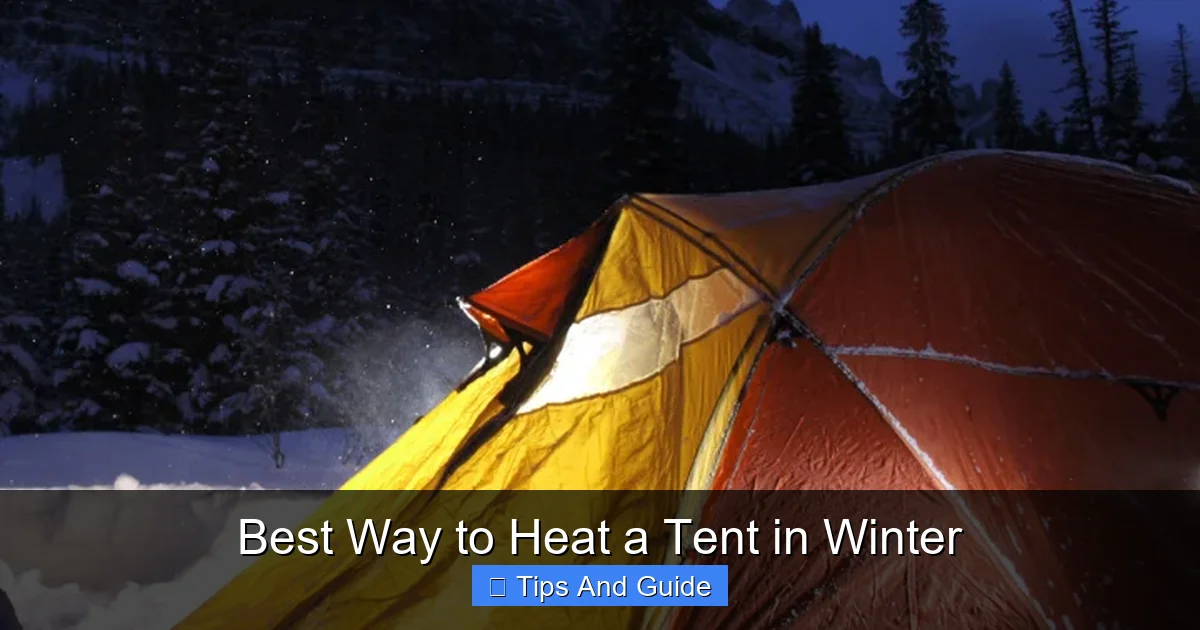
Best Way to Heat a Tent in Winter
Don’t let winter camping freeze you out! This guide reveals the best way to heat a tent, focusing on smart insulation, top-tier sleeping gear, and safe heating solutions. Learn how to stay toasty warm and enjoy your winter adventures.
## The Ultimate Guide to Heating Your Tent in Winter
Winter camping. The very idea can send shivers down your spine, and not just from the thought of the crisp, cold air. Many people assume that camping in the colder months means enduring a frosty, uncomfortable experience. But what if I told you that with the right knowledge and preparation, you can have a wonderfully warm and cozy tent, even when snow is falling outside? It’s entirely possible, and understanding the best way to heat a tent in winter is your ticket to unlocking this exciting season of outdoor adventure.
Forget shivering nights and early morning dashes to thaw frozen fingers. We’re going to dive deep into the strategies that will keep your temporary home toasty. From the foundational principles of insulation to the latest in safe heating technology, this guide will equip you with everything you need to know. Whether you’re a seasoned winter camper or just curious about braving the cold, get ready to learn how to transform your tent into a warm haven.
### The Foundation: Insulating Your Tent Effectively
Before you even think about bringing a heater into your tent, you need to make sure your tent itself is a good insulator. Think of your tent as a mini-home; just like a house, it needs to keep the cold out and the warmth in. If your tent is drafty, any heat you generate will escape faster than you can say “Jack Frost.”
#### Sealing Up the Drafts
Drafts are the silent killers of tent warmth. Those little gaps and openings where the tent fabric meets the ground, around zippers, or where poles insert can let a surprising amount of cold air in.
* Ground Skirts: If your tent has a snow skirt or a generous overhang, use it! Burying the edges in snow or using rocks and logs can create a strong seal against the ground. For tents without this feature, consider using extra tarps or even bringing some heavy-duty duct tape to temporarily seal any obvious gaps.
* Zipper Care: Make sure your zippers are fully closed and that there are no tears around them. Sometimes, a little bit of fabric can get caught, leaving a small opening.
* Ventilation Management: While ventilation is crucial for safety, you want to control it. Most winter tents have smaller vent openings that can be adjusted. Keep them open just enough for airflow but not so much that you’re creating a wind tunnel.
#### Leveraging Reflective Insulation
Adding a layer of reflective insulation can make a huge difference. This isn’t about adding bulk; it’s about bouncing heat back into your living space.
* Emergency Blankets: Those thin, silver emergency blankets are surprisingly effective. You can hang them inside your tent walls (being careful not to block vents) or lay them on the floor under your sleeping pad. They reflect radiant heat.
* Foam Insulation: Closed-cell foam mats or even reflective bubble wrap can be used to line the inside walls or floor of your tent. Cut them to size for a snug fit.
#### Choosing the Right Winter Tent
The tent itself plays a significant role. For serious winter camping, a dedicated winter tent is a wise investment. These tents are designed with fewer mesh panels, thicker fabrics, and often a more robust pole structure to withstand snow loads. They are inherently better at retaining heat. If you’re looking for options, articles on the best pop up tent for winter and the best budget winter tent can offer some starting points.
### Your Personal Heater: Sleeping Gear is Paramount
In a tent, your body is the primary heat source, and your sleeping gear is designed to trap that precious warmth. This is arguably the most critical element for staying comfortable overnight.
#### The Sleeping Bag: Your Winter Cocoon
The “temperature rating” on a sleeping bag is vital. This rating indicates the lowest temperature at which the bag is designed to keep an average person comfortable.
* Go Lower: For winter camping, always choose a sleeping bag with a rating significantly lower than the coldest temperature you anticipate. If it’s going to be 20°F (-7°C), a 0°F (-18°C) or even -20°F (-29°C) bag is a good idea.
* Down vs. Synthetic: Down insulation is lighter and more compressible for its warmth, but it loses its loft and insulating power when wet. Synthetic insulation is heavier and bulkier but retains some warmth even when damp. For very wet winter conditions, synthetic might be preferable.
* Fit Matters: A bag that is too big will have dead air space that your body has to heat. A snug fit is more efficient.
#### The Sleeping Pad: Insulation from Below
Don’t underestimate the importance of your sleeping pad. The ground can suck heat from your body incredibly quickly.
* R-Value is Key: Sleeping pads have an R-value, which measures their thermal resistance. For winter camping, aim for an R-value of 4 or higher. Many campers use a combination of a closed-cell foam pad *and* an inflatable insulated pad for maximum warmth and comfort. This is much better than just relying on one.
* Comfort and Insulation: A good sleeping pad not only insulates you from the cold ground but also provides cushioning, which is essential for a good night’s sleep. Check out guides on the best camping mat for tent or the best camping mattress for tent for more on this.
### Harnessing Your Body Heat: Smart Camper Habits
Your body is a fantastic heat generator, but you need to help it do its job effectively.
#### Layering is Non-Negotiable
Wearing the right clothing is crucial, both inside and outside your sleeping bag.
* Base Layers: Moisture-wicking materials like merino wool or synthetics are best for your base layer. Avoid cotton at all costs, as it holds moisture and makes you cold.
* Mid Layers: Fleece or down jackets provide insulation.
* Outer Layers: A windproof and waterproof shell protects you from the elements.
* At Night: Wear dry base layers to bed. Avoid sleeping in the clothes you wore all day.
#### Hydration and Nutrition
Staying hydrated is important for regulating body temperature. Your body uses water to create heat. Avoid caffeine and alcohol before bed, as they can disrupt your body’s natural temperature regulation and lead to dehydration. Eating a fatty snack before bed can also help your body generate heat as it digests.
#### The Buddy System
If you’re camping with a partner, zipping two sleeping bags together can create a warmer, larger space. Sharing body heat is a surprisingly effective way to stay warm.
### Safe Tent Heating Solutions: When You Need More
While insulation and sleeping gear are your primary defenses against the cold, sometimes you need a little extra boost. This is where tent heaters come in, but safety must be your absolute top priority.
#### Propane Heaters: Power and Peril
Portable propane heaters are common for tent heating. They provide significant warmth but come with serious risks.
* Carbon Monoxide (CO) Poisoning: This is the biggest danger. Propane heaters produce carbon monoxide, an odorless, colorless, and deadly gas. Never, ever run a propane heater inside a tent without proper ventilation and a reliable CO detector. Most manufacturers explicitly state their heaters are for outdoor use only or require significant ventilation.
* Fire Hazard: Propane heaters get hot and can easily ignite tent fabric or nearby materials. Always keep them a safe distance from the tent walls and sleeping bags.
* Ventilation is Critical: If you choose to use a propane heater, you MUST ensure constant ventilation. This means cracking a tent vent or window, even if it’s cold. This is a delicate balance – you need enough airflow to dissipate CO but not so much that you lose all your heat.
* Consider an Outdoor Heater: Some campers use propane heaters *outside* the tent, under a vestibule or awning, to radiate some heat inside, though this is less effective than an internal heater. For more on this, you might find resources on the best camping heater for tent helpful.
#### Catalytic Heaters: A Safer (but still risky) Alternative
Catalytic heaters use a catalytic process to burn propane more completely, producing less CO than a standard propane heater. However, they still produce CO and heat.
* Lower CO Output: Generally considered safer than standard propane heaters, but still require ventilation and a CO detector.
* Slower Heat Output: They tend to produce heat more gradually.
* Still a Fire Risk: Like propane heaters, they generate heat and must be kept away from flammable materials.
#### Electric Heaters: Limited but Safe (with power)
Electric tent heaters are a safe option if you have access to a reliable power source (e.g., a campsite with electrical hookups, a powerful portable power station).
* No CO Risk: They don’t produce carbon monoxide, making them the safest internal heating option.
* Power Dependent: Their effectiveness is entirely dependent on your power source. A small battery pack won’t run a powerful heater for long.
* Fire Risk: Still a fire hazard if placed too close to flammable materials.
#### Battery-Powered Options: Convenience and Caution
* Heated Blankets/Pads: These are a fantastic option for adding direct warmth to your sleeping bag. They run on rechargeable battery packs and are generally safe. Look for the best camping lights for tent as well for illumination, but these heated options are for comfort.
* Rechargeable Hand Warmers: Small, portable, and great for keeping extremities warm.
### Pre-warming Your Tent and Other Tricks
Sometimes, the best way to heat a tent is to get a head start.
#### Hot Water Bottle
A classic for a reason! Fill a sturdy, leak-proof water bottle with hot (not boiling) water, seal it tightly, and place it in your sleeping bag about 15-30 minutes before you plan to get in. It acts like a personal radiator.
#### Warm Rocks (with extreme caution)
If you’re in a situation where you have safe access to rocks and a controlled fire, you can heat smooth, dense rocks by the fire until they are hot. Wrap them securely in cloth (like old towels) and place them carefully inside your tent. This method requires extreme caution to avoid burns or fires. Ensure rocks are not porous and will not explode when heated.
#### Hand and Foot Warmers
Disposable chemical hand warmers can be a lifesaver for cold feet and hands. Place them in your sleeping bag or pockets.
#### Eating and Drinking Warm
A warm meal or a hot drink before bed can significantly raise your internal body temperature. Think hearty soups, stews, or herbal teas.
### The Crucial Balance: Ventilation for Safety and Comfort
This cannot be stressed enough: **ventilation is paramount when heating a tent.** Condensation is a major issue in cold weather camping. Your breath, cooking, and any heating devices will put moisture into the air. If this moist air touches the cold tent fabric, it will condense into water droplets, making everything damp and cold.
* Prevent Condensation: Proper ventilation helps move moist air out, preventing condensation buildup.
* Prevent CO Buildup: As mentioned, this is a life-or-death issue with combustion heaters.
* Balancing Act: The trick is to ventilate enough to manage moisture and gases without letting all your warmth escape. This means strategically opening vents and possibly a small flap on your door, even when it’s frigid outside.
### Conclusion: Embrace the Warmth of Winter Camping
Heating a tent in winter isn’t about magic; it’s about smart preparation and understanding the principles of insulation, personal warmth, and safe heating practices. By focusing on a well-insulated tent, investing in quality sleeping gear, and adopting good personal habits, you’ll already be miles ahead. When additional heat is needed, always prioritize safety. Understand the risks associated with combustion heaters and ensure adequate ventilation and a working carbon monoxide detector.
Winter camping offers a unique and beautiful experience – the quiet of the snow-covered landscape, the crisp air, and the starry nights. Don’t let the fear of the cold hold you back. By following these guidelines, you can ensure your tent is a warm, safe, and inviting sanctuary, allowing you to fully enjoy all that winter camping has to offer. Happy (and warm) camping!
Key Takeaways
- Proper Insulation is Key: Focus on sealing drafts, using reflective insulation, and choosing a tent designed for cold weather to retain heat.
- Invest in Quality Sleeping Gear: A high-rated sleeping bag and a warm sleeping pad are your primary sources of heat at night.
- Body Heat is Your Friend: Layer your clothing, stay hydrated, and avoid alcohol to maximize your body’s natural heat production.
- Safe Tent Heaters: Understand the risks and benefits of propane or catalytic heaters, always prioritizing ventilation and carbon monoxide detection.
- Pre-warming Your Tent: Techniques like using a hot water bottle or a battery-powered heated blanket can make a significant difference.
- Mindful Ventilation: Balancing warmth with airflow is crucial to prevent condensation and the buildup of dangerous gases.
- Choose the Right Tent: A well-designed winter tent, often with good insulation and fewer mesh panels, is essential for effective heating.
Frequently Asked Questions
What is the safest way to heat a tent in winter?
The safest way to heat a tent is to focus on excellent insulation, quality sleeping gear, and your own body heat. If additional heat is needed, battery-powered heated blankets or electric heaters (if you have power) are the safest options as they don’t produce carbon monoxide. Always prioritize ventilation if using any combustion heater.
Can I use a propane heater inside my tent?
Using a propane heater inside a tent is extremely dangerous due to the risk of carbon monoxide poisoning and fire. While some heaters are marketed for tent use, they require significant ventilation and a CO detector. It is generally advised to only use them in well-ventilated vestibules or outdoors.
How important is a sleeping pad for tent warmth?
A sleeping pad is incredibly important for tent warmth. It insulates you from the cold ground, which can quickly sap your body heat. Look for pads with a high R-value (4 or above) for winter camping.
How can I prevent condensation in my tent when heating it?
Preventing condensation involves balancing heat with ventilation. Ensure you have adequate airflow by opening tent vents, even in cold weather. This allows moist air to escape and prevents it from condensing on your tent walls.
What are the best sleeping bag ratings for winter camping?
For winter camping, choose a sleeping bag rated at least 20-30 degrees Fahrenheit (11-17 degrees Celsius) lower than the coldest temperature you expect to encounter. This provides a safety margin and ensures comfort.
Are there any natural ways to heat a tent?
Natural ways to heat a tent include using your own body heat through layering and proper sleeping gear, pre-warming your tent with a hot water bottle, and consuming warm food and drinks before bed. Some campers also carefully use heated rocks, but this requires extreme caution to avoid fires and burns.