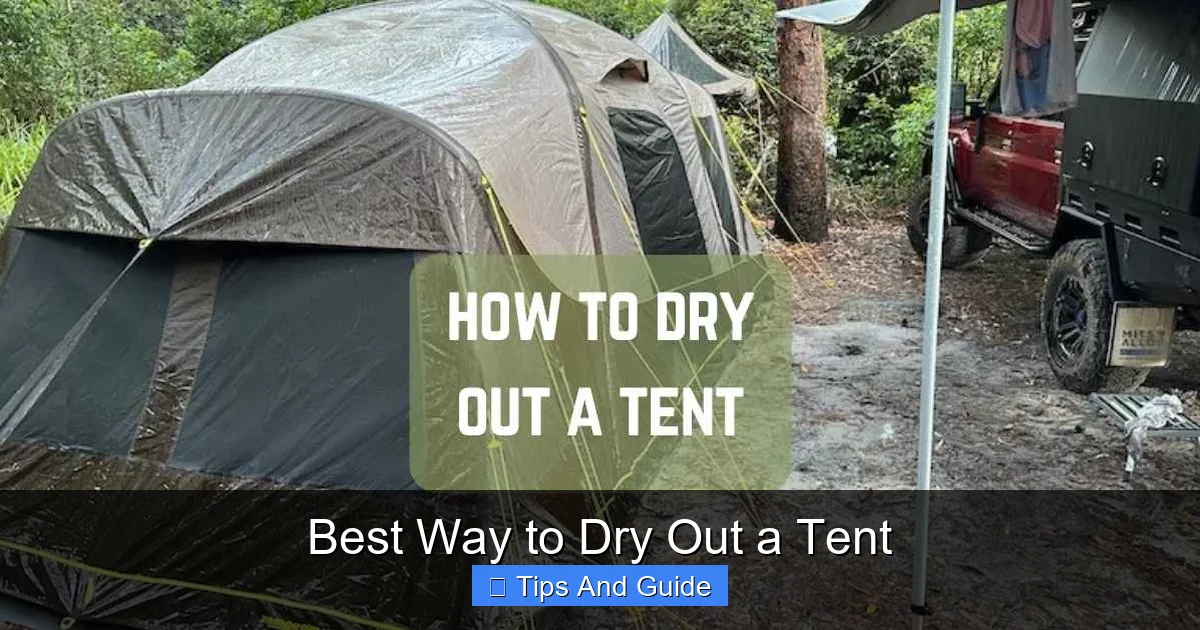
Best Way to Dry Out a Tent
Keeping your tent dry is crucial for its lifespan and preventing nasty mildew. This guide breaks down the best way to dry out a tent, whether you’re home or on the go. We’ll cover everything from immediate post-trip care to long-term storage solutions to ensure your tent stays in top condition.
Heading out on a camping trip is an incredible experience. You pitch your tent, enjoy the outdoors, and then, inevitably, pack it all up. But what happens when you get home and realize your tent is still a little damp? It’s a common problem, and if not handled correctly, it can lead to mildew, mold, and a shortened lifespan for your beloved shelter. Learning the best way to dry out a tent isn’t just about convenience; it’s about protecting your investment and ensuring many more adventures to come.
We’ve all been there. You’ve just finished a fantastic camping trip, perhaps one that involved a bit of unexpected rain or morning dew. You’re tired, ready to unpack, and the thought of wrestling a damp tent back into its bag seems like a chore. But that dampness is the enemy of your tent. Ignoring it can turn a minor inconvenience into a significant problem. This guide is here to help you tackle that damp tent head-on, ensuring it stays fresh, functional, and ready for your next adventure.
## Understanding Why Drying Your Tent is Essential
Before we dive into the “how,” let’s quickly cover the “why.” A properly dried tent is a happy tent. The primary reasons to dry your tent thoroughly are:
### Preventing Mold and Mildew Growth
This is the big one. Mold and mildew thrive in dark, damp environments. Your tent, when packed away wet, provides the perfect breeding ground. Even a small amount of moisture can kickstart their growth. Mildew not only creates an unpleasant musty odor that’s hard to get rid of, but it can also physically damage the tent fabric, weakening it and potentially causing permanent stains. Dealing with mildew is a much bigger hassle than drying your tent properly in the first place.
### Maintaining Fabric Integrity and Waterproofing
Tent fabrics are often treated with special coatings to make them waterproof and resistant to UV damage. When a tent stays wet for extended periods, these coatings can break down faster. Moisture can also lead to fabric degradation over time, especially at the seams where water tends to collect. Keeping your tent dry helps preserve its structural integrity and its ability to keep you protected from the elements.
### Extending Tent Lifespan
Simply put, a well-maintained tent lasts longer. By drying it out properly after each use, you are actively preventing the common culprits of premature tent wear and tear: mildew, fabric degradation, and rust on poles or zippers. This means you get more camping trips out of your tent, saving you money and hassle in the long run.
## The Best Way to Dry Out a Tent: At Home
This is the ideal scenario. When you get home from a camping trip, especially if the tent is wet, the first thing you should do is unpack it and set it up to dry.
### Immediate Unpacking and Setup
As soon as you arrive home, or as soon as you can realistically manage it, get your tent out of its stuff sack. Don’t leave it balled up in your car or in a corner of your garage for days. The longer it sits wet, the higher the risk of mold.
### Finding the Perfect Drying Spot
* Indoors: The best place to dry a tent is inside your home. Find a spacious area where you can fully pitch your tent. This could be a living room, a basement, or even a garage if it’s dry and well-ventilated.
* Outdoors (With Caution): If indoors isn’t an option, you can set up your tent outside. However, be mindful of direct, harsh sunlight. While the sun is a great drying agent, prolonged exposure to intense UV rays can degrade tent fabrics over time. Aim for a shady spot or a time of day when the sun isn’t at its peak. A breezy day is perfect.
### Setting Up for Maximum Airflow
Once you have a location, it’s time to set up the tent for drying.
* Pitch it Fully: If possible, pitch the entire tent as you would when camping. This allows all surfaces to be exposed to the air.
* Open Everything Up: Unzip all doors and windows. Open any vents. The more openings you have, the better the airflow will be. If your tent has a rainfly, set it up over the inner tent, but leave all the openings on both layers unzipped. This simulates its protective function while allowing air to circulate between the layers.
* Hang Components Separately (If Necessary): Sometimes, getting every inch of the tent perfectly dry can be tricky. If certain areas seem stubborn, consider hanging parts of the tent separately. Tent poles can be leaned against a wall, and the rainfly and inner tent can be draped over furniture or clothes racks. Just ensure they are not creased in a way that traps moisture.
### The Drying Process: Patience is Key
* Allow Ample Time: Drying can take anywhere from a few hours to a full day or more, depending on humidity, temperature, and how wet the tent is. Don’t rush it. It’s better to leave it out for an extra few hours than to pack it away still slightly damp.
* Check for Dryness: Before packing it up, run your hands over all surfaces, especially seams and corners. Pay attention to the inside of pockets and vestibules. If it feels cool or slick to the touch, it’s not dry enough.
## Drying Your Tent On the Go: When Home Isn’t an Option
Sometimes, you have to pack up your tent wet. This is common on the last day of a camping trip, especially if it rained overnight. While not ideal, there are ways to mitigate the damage.
### The “Stuff and Dry Later” Method
This is the most common scenario. You have to pack up a wet tent.
* Shake it Out: Before stuffing it, give the tent a good shake to remove as much loose water and debris as possible.
* Stuff Loosely (If Possible): If your tent came with a large compression sack, try not to cinch it down super tight. A looser stuff can allow a little more air circulation. If it came with a simple stuff sack, that’s even better.
* Prioritize Immediate Drying Upon Arrival: The absolute most important part of this method is to unpack and dry the tent *immediately* upon arriving home. Don’t let it sit in your car or gear pile for more than a few hours.
### Quick Air-Dry During the Trip
If you have a sunny break during your camping trip, take advantage of it.
* Hang it Up: Drape your tent over trees, rocks, or your car (be careful of scratches!) to let it air out. Open up all the zippers and vents. Even an hour or two of drying can make a significant difference.
* Use a Camp Stove (Carefully): In a pinch, and with extreme caution, you can use the heat from a camp stove to help dry a small area. Never place the stove inside the tent or too close to the fabric. This is a last resort and carries risks of fire or melting.
## Dealing with Stubborn Dampness and Mildew
What if your tent has a lingering musty smell, or you discover mildew spots?
### Spot Cleaning Mildew
* Mild Soap and Water: For small mildew spots, try washing the affected area with a mild soap (like dish soap) and water. Use a soft brush or sponge. Rinse thoroughly and dry completely.
* Vinegar Solution: A solution of one part white vinegar to one part water can also be effective. Apply it to the mildew spot, let it sit for a few minutes, then rinse and dry. Vinegar is a natural disinfectant and deodorizer.
* Commercial Tent Cleaners: There are specialized tent cleaners available that can help. Always follow the product instructions carefully.
### Deodorizing a Smelly Tent
If the mildew has left a persistent smell, thorough drying is the first step.
* Baking Soda: Sprinkle baking soda inside the tent and leave it for several hours or overnight, then vacuum or shake it out. Baking soda absorbs odors.
* Activated Charcoal: Place bags of activated charcoal inside the tent for a few days. These are excellent at absorbing moisture and odors.
* Sunlight and Fresh Air: Once completely dry, leaving the tent pitched in direct sunlight and fresh air for a day can also help dissipate odors.
## Packing and Storing Your Dry Tent
Once you’re absolutely sure your tent is bone dry, it’s time to pack it away.
### Proper Folding and Stuffing
* Fold Neatly: For longer-term storage, it’s often recommended to fold your tent neatly rather than just stuffing it. This reduces creases in the fabric.
* Use the Storage Sack: Most tents come with two sacks: a smaller stuff sack for packing on the go and a larger, mesh storage sack for home storage. The mesh sack is crucial for allowing air circulation.
* Never Store in a Plastic Bag: Avoid packing your tent in a plastic bag. Plastic traps moisture and prevents any air circulation, creating the perfect environment for mildew.
### Choosing the Right Storage Location
* Cool, Dry, and Dark: Store your tent in a cool, dry, and dark place. An attic can be too hot, and a damp basement is obviously out. A closet on the main floor or a climate-controlled garage is ideal.
* Avoid Extreme Temperatures: Fluctuations in temperature can also affect the fabric and coatings over time.
## Essential Tent Accessories That Help with Drying
While the tent itself is the main focus, some accessories can make the drying process easier.
### Clotheslines and Clips
A portable clothesline and some sturdy clips can be invaluable for hanging up rainflies, inner tents, and other components to dry separately, especially when you don’t have much space.
### Fans
If you’re drying your tent indoors, a small fan can dramatically speed up the process by increasing air circulation. Position it to blow air into or around the tent.
### Microfiber Towels
While you shouldn’t rely solely on towels to dry a tent, a good microfiber towel can be useful for gently wiping down condensation or small water droplets from surfaces before allowing the air to do the rest of the work. For instance, after a particularly wet trip, using a towel to pre-dry the inside of your tent before pitching it for a full air dry can be helpful. If you’re looking for comfort inside your tent, consider investing in the best camping mattress for tent or a quality best camping mat for tent, as these also benefit from being kept dry.
## Conclusion: A Dry Tent is a Happy Tent
Taking the time to properly dry out your tent after every camping trip is a small effort that yields significant rewards. It protects your gear, prevents unpleasant odors and damage, and ensures your tent remains a reliable shelter for countless adventures to come. Whether you’re setting it up in your living room or carefully airing it out on a sunny afternoon, the goal is always the same: a completely dry tent. By following these tips, you’ll be well on your way to enjoying your tent for years to come, ensuring it’s always ready for your next journey into the great outdoors.
- Thoroughness is Key: Ensure every part of your tent, including seams, zippers, and guylines, is completely dry before packing.
- Ventilation is Vital: Maximize airflow by opening doors, windows, and vents to speed up the drying process.
- Sun is Your Friend (Mostly): Sunlight is a great drying agent, but prolonged, intense exposure can degrade tent fabrics.
- Consider the Weather: If you can’t dry it immediately, use techniques to prevent moisture buildup until you can properly dry it.
- Mildew Prevention: A dry tent is a mold-free tent. Address moisture promptly to avoid permanent damage.
- Storage Matters: Store your tent loosely in a cool, dry place, never in a damp stuff sack or plastic bag.
Frequently Asked Questions
How long does it take to dry a tent?
The time it takes to dry a tent can vary greatly, from a few hours to over a day. Factors like humidity, temperature, how wet the tent is, and the tent’s material all play a role. It’s crucial to let it dry completely, even if it takes longer than you expect.
Can I use a hairdryer to dry my tent?
While a hairdryer might seem like a quick solution, it’s generally not recommended for drying a tent. The heat can be too intense and potentially damage the fabric coatings or even melt synthetic materials. Air drying is always the safest and most effective method.
What if my tent smells musty even after drying?
A persistent musty smell usually indicates that some mildew spores remain or that the moisture wasn’t completely eliminated. Try cleaning the tent with a mild soap and water solution or a diluted vinegar mixture, rinse thoroughly, and dry it completely again. Using baking soda or activated charcoal can also help absorb lingering odors.
Is it okay to pack my tent away slightly damp if I plan to dry it soon?
It’s strongly advised against packing your tent away if it’s even slightly damp, especially for more than a few hours. Mold and mildew can begin to grow very quickly in enclosed, moist conditions, leading to permanent damage and unpleasant odors that are difficult to remove. Always aim to dry it as thoroughly as possible before packing.
How often should I clean my tent?
Beyond just drying, your tent should be cleaned periodically to remove dirt, grime, and any residue that could degrade the fabric or waterproof coatings. A good rule of thumb is to give it a light cleaning after each trip and a more thorough cleaning once or twice a year, depending on how frequently you use it and the conditions you camp in.
What’s the difference between a stuff sack and a storage sack for a tent?
A stuff sack is designed for compact packing, often made of durable, lightweight material that you can compress tightly. A storage sack, typically made of breathable mesh, is for long-term storage at home. The mesh allows for air circulation, which is vital for preventing moisture buildup and mildew when the tent isn’t in use.