Best Way to Cool a Grow Tent
Keeping your grow tent cool is crucial for healthy plant development. This guide explores the best ways to manage temperature, from ventilation and airflow to lighting and environmental controls. By implementing these strategies, you’ll create an ideal microclimate for your plants to thrive.
# Best Way to Cool a Grow Tent
So, you’ve got your grow tent set up, your plants are looking happy, and you’re ready to watch them flourish. But wait – is the temperature creeping up? Overheating is a common and frustrating problem for indoor growers, and it can seriously impact your plants’ health and yield. Don’t worry, though! Keeping your grow tent at the optimal temperature is totally achievable with the right approach. It’s all about understanding how heat builds up and then implementing smart strategies to manage it.
Think of your grow tent like a mini-greenhouse. All those powerful grow lights, your plants’ own respiration, and even the ambient temperature of your room can contribute to a heat surge. If left unchecked, this can lead to stressed plants, stunted growth, and even pest infestations. The good news is that the best way to cool a grow tent isn’t a secret; it’s a combination of smart ventilation, thoughtful equipment choices, and a keen eye on your environment. We’re going to break down exactly how to keep things perfectly temperate for your green buddies.
This article is your go-to guide for mastering grow tent temperature control. We’ll cover everything from the fundamental principles of airflow to more advanced cooling solutions. Whether you’re using a small tent for a few herbs or a larger setup for a bountiful harvest, these tips will help you create the ideal environment for your plants to thrive. Let’s dive in!
Key Takeaways
- Effective Ventilation is Paramount: A robust intake and exhaust fan system is the cornerstone of temperature control in a grow tent.
- Air Circulation is Key: Oscillating fans inside the tent prevent hot spots and ensure even temperature distribution.
- Choose Your Lighting Wisely: LED grow lights generate less heat than HPS or MH lights, significantly aiding temperature management.
- Manage Your Environment: Monitoring humidity and using dehumidifiers or humidifiers can indirectly affect perceived temperature.
- Insulate and Seal: Ensure your grow tent is well-sealed and consider insulation for better climate control.
- Consider Active Cooling: For persistent heat issues, options like grow tent AC units or chillers might be necessary.
📑 Table of Contents
The Foundation: Ventilation and Airflow
When we talk about the best way to cool a grow tent, ventilation is the absolute first thing you need to get right. It’s the single most important factor in managing temperature. Without proper airflow, heat generated by your lights and other equipment has nowhere to go, and your plants will quickly overheat.
Exhaust Fans: Your Heat-Removing Heroes
The primary job of your exhaust fan is to pull hot, stale air out of the grow tent. This creates negative pressure inside the tent, which also helps to prevent light leaks and keeps unwanted pests out. Sizing your exhaust fan correctly is critical. A general rule of thumb is to aim for a fan that can exchange the air volume within your tent at least once per minute.
For example, if you have a 4x4x6.5 foot tent (which has a volume of 104 cubic feet), you’ll want an exhaust fan rated for at least 104 CFM (Cubic Feet per Minute). However, it’s often recommended to go slightly higher, especially if you have powerful lights or a warmer ambient room temperature. Factors like the length of your ducting, the number of bends in the ductwork, and the use of carbon filters can all reduce a fan’s actual airflow, so oversizing by 20-30% is a smart move.
* Tip: Look for inline duct fans that are specifically designed for grow tents. They are usually quiet, powerful, and come with useful features. You can find great options when looking into a best budget grow tent setup.
Intake Vents: Letting Fresh Air In
Your exhaust fan is pulling air out, so you need a way for fresh air to come in. Most grow tents have passive intake vents, often near the bottom. These are usually flaps that can be opened or closed. For optimal cooling, you want to ensure these are open enough to allow a good supply of fresh air to enter.
However, in warmer environments, relying solely on passive intake might not be enough. You might need to introduce an active intake fan. This is an intake fan that actively pulls air into the tent. This is particularly useful if your room’s ambient temperature is already high. You can set up your intake fan to run on a timer or a thermostat to bring in cooler air when needed. The key is to balance your intake and exhaust. If your exhaust fan is much more powerful than your intake, you’ll create very strong negative pressure, which can warp your tent.
Ducting and Carbon Filters: The Supporting Cast
Don’t forget about your ducting! The size and quality of your ducting play a role in airflow efficiency. Using the correct size ducting (usually matching your fan’s outlet size) and keeping it as short and straight as possible will improve performance. If you’re concerned about odors, you’ll likely be using a carbon filter. While essential for discretion, carbon filters can restrict airflow. Make sure your exhaust fan is powerful enough to overcome the resistance of both the ducting and the filter.
Circulation Fans: Moving Air Inside
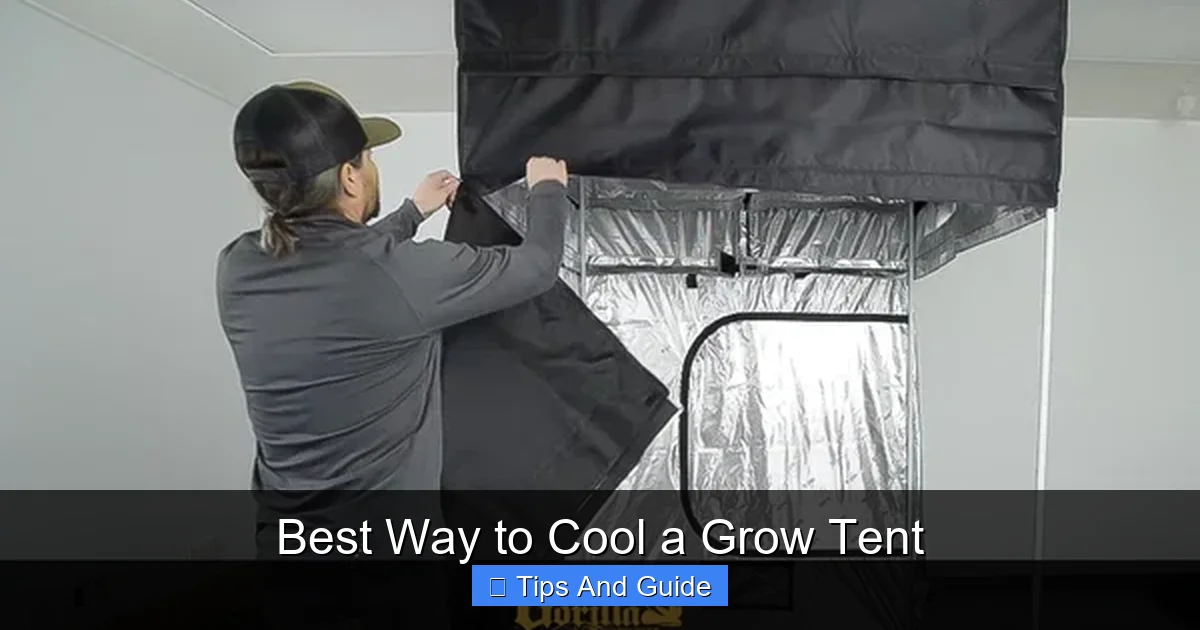
Visual guide about Best Way to Cool a Grow Tent
Image source: gorillagrowtent.com
While exhaust and intake fans manage the air entering and leaving your tent, internal circulation fans are crucial for distributing that air evenly throughout the tent. Think of them as the lungs of your grow tent, ensuring that no pockets of stagnant, hot air form.
Why Internal Circulation Matters
Plants need constant airflow around them for several reasons. Firstly, it helps to prevent the buildup of hot spots directly beneath your lights. Secondly, it strengthens your plants’ stems by simulating natural wind, making them more robust. Thirdly, and crucially for temperature control, it ensures that the cooler air brought in by your intake and circulated by your exhaust fan reaches every part of your plant canopy. Without good internal circulation, the air near your plants can become warm and humid, even if the overall tent temperature seems okay.
Choosing the Right Fans
For most grow tents, one or two small oscillating clip-on fans are sufficient. These can be attached to the tent poles and adjusted to direct airflow where it’s needed most. Oscillating fans are generally preferred over fans that just blow in one direction because they create a more natural, sweeping breeze.
* Placement is Key: Position your circulation fans so that they create a gentle, swirling motion of air throughout the tent. Avoid pointing them directly at your plants for extended periods, as this can cause windburn or dry them out too quickly. Aim for indirect airflow.
Grow Lights: The Heat Source You Can Control
Visual guide about Best Way to Cool a Grow Tent
Image source: cdn.shopify.com
Your grow lights are the primary source of heat in most grow tents. The type of lights you use and how you position them have a significant impact on your tent’s temperature.
LEDs: The Coolest Option
If you’re looking for the best way to cool a grow tent, starting with your lighting choice is a smart move. LED grow lights are significantly more energy-efficient than older technologies like High-Pressure Sodium (HPS) or Metal Halide (MH) lights. This means they produce less wasted heat. While they still generate some heat, it’s considerably less than their predecessors, making them a top choice for growers concerned about temperature. Many growers find that switching to LEDs dramatically reduces their cooling challenges.
* Tip: When selecting LEDs, look for models designed for horticulture that offer a full spectrum of light. You can find great value when considering a best budget grow light for a 4×4 tent or similar sizes.
HPS/MH Lights: Managing the Heat
If you’re using HPS or MH lights, you’ll need to be more proactive about cooling. These lights are powerful and effective but also generate a lot of heat.
* Ballasts: If your ballasts are separate from your light fixtures, ensure they are placed outside the grow tent. Ballasts generate significant heat and will quickly raise the temperature inside.
* Air-Cooled Hoods: For HPS/MH setups, using air-cooled hoods is highly recommended. These hoods have a built-in duct connection that allows you to vent the heat directly out of the tent, much like an exhaust fan. This is a very effective way to remove the majority of the heat generated by the bulb.
Light Height: Distance Equals Heat Reduction
Regardless of the type of light you’re using, adjusting the height of your grow lights can make a difference. Most lights have a recommended hanging height from the plant canopy. Raising your lights slightly can reduce the heat intensity reaching your plants. However, be careful not to raise them too high, as this can lead to stretching and reduced light penetration. Always refer to your specific grow light’s recommendations.
Environmental Controls: Beyond Just Temperature
While direct cooling solutions are essential, managing other environmental factors can also play a role in keeping your grow tent comfortable for your plants.
Humidity: The Invisible Temperature Factor
Humidity is the amount of water vapor in the air. High humidity can make the air feel warmer and can also promote mold and mildew growth, which your plants certainly don’t want. Conversely, very low humidity can stress plants.
* Dehumidifiers: If your tent is in a naturally humid environment or if your plants are transpiring a lot, a small dehumidifier placed inside or near the tent can help. Ensure it has an automatic shut-off to prevent over-drying.
* Humidifiers: In drier climates, you might need a humidifier. While this adds moisture, it can indirectly contribute to heat if the room is already warm.
Temperature Monitoring: Know Your Numbers
You can’t manage what you don’t measure! A good digital thermometer and hygrometer (often combined into one unit) is an indispensable tool. Place it inside your grow tent, ideally at canopy level, to get accurate readings. Some advanced models even log temperature and humidity over time, allowing you to identify patterns and pinpoint when heat spikes are occurring. Many growers use smart controllers that can automate fans and other devices based on these readings.
Advanced Cooling Solutions
Sometimes, even with the best ventilation and lighting strategies, your grow tent can still get too hot. This is especially true in warmer climates or during summer months. In these cases, you might need to consider more advanced cooling solutions.
Grow Tent AC Units
Portable air conditioning units designed for smaller spaces or specific grow tent models are available. These units effectively cool the air and also dehumidify it.
* Pros: Very effective at lowering temperature.
* Cons: Can be expensive, noisy, and consume a significant amount of power. They also require a way to vent hot air (usually out a window or into another room).
Water Chillers (For Hydroponics)
If you’re running a hydroponic system within your grow tent, a water chiller might be necessary. The reservoir of a hydroponic system can act as a heat sink, warming up the surrounding air. A water chiller cools the nutrient solution directly, which can help indirectly lower the tent’s ambient temperature.
Evaporative Coolers (Swamp Coolers)
These devices work by passing air over wet pads, causing the water to evaporate and cool the air.
* Pros: Energy-efficient and can lower temperatures significantly in dry climates.
* Cons: They add humidity to the air, so they are not suitable for already humid environments or if you’re struggling with high humidity.
Putting It All Together: The Best Way to Cool a Grow Tent
The best way to cool a grow tent is a multi-faceted approach. It starts with a solid foundation of excellent ventilation and airflow. You need the right-sized exhaust fan to remove heat and an intake system to bring in fresh air. Internal circulation fans are non-negotiable for distributing that air evenly.
Next, be smart about your equipment. Choosing LED grow lights will significantly reduce your heat load compared to older technologies. If you must use HPS/MH, invest in air-cooled hoods and ensure ballasts are outside the tent. Always hang your lights at the recommended height and adjust as needed.
Don’t underestimate the power of monitoring and controlling other environmental factors like humidity. Use a reliable thermometer/hygrometer and make adjustments as necessary. Finally, if your climate or setup consistently presents heat challenges, don’t hesitate to explore more advanced cooling options like grow tent AC units.
By systematically addressing each of these areas, you’ll create a stable, optimal environment for your plants, leading to healthier growth and better harvests. It might seem like a lot, but once you have a system in place, it becomes second nature. Happy growing!
Frequently Asked Questions
What is the ideal temperature range for a grow tent?
The ideal temperature range for most flowering plants is between 70-85°F (21-29°C) during the day and slightly cooler, around 60-70°F (15-21°C), at night. Consistent monitoring is key.
How can I increase airflow in my grow tent without an exhaust fan?
While an exhaust fan is crucial for effective cooling, you can improve passive airflow by ensuring intake vents are fully open and using multiple oscillating fans inside the tent to create constant movement. However, this is less effective than active ventilation.
Will opening my grow tent doors help cool it down?
Opening the doors temporarily can release built-up heat, but it’s not a sustainable solution. It disrupts the controlled environment, can introduce pests, and you lose the benefit of negative pressure created by an exhaust fan.
Can I use a window AC unit for my grow tent?
Yes, a small window AC unit can be effective, especially for larger tents or rooms. You’ll need to vent the hot air from the AC unit outside your tent or room and ensure it doesn’t create excessive humidity issues.
How does humidity affect grow tent temperature?
High humidity can make the air feel warmer and hinder effective transpiration in plants. Conversely, very low humidity can stress plants. Maintaining a balanced humidity level is part of optimal temperature management.
Are LED grow lights really cooler than HPS lights?
Yes, LED grow lights are significantly more energy-efficient and produce substantially less heat than HPS (High-Pressure Sodium) or MH (Metal Halide) lights. This makes them a much better choice for managing temperature in a grow tent.