Are Pop Up Tents Good for Camping
Pop up tents offer incredible speed and ease of setup, making them a fantastic choice for casual campers and those prioritizing convenience. However, they often come with trade-offs in durability, weather resistance, and space compared to traditional tents. Understanding these aspects will help you determine if a pop up tent is the right fit for your camping style.
Planning a camping trip? The great outdoors beckons, and a key piece of gear for any adventure is your tent. But with so many options out there, how do you choose? You might have seen them advertised: tents that seem to magically spring into shape. These are pop up tents, and they’re gaining popularity. But are pop up tents good for camping? It’s a question many campers ask when they see these convenient shelters advertised. Let’s dive in and explore what makes them tick, their benefits, and their drawbacks.
The allure of a tent that sets itself up is undeniable. Imagine arriving at your campsite after a long drive, tired and ready to relax. Instead of wrestling with poles and deciphering cryptic instructions, you simply toss your tent, and voilà – shelter! This ease of use is the primary selling point of pop up tents. They are designed for speed and simplicity, a stark contrast to the sometimes-frustrating setup process of traditional camping tents. This convenience can be a game-changer, especially for families with young children, novice campers, or anyone who simply wants to maximize their relaxation time in nature.
But are they a perfect solution for every camping scenario? Like any piece of gear, pop up tents have their strengths and weaknesses. Their suitability depends heavily on your specific needs, the type of camping you do, and the conditions you expect to encounter. We’ll break down the different aspects to help you make an informed decision about whether a pop up tent is the right choice for your next outdoor escape.
## The Magic of Instant Setup: Why Pop Up Tents Shine
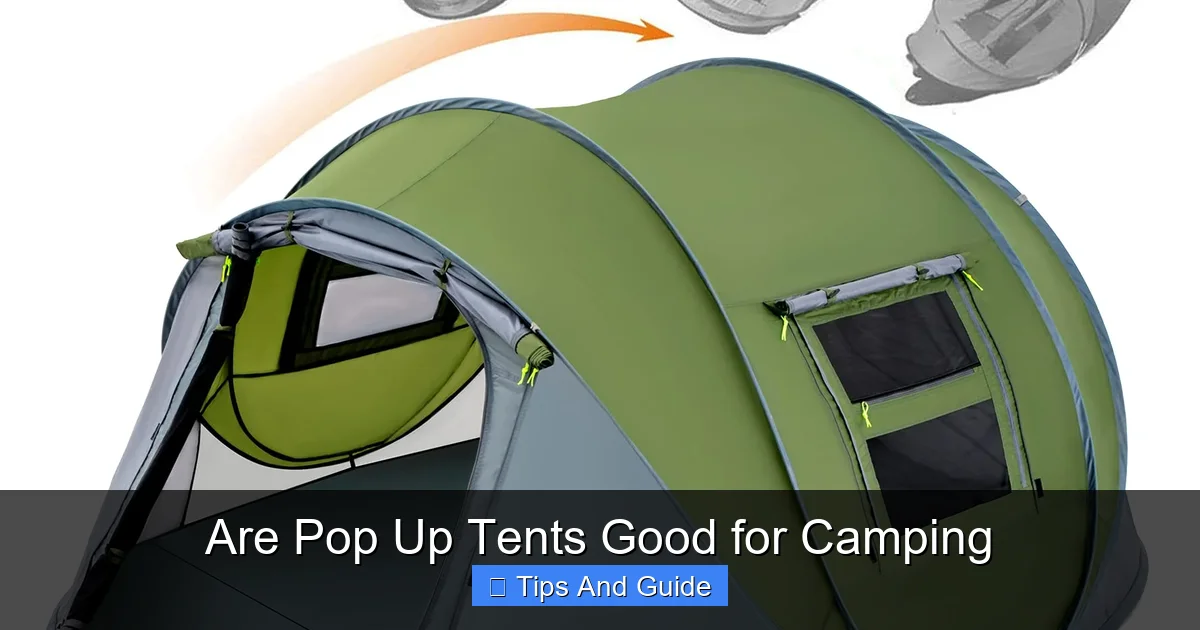
The biggest draw, and arguably the most significant advantage of pop up tents, is their astonishingly quick setup. Forget about spending 20 minutes or more figuring out which pole goes where. Pop up tents are engineered with pre-attached poles that are often integrated into the fabric itself. This means that once you release them from their compressed state, they essentially “pop” or spring into their intended shape.
### Seconds to Shelter
Many pop up tents can be set up in under a minute, and some even faster. This is perfect for situations where time is of the essence, like setting up camp after dark, dealing with impatient kids, or when the weather turns suddenly. For many campers, this speed alone is a massive selling point. It removes a common point of frustration and allows you to start enjoying your camping experience much sooner. If you’re looking for the fastest way to get your shelter ready, a pop up tent is a strong contender.
### Simplicity for Everyone
This ease of setup makes pop up tents incredibly accessible. If you’re new to camping and intimidated by traditional tent pitching, a pop up tent can be a fantastic entry point. There’s no complex learning curve. Even children can often help with the setup, making it a fun family activity. For individuals with physical limitations, the reduced effort required to set up a pop up tent can make camping a more viable and enjoyable hobby.
### Great for Casual Camping and Short Trips
Pop up tents are ideal for weekend getaways, car camping where you don’t need extreme ruggedness, or even for backyard sleepovers. Their quick deployment makes them perfect for those who camp infrequently or simply want a hassle-free shelter for a short duration. For many, the ease of use outweighs the need for advanced features. We’ve seen great options for various uses, including some of the best pop up camping tents that balance speed with decent functionality.
## When Speed Trumps Strength: The Limitations of Pop Up Tents
While the instant setup is a huge plus, it’s important to be realistic about what pop up tents can offer. They often come with trade-offs, especially when compared to traditional dome or tunnel tents that rely on more robust construction.
### Weather Resistance Woes
This is perhaps the most significant area where pop up tents can fall short. Because they are designed for speed and often use lighter materials, many pop up tents are not built to withstand harsh weather conditions.
#### Rain
While most pop up tents will offer a degree of water resistance for light drizzles, they may not perform well in prolonged or heavy rain. The seams might not be as well-sealed, the waterproofing treatment might be less durable, and the lighter fabric can sag, allowing water to pool. If you’re camping in an area known for frequent or heavy rainfall, a pop up tent might not keep you as dry as a more robust, traditional tent. However, there are models designed for better rain protection, and it’s worth looking into the best pop up tent for rain if this is a concern.
#### Wind
The lightweight nature and often simpler structure of pop up tents can make them more susceptible to wind damage. While they might have stake points, they often lack the strong pole structure and guy-out points that help traditional tents anchor securely against strong gusts. A sudden storm could potentially damage or even blow away a less robust pop up tent. For windy conditions, you’ll want to research the best pop up tent for wind, though even then, limitations can exist.
### Durability and Longevity
The quick-deploy mechanism, while convenient, can also be a point of failure. The integrated poles, while pre-attached, are often made of flexible fiberglass that can bend, break, or fray over time with repeated use. The zippers and fabric might also be less heavy-duty than those found on more expedition-style tents. If you plan on camping frequently or in rugged environments, a pop up tent might not have the same lifespan as a well-cared-for traditional tent.
### Space and Comfort Considerations
Many pop up tents are designed to be compact for easy storage and transport. This can translate to less interior space.
#### Interior Volume
While some models offer generous headroom, others can feel quite cramped, especially if you’re sharing the tent with more than one person, or if you like to spread out. This is particularly true for smaller, 2-person pop up tents. If you’re looking for a 10 best pop up 2 person tents, pay close attention to the dimensions and reported interior space. For family camping, you’ll definitely want to investigate the best pop up tent for family camping to ensure adequate room.
#### Ventilation
Some pop up tent designs prioritize speed over sophisticated ventilation systems. This can lead to condensation buildup inside the tent, making it feel damp and uncomfortable. While many have mesh windows, they might not offer the airflow needed to keep the interior fresh, especially in warmer weather.
## Who Are Pop Up Tents Best For?
Given their pros and cons, pop up tents aren’t for everyone, but they are fantastic for specific types of campers and situations.
### The Casual Camper
If you go camping a few times a year, primarily during fair weather, and value convenience above all else, a pop up tent is likely a great fit. You can get to your campsite and have your shelter ready in moments, leaving you more time to hike, relax by the fire, or explore.
### Families with Young Children
Parents will appreciate the speed and ease of setup when dealing with excited, impatient children. The reduced stress of pitching a tent means a smoother start to the camping trip for everyone. They can be a great choice for car camping with kids, offering a fun and easy way to introduce them to the outdoors.
### Festival Goers
Attending a music festival? Pop up tents are incredibly popular among festival-goers for their rapid setup, often in crowded and sometimes chaotic camping areas. They allow you to quickly secure your spot and get back to enjoying the event.
### Backyard Adventurers and Kids’ Playhouses
Pop up tents aren’t just for the wilderness! They make excellent playhouses for kids in the backyard, providing a fun space for imaginative play. They’re also perfect for backyard sleepovers, offering a novel and exciting camping experience without having to venture far from home. Some are even designed as best pop up tent for kids.
### Beach and Day Trip Shelters
While not strictly for overnight camping, many pop up tents function brilliantly as shelters on the beach or for day trips. They offer quick shade and protection from the sun, making them a much more convenient option than struggling with traditional beach umbrellas or canopies. Consider looking into the best pop up tent for the beach for these purposes.
## Choosing the Right Pop Up Tent: What to Look For
If you’ve decided a pop up tent might be for you, keep these factors in mind when shopping:
### Size and Capacity
Be realistic about how many people will be sleeping in the tent and how much gear you’ll have. A tent rated for two people might be comfortable for one person with gear, but snug for two adults. Always check the dimensions and consider if you need extra space for storage or just to spread out.
### Water Resistance and Seams
Look for tents with a good hydrostatic head rating (higher is better) and sealed seams. This indicates how well the fabric can resist water penetration. Even a pop up tent needs some level of waterproofing.
### Ventilation Features
Check for mesh panels, windows, and vents. Good ventilation is crucial for preventing condensation and keeping the tent comfortable, especially in warmer weather.
### Pole Material and Construction
While most pop up tents use fiberglass, some higher-end models might use more durable materials. Examine how the poles are integrated and whether they seem sturdy.
### Ease of Repacking
Setting up is one thing, but repacking a pop up tent can sometimes be a puzzle. Look for models that come with clear instructions or videos on how to fold them back down effectively. Some are notoriously tricky!
### Stakes and Guy Lines
Ensure the tent comes with adequate stakes for securing it to the ground and consider if additional guy lines would be beneficial for added stability in windy conditions.
## Are Pop Up Tents Good for Camping? The Verdict
So, to circle back to our original question: are pop up tents good for camping? The answer is a resounding **”it depends.”**
If you are a casual camper who prioritizes speed, ease of use, and convenience, and you typically camp in fair weather, then a pop up tent can be an excellent choice. They are fantastic for families, beginners, or anyone who wants to spend less time setting up and more time enjoying their surroundings. For many, the sheer joy of an instantly erected shelter makes them worth the investment.
However, if you are an experienced backpacker, plan on camping in challenging weather conditions (heavy rain, strong winds, extreme cold), or need a tent that will stand up to frequent and rugged use, you might find a traditional tent to be a more suitable option. The durability and weather resistance of many pop up tents simply don’t match that of their more traditionally constructed counterparts.
Ultimately, understanding your camping style, the environments you’ll be exploring, and your priorities will guide you to the right tent. Pop up tents have carved out a valuable niche in the camping world, offering a unique blend of convenience and shelter. For the right person and the right trip, they are indeed very good for camping.
- Unmatched Speed and Simplicity: Pop up tents deploy in seconds, ideal for quick setup and takedown, especially for beginners or those with limited mobility.
- Portability and Convenience: Their compact folded size and lightweight nature make them easy to transport, fitting into car trunks or even backpacks for some models.
- Weather Limitations: While some are designed for moderate conditions, many pop up tents struggle with heavy rain, strong winds, and extreme temperatures compared to robust traditional tents.
- Durability Concerns: The quick-deploy mechanisms and lighter materials can sometimes lead to less durability than more traditional, pole-and-sleeve designs.
- Size and Space: Often designed for efficiency, some pop up tents can feel cramped, especially for multiple people or extended stays, though larger family models are available.
- Versatile Applications: Beyond traditional camping, they excel for beach trips, festivals, backyard sleepovers, and as temporary shelters.
- Cost vs. Value: Prices vary widely, with cheaper models offering basic functionality and higher-end versions providing better materials and features for more demanding use cases.
Frequently Asked Questions
Are pop up tents durable enough for rugged camping?
Generally, pop up tents are not as durable as traditional tents for rugged camping. Their lightweight construction and quick-deploy mechanisms can make them less resistant to strong winds, heavy rain, and rough handling. For challenging conditions, a more robust, traditional tent is usually recommended.
How do pop up tents perform in bad weather?
Performance varies, but many pop up tents struggle in bad weather. While they can handle light drizzles, they may not be sufficiently waterproof for heavy or prolonged rain and can be vulnerable to strong winds. Always check specific models for their weather ratings if this is a concern.
Are pop up tents good for beginners?
Yes, pop up tents are excellent for beginners due to their incredibly simple and fast setup. They eliminate the frustration often associated with learning to pitch a traditional tent, making camping more accessible and enjoyable from the start.
Can pop up tents be used for family camping?
Some larger pop up tents are suitable for family camping, offering quick setup and convenience for parents. However, always check the capacity and interior dimensions to ensure there is enough space for everyone and their gear, especially for longer trips.
Are pop up tents easy to pack away?
Packing away pop up tents can sometimes be more challenging than setting them up. They often require a specific folding technique to fit back into their carrying bag. Many models come with instructions or videos to help with this process.
What are the main advantages of using a pop up tent?
The primary advantages are speed and ease of setup; they can be pitched in seconds. They are also very portable and convenient, making them ideal for casual campers, families with young children, and those who value quick shelter over extreme durability.