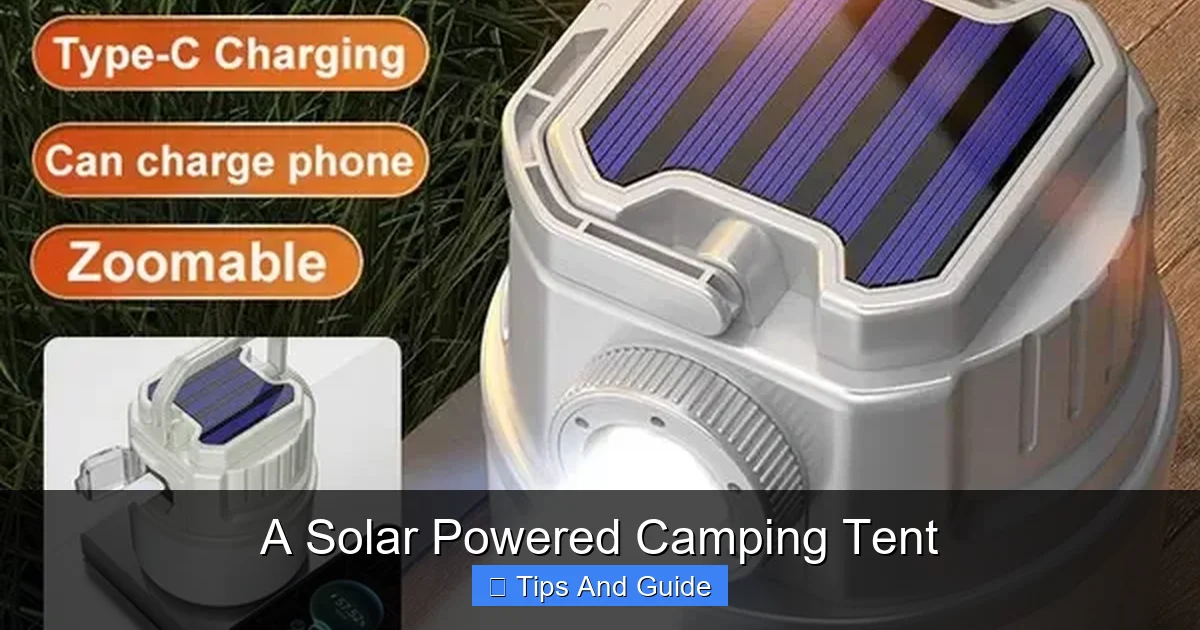
A Solar Powered Camping Tent
Embrace sustainable adventures with a solar powered camping tent. This innovative gear harnesses the sun’s energy to keep your devices charged and lights on, enhancing your outdoor experience. Say goodbye to dead batteries and hello to eco-friendly convenience.
Imagine this: you’re deep in the backcountry, miles away from the nearest power outlet. Your phone battery is dwindling, your camera is almost dead, and the thought of fumbling in the dark for a headlamp sends a shiver down your spine. This used to be a common camping conundrum. But what if your tent could offer a solution, literally powering your adventure? Enter the solar powered camping tent, a game-changer for modern outdoor enthusiasts.
This isn’t just a tent with a few extra gadgets; it’s a smart, self-sufficient shelter designed for the digital age of camping. A solar powered camping tent is equipped with built-in photovoltaic (PV) panels that capture sunlight and convert it into electricity. This energy can then be used to charge your electronic devices, power LED lights, or even run small appliances, all while you’re enjoying the great outdoors. It’s about bringing a new level of comfort and convenience to your camping trips without sacrificing the essential connection with nature.
### What Exactly is a Solar Powered Camping Tent?
At its core, a solar powered camping tent is a traditional tent that has been enhanced with integrated solar technology. The most common setup involves flexible, lightweight solar panels sewn directly into the fabric of the tent or designed as an add-on accessory that attaches easily. These panels are connected to a power management system, which typically includes a charge controller and a battery pack. The charge controller regulates the flow of electricity from the solar panels to the battery, preventing overcharging and ensuring efficient energy storage. The battery pack then acts as a reservoir, storing the captured solar energy so you can use it when the sun isn’t shining, like at night or on a cloudy day.
Many solar powered camping tents also feature built-in USB ports or AC outlets, making it incredibly simple to plug in your devices and start charging. Some high-end models might even include integrated LED lighting systems. The beauty of this technology is its seamless integration. You get the shelter and comfort of a regular tent, plus the added benefit of renewable energy, all in one package.
### The Advantages of Going Solar in the Wild
The benefits of using a solar powered camping tent extend far beyond just keeping your phone alive. It’s about enhancing your overall camping experience in several key ways.
#### Powering Your Devices, Always Connected
The most immediate and obvious advantage is the ability to keep your essential electronic devices charged. In today’s world, many campers rely on smartphones for navigation, communication, taking photos, and even entertainment. A dead phone in the wilderness can be more than just an inconvenience; it can be a safety concern. With a solar powered tent, you can ensure your GPS device remains active, your camera has power for those stunning sunrise shots, and you can stay in touch with loved ones if necessary. Think about charging your portable power bank, which can then power multiple devices, giving you even more flexibility.
#### Extended Evenings and Enhanced Ambiance
Forget the days of relying solely on dim, battery-guzzling lanterns. A solar powered tent can easily power bright, energy-efficient LED lighting systems. This means you can enjoy longer evenings reading, playing cards, or simply soaking in the ambiance of your campsite. Many tents come with integrated LED strips that cast a warm, inviting glow throughout the interior. This not only adds to the comfort but also enhances safety by illuminating the space and preventing trips and falls in the dark. You might even power a small camping fan to keep you cool on warm nights, making your tent a much more comfortable retreat.
#### Environmental Friendliness and Sustainability
One of the most compelling reasons to embrace solar powered camping gear is its positive impact on the environment. Traditional camping often involves disposable batteries, which contribute to waste and can contain harmful chemicals. By harnessing solar energy, you’re opting for a clean, renewable power source. This reduces your carbon footprint and aligns with the growing movement towards sustainable outdoor recreation. It’s a way to enjoy nature while also respecting and preserving it for future generations. This eco-conscious approach is becoming increasingly important for outdoor enthusiasts.
#### Independence and Self-Sufficiency
A solar powered camping tent offers a remarkable degree of independence. You’re no longer tied to limited battery life or the need to carry bulky power banks that also need recharging. This self-sufficiency is particularly valuable for longer trips or expeditions where access to power is limited or non-existent. You can camp further off the beaten path, explore remote areas, and still have the peace of mind that comes with knowing you can power your essential gear. This freedom is what many people seek when they head into the wilderness.
### Types of Solar Powered Camping Tents
The market is evolving, and solar powered camping tents are available in a range of styles and configurations to suit different camping needs.
#### Integrated Panel Designs
These tents are manufactured with solar panels permanently incorporated into the tent fabric, often on the roof or sides. This offers a sleek, all-in-one solution. The panels are usually flexible and durable, designed to withstand the rigors of outdoor use. They are often pre-wired to a charge controller and battery system. The advantage here is convenience; everything is built-in, making setup and operation straightforward. However, these are typically more expensive and might offer less flexibility if you want to replace or upgrade specific components.
#### Add-On Solar Kits
Another popular option involves purchasing a tent separately and then adding a solar power kit. These kits typically include a portable solar panel that can be unfolded and positioned to catch the sun’s rays, a charge controller, and a portable power station or battery. The solar panel can be staked into the ground near your tent, hung from a tree, or attached to the tent itself using loops or clips. This offers more flexibility, as you can choose the tent that best suits your needs and then select a solar kit that matches your power requirements. It also allows you to use the solar panel independently for other purposes.
#### Specific Tent Types with Solar Options
While not a distinct category of solar technology, it’s worth noting that solar power is being integrated into various types of tents. You can find solar powered pop-up tents, which offer quick setup and convenience, ideal for car camping. Larger family camping tents might feature larger solar arrays to power more devices or even small appliances. Even specialized tents like camping gazebos or screen tents might offer solar-powered lighting solutions to extend their usability into the evening. The core solar technology remains the same, but its application varies with the tent’s primary design and purpose.
### Key Features to Look For
When choosing a solar powered camping tent, there are several factors to consider to ensure you get a product that meets your needs.
#### Solar Panel Wattage and Efficiency
The wattage of the solar panels determines how quickly they can generate electricity. Higher wattage panels will charge your battery faster, especially on less sunny days. Panel efficiency refers to how well the panels convert sunlight into electricity. Look for panels with high efficiency ratings, often around 20% or more. Flexible panels are becoming more efficient and durable, making them a great choice for tents.
#### Battery Capacity and Type
The battery is where your captured solar energy is stored. Battery capacity is measured in watt-hours (Wh) or milliamp-hours (mAh). A larger capacity means you can store more energy, allowing you to power devices for longer periods without direct sunlight. Common battery types include lithium-ion, which are lightweight and have a good energy density. Consider how much power your devices consume to determine the required battery size.
#### Power Output Ports
Check the types and number of output ports available. Most solar tents will offer USB-A ports for charging phones and other standard electronics. Some may also have USB-C ports for newer devices or even AC outlets for running small appliances like portable refrigerators or CPAP machines. The availability of multiple ports can be very useful for charging several devices simultaneously.
#### Durability and Weather Resistance
Camping gear is exposed to the elements. Ensure the tent fabric is durable, waterproof, and UV-resistant. The solar panels themselves should also be robust and able to withstand rain, wind, and temperature fluctuations. Look for tents made with high-quality materials that are designed for outdoor use. The integrated wiring should also be protected from moisture and abrasion.
#### Ease of Setup and Portability
While solar technology adds complexity, the tent itself should still be relatively easy to set up and take down. If you’re backpacking, weight and packed size will be crucial considerations. For car camping, these factors might be less critical, but convenience is always appreciated. Some add-on solar kits can be detached and used independently, offering added versatility.
### Practical Tips for Using Your Solar Powered Camping Tent
Maximizing the benefits of your solar powered camping tent involves a few smart practices.
#### Positioning for Maximum Sunlight
This is the most critical tip. To get the most energy, position your solar panels so they face directly towards the sun. During the day, the sun moves across the sky. You may need to adjust the angle of your panels a few times throughout the day to ensure they are always optimally oriented. If your tent has integrated panels, you might need to pitch your tent in a location that offers unobstructed sunlight. Consider the time of day and the sun’s path when choosing your campsite.
#### Understanding Charging Times and Conditions
Solar charging is dependent on sunlight intensity. Bright, direct sunlight will charge your battery much faster than cloudy or hazy conditions. Don’t expect a full charge on a heavily overcast day. Factor this into your power management strategy. If you have a portable power station with an add-on panel, you can often detach it and place it in a sunny spot while you use the tent for shelter.
#### Managing Your Power Consumption
Be mindful of how much power you’re using. While it’s great to have power, excessive use can drain your battery quickly, especially if you’re not in constant direct sunlight. Prioritize charging essential devices first. Consider bringing a small, lightweight portable power bank as a backup or to supplement your tent’s charging capabilities. If you’re looking for ways to enhance your camping comfort, don’t forget to explore options like a comfortable sleeping mat for your tent; a good camping mat can make a huge difference in sleep quality.
#### Maintenance and Care
Keep your solar panels clean. Dust, dirt, and debris can significantly reduce their efficiency. Wipe them down with a soft cloth and water as needed. Ensure all connections are secure and free from corrosion. Proper care will extend the life of your solar powered tent and ensure it continues to perform well over time. If you are using an add-on solar panel, always follow the manufacturer’s instructions for cleaning and storage.
### Is a Solar Powered Camping Tent Right for You?
The decision to invest in a solar powered camping tent depends on your camping style and needs. If you frequently camp in areas with ample sunlight, enjoy longer trips, rely on electronic devices, and value sustainability and self-sufficiency, then it’s likely a fantastic upgrade. For the casual camper who only heads out a few times a year for short trips, a traditional tent combined with a portable power bank might suffice.
However, for the dedicated outdoor enthusiast who seeks to push boundaries, stay connected, and tread lightly on the planet, a solar powered camping tent represents the next frontier in camping gear. It’s about embracing technology to enhance our connection with nature, not replace it. Imagine powering your GPS to find that remote trailhead, illuminating your path to a perfect stargazing spot, or simply ensuring you can capture every memory with a fully charged camera. The solar powered camping tent makes all of this possible, turning your tent into a sustainable, intelligent basecamp.
### The Future of Outdoor Adventures
The integration of solar power into camping gear is a significant step forward. As technology advances, we can expect solar powered tents to become even more efficient, affordable, and feature-rich. They represent a shift towards more sustainable and convenient outdoor experiences, allowing us to enjoy the wilderness responsibly. Whether you’re a seasoned adventurer or just starting out, a solar powered camping tent offers a compelling way to power your next journey.
- Harness the Sun’s Power: Solar powered camping tents integrate photovoltaic panels to convert sunlight into usable electricity.
- Device Charging Convenience: Keep your phones, GPS devices, cameras, and other essential electronics powered up off-grid.
- Extended Campfire Nights: Power interior lighting and small appliances, extending your enjoyment of the campsite after dark.
- Environmental Benefits: Reduce reliance on disposable batteries and contribute to a more sustainable camping practice.
- Variety of Designs: Available in different sizes and configurations, from minimalist backpacking shelters to family-sized living spaces.
- Considerations for Use: Optimal performance depends on sunlight availability, panel efficiency, and battery storage capacity.
Frequently Asked Questions
What are the main benefits of a solar powered camping tent?
The main benefits include the ability to charge electronic devices, power LED lighting for extended evenings, and promote environmental sustainability by using renewable energy. It also offers greater independence and self-sufficiency while camping.
Do I need to worry about the weather affecting my solar powered tent’s performance?
Yes, weather conditions significantly impact performance. Cloudy days or heavy shade will reduce the amount of electricity generated. Direct sunlight is crucial for optimal charging. Most solar tents have battery storage to compensate for periods without sun.
How long does it take to charge a device using a solar powered tent?
Charging times vary greatly depending on the solar panel wattage, the battery’s state of charge, the device’s power requirements, and the intensity of sunlight. On a sunny day, charging a smartphone might take a few hours.
Are solar powered camping tents more expensive than regular tents?
Generally, solar powered camping tents are more expensive than comparable traditional tents due to the integrated technology like solar panels, charge controllers, and batteries. However, the long-term benefits of free, renewable energy can offset this initial cost.
Can a solar powered camping tent power larger appliances?
Most integrated solar tents are designed to power smaller devices like phones, GPS units, and lights. Some higher-end models or those paired with portable power stations might have AC outlets capable of running very low-power appliances, but larger items like refrigerators or heaters are usually not feasible.
How durable are the solar panels on a camping tent?
Modern solar panels used in tents are often made from flexible, durable materials designed to withstand outdoor conditions, including some level of moisture and abrasion. However, they can still be susceptible to punctures or tears if not handled with care.