

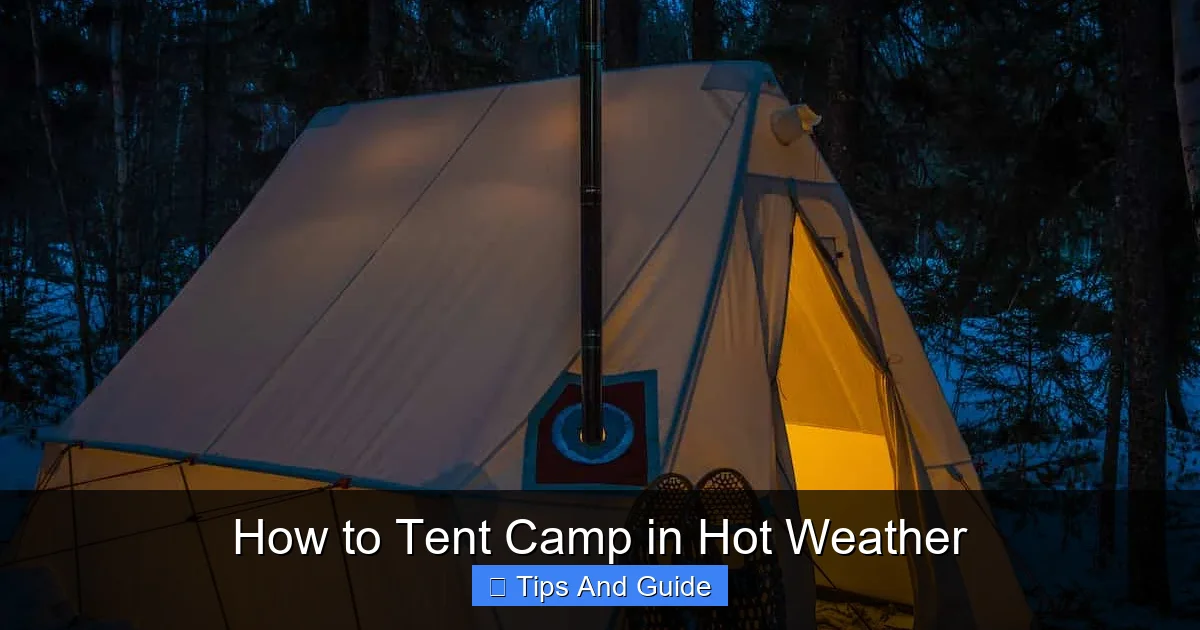
Camping in the heat doesn’t have to be miserable. This guide provides essential strategies for staying cool and comfortable during your hot weather camping trip. We’ll cover everything from selecting the perfect tent to clever campsite setups and personal cooling techniques. With these tips, you can embrace the summer outdoors and enjoy a fantastic camping experience, even when temperatures soar.
## How to Tent Camp in Hot Weather
Summer camping is a fantastic way to experience the outdoors, but when the mercury rises, it can quickly turn from a relaxing escape to a sweltering ordeal. Don’t let the heat deter you from enjoying a night under the stars! With the right preparation and strategies, you can tent camp comfortably even on the hottest days. This guide will walk you through everything you need to know to beat the heat and make your summer camping trip a success.
We’ll cover crucial aspects like selecting the ideal tent, choosing the perfect campsite, maximizing ventilation, staying cool and hydrated, and smart packing. Get ready to transform your hot-weather camping experience from uncomfortable to unforgettable!
## 1. Choosing the Right Tent for Hot Weather
Your tent is your primary shelter, and its design plays a massive role in how comfortable you’ll be in the heat. Not all tents are created equal when it comes to staying cool.
### Look for Excellent Ventilation
This is paramount. The best tents for hot weather have multiple windows and vents that allow for maximum cross-breeze.
* **Mesh Panels:** Look for tents with large mesh panels on the doors and windows. This lets in air while keeping bugs out. Some tents even have full mesh canopies for the inner tent, essentially turning them into screened rooms.
* **Multiple Doors and Windows:** Having doors on opposite sides of the tent, along with strategically placed windows, helps create a natural airflow. You can open them up to let the cool morning and evening air in, and even during the day if it’s breezy.
* **Vents:** Many tents have roof vents that can be propped open. These are crucial for allowing hot air, which rises, to escape.
### Consider Tent Color and Material
The color of your tent can significantly impact how much heat it absorbs.
* **Light Colors:** Lighter colored tents, like white, tan, or light grey, reflect sunlight better than dark colors. This means your tent will stay cooler inside. Darker tents absorb sunlight and can become ovens.
* **Breathable Fabrics:** While most modern tents use synthetic fabrics, some offer better breathability than others. Look for tents with a good balance of waterproof coating and breathability.
### Tent Size and Shape
While you might want space, a massive tent can sometimes trap more heat if ventilation isn’t optimal.
* **Consider a Dome Tent:** Dome tents often have a lower profile and good ventilation options. We’ve reviewed some of the best camping dome tents that are suitable for various conditions.
* **Pop-Up Tents:** Many pop-up tents are designed for quick setup and can offer good ventilation. However, always check the specific model’s features. Some pop-up tent reviews highlight their ventilation capabilities.
### Tent Stakes and Guylines
Ensure you have sturdy stakes and guylines. While not directly related to cooling, a secure tent is essential for peace of mind in any weather.
## 2. Strategic Campsite Selection
Where you pitch your tent is almost as important as the tent itself when it comes to managing heat.
### Seek Shade
This is your number one priority.
* **Under Trees:** The best spots are under the canopy of mature trees. These provide natural shade that can lower the ambient temperature around your tent significantly. Be mindful of dead branches that could fall.
* **Avoid Open Fields:** As tempting as a flat, open field might seem, it will likely bake in the sun all day, making your tent unbearable.
* **Consider the Sun’s Path:** Observe where the sun will be throughout the day. A spot that’s shaded in the morning might be exposed in the afternoon. Try to find a location that offers shade for the longest possible period.
### Proximity to Water
If available, camping near a lake, river, or stream can offer a cooling effect due to evaporation.
* **Evaporative Cooling:** The air near water bodies is often cooler and more humid, which can be a welcome relief.
* **Recreational Opportunities:** Plus, you’ll have easy access to swimming or wading to cool off!
### Elevation
If you’re in a mountainous region, camping at a higher elevation will generally mean cooler temperatures.
### Wind Patterns
Observe the prevailing wind direction. Setting up your tent so that its doors and windows face the wind can help create a consistent airflow.
## 3. Maximizing Airflow and Ventilation Inside Your Tent
Once you’ve chosen your tent and campsite, it’s time to optimize your tent’s interior environment.
### Open Everything Up
As soon as you arrive and set up, open all doors, windows, and vents. The goal is to let the air circulate freely.
### Use Fans
A portable battery-powered fan is a game-changer for hot weather camping.
* **Small Clip-On Fans:** These can be clipped to tent poles or the top of the tent and provide a gentle breeze.
* **Larger Fans:** For a bit more power, consider a slightly larger fan. Look for options designed for camping that are quiet and energy-efficient. We’ve found some excellent camping fans for tents that can make a big difference. For larger tents, a camping fan for a large tent might be necessary.
### Create a Breeze Path
Think about how air moves. If you have a door on one side and a window on the other, opening them both will create a cross-breeze. If you have a fan, position it to push air out of one opening and draw cooler air in through another.
### Keep it Closed During Peak Heat
While you want to maximize airflow, there’s a time to close up shop. If the outside temperature is hotter than the inside of your tent (typically mid-day), close the doors and windows to trap the cooler air inside your tent. Open them up again when the outdoor temperature starts to drop.
## 4. Staying Cool and Hydrated
Personal comfort is key. Here’s how to manage your body temperature.
### Hydration is Crucial
Dehydration is a serious risk in hot weather.
* **Drink Plenty of Water:** Carry more water than you think you’ll need. Sip it consistently throughout the day, even if you don’t feel thirsty.
* **Electrolytes:** Consider electrolyte supplements or drinks to replace salts lost through sweating.
* **Avoid Dehydrating Drinks:** Limit your intake of alcohol and caffeine, as they can contribute to dehydration.
### Wear Appropriate Clothing
What you wear makes a big difference.
* **Lightweight, Breathable Fabrics:** Opt for light-colored, loose-fitting clothing made from moisture-wicking materials like cotton blends, linen, or specialized outdoor fabrics.
* **Sun Protection:** A wide-brimmed hat and sunglasses are essential for protecting yourself from the sun’s rays.
### Cooling Techniques
Implement simple methods to lower your body temperature.
* **Cooling Towels:** Dampen a cooling towel (available at most outdoor retailers) and wear it around your neck or on your head. They work wonders!
* **Misting Bottles:** A small spray bottle filled with cool water can provide instant relief when sprayed on your face and skin.
* **Wet Bandanas:** Similar to cooling towels, a damp bandana around your neck can help keep you cool.
* **Damp Socks:** If you’re really struggling, briefly dampening your socks can help cool your feet, which can then cool your body.
### Manage Your Sleeping Setup
Your sleeping arrangement can make or break your comfort at night.
* **Lightweight Sleeping Bag:** Opt for a sleeping bag rated for warmer temperatures, or consider using just a liner or a light blanket.
* **Breathable Bedding:** Use cotton sheets or a breathable sleeping pad. Avoid synthetic materials that trap heat. A good camping mattress for tent or a camping mat for tent that doesn’t retain heat is important. Consider a camp bed for tent that allows for airflow underneath.
* **Avoid Overheating:** Don’t bundle up too much in your sleeping bag. Listen to your body.
## 5. Smart Gear Choices
Beyond the tent itself, other gear can help keep you comfortable.
### Portable Refrigeration
* **Coolers:** A good quality cooler filled with ice packs or frozen water bottles is essential for keeping food and drinks cold, as well as providing cold compresses.
* **Powered Coolers/Refrigerators:** If you have access to a power source (like a portable power station or car inverter), a powered cooler can be a luxurious addition.
### Lighting
Bright lights can generate heat.
* **LED Lanterns and Headlamps:** Opt for LED lights, which are much cooler and more energy-efficient than older bulb types. Camping lights for tents are crucial for visibility without adding excessive heat. Check out our guide to the best camping lights for tents.
### Cooking
Avoid cooking inside your tent. Use an outdoor stove, and try to cook during cooler parts of the day. A camping kitchen tent can provide a shaded cooking area.
## 6. Timing is Everything: Planning Your Activities
Make the most of the cooler parts of the day.
### Embrace the Dawn and Dusk
The early morning hours and the late evening are typically the coolest times. Plan strenuous activities like hiking or setting up camp for these periods.
### Midday Rest
Use the hottest part of the day (usually 10 am to 4 pm) for rest and relaxation. This is when you’ll want to be inside your shaded tent with good ventilation, or even better, near a body of water.
### Evening Activities
Enjoying the sunset, stargazing, and quiet campfire conversations are perfect for the cooler evenings.
## Troubleshooting Common Hot Weather Camping Problems
Even with the best preparation, you might encounter challenges.
### Problem: My tent is still too hot inside.
* **Solution:** Double-check your ventilation. Are all vents open? Can you create more cross-breeze? Is there a fan running? If it’s still unbearable, consider spending more time outside the tent in a shaded area or near water.
### Problem: I’m having trouble sleeping due to the heat.
* **Solution:** Try sleeping with minimal bedding. If you have a sleeping pad that retains heat, try sleeping directly on a cooler ground surface (if possible and comfortable) or a more breathable mat. Make sure you’re hydrated.
### Problem: Insects are worse in the heat.
* **Solution:** Ensure your tent’s mesh is in good repair. Use insect repellent and consider a screened enclosure or gazebo for sitting outside the tent. Having a good pop-up tent for the beach or similar with ample mesh can help.
## Conclusion
Tent camping in hot weather is absolutely achievable and can be a deeply rewarding experience. By focusing on selecting a well-ventilated tent, choosing a strategic campsite with ample shade, and actively managing your personal comfort through hydration and smart cooling techniques, you can transform a potentially miserable situation into a pleasant adventure.
Remember to pack smart, plan your activities around the coolest parts of the day, and embrace the natural cooling methods available. With this guide, you’re well-equipped to enjoy the great outdoors, no matter how high the temperatures climb. Happy camping!
Key Takeaways
- Choose the Right Tent: Opt for tents with excellent ventilation, mesh panels, and lighter colors to reflect sunlight. Look for designs that maximize airflow.
- Strategic Campsite Selection: Prioritize shaded spots, ideally under mature trees, and consider proximity to water sources. Avoid areas that bake in the sun all day.
- Maximize Airflow and Ventilation: Keep tent doors and windows open as much as possible, especially during cooler parts of the day, and use fans to circulate air.
- Stay Hydrated and Cool: Drink plenty of water, wear light clothing, and use cooling cloths or misting bottles to manage your body temperature.
- Smart Gear Choices: Pack lightweight, moisture-wicking bedding and consider portable cooling devices. Avoid dark, heavy materials.
- Timing is Everything: Plan activities for cooler parts of the day and use the hottest midday hours for rest inside your shaded, ventilated tent.
