

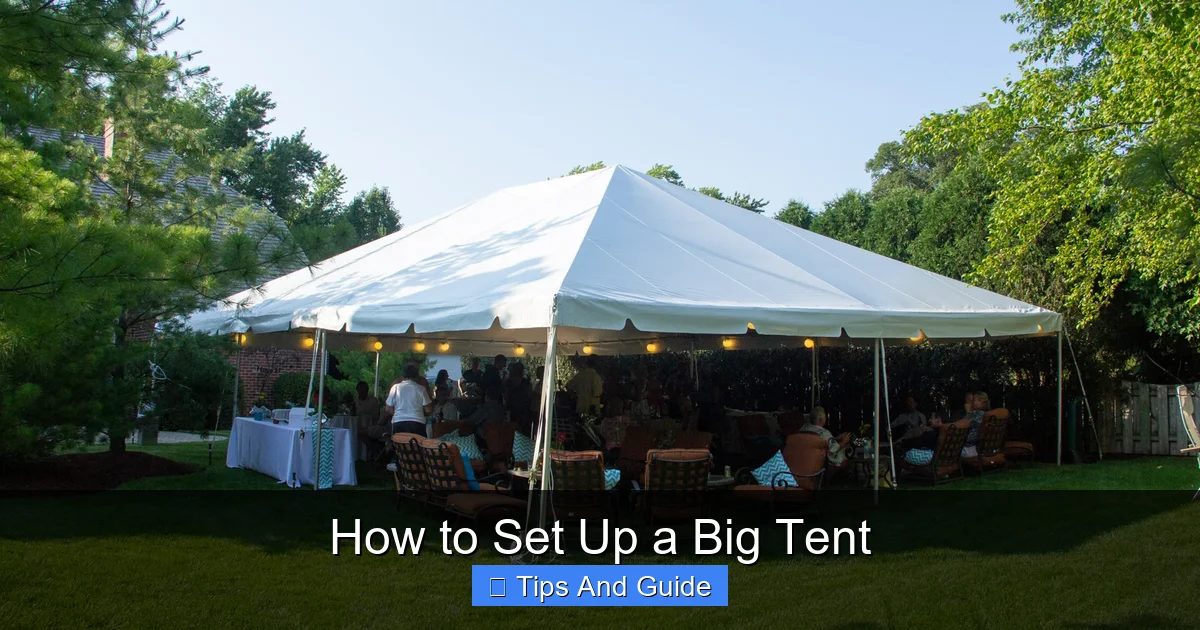
Setting up a big tent can seem daunting, but with the right preparation and guidance, it’s a straightforward process. This comprehensive guide walks you through every step, from choosing the perfect campsite to securing your tent against the elements. Learn how to effectively organize your gear, erect the poles, attach the fly, and stake it down for a stable and comfortable outdoor living space. Mastering tent setup ensures a stress-free camping experience, so you can focus on enjoying nature.
# How to Set Up a Big Tent
Camping is an incredible way to connect with nature, relax, and create lasting memories. A significant part of that experience hinges on having a comfortable and secure shelter. While setting up a small backpacking tent can be relatively simple, a big tent, often designed for families or groups, can feel like a much larger undertaking. Don’t let that intimidate you! This guide will break down the process into manageable steps, equipping you with the knowledge and confidence to set up your big tent like a pro. We’ll cover everything from choosing the right spot to ensuring your tent can withstand the elements.
## Step 1: Prepare for Success – Pre-Setup Essentials
Before you even arrive at your campsite, some preparation can make the actual tent setup significantly smoother.
### H3: Unpack and Inspect Your Tent
When you first get your tent, or before a big trip, it’s wise to unpack it completely. Lay out all the components: the tent body, rainfly, poles, stakes, guylines, and any footprint or ground tarp. Check for any rips, tears, or missing parts. This is also a great time to familiarize yourself with how the poles connect and how the rainfly attaches.
### H3: Read the Manufacturer’s Instructions
Every tent is a little different. While this guide provides general advice, the specific instructions from the manufacturer are invaluable. They will detail the unique pole configuration, attachment methods, and any specific recommendations for your model. Keep these instructions with your tent gear.
### H3: Gather Necessary Tools and Supplies
Besides the tent itself, you might need a few extra items:
* A **mallet or hammer** for driving stakes into harder ground.
* **Extra rope or cordage** for securing the tent in very windy conditions.
* A **ground tarp or footprint** (often included or sold separately) to protect the tent floor.
* A **small brush or broom** to clear debris from the tent floor once it’s up.
## Step 2: Choose the Perfect Campsite
The location where you pitch your tent is as important as how you pitch it. A good campsite can mean the difference between a peaceful night’s sleep and a challenging one.
### H3: Prioritize Flat and Level Ground
Pitch your tent on the flattest ground available. Even a slight slope can be uncomfortable, leading you to slide down the sleeping bag during the night. Avoid areas where water might pool if it rains.
### H3: Consider Drainage
Look for a spot that is well-drained. If you’re camping in an area prone to rain, choose higher ground or a spot where water naturally flows away from your tent, not towards it. Avoid the bottom of valleys or depressions.
### H3: Be Mindful of Overhead Hazards
Steer clear of pitching your tent directly under dead trees or large, overhanging branches (sometimes called “widowmakers”). Falling branches can cause serious damage to your tent and pose a significant safety risk.
### H3: Assess Wind Exposure
While some wind can be good for ventilation, pitching your tent in a very exposed area can lead to a noisy and uncomfortable night. Try to find a spot with some natural windbreak, like behind a cluster of bushes or a small rise in the land, but not so close that vegetation will rub against your tent.
### H3: Sunlight and Shade
Consider the sun’s path. In hot weather, morning shade can be a blessing. In cooler weather, morning sun can help warm up your tent. Think about where the sun will be during the hottest part of the day and where it will be when you wake up.
### H3: Proximity to Amenities and Neighbors
Be aware of your surroundings. If you’re in a campground, consider how close you are to restrooms, water sources, and other campers. Respect quiet hours and give your neighbors space.
## Step 3: Lay the Foundation – Ground Tarp and Tent Body
Once you’ve selected your ideal spot, it’s time to start building your shelter.
### H3: Position the Ground Tarp or Footprint
Lay down your ground tarp or footprint first. This extra layer protects the bottom of your tent from abrasion, punctures, and moisture. Make sure it’s spread out smoothly and that any grommets or tie-out points are facing outwards, away from the tent floor area. If your tarp is larger than your tent floor, consider folding the excess edges under to prevent water from channeling onto your tent floor.
### H3: Unpack and Orient the Tent Body
Carefully unpack the main tent body and spread it out over the ground tarp. Orient it so that the doors are facing the direction you prefer for entry and exit, or towards the best view. Ensure the floor is spread out as much as possible, with no major wrinkles.
## Step 4: Erect the Poles and Structure
This is where your big tent starts to take shape. Modern tents often use a color-coded pole system, which greatly simplifies this step.
### H3: Assemble the Tent Poles
Identify the different pole sections. Most poles are shock-corded, meaning they are elasticated and snap together easily. Connect each pole segment until you have full-length poles. Be careful not to let the sections snap together with too much force, which can damage them.
### H3: Insert Poles into Sleeves or Clips
Many tents have fabric sleeves that the poles slide through. Carefully feed the poles through the correct sleeves, referring to your tent’s instructions or color-coding system. Some tents use clips that attach to the poles. If your tent uses clips, loosely attach them to the poles as you insert them.
### H3: Dome Tents: Bending and Securing Poles
For dome-style tents, you’ll typically insert the ends of the poles into grommets or pockets at the corners of the tent floor. Once the poles are in the corner grommets, they will bend to form the dome shape. This might require a bit of gentle pressure. As you bend the poles, secure them to the tent body using the provided clips or ties. Work systematically, one pole at a time.
### H3: Other Tent Designs
Larger tents, like cabin-style tents or those with vestibules, might have a more complex pole structure. Some may have multiple sets of poles that cross each other. Always follow the color-coding or numbering system if provided. You might need to have someone help you hold poles in place as you insert them into grommets or attach clips.
## Step 5: Attach the Rainfly
The rainfly is crucial for weather protection. Getting it on correctly ensures your tent stays dry.
### H3: Drape the Rainfly Over the Tent
Carefully drape the rainfly over the erected tent poles. Ensure it’s oriented correctly – the doors and vents on the rainfly should align with the doors and vents on the tent body. Many rainflies have specific indicators or labels to help you orient them.
### H3: Secure the Rainfly to the Tent Poles and Body
Most rainflies attach to the tent poles or the tent body at specific points. These can be buckles, clips, Velcro straps, or toggles. Connect all the attachment points. Make sure the rainfly is taut and not sagging anywhere.
### H3: Tensioning the Rainfly
Once the rainfly is attached, you’ll want to tension it. This is done by pulling the fabric away from the tent body and securing it. For many tents, this means using the buckles or straps at the corners to tighten the rainfly. A taut rainfly is essential for shedding rain and for wind resistance. If you’re looking for a tent that offers excellent protection, you might want to check out guides on the best pop up tent waterproof options available.
## Step 6: Stake Out Your Tent for Stability
Staking is critical for keeping your tent secure, especially in windy conditions.
### H3: Identify Stake Points
Your tent will have numerous stake loops around the base of the tent body and often along the edges of the rainfly and vestibules.
### H3: Drive Stakes at a 45-Degree Angle
Insert the stakes into the ground at a 45-degree angle, pointing away from the tent. This angle provides the best holding power. For softer ground, you might need to drive the stakes deeper. For harder ground, a mallet or hammer will be helpful. Ensure the stake is fully seated in the ground.
### H3: Stake the Tent Floor First
Begin by staking out the floor of the tent. This helps establish the tent’s footprint and tension.
### H3: Stake the Rainfly and Vestibules
Next, stake out the rainfly and any vestibule areas. These sections are designed to create additional living or storage space and need to be pulled taut and secured.
## Step 7: Tension the Guylines
Guylines are your tent’s best friend in windy or rainy weather. They provide essential stability and help keep the rainfly taut, preventing it from touching the tent body (which can cause condensation issues).
### H3: Locate Guyline Loops and Anchors
Your tent will have loops on the rainfly and sometimes on the tent body where you can attach guylines.
### H3: Attach and Extend Guylines
Attach the guylines to these loops. Extend the guylines away from the tent and find a secure anchor point in the ground. This could be a tree, a rock, or simply a spot where you can drive another stake.
### H3: Adjust Guyline Tension
Use the tensioning sliders on the guylines to make them taut. The goal is to pull the rainfly away from the tent body and create a stable structure. Don’t overtension to the point of straining the fabric, but ensure they are snug. If you’re camping in an area known for strong winds, you might find guides for the best pop up tent for wind useful for additional insights.
## Step 8: Final Touches and Interior Setup
With the exterior structure secure, it’s time to make the inside comfortable.
### H3: Clear the Tent Floor
Use your brush or broom to sweep away any leaves, dirt, or debris that may have been tracked in during setup.
### H3: Set Up Sleeping Gear
Arrange your sleeping pads, sleeping bags, and pillows. Consider the layout for your group, ensuring easy access to doors and internal pockets.
### H3: Organize Storage
Utilize the tent’s internal pockets, gear lofts, and vestibule areas for storing your clothing, shoes, and other essentials. This keeps the main living area clear.
## Troubleshooting Common Tent Setup Issues
Even with the best intentions, you might encounter a few snags. Here are some common issues and how to fix them:
### H3: Tent Poles Won’t Fit or Bend Correctly
* **Problem:** The poles are too stiff to bend into place, or you can’t get them to seat properly in the grommets.
* **Solution:** Double-check that you’re using the correct poles for the correct sleeves or attachment points. Sometimes, a pole might be slightly bent. Gently try to straighten it. Ensure the ends are fully seated in the grommets. If it’s a major issue, consult your manual or manufacturer.
### H3: Rainfly Doesn’t Fit Tautly or Is Sagging
* **Problem:** The rainfly has loose spots, or it’s sagging, potentially touching the tent body.
* **Solution:** Re-check all the attachment points between the rainfly and the tent poles/body. Ensure all buckles are fastened and straps are tightened. Re-adjust the stakes and guylines to create more tension. Sometimes, the tent floor might not be perfectly spread out, affecting the rainfly tension – ensure the floor is flat.
### H3: Stakes Won’t Stay in the Ground
* **Problem:** The ground is too soft or rocky, and stakes are pulling out.
* **Solution:** For soft ground, use wider or “snow” stakes if you have them. You can also try driving rocks on top of the stakes for added weight. For very rocky ground, look for cracks or crevices to anchor your stakes. In a pinch, you can tie guylines to heavy rocks. For a sturdy setup, consider the best pop up tent for 8 people, as larger tents often come with more robust staking systems.
### H3: Condensation Inside the Tent
* **Problem:** The inside of your tent feels damp, even when it’s not raining.
* **Solution:** This is a common issue caused by the occupants breathing out moisture, which condenses on cooler tent walls. Ensure good ventilation by opening mesh panels and vents. Make sure the rainfly is taut and not touching the tent body. Avoid cooking inside the tent.
## Conclusion
Setting up a big tent is a skill that improves with practice. By following these steps, preparing in advance, and choosing your campsite wisely, you can erect a stable and comfortable shelter for your outdoor adventures. Remember to always refer to your tent’s specific instructions and to take your time. With a well-pitched tent, you’ll be ready to relax, enjoy the scenery, and make the most of your camping experience. Happy camping!
- Read the Instructions First: Always review your tent’s specific manual before you begin setup. Different tents have unique designs and pole systems.
- Site Selection is Crucial: Choose a flat, well-drained spot away from potential hazards like dead trees or water run-off.
- Organize Your Gear: Lay out all tent components, poles, stakes, and guylines before starting to avoid confusion and missing parts.
- Understand Pole Assembly: Learn how to connect and tension tent poles correctly for structural integrity.
- Proper Guyline Tension: Securely stake and tension guylines to stabilize the tent against wind and rain.
- Practice Makes Perfect: If possible, practice setting up your tent at home before your trip to familiarize yourself with the process.
