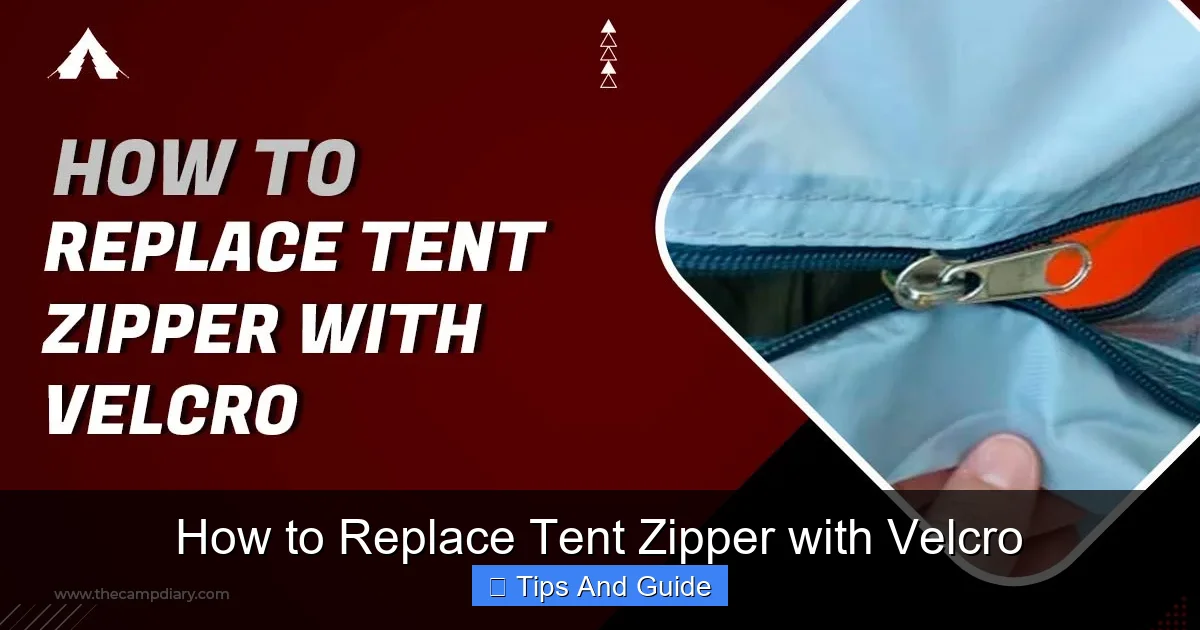
How to Replace Tent Zipper with Velcro
Tired of a broken tent zipper? This guide provides a straightforward method to replace it with robust velcro. You’ll learn to remove the old zipper and securely attach the velcro, ensuring your tent remains functional and weather-resistant. With these simple steps, you can extend the life of your tent and enjoy your outdoor adventures without zipper worries.
## How to Replace Tent Zipper with Velcro
A broken tent zipper can quickly turn a dream camping trip into a soggy, bug-infested nightmare. While replacing a zipper with a new one is an option, it can be a fiddly and sometimes expensive repair. For many situations, especially on tents where a perfect, absolute watertight seal isn’t the primary concern (like on a screen room addition or an older tent you want to keep using), a clever and surprisingly effective alternative is to replace the zipper with heavy-duty velcro. This guide will walk you through the process step-by-step, empowering you to revive your trusty shelter.
We’ll cover everything from preparing your materials to the final, secure attachment of your new velcro closure. By the end of this guide, you’ll have a functional and reliable way to keep your tent sealed, allowing you to focus on enjoying the great outdoors. This method is particularly useful for tents where the zipper is the only entry or for areas that might be exposed to wind but not necessarily torrential rain. If you’re looking for the ultimate in weather protection, you might want to explore options like the best pop-up tent waterproof solutions, but for a practical repair, velcro is a fantastic choice.
### Step 1: Assess the Situation and Gather Your Supplies
Before you grab your tools, it’s important to understand what you’re dealing with. Take a good look at the area where the zipper is damaged. Is it just a slider that’s come off, or is the zipper tape itself torn? If the fabric around the zipper is significantly damaged, velcro might not be able to provide a secure enough attachment. Also, consider the type of tent. For a primary tent entrance where you need maximum protection from the elements, a well-functioning zipper might still be the best long-term solution. However, for secondary entrances, windows, or if your tent is primarily for shade and bug protection, velcro can be an excellent, cost-effective substitute.
Once you’ve decided that velcro is the right solution, it’s time to gather your materials. Having everything ready before you start will make the process much smoother.
#### What You’ll Need:
* Heavy-Duty Velcro: Look for industrial-strength hook and loop fasteners. Choose a width that is at least 1.5 to 2 inches wide for good adhesion and sealing. You’ll need enough length to cover the entire opening where the zipper was.
* Strong Thread: Upholstery thread or a heavy-duty polyester thread is ideal, as it’s designed to withstand stress and outdoor conditions.
* Sewing Machine (Recommended) or Heavy-Duty Needle: A sewing machine will make this process significantly easier and result in stronger seams. If you don’t have one, a sturdy needle and patience will work.
* Seam Ripper: This is crucial for carefully removing the old zipper without damaging the tent fabric.
* Sharp Scissors: For cutting fabric and velcro cleanly.
* Fabric Glue (Optional but Recommended): A strong, flexible fabric glue can help reinforce the velcro attachment before sewing, or provide extra hold on areas where sewing is difficult.
* Measuring Tape: To ensure you cut the velcro to the correct length.
* Marking Pen or Chalk: To mark where you’ll attach the velcro.
* Pins or Fabric Clips: To hold the velcro in place while you sew.
### Step 2: Remove the Old Zipper
This is a delicate step. The goal is to remove the zipper completely without creating new holes or tears in your tent fabric. Take your time and work methodically.
#### Removing the Zipper Tape:
1. Locate the Zipper Seam: Examine where the zipper tape is sewn to the tent fabric. You’ll usually find a seam running along the edge of the fabric.
2. Carefully Insert Seam Ripper: Gently slide the tip of your seam ripper under the stitching that holds the zipper tape in place.
3. Cut the Stitches: Use the seam ripper to cut each stitch. Work in small sections, and be careful not to snag or cut the tent fabric itself.
4. Peel Away the Zipper: As you cut the stitches, the zipper tape will begin to loosen. Continue to cut all the way around the opening.
5. Remove Any Remnants: Once the main zipper tape is free, check for any stubborn threads or small pieces of the zipper mechanism that might be left behind. Remove them carefully with your seam ripper or small scissors.
**Pro Tip:** If your tent has a double zipper (two sliders on the same track), or if the zipper is integrated into a panel (like on some screen rooms), take extra care to note how it was originally sewn. This can help you plan your velcro placement. Sometimes, the zipper might be sewn onto a separate flap or panel.
### Step 3: Prepare the Velcro for Attachment
Now that the old zipper is gone, it’s time to get your new velcro ready. This involves cutting it to size and separating the hook and loop sides.
#### Cutting and Separating Velcro:
1. Measure the Opening: Use your measuring tape to determine the exact length of the opening where the zipper used to be. Add about an inch to this measurement for a good overlap at the top and bottom.
2. Cut the Velcro: Using your sharp scissors, cut two strips of velcro to the measured length. You’ll need one strip for the hook side and one for the loop side.
3. Separate Hook and Loop: Most velcro is designed so that the hook and loop sides can be easily separated. If they are firmly attached, you might need to use a fingernail or the tip of your seam ripper to start the separation. You’ll be attaching one side to one edge of the opening and the other side to the opposite edge.
**Consideration for Overlap:** When you’re determining where the velcro will attach, think about how you want the tent to seal. Ideally, one side of the velcro will attach to the tent’s main body, and the other will attach to a flap or the opposite side of the opening. This creates a good seal and allows for easy opening and closing. Many tents use a design where the zipper sits on one panel, and the other panel has a flap that covers it. You’ll want to mimic this with your velcro.
### Step 4: Attach the Velcro to Your Tent
This is the most critical step, requiring precision and strength. You’ll be sewing the velcro strips onto the tent fabric.
#### Sewing the Velcro:
1. Position the First Velcro Strip: Take one of your velcro strips (let’s say the hook side) and position it along the edge of the tent opening where you want it to be. Ensure it’s straight and aligned with the edge of the fabric. If you’re using fabric glue, apply a thin bead along the back of the velcro strip and press it firmly onto the fabric. Let it dry for a few minutes according to the glue’s instructions.
2. Pin or Clip in Place: Use pins or fabric clips to hold the velcro strip securely in place. Make sure the pins don’t go through to the other side of the fabric unless necessary.
3. Sew the First Strip:
* Using a Sewing Machine: Set your machine to a strong stitch, like a zigzag stitch, which will allow for some flexibility. Start sewing from one end of the velcro strip, following the edge of the velcro tape. Sew along both long edges of the velcro strip. Go slowly and guide the fabric. For added strength, you can sew an “X” stitch at the beginning and end of each seam.
* Hand Sewing: Use a strong needle and double up your thread. A backstitch is a good choice for durability. Sew along both long edges of the velcro strip, keeping your stitches close together and as even as possible. This will take patience but will yield a secure result.
4. Attach the Second Velcro Strip: Now, take the other velcro strip (the loop side) and position it on the opposite edge of the tent opening. It should align perfectly with the first strip so that when the tent is closed, the velcro engages smoothly. If you’re using fabric glue, apply it and let it set.
5. Pin or Clip in Place: Secure the second strip with pins or clips.
6. Sew the Second Strip: Repeat the sewing process as you did for the first strip, ensuring a strong, secure attachment.
**Important Considerations:**
* Tension: Ensure you maintain consistent tension on the fabric as you sew. Too loose, and the velcro might pull away; too tight, and you might distort the fabric.
* Reinforcement: For high-stress areas, consider sewing a second line of stitches or reinforcing the ends of the velcro with extra stitches.
* Fabric Glue Reinforcement: If you used fabric glue, the sewing will be much easier, and the bond will be stronger. The glue acts as a buffer and helps prevent the fabric from shifting under the sewing machine’s needle.
### Step 5: Test the New Closure
With both velcro strips securely attached, it’s time for the moment of truth.
#### Checking the Seal:
1. Engage the Velcro: Bring the two sides of the opening together and press the velcro strips firmly. Ensure they make good contact and stick well.
2. Open and Close: Practice opening and closing the tent flap a few times. Does it feel secure? Is it easy to operate?
3. Check for Gaps: Look closely at the seam where the velcro meets. Are there any significant gaps where insects or rain could enter? If there are small gaps, you might be able to adjust the placement slightly or consider adding a small flap of fabric to bridge them.
4. Test in Mild Conditions: If possible, test your velcro closure in mild weather before relying on it for a major trip. A light spray of water can help you see how well it seals.
**Troubleshooting:**
* Velcro Not Sticking Well:
* Ensure you used industrial-strength velcro.
* Make sure the fabric was clean and dry before attaching.
* Consider adding more stitches or using a stronger fabric glue.
* Check that the hook and loop sides are correctly matched and that there’s good surface contact.
* Gaps in the Seal:
* The velcro might be too narrow. Consider replacing it with wider velcro.
* The original zipper placement might have had a design that created a better seal. You might need to add a small fabric flap that overlaps the velcro closure.
* Ensure the velcro is attached straight and flush with the tent edge.
* Stitching Coming Loose:
* Use heavier-duty thread and consider a sewing machine if you hand-sewed.
* Ensure your stitches are close together and that you’ve reinforced the ends.
* For a temporary fix, you could use strong fabric glue to reattach the velcro to the fabric if stitching has failed.
### Conclusion
Replacing a broken tent zipper with velcro is a practical and achievable DIY repair. It’s an excellent way to extend the life of your tent and keep it functional for many more adventures. While it might not offer the same absolute watertight seal as a perfectly functioning zipper, for many applications, it provides a robust and reliable closure. Remember to choose good quality materials, take your time with the removal and attachment steps, and test your work thoroughly. With your new velcro closure, you can get back to enjoying your time outdoors, whether you’re camping under the stars or simply relaxing in your backyard. For those seeking the ultimate in convenience for quick setups, exploring the best pop-up tent on the market might be another avenue, but for repairing what you already have, this velcro fix is hard to beat.
### FAQs
Can I use regular velcro from a craft store?
While you can use regular velcro, it’s highly recommended to use heavy-duty or industrial-strength velcro. This type of velcro is designed for greater durability and stronger adhesion, which is essential for withstanding the stresses of tent use and weather exposure.
Will velcro provide a waterproof seal?
Velcro alone typically does not provide a completely waterproof seal. It can offer good protection against wind and light rain by creating a decent barrier, but persistent heavy rain or strong winds might still find a way through the edges or where the velcro hooks and loops meet. It’s better suited for applications where an absolute watertight seal isn’t the primary requirement.
How do I ensure the velcro doesn’t snag on things?
To minimize snagging, ensure that when you close the tent, the hook side of the velcro is on the outside (or the side less likely to brush against you or your gear) and the loop side is on the inside. Also, ensure the velcro strips are attached neatly and flush with the tent fabric.
What if my tent fabric is thin?
If your tent fabric is thin, you’ll need to be extra careful when sewing to avoid tearing it. Using a sewing machine on a lower tension setting and a finer needle can help. Alternatively, you could use a strong fabric glue to adhere the velcro and then reinforce it with just a few strategic stitches, or consider sewing onto a slightly more robust fabric patch that is then attached to the tent.
How long will a velcro closure last compared to a zipper?
A well-attached heavy-duty velcro closure can last for many years, especially with proper care. However, the lifespan of velcro can be affected by dirt, debris, and repeated use. Zippers, when they fail, often do so catastrophically, whereas velcro tends to gradually lose its gripping power over time. For many campers, the ease of repair and replacement makes velcro a practical long-term solution.
Can I use this method on any type of tent?
This method is generally suitable for most tent types, including screen houses, canopy tents, or even as a temporary fix on family tents where a zipper has failed. It’s most effective on tents where the zipper isn’t the sole barrier against extreme weather conditions. For primary entrances on high-performance tents, a professional zipper replacement might be a better investment.
Key Takeaways
- Assess Zipper Damage: Determine if replacing the entire zipper with velcro is the best solution for your tent.
- Gather Supplies: Collect heavy-duty velcro, strong thread, a sewing machine or needle, scissors, seam ripper, and fabric glue.
- Remove Old Zipper: Carefully detach the broken zipper from the tent fabric using a seam ripper and scissors.
- Prepare Velcro: Cut the velcro strips to the correct length, ensuring they overlap sufficiently for a secure closure.
- Attach Velcro: Sew the velcro strips securely to the tent fabric, ensuring even tension and strong seams.
- Test the Seal: Once attached, test the velcro closure to ensure it seals effectively against weather elements.
- Consider Alternatives: While velcro offers a quick fix, explore other repair options if a watertight seal is paramount for your camping needs.