How to Repair Tent Pole
Don’t let a broken tent pole ruin your camping trip! This comprehensive guide shows you how to easily repair damaged tent poles of various types. We cover common issues like bends, cracks, and breaks, offering practical solutions to get your tent back in shape. With these tips, you can save money and extend the life of your camping gear.
Don’t let a broken tent pole send you home from your camping adventure early! A damaged pole can render your tent unstable and unusable. But before you consider replacing the entire tent, know that most tent pole problems are surprisingly easy to fix. This comprehensive guide will walk you through everything you need to know to repair your tent pole, saving you money and keeping your shelter standing tall. We’ll cover common issues, the tools you’ll need, and step-by-step instructions for effective repairs.
### Why Repair Your Tent Pole?
Tent poles are the backbone of your tent. When they break, your tent loses its shape and structural integrity. This can lead to a collapsed tent, leaving you exposed to the elements. Instead of shelling out for a new tent, a simple repair can often bring your current one back to life. It’s a sustainable and cost-effective solution that allows you to continue enjoying the outdoors. Plus, knowing how to perform these repairs gives you valuable self-reliance skills for future trips.
## Step 1: Assess the Damage
The first and most crucial step is to thoroughly examine the damaged tent pole. Different types of damage require different repair approaches. Lay out all the sections of your tent pole on a flat surface and carefully inspect each one.
### Types of Tent Pole Damage
* **Bent Pole:** The pole is misshapen but not broken. This is often caused by excessive force or improper packing.
* **Cracked Pole:** There’s a visible crack or split in the material of the pole. This can happen due to stress, impact, or wear and tear.
* **Snapped Pole:** The pole is broken into two or more pieces. This is the most severe type of damage and requires a more robust repair.
* **Damaged Shock Cord:** The elastic cord that runs through the poles might be frayed, stretched, or broken. This affects how the poles stay together.
* **Bent or Damaged Connectors:** The small metal or plastic pieces where poles join can sometimes get bent or broken.
### What to Look For
* **Location of the Damage:** Is it near the end, in the middle, or at a joint?
* **Severity of the Damage:** How deep is the bend or crack? Is the pole completely severed?
* **Material of the Pole:** Most modern tent poles are made of aluminum alloy, while older or cheaper tents might use fiberglass. The repair method can vary slightly.
## Step 2: Gather Your Repair Supplies
Once you know what you’re dealing with, it’s time to gather the necessary tools and materials. Thankfully, most tent pole repairs require common items you might already have or can easily purchase.
### Essential Repair Items
* **Duct Tape or Repair Tape:** A strong, waterproof tape is essential for reinforcing cracks and securing repairs. Specialized tent pole repair tape is also available and often works better.
* **Epoxy Glue or Strong Adhesive:** For more permanent repairs, especially on snapped poles or larger cracks, a good epoxy glue is invaluable. Make sure it’s suitable for metal or fiberglass, depending on your pole material.
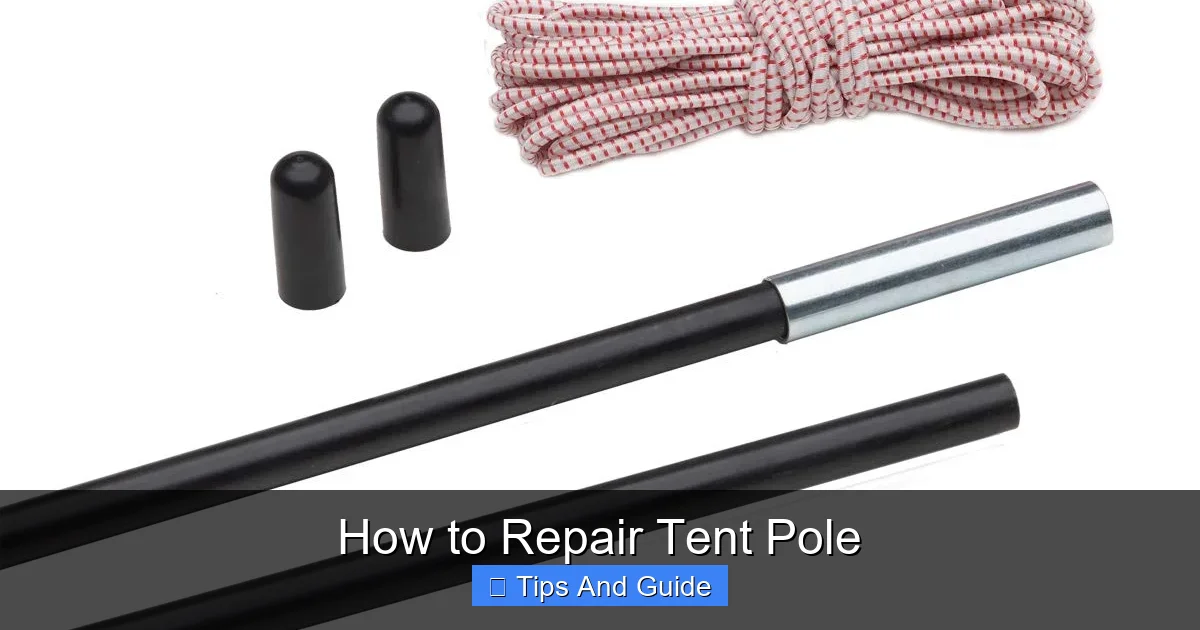
* **Repair Sleeve:** These are often metal or sturdy plastic tubes that slide over a broken section of a pole to provide support. Many tent repair kits include these.
* **Pliers (Needle-nose and regular):** Useful for straightening bent sections, gripping small parts, and removing old remnants.
* **Sandpaper (Fine-grit):** To clean and roughen the surface before applying glue for better adhesion.
* **Scissors or a Craft Knife:** For cutting tape and other materials.
* **Gloves:** To protect your hands when working with epoxy or sharp edges.
* **Cleaning Cloths:** To wipe down the pole sections.
* **Replacement Shock Cord (if needed):** If your shock cord is the issue, you’ll need a new length of elastic cord specifically designed for tent poles. You might also need a thin wire or strong string to help thread the new cord.
### Optional but Helpful Items
* **Vise:** If you have a vise, it can be very helpful for holding bent poles steady while you work on straightening them.
* **Mallet or Hammer:** For gently tapping bent poles back into shape (use with caution!).
* **Small Saw or File:** If you need to trim a damaged end of a pole.
## Step 3: Repairing a Bent Tent Pole
Bent poles are common and often fixable without specialized parts. The key is to apply controlled force to straighten the pole without causing further damage.
### Straightening Minor Bends
1. **Gentle Manipulation:** For slight bends, you can often use your hands or gentle pressure from your feet to carefully bend the pole back into its original shape. Do this on a soft surface to avoid further scratching or denting.
2. **Using Pliers:** For slightly more stubborn bends, grip the pole on either side of the bend with needle-nose pliers. Apply slow, steady pressure to straighten it. Be cautious not to apply too much force, which could snap the pole.
3. **Using a Vise:** If you have a vise, this is an excellent tool.
* H3: Using a Vise for Straightening
* **Secure the Pole:** Place the bent section of the pole in the vise, ensuring the bend is exposed and you have room to work. Don’t overtighten the vise, as this can crush the pole.
* **Apply Gradual Pressure:** Use a piece of wood or a rubber mallet to gently tap or lever the pole to straighten it. Work slowly and check your progress frequently. The goal is to coax it back into shape, not force it.
### Reinforcing a Bent Pole
Even after straightening, a bent pole might be weaker in that spot. You can add some extra strength.
1. **Clean the Area:** Wipe down the straightened section to remove any dirt or grease.
2. **Wrap with Tape:** Tightly wrap several layers of strong duct tape or specialized repair tape around the straightened section. This provides external support and helps prevent future bending.
## Step 4: Repairing a Cracked Tent Pole
Cracks, even small ones, can compromise the pole’s integrity. The repair method depends on the size and depth of the crack.
### Small Cracks and Splits
1. **Clean the Area:** Thoroughly clean the cracked area with a cloth and mild soap, then dry it completely.
2. **Sand Lightly:** Gently sand the area around the crack with fine-grit sandpaper. This creates a rougher surface for better adhesion of tape or glue.
3. **Apply Repair Tape:**
* H3: Using Repair Tape
* **Cut a Piece of Tape:** Cut a strip of strong duct tape or tent pole repair tape that is long enough to wrap around the pole at least twice.
* **Apply Tightly:** Start applying the tape at one end of the crack and wrap it tightly, overlapping each layer by about half the tape’s width. Ensure the tape covers the crack completely and extends a little beyond it on either side. Smooth out any air bubbles.
4. **Apply Epoxy (Optional for added strength):** For a more durable repair, after cleaning and sanding, apply a thin layer of epoxy glue to the crack before wrapping with tape.
### Larger Cracks and Deep Splits
For larger cracks, tape alone might not be enough. You’ll need to reinforce the area.
1. **Clean and Sand:** As with small cracks, clean the area thoroughly and sand it to create a good surface for adhesion.
2. **Apply Epoxy:** Mix your epoxy glue according to the manufacturer’s instructions. Apply a generous amount to the cracked area, ensuring it fills the split.
3. **Wrap with Tape:** While the epoxy is still wet, wrap the area tightly with strong duct tape or repair tape. The tape will help hold the cracked pieces together as the epoxy cures and provide external reinforcement.
4. **Cure Time:** Allow the epoxy to cure fully according to the product’s instructions (usually 24-72 hours). Do not stress the pole during this time.
5. **Consider a Repair Sleeve:** If the crack is very severe or in a high-stress area, you might need to use a repair sleeve over the top for added support.
## Step 5: Repairing a Snapped Tent Pole
A snapped tent pole is the most challenging repair, but it’s definitely doable with the right materials. The goal is to create a strong bond that can withstand the tension of the tent.
### Using a Repair Sleeve and Epoxy
This is the most common and effective method for a snapped pole.
1. **Clean the Ends:** Ensure the broken ends of the pole are clean and free of debris. If there are any jagged edges, try to smooth them slightly with sandpaper or a file.
2. **Prepare the Repair Sleeve:**
* H3: Fitting the Repair Sleeve
* **Measure:** If your repair sleeve isn’t pre-cut, measure it to ensure it’s long enough to overlap the break by at least 2-3 inches on each side (4-6 inches total overlap).
* **Slide One Half:** Slide one half of the repair sleeve onto one of the broken pole ends.
3. **Apply Epoxy:** Mix your epoxy glue. Apply a good amount of epoxy to the inside of the repair sleeve and to the broken ends of the tent pole.
4. **Join the Pole Sections:** Carefully push the two broken pole sections together inside the repair sleeve. Ensure they are aligned as straight as possible.
5. **Slide the Sleeve:** Slide the repair sleeve so it completely covers the break, with even overlap on both sides.
6. **Secure and Cure:**
* H3: Securing the Repair
* **Wrap with Tape:** Wrap the entire repair sleeve tightly with strong duct tape or repair tape. This provides immediate structural support and helps keep everything in place while the epoxy cures.
* **Allow to Cure:** Let the epoxy cure fully for at least 24-72 hours. Avoid flexing or putting any stress on the repaired section during this time.
### Alternative: Improvised Splint
If you don’t have a repair sleeve, you can create a makeshift splint.
1. **Find a Strong Tube:** Find a sturdy tube that fits snugly over the broken pole, like a section of thicker aluminum tubing, a metal pen casing, or even a strong plastic pipe.
2. **Prepare Pole Ends:** Clean and sand the broken ends.
3. **Apply Epoxy and Join:** Apply epoxy to the inside of your makeshift tube and to the pole ends. Join the pole sections inside the tube, ensuring good alignment.
4. **Secure and Cure:** Wrap the entire assembly tightly with duct tape and allow it to cure fully.
## Step 6: Repairing Damaged Shock Cord
The shock cord is vital for keeping your tent pole sections connected and allowing for easy setup.
### Replacing the Shock Cord
1. **Disassemble the Pole:** Carefully pull the damaged pole sections apart. You may need to untie or cut the old shock cord.
2. **Thread the New Cord:**
* H3: Threading the New Cord
* **Start Point:** Tie one end of the new shock cord securely to the end cap of one of the pole sections.
* **Use a Guide:** Use a thin piece of wire, a strong string, or even a straightened paperclip to thread the shock cord through the hollow center of the pole sections.
* **Connect Sections:** Once threaded through all the sections, bring the ends of the pole together and pull the shock cord taut. Tie a secure knot (like a fisherman’s knot or a series of overhand knots) to create the right amount of tension. The poles should snap together easily but not flop around loosely.
3. **Trim and Secure:** Trim any excess shock cord and secure the knot with a lighter flame (carefully!) or a dab of super glue to prevent it from unraveling.
## Step 7: Troubleshooting and Prevention
Sometimes, even with the best repairs, a pole might not be as strong as it was originally. Here are some tips and preventative measures.
### Troubleshooting Common Issues
* **Pole Still Wobbly:** If the repair feels loose, you might need to add more epoxy or reinforce it with another layer of tape or a larger repair sleeve. Ensure the pole is properly aligned.
* **Repair Fails Under Stress:** This usually means the initial repair wasn’t strong enough for the forces the pole experiences. For snapped poles, a proper repair sleeve and strong epoxy are crucial. For bent poles, ensure they are straightened as much as possible before reinforcing.
* **Difficulty Threading Shock Cord:** If the pole channel is blocked or dirty, clean it out. Using a bit of lubrication like silicone spray can sometimes help.
### Preventing Tent Pole Damage
* **Careful Packing:** Always pack your tent poles carefully. Avoid bending them at sharp angles, especially when putting them away. If they are tight, don’t force them.
* **Clean After Use:** After camping, clean your tent poles. Remove dirt, sand, and debris. Dry them completely before storing.
* **Avoid Excessive Force:** Don’t use your tent poles for anything other than supporting your tent. Don’t use them as walking sticks unless they are specifically designed for that purpose, like many trekking poles designed for trekking pole tents.
* **Store Properly:** Store your tent poles in their protective bag in a dry place. Avoid extreme temperatures.
* **Regular Inspection:** Periodically inspect your poles for any signs of wear or damage. Addressing small issues early can prevent bigger problems later.
### When to Consider Replacement
While repairs are great, some damage might be beyond fixing, especially if multiple sections are severely damaged, the pole material is significantly degraded, or the damage compromises the overall integrity of your tent setup. If your tent is old and the poles are consistently failing, it might be time to invest in a new tent or replacement poles.
## Conclusion
Repairing a tent pole is a practical skill that can save your camping trip and your wallet. By understanding the different types of damage and employing the right techniques, you can extend the life of your camping gear significantly. Whether it’s a minor bend or a snapped section, these methods will help you get your tent back in reliable condition for many adventures to come. So next time a pole gets damaged, don’t despair – grab your repair kit and get to work! Happy camping!
Key Takeaways
- Assess the Damage: Carefully inspect your tent pole to identify the exact problem – is it bent, cracked, or completely snapped? The type of damage dictates the best repair method.
- Gather Your Supplies: Common repair materials include duct tape, epoxy, repair sleeves, and sometimes even a replacement section if the damage is severe.
- Straighten Bent Poles: For minor bends, gentle manipulation with pliers or even your hands can often realign the pole. For more stubborn bends, using a vise or specialized tools might be necessary.
- Fixing Cracks and Splits: Small cracks can be reinforced with strong tape like duct tape or specialized tent pole repair tape. For larger cracks, epoxy or a repair sleeve offers a more durable solution.
- Repairing Snapped Poles: A snapped pole requires joining the two pieces. This is typically done using a repair sleeve that slides over the break and is secured with epoxy or strong adhesive.
- Preventative Maintenance: Proper care and storage of your tent poles, such as cleaning them after use and avoiding unnecessary stress, can prevent damage in the first place.