How to Refold a Pop Up Tent
Packing up your pop-up tent doesn’t have to be a struggle! This guide offers clear, step-by-step instructions and practical tips to help you refold your pop-up tent efficiently. Mastering this skill ensures your tent stays in good condition and is ready for your next adventure. Follow our advice for a frustration-free experience every time.
# How to Refold a Pop Up Tent
So, you’ve had an amazing time camping, enjoying a festival, or simply relaxing in your backyard with your trusty pop-up tent. Now comes the part that can sometimes feel like a puzzle: packing it all away. If you’ve ever wrestled with a pop-up tent, trying to get it back into its original bag, you know it can be a bit of a challenge. But don’t worry! Refolding a pop-up tent is a skill that anyone can master with a little patience and the right technique.
This comprehensive guide will walk you through the entire process, from understanding the basic principles of how these tents work to specific step-by-step instructions. We’ll cover practical tips, common pitfalls to avoid, and even offer some troubleshooting advice. By the end of this guide, you’ll be able to refold your pop-up tent quickly, efficiently, and without the frustration. Let’s get started on making packing up as enjoyable as setting up!
## Understanding the Mechanics of a Pop Up Tent
Before diving into the folding process, it’s helpful to understand what makes a pop-up tent “pop up.” These tents are ingeniously designed with pre-attached poles that have a degree of flexibility and memory. When you release them, they spring into shape, creating the tent’s structure almost instantly. This flexibility is what allows them to be compressed and folded, albeit in a specific way.
The key to folding them lies in understanding how to counteract that spring action. You’re essentially forcing the poles back into a compressed state, guiding the fabric along with them. Most pop-up tents, regardless of size or specific design, follow similar folding principles. Whether you have a small one-person tent or a larger family model, the core idea is to create organized curves and bends in the poles.
## Preparing Your Workspace
The first crucial step before you even touch the tent is to prepare your workspace. This might seem simple, but it makes a huge difference.
### Clear the Area
Find a large, flat, and open space. This could be a lawn, a large room indoors, or a clear patch of ground. Ensure there are no sharp objects, rocks, or debris that could snag or damage the tent fabric. A spacious area allows you to move around the tent freely and prevents you from feeling cramped.
### Ensure the Tent is Dry
It’s vital to refold your pop-up tent when it’s completely dry. Packing a damp tent can lead to mildew, unpleasant odors, and damage to the fabric over time. If your tent is wet, allow it to air dry thoroughly in the sun or a well-ventilated area before attempting to fold it.
### Remove All Accessories
Take out any sleeping bags, mats, lights, or other accessories. Unzip all doors and windows to allow air to escape easily as you fold. This prevents the tent from puffing up like a balloon and makes the folding process much smoother.
## Step-by-Step Guide to Refolding Your Pop Up Tent
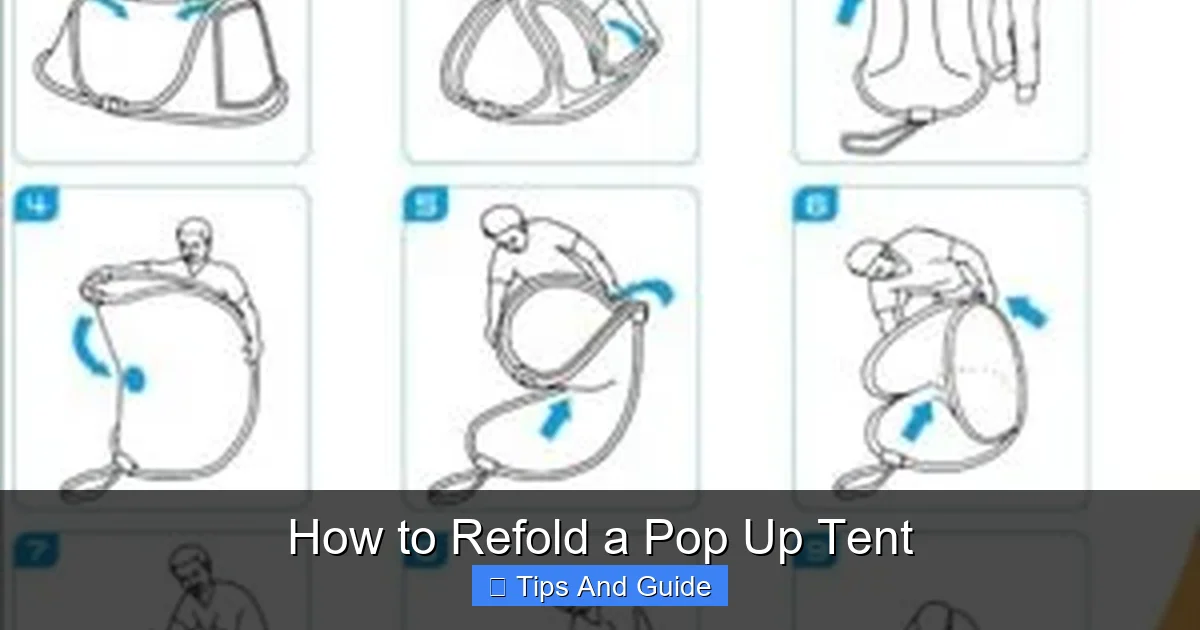
While specific models might have slight variations, the general principle for refolding most pop-up tents involves creating specific folds to collapse the spring-loaded poles. The most common type involves folding the tent into roughly two halves, then into quarters, creating compact circular shapes.
### Step 1: Flatten the Tent and Prepare for the First Fold
Start by laying the tent flat on the prepared surface, with the doors facing upwards if possible. Imagine the tent as a large circle or oval. Your goal is to bring two opposite sides towards the center, creating a bend in the poles.
#### H3: Kneel and Push In
Kneel inside or next to the tent. With one hand, grasp the tent at one edge. With your other hand, reach across to the opposite edge. You are going to gently push these two edges towards each other, causing the tent to bend in the middle. Think of it like collapsing a spring. You want to create a crescent shape.
#### H3: Guide the Fabric
As you push the edges together, the fabric will naturally want to bunch up. Use your free hand to gently guide the fabric so it folds neatly. You don’t want it to twist or get caught. The aim is to have the fabric fold inwards, creating a more compact shape as the poles bend.
### Step 2: Create the First Circular Fold
Once you have the tent bent in half, you’re ready to complete the first major fold. This step transforms the bent shape into a more manageable circle.
#### H3: Bring the Ends Together
Now, take the two bent ends that you just brought together and continue to push them towards each other. You are essentially folding the bent tent in half again. The poles will naturally start to curve. Your goal is to make the bent structure form a rough circle or an ‘8’ shape that you can then collapse into a circle.
#### H3: Nest the Rings
As you bring the ends together, you’ll notice two large hoop-like structures forming from the poles. The key is to nest these two hoops one inside the other. One hoop will usually sit slightly inside or on top of the other. This is where the tent’s ability to be compressed comes from. Gently manipulate the poles so they nest cleanly.
### Step 3: Secure the Circular Shape
With the two hoop-like pole structures nested, you’ll have a compact, somewhat circular shape. Now, you need to secure it.
#### H3: Flatten and Press
Gently press down on the nested hoops. This helps to flatten the shape further and makes it easier to manage. You might need to adjust the fabric a bit to ensure it’s not bunched up awkwardly.
#### H3: Use the Integrated Straps
Most pop-up tents come with integrated straps. Find these straps (they are usually Velcro and attached to the tent fabric). Wrap these straps around the folded tent to hold the nested hoops tightly together. This prevents the tent from springing open unexpectedly.
### Step 4: Fold into the Final Bag Shape
Once the tent is secured in its compact circular form, it’s time to get it into its storage bag. This usually involves one final manipulation.
#### H3: Position for the Bag
Place the secured, folded tent near its storage bag. The bag is typically designed to fit the folded tent snugly. You might need to position the folded tent so that it aligns with the opening of the bag.
#### H3: Slide or Tuck into the Bag
Carefully slide or tuck the folded tent into its bag. Sometimes, you might need to slightly twist or compress the folded tent a little more to get it to fit. Once inside, zip the bag closed. You might have a little extra space, which is normal, as the bag is often designed to be a tight fit to keep everything compact.
### Step 5: Final Checks
After the tent is in its bag, give it a final check.
#### H3: Ensure it’s Fully Closed
Make sure the bag is zipped up completely. This prevents the tent from partially escaping or getting damaged.
#### H3: Store Appropriately
Store the bag in a cool, dry place, away from direct sunlight and extreme temperatures. This will help preserve the tent’s materials and prolong its lifespan.
## Practical Tips for Easier Folding
Here are some extra tips to make the process even smoother:
* Two-Person Job: For larger pop-up tents, having a second person can make the folding process significantly easier. One person can hold and guide the fabric while the other manipulates the poles.
* Don’t Force It: If the tent isn’t folding easily, don’t force it. This can damage the poles or fabric. Re-evaluate your approach, ensure you’re creating the correct bends, and try again gently.
* Watch a Video: If you’re struggling, search online for videos of your specific tent model or similar pop-up tents being folded. Seeing it done visually can be incredibly helpful. Many brands, like those featured in our best pop-up tent reviews, often have demonstration videos.
* Practice in Good Weather: The first few times you refold your tent, try doing it in ideal conditions – calm weather, plenty of space, and good daylight. This will help you learn the technique without added stress.
* Consider Tent Type: While most pop-up tents fold similarly, some might have slightly different pole configurations. For example, some instant pop-up tents might feel more rigid initially. Always refer to your tent’s manual if you have it. If you’re looking for a tent that’s easy to set up and take down, exploring options like a best pop-up tent for camping that prioritizes user-friendliness is a good idea.
## Troubleshooting Common Issues
Even with the best instructions, you might encounter a few snags. Here’s how to handle them:
### Problem: The Tent Won’t Collapse into a Circle
Solution: This usually means the poles aren’t nested correctly or you haven’t applied enough controlled pressure. Ensure you are bringing the bent sides together to form two concentric hoops. Gently work the poles so one hoop slides neatly inside the other. Sometimes, wiggling the poles slightly can help them find their position.
### Problem: The Fabric is Bunched Up and Won’t Fold Neatly
Solution: As you collapse the poles, use your free hand to smooth out the fabric. Don’t let it twist. Guide it inwards to create neat pleats or folds. If it’s severely bunched, you might need to slightly release some pressure on the poles, rearrange the fabric, and then reapply pressure.
### Problem: The Tent Springs Open After I’ve Folded It
Solution: This means the integrated straps aren’t tight enough, or you haven’t secured the folded shape properly. Once you have the nested hoops, press down firmly to compact them before wrapping the straps. Make sure the straps are as tight as they can go. If the straps seem too long, you might need to consider using a bungee cord or extra rope to secure it tightly until you can get it into the bag.
### Problem: The Tent is Still Damp and I Need to Pack It
Solution: If you absolutely must pack a damp tent, do your best to wring out as much moisture as possible. Once you get home, unpack it immediately and air it out fully until completely dry. You can also lightly wipe it down with a dry towel. For more persistent dampness, consider using a tent-specific waterproofing spray after drying, especially if it’s a best pop-up tent waterproof model that you want to keep that way.
## Conclusion
Refolding a pop-up tent might seem daunting at first, but with this guide, you’re now equipped with the knowledge and steps to tackle it with confidence. The key is to understand the spring-loaded pole system and practice the technique of bending and nesting the pole structures to create a compact circle. Remember to prepare your space, work gently, and secure your tent properly in its bag.
With a little practice, you’ll find that refolding your pop-up tent becomes a quick and easy part of your camping or event packing routine. No more wrestling matches – just efficient packing that gets you on your way. Happy travels!
- Understand Your Tent’s Design: Pop-up tents rely on spring-loaded poles that create their structure. Recognizing how these poles interact is key to folding.
- Clear a Spacious Area: Before you begin, find a large, flat, and clear space. This prevents snagging and makes maneuvering the tent much easier.
- Follow the Reverse of Setup: Most pop-up tents fold in a way that’s the opposite of how they spring open. Aim to reverse the opening actions.
- Use Gentle but Firm Pressure: Don’t force anything. Apply steady, controlled pressure to bend the poles and guide the fabric.
- Secure with Straps: Once folded into its final compact shape, use the tent’s integrated straps or additional ties to keep it tightly bundled.
- Practice Makes Perfect: The first few times might feel awkward, but with practice, refolding your pop-up tent will become second nature.