How to Put a Pop Up Tent Away
Putting away a pop-up tent doesn’t have to be a struggle! This guide provides clear, step-by-step instructions to help you efficiently fold and store your tent. Master the folding technique and ensure your tent is ready for your next adventure.
# How to Put a Pop Up Tent Away
So, you’ve had a fantastic time camping, at a festival, or enjoying a day at the beach. Now comes the part that can sometimes feel a little daunting: putting your pop-up tent away. Don’t worry, it’s not as complicated as it might seem at first glance. Pop-up tents are designed for quick assembly, and with a little know-how, they can be just as quick to pack up.
This guide is here to walk you through the process, step by step. We’ll cover everything from preparing your tent for packing to the final fold, ensuring you can store it efficiently and keep it in great condition for your next outing. Whether you have a small one-person pop-up or a larger family-sized model, the general principles are the same. Let’s get started!
## Preparing Your Pop-Up Tent for Storage
Before you even think about folding, a little preparation goes a long way. This ensures your tent stays clean, dry, and lasts longer.
### Step 1: Empty the Tent Completely
This might sound obvious, but it’s easy to forget a stray water bottle, a pair of shoes, or even small children if you’re not careful! Take everything out of the tent, including any sleeping bags, mats, and personal belongings. Check all pockets and compartments.
### Step 2: Clean and Dry the Tent
This is a crucial step that many people overlook. Storing a wet or dirty tent can lead to mildew, mold, and damage to the fabric and poles.
- Shake it Out: Stand inside the tent and give it a good shake to dislodge any dirt, leaves, or debris. If you can, do this outdoors in a breezy spot.
- Wipe Down: If the tent is damp or has mud on it, use a damp cloth or sponge to wipe down the interior and exterior. For stubborn stains, a mild soap solution can be used, but always rinse thoroughly with a clean damp cloth.
- Air Dry Thoroughly: This is the most important part. Find a sunny, dry day and set up your tent (or at least spread out the fabric) to let it air dry completely. Ensure the inside, outside, and especially the seams and floor are bone dry. If you’re short on time or space, you might need to lay it out on a clean tarp or even hang it up in a garage or large room. Never pack a damp tent away. For tips on choosing a tent that handles moisture well, check out our guide on the best pop up tent waterproof options.
### Step 3: Disconnect and Remove Accessories
If your tent has detachable elements like a rainfly, groundsheet, or any additional annexes, carefully detach them. Fold these accessories separately according to their own instructions (if any) and ensure they are also clean and dry before packing.
## The Folding Process: Step-by-Step
Now that your tent is clean, dry, and empty, it’s time to fold it. Most pop-up tents use a “spring pole” or “instant” design, which relies on flexible poles that bend and snap into place. Folding is essentially reversing this process.
### Step 1: Identify the Poles and Their Tension
Stand your tent up and identify the main flexible poles that give it its shape. You’ll notice they are under tension when the tent is erected. The goal of folding is to release this tension safely and systematically.
### Step 2: Collapse the Tent Frame
This is the core of the pop-up tent folding process. There are a few variations depending on the tent design, but the most common method involves collapsing the tent into a circular shape.
- Step 2a: Bring Two Opposite Corners Together
Choose two corners of the tent that are diagonally opposite each other (e.g., front-left and back-right). Gently pull one of these corners towards the other. As you do this, the frame will start to bend. You want to encourage the poles to bend inwards, effectively making the tent narrower. The floor of the tent will start to fold inwards as well.
- Step 2b: Fold the Tent in Half
Once you have brought the two corners close together, you should be able to fold the entire tent structure in half. The bent poles will naturally create a shape that allows for this. You might need to push down gently on the top of the tent as you bring the sides together to help it collapse.
- Step 2c: Bring the Remaining Two Corners Together
With the tent now folded in half, you should have two more “ends” or corners. Bring these together. The flexible poles will bend and curve, allowing the tent to form a compact disc or circle shape. It’s important to apply gentle, consistent pressure. Avoid forcing anything, as this could damage the poles or fabric. The structure should naturally want to collapse into this shape.
Tip: Some tents have a specific “zippered opening” that you might want to align with the fold for a neater package. Check your tent’s manual if you’re unsure.
### Step 3: Secure the Folded Tent
Once the tent is collapsed into a disc shape, it will want to spring back open. You need to secure it tightly.
- Use the Straps: Most pop-up tents come with integrated straps or separate Velcro ties. Wrap these around the folded tent disc and fasten them securely. This is essential for keeping the tent compact and manageable.
- Check for Security: Give the secured tent a gentle wiggle. It should feel firm and stay in its disc shape. If it feels loose, re-tighten the straps.
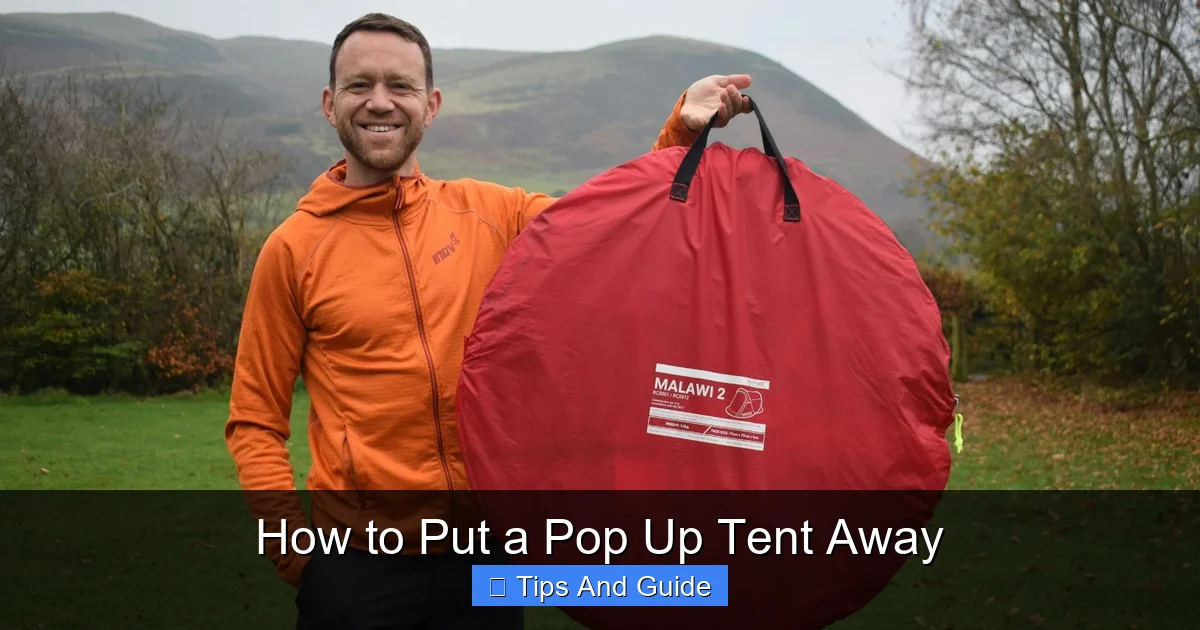
### Step 4: Place into the Carry Bag
Carefully slide the secured, folded tent into its original carry bag. The bag is designed to fit the tent perfectly when folded. If it seems tight, ensure the tent is as flat and compact as possible. Some bags might have a zipper; close it to keep everything contained.
## Troubleshooting Common Folding Issues
Even with instructions, pop-up tents can sometimes be a bit stubborn. Here are a few common problems and how to solve them:
### Issue: The Tent Won’t Collapse into a Disc Shape
Solution: This usually means you haven’t effectively brought the opposing corners together or allowed the poles to bend correctly. Ensure you’re pulling two *opposite* corners towards each other with a firm but controlled motion. You may need to slightly twist or manipulate the tent as you bring the sides together. Imagine you’re trying to make an imperfect “figure eight” with the poles before bringing the ends together to form a circle.
### Issue: The Tent Springs Open After Folding
Solution: Your securing straps aren’t tight enough. Make sure they are fully fastened and pulled snug. If the straps are worn or stretched, you might need to hold the tent closed with your knee or body weight while you fasten the straps.
### Issue: It’s Difficult to Get the Tent Back into the Bag
Solution: Ensure the tent is folded as flat and compact as possible. Sometimes, the poles might not be perfectly aligned. Try gently pressing down on the center of the folded disc to make it thinner. If the bag is torn or damaged, it might be time to consider a replacement bag or a new tent. A good family tent is an investment, and choosing the right one for your needs is important; for families, you might want to look at our best pop up tent for family camping guide.
### Issue: The Poles Seem Stuck or Bent Severely
Solution: Never force the poles. If a pole feels like it’s stuck or bending at an unnatural angle, stop and inspect it. Sometimes, the fabric can get caught. Gently try to free it. If a pole is genuinely bent or broken, it may need repair or replacement. Always be careful not to over-stress the poles during folding.
## Final Storage Tips
Once your pop-up tent is neatly packed into its bag, the final step is to store it correctly.
- Choose a Dry Location: Avoid damp basements, garages, or sheds where moisture can accumulate. A climate-controlled closet or storage area is ideal.
- Keep it Out of Direct Sunlight: Prolonged exposure to UV rays can degrade the fabric over time, making it brittle and less waterproof.
- Don’t Store Heavy Items on Top: Placing heavy objects on the packed tent could crush or damage the poles and fabric.
- Check Periodically: If you store your tent for long periods, it’s a good idea to unpack and air it out every few months to prevent any lingering moisture issues or smells.
## Conclusion
Putting away a pop-up tent is a skill that improves with practice. By following these steps – cleaning, drying, carefully collapsing, securing, and storing – you can ensure your tent remains in excellent condition for many adventures to come. Don’t be discouraged if the first few attempts feel a bit awkward; you’ll quickly get the hang of it. A well-maintained pop-up tent is a reliable companion, whether you’re seeking a temporary shelter for a festival, a quick camping trip, or even just some best pop up tent for sun protection at the beach. Happy camping!
Key Takeaways
- Clear the Area: Ensure you have enough space around the tent to fold it without obstructions. This prevents damage to the tent and makes the process smoother.
- Understand the Folding Mechanism: Pop-up tents use a spring-loaded mechanism. The key is to reverse the opening process by collapsing the frame in the opposite direction.
- Corner Collapse is Crucial: The most common method involves bringing two opposing corners together, then the other two, creating a compact shape for folding.
- Secure the Folded Tent: Once folded, use the provided straps or ties to keep the tent securely in its compact shape. This prevents it from springing open.
- Store Properly: Place the folded tent back into its original carry bag and store it in a dry, cool place to protect it from damage and the elements.
- Practice Makes Perfect: Don’t be discouraged if it takes a few tries. The folding process becomes much easier with practice.