How to Make Name Tents
Discover how to create professional name tents for any event with this comprehensive guide. You’ll learn to choose the right materials, design your tents with clear, readable fonts, and assemble them with ease. This guide provides simple, step-by-step instructions suitable for beginners, ensuring your name tents make a great impression.
## How to Make Name Tents: A Comprehensive Guide
Planning an event, a conference, a workshop, or even a classroom setting? Name tents are a fantastic way to help attendees, students, or colleagues identify each other and feel more welcome. They add a touch of professionalism and organization that can make a big difference. But creating them doesn’t have to be complicated or expensive. With a few simple materials and a little guidance, you can make your own impressive name tents.
This guide will walk you through everything you need to know to create professional-looking name tents. We’ll cover selecting the best materials, designing for maximum readability, and the straightforward steps for assembly. Whether you’re making a few for a small meeting or hundreds for a large conference, these tips will ensure your name tents are a success. Let’s get started!
## Step 1: Gather Your Materials
The first step to making any project is gathering what you need. For name tents, the essential materials are quite simple.
### Cardstock or Heavy Paper
The most crucial material is your paper. You want something sturdy enough to stand on its own once folded.
* Cardstock: This is ideal. It’s thicker than regular paper and comes in a wide variety of colors and finishes. Standard cardstock is usually around 65 lb to 110 lb (176 gsm to 300 gsm). For name tents, 80 lb (216 gsm) or 100 lb (271 gsm) cardstock is a great choice.
* Heavy Paper: If cardstock isn’t readily available, a heavy-weight paper (like 28 lb or 32 lb bond paper) can work, but it might be slightly less stable and more prone to bending.
### Cutting Tools
You’ll need a way to cut your paper precisely.
* Paper Trimmer or Guillotine Cutter: This is the best option for straight, clean cuts. It’s faster and more accurate than scissors for multiple pieces.
* Scissors: If you don’t have a trimmer, a good pair of sharp scissors will work. Just be patient and try to keep your lines as straight as possible.
* Craft Knife and Ruler: For very precise cuts, especially if you’re working with a cutting mat.
### Scoring Tool
Scoring creates a fold line without creasing or cracking the paper. This is essential for crisp, professional folds.
* Bone Folder: This is the traditional tool for scoring and creasing paper. It’s inexpensive and very effective.
* Butter Knife or Blunt Edge of a Ruler: You can use the dull side of a butter knife or the edge of a ruler in conjunction with a ruler to score.
* Scoring Tool/Wheel: These are specifically designed for scoring paper.
### Ruler
A ruler is necessary for measuring and ensuring straight lines for cutting and scoring.
### Printer
You’ll need a printer to add the names, event details, or logos to your name tents.
### Design Software or Word Processor
You’ll need a program to create your design.
* Microsoft Word, Google Docs, Pages: These are good for simple text-based designs.
* Canva, Adobe Express: Free online tools that offer more design flexibility and templates.
* Adobe InDesign, Illustrator, Photoshop: Professional software for complex designs.
### Pen or Marker (Optional)
If you plan to handwrite names or add a personal touch, a good quality pen or marker is needed.
## Step 2: Design Your Name Tents
The design of your name tent is crucial for readability and aesthetics.
### Determine the Size
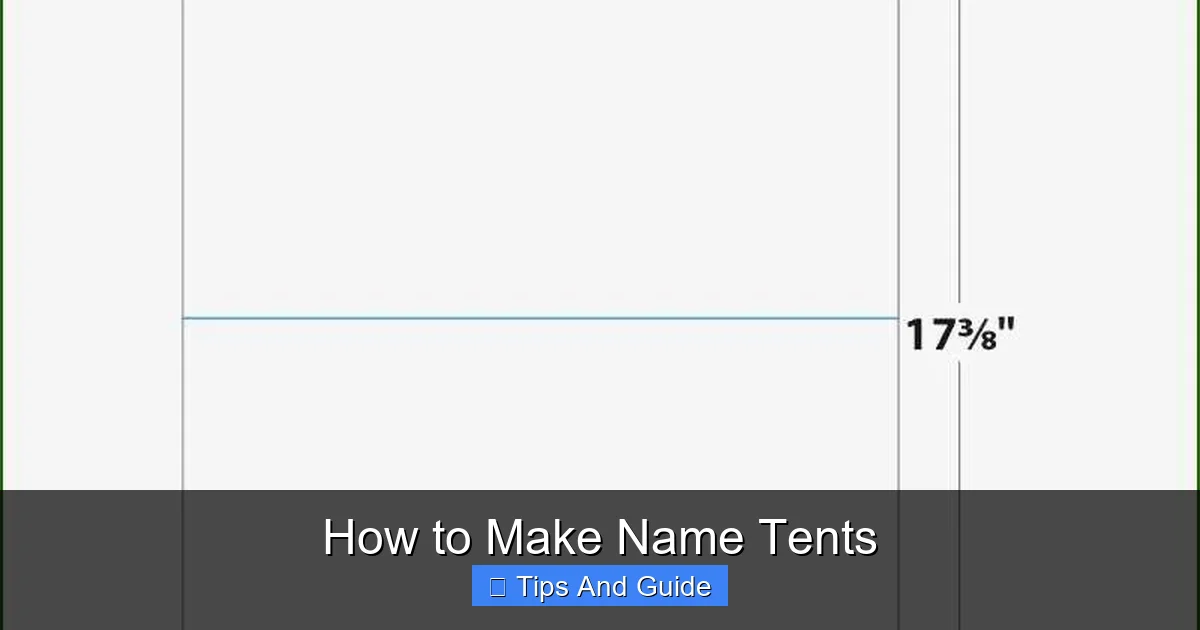
Standard name tents are often made from a half-sheet of letter-sized paper (8.5″ x 11″). This means you’ll cut the paper in half to 8.5″ x 5.5″. When folded, this creates a tent that is 4.25″ wide and 5.5″ tall. This size is usually generous enough for a name and potentially a title or company.
If you want smaller tents, you can adjust. For instance, you could start with A4 paper or a smaller card size and adjust your cuts accordingly.
### Layout and Font Choice
This is where readability is king.
* Font: Choose a clear, legible font. Sans-serif fonts like Arial, Calibri, or Helvetica are usually excellent choices for modern events. Serif fonts can also work if they are clean and not overly decorative. Avoid script fonts or highly stylized fonts that are hard to read from a distance.
* Font Size: Make the font large enough. For a 4.25″ wide tent, a font size between 18 and 30 points is generally a good starting point, depending on the font and how much text you have. Test it!
* Text Placement: Center the name. If you’re including a company or title, place it below the name, perhaps in a slightly smaller font size.
* White Space: Don’t overcrowd the tent. Ample white space around the text makes it easier to read and gives a more polished look.
* Color: If you’re printing on colored cardstock, ensure your text color has good contrast. Black or dark blue text on white or light-colored cardstock is classic. White text on dark cardstock can also look very stylish.
### Adding Logos or Graphics
If you have a logo or specific branding, you can incorporate it.
* Placement: Place the logo either above or below the name, or perhaps subtly on one of the side panels.
* Size: Keep the logo relatively small so it doesn’t overpower the name.
* Color: Ensure the logo colors work well with your overall design and cardstock color.
### Creating a Template
It’s highly recommended to create a template in your chosen software.
1. Set your document page size to match your final cut paper size (e.g., 8.5″ x 5.5″).
2. Design your tent layout. Remember that the final tent will be folded in half. If you want text to appear on both sides of the folded tent, you’ll need to design for that.
3. A common layout is to have the name on one side of the folded tent and perhaps a company logo or event title on the other.
4. Save your template. This is especially useful if you have many names to print.
## Step 3: Printing Your Name Tents
Once your design is ready, it’s time to print.
### Paper Orientation
* Set your printer to print in “Landscape” orientation if your design is wider than it is tall, or “Portrait” if it’s taller than it is wide. For the common 8.5″ x 5.5″ cut size, you will likely be printing on a full 8.5″ x 11″ sheet with two name tents per sheet. So, if your design for one tent is 4.25″ wide and 5.5″ tall, you’ll arrange two of these side-by-side on an 8.5″ x 11″ document set to landscape.
### Print Settings
* Paper Type: Select the appropriate paper type setting in your printer’s properties. If you’re using cardstock, choose the “Cardstock” or “Heavy Paper” setting. This ensures the printer feeds the paper correctly and uses the right amount of ink.
* Print Quality: Set your printer to its highest quality setting for the best results, especially if you have logos or graphics.
### Printing Names
If you have a long list of names, you can use mail merge functionality in programs like Microsoft Word or Google Docs.
1. Create a spreadsheet or table with a column for each piece of information you want on your name tent (e.g., “Name,” “Company”).
2. Link this data to your name tent template.
3. Your software will then generate a document with each name tent populated with the correct details.
4. Print this document.
## Step 4: Cutting and Scoring
Precision is key at this stage to ensure your name tents stand up correctly.
### Cutting the Paper
1. Prepare: Place your printed sheet (8.5″ x 11″ for the common size) onto your paper trimmer or cutting mat.
2. Measure and Mark: If you’re cutting an 8.5″ x 11″ sheet into two 8.5″ x 5.5″ pieces, you’ll need to cut it exactly down the middle lengthwise. Measure 5.5 inches from one of the 8.5-inch edges and mark a light pencil line if needed. Ensure your line is perfectly straight.
3. Cut: Using your paper trimmer, make a clean, straight cut along your measured line. If using scissors, carefully follow your line. Repeat for all sheets.
### Scoring the Fold Line
1. Identify the Fold: The fold line will be exactly in the middle of the width of your cut piece. For an 8.5″ x 5.5″ piece, the fold line will be at the 4.25-inch mark along the 8.5-inch edge.
2. Position: Place your cut name tent piece flat. Align your ruler along the line where you want the fold to be.
3. Score: Take your scoring tool (bone folder, butter knife, etc.) and firmly run it along the ruler’s edge. Apply enough pressure to create an indentation in the paper without tearing it. This indentation will guide your fold.
4. Repeat: Score all your name tents.
## Step 5: Folding and Assembling
This is the final step where your name tents take shape.
### Folding the Tents
1. Align: Carefully fold the name tent along the scored line.
2. Crease: Use your bone folder or the edge of your ruler to firmly crease the fold. This makes the tent stand up much better. You want a sharp, defined crease.
3. Check Stability: Once creased, set the tent on a flat surface to ensure it stands up on its own without wobbling or falling over.
### Optional: Adding Stability
Sometimes, even with scoring, very thin cardstock might be a bit flimsy.
* Thicker Cardstock: If you find your tents are wobbly, consider using even heavier cardstock for future projects.
* Reinforcement: For very large events where stability is paramount, some people might glue a small, thin strip of cardboard to the inside bottom edge of the tent. However, this is rarely necessary with good quality cardstock and proper scoring.
## Practical Tips and Examples
* Color Coordination: Match your cardstock color to your event theme or company branding for a cohesive look.
* Two-Sided Design: Consider having different information on each side of the folded tent. For example, a speaker’s name and title on one side, and the event logo and date on the other.
* Classroom Use: For younger students, use larger fonts and maybe even a simple graphic or outline they can color in. This can be a fun activity!
* Virtual Events: Even for virtual events, name tents can be useful for those attending from their home offices, providing a professional backdrop.
* Testing is Crucial: Before you print hundreds of name tents, print and assemble just one or two. Place them on a table and view them from different angles and distances. Check for readability and stability. This is your chance to make adjustments to font size or design before committing.
* Bulk Printing: If you need a large quantity, look into professional printing services. They can often handle the printing and cutting for you, especially if you provide a digital file.
## Troubleshooting
* Wobbly Tents: Ensure you are scoring deeply enough and creasing the fold sharply. Using heavier cardstock is the best solution.
* Ink Smudging: If using an inkjet printer and the ink smudges when you handle the cardstock, allow ample drying time. Consider using a laser printer if available, as its toner is usually more durable. Using cardstock with a slight texture can also help prevent smudging.
* Uneven Cuts: A paper trimmer is your best friend here. If using scissors, try to cut slowly and steadily.
* Font Not Showing Up: Double-check your printer settings for paper type and quality. Ensure you haven’t accidentally set it to draft mode.
## Conclusion
Making name tents is a rewarding and practical DIY project. By following these steps, you can create professional, functional, and attractive name tents that enhance any event or setting. From choosing the right cardstock to ensuring your text is perfectly readable, each step contributes to a polished final product. So, gather your supplies, get creative with your designs, and enjoy the satisfaction of making your own custom name tents! They are a small detail that can make a big difference in how organized and welcoming your event feels.
If you’re looking for more ways to enhance your event setup, consider exploring options like the best camping furniture for tents or ensuring you have the right accessories such as the best camping mats for tents.
Key Takeaways
- Materials Matter: Selecting the right cardstock or paper is crucial for sturdy and attractive name tents.
- Design for Readability: Choose clear, large fonts and sufficient spacing to ensure names are easily visible from a distance.
- Precise Folding is Key: Accurate scoring and folding create professional-looking, stable name tents.
- Customization Adds Flair: Incorporate logos, colors, or simple decorations to personalize your name tents.
- Test Before Mass Production: Always create a few sample name tents to check legibility and structure before making many.