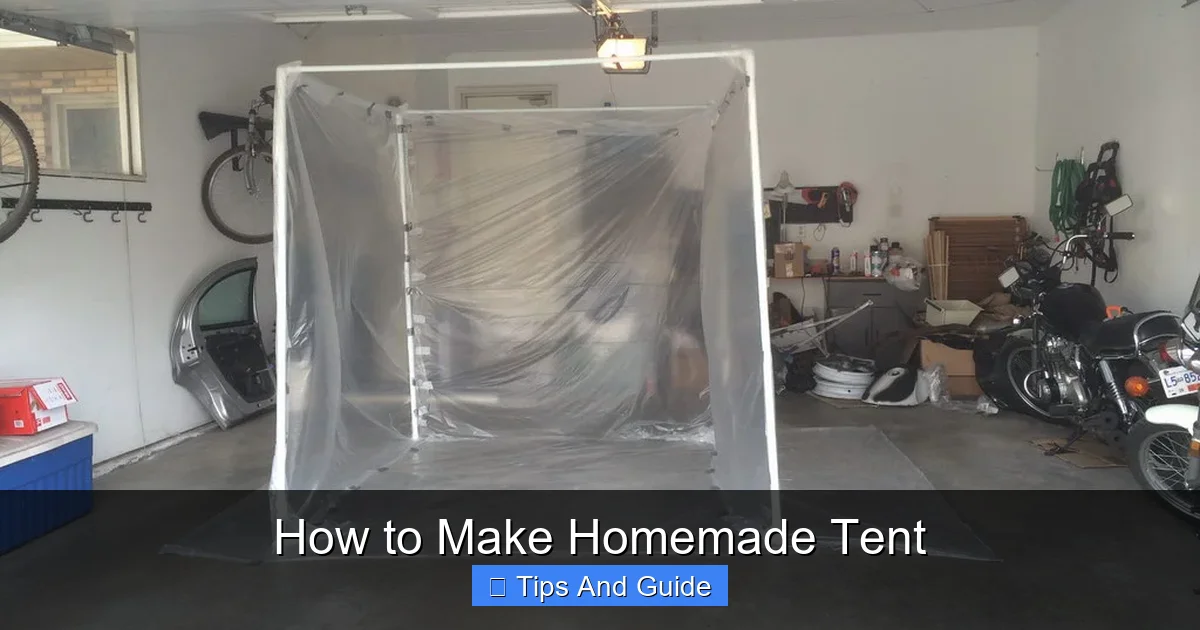
How to Make Homemade Tent
Discover how to build your very own homemade tent with this comprehensive guide. We’ll walk you through selecting materials, designing your structure, and assembling it step-by-step, making it a fun and rewarding project. Perfect for camping adventures or imaginative play, this guide empowers you to create a custom shelter tailored to your needs.
Dreaming of a camping trip but don’t have the perfect tent? Or maybe you want a unique play structure for the backyard? Building your own homemade tent might sound like a daunting task, but it’s a surprisingly achievable and incredibly rewarding project. In this guide, we’ll take you through everything you need to know to create your very own custom tent, from choosing your materials to the final stitch. Get ready to unleash your inner builder and craft a shelter that’s as unique as you are!
Making a homemade tent is a fantastic way to save money, customize your camping gear, or simply enjoy a fun DIY project. It’s a chance to be creative and build something functional with your own hands. This guide will break down the process into simple, manageable steps, making it accessible even for those with minimal sewing experience. We’ll cover basic designs, essential tools, and tips for ensuring your tent is both durable and comfortable.
## Designing Your Homemade Tent
The first step in making a homemade tent is to decide what you want it to be. This involves thinking about its purpose, size, and the overall shape.
### 1. Determine the Purpose and Size
* **Camping:** If your tent is for camping, consider how many people it needs to accommodate. Think about the typical weather conditions you’ll encounter. Do you need space for gear? A larger tent might be comfortable, but it will also be heavier and take up more space. For backpacking, portability is key.
* **Backyard Play:** For a play tent, size is less critical, and you can be more creative with shapes. Durability against weather might be less of a concern, but safety is paramount.
* **Other Uses:** Perhaps you need a simple shelter for a garden project or an outdoor event.
Once you have a purpose, decide on the dimensions. Measure the space where you plan to set it up. Sketch out a rough design, noting the desired length, width, and height.
### 2. Choose a Tent Design
For a first-time builder, simpler designs are best. Here are a few popular and easy-to-construct options:
* **A-Frame Tent:** This is the classic tent shape, resembling the letter “A.” It’s straightforward to build and offers good stability. It typically consists of two sloping sides meeting at a ridge.
* **Lean-To Tent:** This design is even simpler, with one large sloping side supported by poles and possibly one or two vertical walls. It’s great for temporary shelter or as an addition to another structure.
* **Dome Tent:** While more complex to sew and set up, dome tents are very stable in wind. This might be a project for those with more sewing experience.
For this guide, we’ll focus on building a basic A-frame tent, as it’s a great starting point.
## Gathering Your Materials and Tools
Having the right materials and tools makes the entire process smoother and leads to a better final product.
### 1. Fabric Selection
The fabric is the most important component of your tent. You need something durable, waterproof or water-resistant, and ideally, breathable.
* **Ripstop Nylon or Polyester:** These are excellent choices for camping tents. They are lightweight, strong, and often treated for water resistance. Ripstop means that if a small tear occurs, the fabric is designed to prevent it from spreading.
* **Canvas:** Traditional and very durable, canvas is a good option for backyard play tents or more permanent structures. However, it’s heavy and can be prone to mildew if not dried properly. It also needs a waterproof coating.
* **Tarp Material:** Heavy-duty tarps can be a very economical and waterproof option for a simple, no-sew tent or a quick lean-to.
**Important Considerations:**
* **Waterproofing:** Look for fabrics with a polyurethane (PU) or silicone coating.
* **UV Resistance:** If your tent will be exposed to direct sunlight often, UV-resistant fabric will last longer.
* **Breathability:** While waterproofing is key, some breathability helps reduce condensation inside the tent, which can make you feel damp.
You’ll need enough fabric for the tent walls, roof, and a floor if you plan to have one.
### 2. Support Structure (Poles)
Your tent needs poles to hold its shape.
* **Tent Poles:** You can purchase pre-made tent poles made from fiberglass or aluminum. These are lightweight and durable.
* **PVC Pipes:** For backyard tents or simpler designs, PVC pipes can be a cost-effective and easy-to-cut alternative.
* **Wood:** For a more rustic or permanent structure, wooden poles can be used, but they are heavier and require sealing.
Ensure your poles are strong enough to support the weight of the fabric and withstand wind.
### 3. Other Essential Supplies
* **Stakes/Pegs:** To secure your tent to the ground. Metal or plastic stakes work well.
* **Guy Lines/Ropes:** For extra stability, especially in windy conditions.
* **Thread:** Strong, waterproof polyester thread is ideal for sewing.
* **Waterproof Sealant/Tape:** For seams and reinforcing stress points.
* **Optional: Zippers, Velcro, Buckles:** For doors and openings.
* **Optional: Mesh Fabric:** For windows or insect screening.
### 4. Tools You’ll Need
* **Sewing Machine:** A sturdy sewing machine capable of handling outdoor fabrics is highly recommended.
* **Scissors or Rotary Cutter:** For precise fabric cutting.
* **Measuring Tape:** Essential for accurate measurements.
* **Fabric Marker or Chalk:** To mark cutting and sewing lines.
* **Pins or Clips:** To hold fabric pieces together before sewing.
* **Hammer or Mallet:** For driving stakes into the ground.
* **Drill (if using PVC pipes):** To create holes for pole connections.
## Step-by-Step: Building Your A-Frame Tent
Let’s get building! This guide assumes you’re making a simple A-frame tent.
### Step 1: Prepare Your Fabric
1. **Measure and Cut:** Based on your design sketch, lay out your fabric. Carefully measure and mark your cutting lines. For an A-frame, you’ll typically need two large rectangular or trapezoidal pieces for the main sides, and smaller pieces for the front and back ends. If you’re adding a floor, cut that piece to the desired dimensions.
* Tip: Always add a few extra inches to your measurements for seam allowances and hems. It’s better to have a little extra fabric than to be short.
2. **Hem Edges:** Fold over the raw edges of your fabric pieces twice (about 1/2 inch each time) and stitch them down. This creates a clean, durable hem that prevents fraying. This is especially important for the bottom edges of the tent.
3. **Reinforce Stress Points:** Areas where poles will connect or where guy lines will attach should be reinforced. You can do this by sewing on extra patches of fabric.
### Step 2: Construct the Main Body
1. **Sew the Sides Together:** Lay your two main tent side pieces flat. If your design has a peak, you’ll sew them together along what will be the ridgeline. If you’re creating separate panels, you’ll sew them at angles later.
* Tip: Use a strong, waterproof thread and a longer stitch length for outdoor fabrics.
2. **Add the Front and Back Panels:** Attach the pre-cut front and back panels to the main body. This is where you’ll decide on your entrance. You can leave one end open or create a simple flap closure with Velcro or ties.
3. **Integrate the Floor (Optional):** If you’re adding a floor, it will typically be sewn to the bottom edges of the main tent walls. Ensure this seam is waterproof.
### Step 3: Incorporate Pole Sleeves or Loops
You need a way to insert your poles.
* **Pole Sleeves:** For an A-frame, you’ll likely create long fabric “sleeves” along the ridgeline and possibly along the bottom edges where the poles will slide through. These sleeves are made by folding and sewing long strips of fabric to the inside of your tent panels. Make sure the sleeves are slightly larger than your poles to allow for easy insertion.
* **Webbing Loops:** Alternatively, you can sew strong webbing loops at intervals along the seams where poles will rest. This is a simpler option if you plan to use poles that rest on the outside or are supported by external guy lines.
### Step 4: Add Ventilation and Waterproofing
* **Ventilation:** Consider adding mesh windows or vents, especially at the top of the tent, to allow for airflow and reduce condensation. Cover these with flap openings if you need to seal them against rain.
* **Seam Sealing:** Once the tent is assembled, it’s crucial to seal all the seams. You can use a specialized seam-sealing tape designed for outdoor gear or a liquid seam sealer. Apply it generously to all stitched seams, both inside and out. This is vital for preventing leaks.
### Step 5: Prepare for Setup
1. **Attach Grommets or Loops for Stakes:** Along the bottom hem of your tent, and at strategic points on the sides and corners, attach grommets or sturdy webbing loops. These are where you’ll attach your stakes to anchor the tent to the ground.
2. **Attach Guy Line Attachment Points:** At the top corners and along the sides of the tent, sew on reinforced loops or attach additional grommets for your guy lines. These will connect to ropes that help stabilize the tent against wind.
## Setting Up Your Homemade Tent
Now for the exciting part – seeing your creation stand on its own!
### 1. Choose a Suitable Location
* **Flat Ground:** Find a level spot to pitch your tent. This will make sleeping more comfortable and prevent water from pooling.
* **Away from Hazards:** Avoid setting up directly under dead trees or branches that could fall. Stay clear of steep slopes or areas prone to flooding.
* **Consider the Sun and Wind:** Think about where the sun will rise and set to manage temperature. Position your tent to take advantage of natural windbreaks if possible.
### 2. Assemble the Tent
1. **Insert Poles:** Carefully slide your tent poles through the prepared sleeves or attach them to the loops. For an A-frame, you’ll likely have a main ridgeline pole and possibly poles for the front and back.
2. **Raise the Tent:** With the poles in place, gently lift and position the tent.
3. **Stake It Down:** Secure the bottom of the tent to the ground using your stakes through the grommets or loops. Start with the corners and work your way around.
4. **Attach Guy Lines:** Extend the guy lines from their attachment points and secure them to the ground with additional stakes, pulling the tent taut. This step is crucial for stability.
### 3. Interior Comforts
Once your tent is up, you can make it comfortable. Consider adding a groundsheet for extra protection and insulation. For sleeping, a good sleeping pad or cot is essential. You can explore options like the best camping mattress for tent or the best camping mat for tent to ensure a restful night. Don’t forget about lighting; a good camping light for tent can make a big difference.
## Troubleshooting Common Issues
Even the best-made tents can encounter problems. Here are a few common issues and how to address them:
* **Leaks:** If you notice leaks after setup, the most common culprits are unsealed seams or minor holes. Reapply seam sealer to suspect areas. For small holes in the fabric, use fabric repair tape.
* **Sagging Fabric:** If the tent fabric is sagging, your poles might not be properly secured, or your guy lines aren’t taut enough. Ensure poles are fully inserted and guy lines are well-tensioned.
* **Condensation:** This is a common issue in any tent, especially in humid or cold conditions. Ensure your ventilation is adequate. If possible, open vents slightly, even in light rain. Avoid breathing directly onto the tent walls.
* **Struggling with Setup:** If setting up is consistently difficult, review the design of your pole sleeves or attachment points. Ensure they are large enough and that the poles aren’t getting snagged.
## Conclusion
Creating a homemade tent is a fulfilling project that can result in a functional, personalized shelter for your adventures or imaginative play. By carefully selecting your materials, planning your design, and following these step-by-step instructions, you can build a tent that suits your needs perfectly. Don’t be afraid to experiment and adapt the design to your own creativity. With a bit of effort, you’ll have a unique tent that you can be proud of, ready for countless memories under the stars or in the backyard. Happy building!
Key Takeaways
- Understand the Basics: Before you start, it’s important to have a clear idea of the tent’s purpose, size, and the materials you’ll need.
- Choose the Right Materials: Selecting durable, waterproof, and lightweight fabrics is crucial for a functional and long-lasting tent.
- Design for Simplicity and Stability: A simple A-frame or lean-to design is often easiest for beginners, focusing on sturdy poles and secure guy lines.
- Prioritize Waterproofing and Ventilation: Ensure your tent can withstand the elements while also allowing for airflow to prevent condensation.
- Practice Assembly and Disassembly: Getting familiar with how your homemade tent goes up and comes down will make setup much smoother.
- Safety First: Always supervise children during construction and use, and ensure the tent is set up in a safe location, away from hazards.