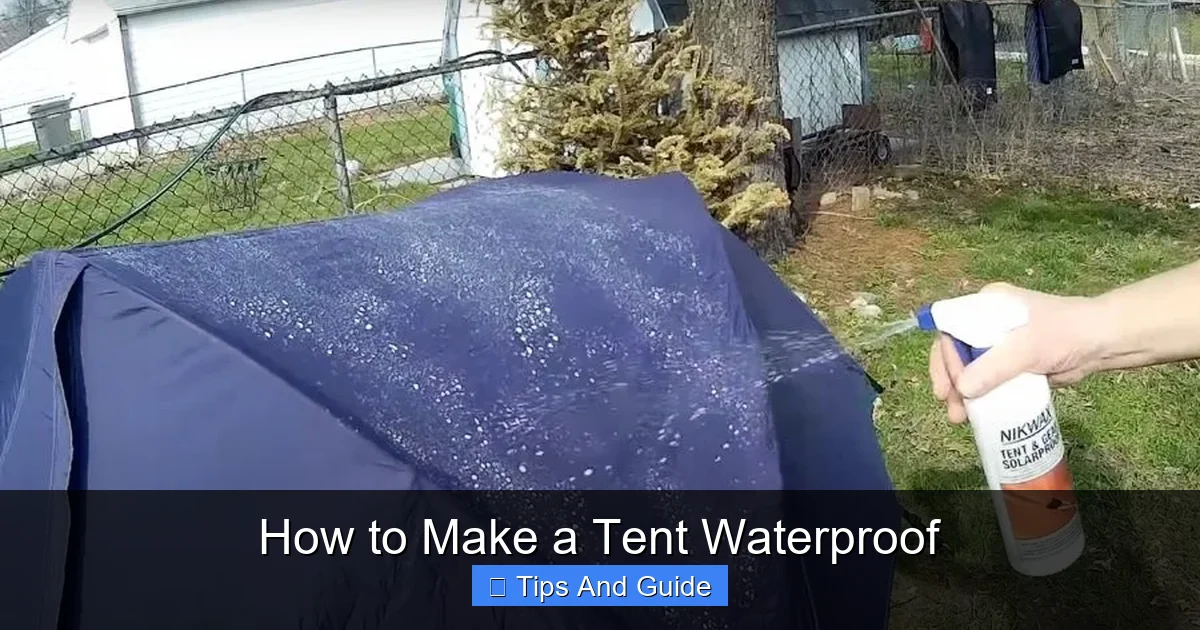
How to Make a Tent Waterproof
Don’t let rain ruin your camping trip! This guide provides a detailed walkthrough on how to make your tent waterproof, ensuring you stay dry and comfortable outdoors. We cover everything from essential cleaning and inspection to applying seam sealers and waterproof sprays. By following these steps, you can significantly extend the life and performance of your tent, making it a reliable shelter in any weather.
# How to Make a Tent Waterproof
There’s nothing worse than waking up in a puddle inside your tent. Rain and moisture can quickly turn a fun camping adventure into a soggy, miserable experience. Fortunately, most tents are designed with water resistance in mind, but over time, their waterproofing capabilities can diminish. This guide will walk you through everything you need to know about how to make a tent waterproof, ensuring you stay dry and comfortable on your next outdoor excursion. We’ll cover inspection, cleaning, seam sealing, and re-waterproofing techniques so you can confidently face any weather.
## Why Your Tent Needs Waterproofing
Even the best tents aren’t inherently waterproof forever. The fabrics used, like nylon and polyester, are often treated with a Durable Water Repellent (DWR) coating. This coating causes water to bead up and roll off the fabric. However, this DWR layer degrades with use, exposure to UV rays, and improper cleaning. Additionally, seams are stitched, creating tiny holes that can allow water to seep through, especially under pressure from rain or wind. Making your tent waterproof is about maintaining and restoring these protective layers and sealing potential entry points for moisture.
## Step 1: Inspect Your Tent for Damage
Before you start applying any treatments, it’s essential to know what you’re working with. A thorough inspection will reveal any existing damage that needs addressing. This step is crucial for effective waterproofing.
### Inspect the Fabric
* **Look for Tears and Holes:** Carefully examine the entire tent fly, inner tent, and floor for any rips, punctures, or abrasions. Pay close attention to high-stress areas like pole sleeves and guy-out points.
* **Check for Fading or Wear:** Significant fading, especially on the fly, can indicate that the fabric is degrading and its DWR coating is likely gone.
* **Feel for Fragility:** Gently touch the fabric. If it feels stiff, brittle, or overly dry, it may be nearing the end of its lifespan, and waterproofing might only be a temporary fix.
### Inspect the Seams
* **Run Your Fingers Along Seams:** Feel for any loose threads, gaps, or areas where the seam tape (if present) is peeling away.
* **Check for Leaks:** If you have a hose, lightly spray the tent (outdoors) and look for water seeping through the seams.
### Inspect Zippers and Other Components
* **Test Zippers:** Ensure all zippers function smoothly. Damaged zippers can let in rain.
* **Examine Guy Lines and Stakes:** Check for wear and tear. While not directly related to waterproofing the tent fabric, they are vital for setting up your tent correctly to shed water.
## Step 2: Clean Your Tent
A clean tent is a happy tent, and more importantly, a receptive tent for waterproofing treatments. Dirt, mud, and even sunscreen residue can prevent sealants and sprays from adhering properly.
### Gather Your Cleaning Supplies
You’ll need:
* A bucket or tub
* Lukewarm water
* Mild, non-detergent soap (like Nikwax Tech Wash or Grangers Performance Wash) or a very gentle dish soap. **Avoid harsh detergents or bleach**, as they can strip the DWR coating and damage the fabric.
* A soft sponge or cloth
* A hose with a gentle spray setting
### Cleaning the Tent
1. **Set Up Your Tent (or Large Area):** If possible, set up your tent in a clear outdoor space. This allows for easier access to all surfaces. If not, you can lay the components flat.
2. **Rinse Thoroughly:** Start by rinsing the tent with cool water to remove loose dirt and debris.
3. **Prepare the Cleaning Solution:** Fill your bucket with lukewarm water and add a small amount of your chosen mild soap.
4. **Wash Gently:** Using a soft sponge or cloth dipped in the soapy water, gently wipe down the tent fabric. Focus on stained areas but avoid aggressive scrubbing, which can damage the fabric or coating.
5. **Rinse, Rinse, Rinse!** This is a critical step. Thoroughly rinse the tent with the hose, ensuring all soap residue is removed. Soap left behind can attract dirt and reduce the tent’s breathability. Continue rinsing until the water runs clear.
6. **Clean the Floor Separately:** The tent floor often collects the most dirt. You might need to gently scrub it more, but always be mindful of the fabric’s integrity.
## Step 3: Dry Your Tent Completely
This is arguably the most important step before applying any waterproofing treatments. A damp tent will not accept sealants or sprays effectively, and trapping moisture can lead to mildew growth.
### Air Dry Thoroughly
* **Hang or Drape:** The best way to dry a tent is to hang it up or drape it over multiple lines in a well-ventilated area, out of direct sunlight. Direct sun can degrade fabric over time.
* **Unzip Everything:** Open all zippers and vents to allow air to circulate throughout the tent.
* **Be Patient:** Depending on humidity and temperature, this can take 24-48 hours or even longer. Check for any remaining dampness, especially in seams and corners. You can use a fan to help circulate air.
* **Never Machine Dry:** Do not put your tent in a washing machine dryer. The heat and tumbling action can severely damage the fabric, poles, and coatings.
## Step 4: Seal the Seams
Tent seams are notorious for being weak points. Even with factory-applied seam tape, wear and tear can lead to leaks. Seam sealing creates a waterproof barrier.
### Choose the Right Seam Sealer
There are two main types of seam sealers:
* **Silicone-based sealers:** Best for silicone-coated fabrics. They are flexible and durable.
* **Polyurethane-based sealers:** Best for PU-coated fabrics. They are typically water-based and easier to clean up.
**Always check the manufacturer’s recommendations for your tent or consult the product label** to ensure compatibility. If you have a tent with a DWR coating, a silicone-based sealer is often a good choice as it won’t damage the DWR.
### How to Apply Seam Sealer
1. **Ensure the Tent is Dry and Clean:** Reiterate this important point.
2. **Apply in a Well-Ventilated Area:** Seam sealers can have strong fumes.
3. **Work in Sections:** It’s easier to manage and apply the sealer evenly if you work on one seam at a time.
4. **Apply a Thin, Even Coat:**
* **For liquid sealers:** Use the applicator brush provided or a small paintbrush. Apply a thin, even layer directly to the seam from the inside of the tent. Ensure it covers the stitching completely. Avoid applying too much, as it can become gummy or peel.
* **For tape:** If your factory seam tape is peeling, you might need to remove the old tape (carefully!) and apply new seam-sealing tape according to its instructions.
5. **Allow to Dry:** Let the seam sealer dry completely according to the product’s instructions. This can take several hours. The sealer should become clear or slightly hazy and no longer tacky.
6. **Repeat if Necessary:** For critical seams or if you notice any missed spots, a second thin coat may be beneficial after the first is dry.
**Tip:** For older tents, you might find that applying seam sealer to the outside of the seams also helps. However, always test on an inconspicuous area first.
## Step 5: Re-waterproof the Fabric (DWR Treatment)
The DWR coating on your tent’s fabric wears off over time. Reapplying it will make water bead up and roll off again, enhancing its overall water resistance.
### Choose a Waterproofing Treatment
There are several types of treatments available:
* **Waterproofing Sprays:** These are the most common and easiest to use. They are designed to replenish or add a DWR coating to the fabric. Brands like Nikwax, Grangers, and Gear Aid offer excellent options.
* **Wash-in Treatments:** These are added to the washing machine during the cleaning process. They can be effective but might require more thorough rinsing to prevent residue.
**Again, always check your tent’s material and the product recommendations** to choose the most suitable treatment. Some treatments are specifically for nylon, polyester, or canvas.
### How to Apply Waterproofing Spray
1. **Ensure the Tent is Clean and Dry:** Make sure there’s no soap residue.
2. **Set Up Your Tent or Lay Components Flat:** This allows for even application. You can do this outdoors.
3. **Read Product Instructions Carefully:** Each product has specific application guidelines.
4. **Spray Evenly:** Hold the spray bottle at the recommended distance (usually 6-8 inches) and apply a continuous, even coat over the entire outer surface of the tent fly and any other treated surfaces (like the rainfly). Don’t over-saturate the fabric.
5. **Work in Sections:** Similar to seam sealing, this helps ensure you don’t miss any spots.
6. **Allow to Air Dry:** Let the tent air dry completely. This process can take 24-48 hours.
7. **Activate the DWR (Optional but Recommended):** Some DWR treatments require heat to fully activate their performance. Check the product instructions. This might involve tumble drying on a low heat setting (if the fabric can tolerate it) or leaving the tent in the sun for a period.
**Internal Link Integration:**
* If you’re looking for a tent that already offers excellent water resistance, you might want to explore options for the best pop-up tent waterproof models available.
* For campers on a budget, understanding how to waterproof your existing tent is also key, complementing your search for the best budget waterproof tent.
## Step 6: Proper Drying and Storage
How you dry and store your tent between uses significantly impacts its lifespan and waterproof performance.
### Drying After Every Use
* **Always Dry Thoroughly:** Even if it didn’t rain, dew can make a tent damp. Always dry your tent completely before packing it away.
* **Air it Out:** If you can’t dry it fully, at least unpack it and hang it up to air out as soon as you get home.
### Storage
* **Cool and Dry Place:** Store your tent in a cool, dry environment, away from direct sunlight and extreme temperatures. Avoid storing it in damp basements or garages where mold and mildew can thrive.
* **Loosely Packaged:** Don’t store your tent tightly compressed in its stuff sack for long periods. This can damage the fabric and coatings. Store it loosely in a breathable bag or a larger mesh sack.
* **Check Before Storing:** Ensure there are no food crumbs or debris that could attract pests.
## Troubleshooting Common Waterproofing Issues
### Water Still Seeps Through After Treatment
* **Insufficient Application:** You might not have applied enough seam sealer or waterproofing spray. Consider a second application.
* **Fabric Degradation:** If the tent fabric itself is old and worn, even the best treatments might only offer temporary relief.
* **Incorrect Product:** You may have used a product incompatible with your tent’s material.
### Seam Sealer Peels Off
* **Improper Surface Prep:** The surface might not have been clean and dry, or you may have used a cleaner that left residue.
* **Wrong Type of Sealer:** Using a solvent-based sealer on a fabric with a delicate coating can cause it to lift.
* **Too Thick Application:** Applying the sealer too thickly can cause it to become brittle and peel.
### Mold or Mildew Growth
* **Insufficient Drying:** This is almost always due to storing the tent while still damp.
* **Improper Storage Location:** Storing in a humid environment.
* **Remediation:** For minor mold spots, try cleaning with a mild soap solution or a specialized tent cleaner. For severe cases, it might be difficult to fully remove and could compromise the fabric.
## Conclusion
Keeping your tent waterproof is an achievable task with the right knowledge and a little effort. By regularly inspecting, cleaning, sealing seams, and reapplying DWR treatments, you can ensure your tent provides reliable shelter from the elements for years to come. Investing time in these maintenance steps will pay off in dry, comfortable nights spent under the stars, no matter what the weather throws at you. Happy camping!
Key Takeaways
- Inspect Your Tent Thoroughly: Before any waterproofing efforts, a detailed inspection is crucial to identify tears, holes, or worn seams that compromise its water resistance.
- Clean Your Tent Properly: Dirt and grime can hinder the effectiveness of waterproofing treatments. A gentle cleaning ensures the fabric is ready to accept sealants and sprays.
- Seam Sealing is Essential: Tent seams are common leak points. Applying a dedicated seam sealer creates a waterproof barrier where stitches have created tiny holes.
- Re-waterproof the Fabric: Over time, the original DWR (Durable Water Repellent) coating on tent fabric wears off. Reapplying this coating or using a waterproofing spray is vital.
- Consider the Tent Type: Different tent materials and designs may require specific waterproofing methods and products for optimal results.
- Proper Drying and Storage: After any treatment, allowing the tent to dry completely and storing it in a cool, dry place is key to maintaining its waterproof capabilities.