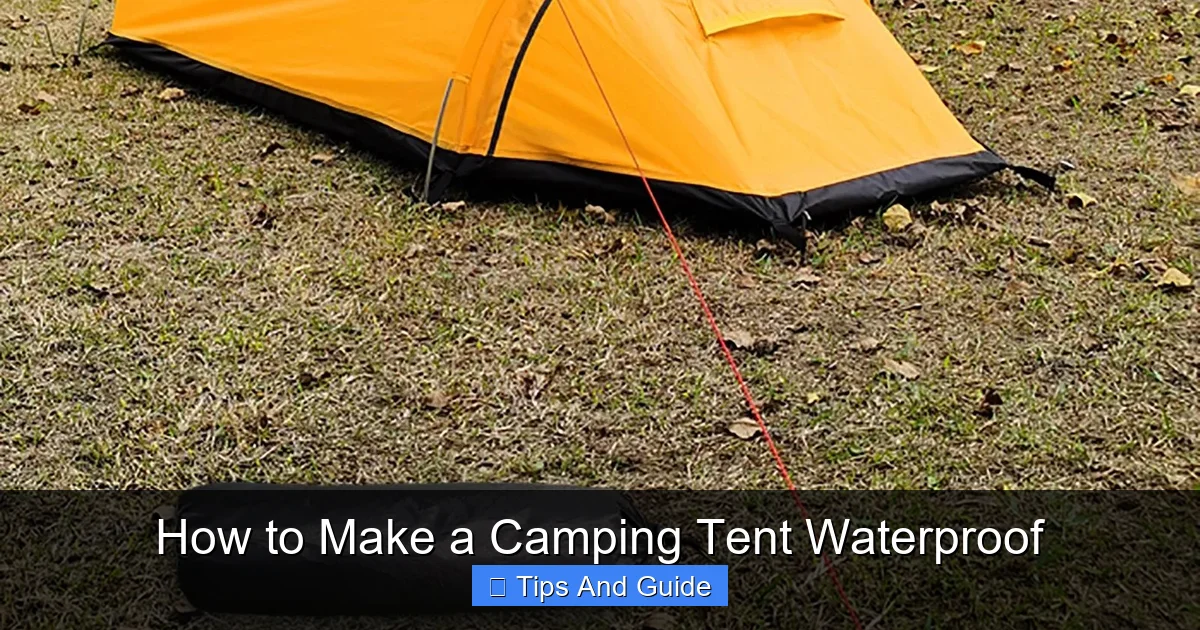
How to Make a Camping Tent Waterproof
Don’t let rain ruin your camping trip! This guide offers a complete breakdown of how to make your camping tent waterproof. We’ll cover everything from choosing the right waterproofing treatments and applying them correctly to maintaining your tent’s water-repellent qualities over time. With these steps, you can ensure your shelter stays dry and comfortable, no matter the weather.
# How to Make a Camping Tent Waterproof
There’s nothing quite like the feeling of being out in nature, surrounded by the beauty of the outdoors. However, a sudden downpour can quickly turn a dream camping trip into a damp, miserable experience. The key to staying comfortable and dry is a waterproof tent. While many tents come with some level of water resistance, their effectiveness can diminish over time or they might not be sufficient for heavy rain. Fortunately, you don’t need to buy a new tent to ensure you stay dry. This comprehensive guide will walk you through everything you need to know about how to make a camping tent waterproof, from basic maintenance to advanced treatments.
Whether you have a brand-new tent or an old trusty companion, following these steps will help you achieve and maintain optimal waterproofing, ensuring many more dry and enjoyable camping adventures. We’ll cover cleaning, seam sealing, applying waterproofing treatments, and essential maintenance tips.
## Understanding Your Tent’s Waterproofing
Before we dive into the “how-to,” it’s important to understand what makes a tent waterproof and why its effectiveness might decrease.
* Fabric Coatings: Most modern tents are made from synthetic fabrics like nylon or polyester. These fabrics are often coated with a waterproof and breathable membrane, commonly polyurethane (PU) or silicone (silnylon). This coating is what prevents water from seeping through.
* Durable Water Repellent (DWR): In addition to the main coating, tents usually have a DWR finish applied to the exterior. DWR causes water to bead up and roll off the fabric, preventing it from soaking in and weighing down the material. DWR is the first line of defense against light rain and dew.
* Seams: Even the best waterproof fabric will leak if the seams are not properly sealed. Tents are typically constructed by stitching panels together, which creates tiny holes along the seams. These holes are usually taped on the inside or treated with a sealant.
* Wear and Tear: Over time, UV exposure, abrasion from the ground, repeated folding and unfolding, and environmental contaminants can degrade both the fabric coating and the DWR finish. This is why tents eventually lose their waterproof capabilities.
Knowing these basics will help you appreciate the importance of each step in making your tent waterproof.
## Step 1: Thoroughly Clean Your Tent
You can’t effectively waterproof a dirty tent. Dirt, grime, sunscreen, bug spray, and other residues can prevent waterproofing treatments from adhering to the fabric and can even clog the pores of breathable membranes. A clean tent is the foundation for good waterproofing.
### Cleaning the Tent Body and Fly
This is the most important first step. If you are planning on re-waterproofing your tent, a thorough cleaning is essential.
Materials You’ll Need:
- Mild, non-detergent soap (e.g., Nikwax Tech Wash, Grangers Performance Wash, or a very mild dish soap like Dawn, used sparingly)
- Lukewarm water
- Soft sponge or cloth
- Clean water source for rinsing
- A large area to work (like a clean driveway or a spacious room)
Instructions:
- Set Up Your Tent (or lay out components): It’s easiest to clean the tent when it’s partially or fully set up. If you can’t set it up, lay out the fly and inner tent separately on a clean surface.
- Prepare the Cleaning Solution: Mix a small amount of mild soap with lukewarm water in a bucket. Avoid using harsh detergents, bleach, or fabric softeners, as these can strip away existing DWR treatments and damage the fabric.
- Gently Wash the Tent: Using a soft sponge or cloth dipped in the soapy water, gently wipe down the exterior of the tent fly and the inner tent walls. Pay attention to areas that are particularly dirty, like the base or around vents.
- Rinse Thoroughly: This is critical. Rinse the tent with clean water multiple times. Ensure all soap residue is gone. Soap residue can interfere with the waterproofing treatment and attract dirt. Let the water run off the tent.
- Allow to Air Dry Completely: Hang the tent components (fly, inner, poles, stakes) in a well-ventilated area, away from direct sunlight, until they are bone dry. This might take 24-48 hours depending on humidity. Do not pack away a damp tent, as this can lead to mildew.
### Cleaning the Tent Floor
The tent floor often gets the dirtiest and can be prone to mildew if not cleaned properly.
Instructions:
- Scrape Off Excess Dirt: Use a stiff brush to remove any dried mud or debris.
- Wipe Down: Use a damp cloth with a tiny bit of mild soap to wipe down the floor.
- Rinse and Dry: Rinse the cloth thoroughly and wipe again to remove soap. Ensure the floor is completely dry before proceeding.
## Step 2: Inspect and Seal the Seams
Seams are the Achilles’ heel of any tent. Even with the best fabric, water will find its way through the tiny holes created by stitching. Seam sealing is a crucial step in making your camping tent waterproof.
### Identifying Seams That Need Sealing
Examine all the seams on your tent fly and floor. Look for:
- Tears or peeling tape.
- Areas where the sealant looks dry, cracked, or is missing.
- Any stitch holes that appear to be exposed.
### Applying Seam Sealer
Materials You’ll Need:
- Seam sealer (available in liquid or tape form. Liquid is generally easier for home application. Ensure it’s suitable for your tent’s fabric type – check the product label.)
- Small brush or applicator (often included with liquid sealers)
- Rubbing alcohol or a clean cloth for cleaning the seams
- Painter’s tape (optional, for a neater finish)
Instructions:
- Prepare the Seams: Ensure the seams are clean and completely dry from the washing step. You can use a small amount of rubbing alcohol on a cloth to wipe down the seams, ensuring they are free of any oils or residues.
- Apply the Seam Sealer:
- For liquid seam sealers: Carefully apply a thin, even coat of the seam sealer along the stitching line. Work in small sections. Many sealers are clear or slightly milky when wet but dry clear. If your tent has a factory-applied seam tape, you might be able to apply the liquid sealer over it to reinforce it, or you may need to remove old tape first if it’s peeling significantly.
- For seam tape: If your tent has factory tape that’s peeling, you might need to carefully remove the old tape (use a hairdryer on low heat to soften the adhesive, then gently peel). Clean the seam, then apply new seam-sealing tape according to the product instructions, ensuring good adhesion. This is more tedious than liquid sealers.
- Use Painter’s Tape (Optional): For a cleaner application, you can use painter’s tape to mask off the fabric on either side of the seam, leaving only the stitch line exposed. Apply the sealer, then carefully remove the tape while the sealer is still wet.
- Allow to Cure: Let the seam sealer dry and cure completely according to the manufacturer’s instructions. This usually takes several hours to a full day. Ensure the tent is in a well-ventilated area and avoid touching the sealed seams during the curing process.
Tip: For tents with a PU-coated floor, you might need a specific floor seam sealer or a fabric repair adhesive designed for PU fabrics.
## Step 3: Apply a Waterproofing Treatment (DWR)
Once your tent is clean and its seams are sealed, it’s time to reapply or enhance the Durable Water Repellent (DWR) finish. This treatment makes water bead up and roll off the fabric, preventing the tent from getting saturated.
### Choosing the Right Waterproofing Product
There are several types of DWR treatments available. The most common are:
- Spray-on DWR: These are easy to apply and ideal for tent flies and inner tents. Brands like Nikwax, Granger’s, and Scotchgard offer excellent options.
- Wash-in DWR: These are added to your washing machine along with the tent. They can be effective but might require a separate rinse cycle to remove all residue. Best for the tent fly.
Important Considerations:
- Fabric Type: Make sure the product is suitable for your tent’s fabric (nylon, polyester, or canvas).
- Breathability: Some waterproofing treatments can affect a tent’s breathability. Look for products that are designed to maintain breathability if this is a concern for your tent.
### Applying a Spray-On DWR Treatment
Materials You’ll Need:
- Chosen spray-on DWR treatment
- Clean cloths or paper towels
- A large, well-ventilated area
Instructions:
- Ensure Tent is Dry and Clean: This is paramount. You’ve already done this in Step 1, so just double-check that it’s completely dry.
- Set Up or Lay Out Tent Components: Lay the tent fly flat or set up the tent in a well-ventilated area (outdoors is best). Protect the surrounding area from overspray.
- Apply Evenly: Hold the spray bottle about 6-8 inches away from the fabric. Apply a liberal, even coat to the exterior of the tent fly. Ensure complete coverage, but avoid over-saturating the fabric to the point of dripping heavily.
- Work in Sections: If you’re treating a large tent, work on one panel or section at a time to ensure you don’t miss any spots.
- Wipe Away Excess (if necessary): Some products recommend gently wiping away any heavy drips with a clean cloth after application, while others let it dry. Follow the product’s specific instructions.
- Allow to Air Dry: Let the tent air dry completely. This can take several hours. Avoid exposure to direct sunlight during the drying process, as it can sometimes affect the treatment.
- Second Coat (Optional): For heavily worn tents, a second light coat after the first has dried can provide extra protection.
### Applying a Wash-In DWR Treatment
Materials You’ll Need:
- Chosen wash-in DWR treatment
- Washing machine (front-loader recommended, or hand wash)
- Optional: Extra rinse aid
Instructions:
- Prepare the Washing Machine: Clean the washing machine thoroughly to remove any residual detergent or fabric softener. Run an empty cycle with just water if needed.
- Add Tent and Treatment: Place your tent fly (and possibly inner tent, depending on fabric and product) into the washing machine. Add the wash-in DWR treatment according to the product’s instructions.
- Run the Wash Cycle: Use a gentle wash cycle with cold or lukewarm water. Do not use detergent.
- Run an Extra Rinse Cycle: This is crucial to ensure all treatment is rinsed out of the machine and the tent. Use plain water for the extra rinse.
- Air Dry: Hang the tent components to air dry completely, away from direct sunlight.
Note: Wash-in treatments are generally not suitable for tent floors as they can clog the fabric’s pores if not designed for that purpose.
## Step 4: Protect the Tent Floor with a Ground Tarp (Footprint)
While the above steps make the tent itself waterproof, the tent floor is often the first point of contact with the wet ground. A waterproof ground tarp, also known as a footprint, is essential for protecting the tent floor from moisture and abrasion.
### Why Use a Footprint?
* Extra Waterproofing: It provides an additional barrier against ground moisture.
* Protection: It shields the tent floor from sharp objects, rocks, and abrasive surfaces, preventing punctures and wear.
* Cleanliness: It keeps the bottom of your tent much cleaner, making pack-up easier.
### Choosing and Using a Footprint
Considerations:
- Size: Your footprint should be slightly smaller than your tent floor. If it’s larger, it can channel water underneath your tent.
- Material: Look for a durable, waterproof material like coated nylon or polyester.
- Attachment: Some footprints have grommets or loops that connect to the tent poles or stake points to keep them in place.
How to Use:
- Lay the Footprint: Place the footprint on the ground where you intend to pitch your tent.
- Pitch Tent On Top: Pitch your tent directly on top of the footprint.
- Stake Securely: Stake down both the footprint and the tent for maximum stability and protection.
## Step 5: Proper Storage and Maintenance
Keeping your tent waterproof isn’t just about initial treatment; it’s also about ongoing care. Proper storage is vital for preserving the tent’s waterproof qualities and overall lifespan.
### Before Storing Your Tent
Always ensure your tent is:
- Clean: Brush off any dirt, leaves, or debris. If it’s dirty, wash it thoroughly as described in Step 1.
- Completely Dry: This is the most critical rule. Never store a damp tent, as it will quickly develop mildew, which is difficult to remove and can permanently damage the fabric and coatings.
### Storage Recommendations
- Store Loosely: Stuff your tent into its stuff sack or storage bag loosely. Avoid folding or rolling it the exact same way every time, as this can create permanent creases that weaken the fabric. A mesh sack is ideal for breathability.
- Cool, Dry Place: Store your tent in a cool, dry location, away from direct sunlight and extreme temperatures. Avoid storing it in a damp basement or an uninsulated garage.
- Away from Pests: Ensure your storage area is free from rodents or insects that might chew on the fabric or poles.
### Regular Inspection and Reapplication
* Before Each Trip: Inspect your tent for any signs of wear and tear, especially on seams and the floor. Check the DWR by sprinkling a little water on the fabric – if it beads up and rolls off, the DWR is still active. If it soaks in, it’s time to reapply.
* Periodically: Reapply seam sealer every few years, or as needed if you notice leaks. Reapply DWR treatment annually or bi-annually, depending on usage and climate.
## Troubleshooting Common Waterproofing Issues
* Tent Leaks Despite Treatment:
* Check Seams Again: You might have missed a spot or the sealer may have failed. Reapply.
* Fabric Wear: If the fabric itself is old and degraded, it may not hold a waterproof coating. Consider a heavy-duty waterproofing spray or replacement.
* Condensation vs. Leak: In cool, humid conditions, condensation can build up inside the tent, making it feel wet. Ensure good ventilation by opening vents and doors when possible. A good tent footprint also helps prevent ground moisture from causing condensation issues.
* Waterproofing Spray Not Working:
* Incomplete Coverage: Did you spray every inch?
* Tent Not Clean Enough: Residue prevented adhesion. Re-wash and re-treat.
* Product Expired or Incorrect: Ensure you’re using a quality product for the right fabric.
## Conclusion
Keeping your camping tent waterproof is an essential part of ensuring a comfortable and enjoyable outdoor experience. By following these steps—thorough cleaning, diligent seam sealing, careful application of waterproofing treatments, using a protective footprint, and practicing proper storage—you can significantly extend the life of your tent and guarantee that it provides reliable shelter against the elements.
Regular maintenance is key. Don’t wait until you’re caught in a downpour to discover your tent isn’t as waterproof as it used to be. A little effort before and after your camping season will pay dividends in dry nights and happy memories. So, embrace the outdoors with confidence, knowing your tent is ready for whatever the weather throws at you!
Key Takeaways
- Understand Your Tent’s Material: Different fabrics (nylon, polyester, canvas) require specific waterproofing methods and products. Knowing your tent’s material is the first step to effective waterproofing.
- Regular Cleaning is Crucial: A clean tent surface allows waterproofing treatments to adhere properly and remain effective for longer.
- Seam Sealing is Essential: The seams are often the weakest points for water entry. Sealing them is a vital step in achieving a truly waterproof tent.
- Apply Waterproofing Sprays or DWR Treatments Correctly: Proper application techniques, including even coverage and drying time, are key to maximizing the effectiveness of these treatments.
- Consider a Ground Tarp (Footprint): Protecting the underside of your tent from moisture and abrasion is critical, and a good footprint is a simple yet effective solution.
- Proper Storage Extends Lifespan: Storing your tent dry and clean prevents mildew and degradation of its waterproof coatings.
- Regular Inspection and Reapplication: Waterproofing isn’t a one-time fix. Periodically checking your tent and reapplying treatments will keep it ready for any downpour.