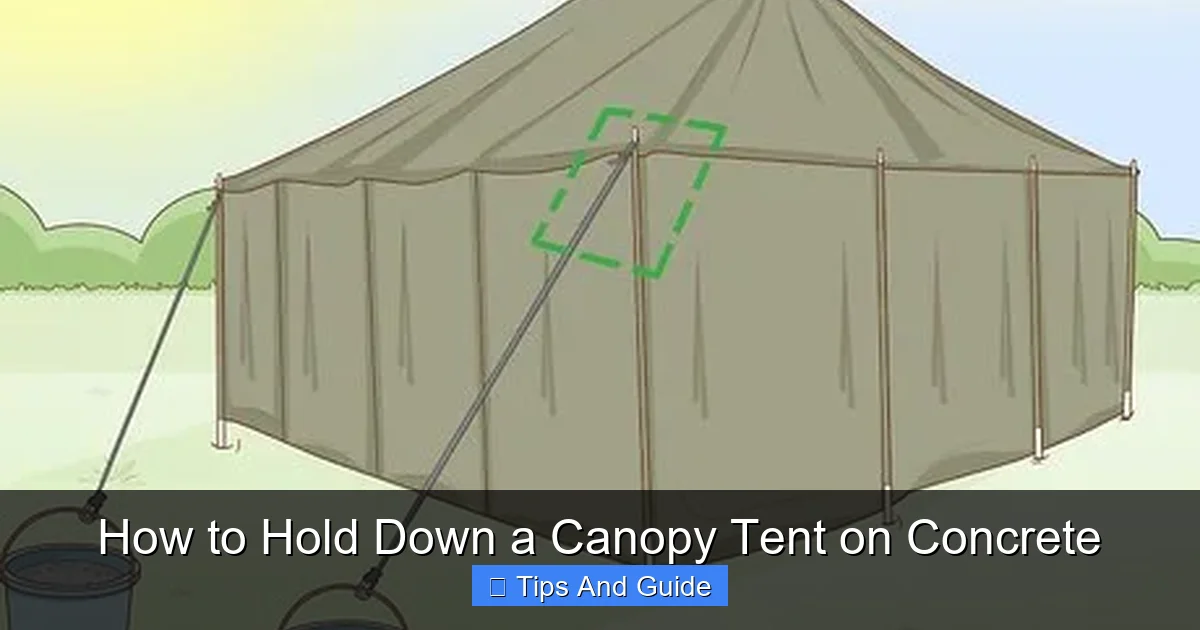
How to Hold Down a Canopy Tent on Concrete
Holding down a canopy tent on concrete requires specific strategies to prevent wind damage and ensure safety. This guide covers various methods, from using weights and anchors to specialized solutions. You’ll learn how to choose the right anchoring system for your needs and the importance of proper setup for maximum stability.
# How to Hold Down a Canopy Tent on Concrete
A canopy tent can be a fantastic addition to your backyard gatherings, outdoor events, or even just as a shaded spot for your car. However, when that event is happening on a hard surface like concrete, things can get a little tricky. Unlike grass, concrete doesn’t offer much grip for your tent legs. This means a sudden gust of wind can turn your stable shelter into a flying hazard, potentially damaging your tent, your property, or even causing injury.
Fear not! This comprehensive guide will walk you through everything you need to know about how to hold down a canopy tent on concrete. We’ll explore various methods, from simple DIY solutions to more robust anchoring systems, ensuring your canopy stays put, no matter what the weather throws at it. By the end of this guide, you’ll have the knowledge to confidently set up your canopy on any concrete surface, knowing it’s securely fastened.
## Understanding the Challenge of Concrete
Concrete surfaces present a unique challenge for canopy tent setup. Here’s why:
* **Lack of Grip:** Unlike soil or sand, concrete is smooth and offers no natural friction for tent legs to grip.
* **No Penetration:** You can’t simply hammer stakes into concrete. This means traditional tent anchoring methods are out.
* **Wind Amplification:** Open concrete areas, like driveways or patios, can sometimes channel or amplify wind, making it more unpredictable.
Because of these factors, you can’t just set up a canopy tent on concrete and assume it’s safe. You need to actively secure it.
## Essential Anchoring Methods for Concrete
The best way to hold down a canopy tent on concrete often involves a combination of methods. We’ll break down the most effective techniques.
## Method 1: Using Weights
This is perhaps the most common and accessible method for securing a canopy tent on concrete. The principle is simple: add significant weight to the legs of your tent.
### 1. Dedicated Canopy Weights
These are purpose-built weights designed specifically for canopy tents. They typically come in various forms:
* **Plate Weights:** These are heavy metal plates that slide over the tent legs and are secured with bolts or clamps. They are often stackable for added weight.
* **Bag Weights:** These are heavy-duty fabric bags that you fill with sand, gravel, or water. They then wrap around the tent legs and are secured with Velcro or straps.
* **Conical or Pyramid Weights:** These are often made of dense plastic or metal and are designed to be filled with water or sand. Their shape helps them stay put and distribute weight effectively.
#### How to Use Dedicated Canopy Weights:
1. **Assemble Your Canopy:** Set up your canopy tent as you normally would, ensuring all legs are extended and the frame is stable.
2. **Position the Weights:** Place the weights around the base of each tent leg. If using plate weights, slide them onto the legs before fully extending them, or ensure they can be secured afterwards. If using bag or conical weights, wrap or place them around the legs according to the manufacturer’s instructions.
3. **Secure the Weights:** Ensure any straps, bolts, or clamps are tightened securely to prevent the weights from shifting.
4. **Distribute Weight Evenly:** Aim for an equal amount of weight on each leg. This ensures balanced stability.
#### Pros of Dedicated Canopy Weights:
* Designed for the job, offering good stability.
* Reusable and durable.
* Relatively easy to use.
#### Cons of Dedicated Canopy Weights:
* Can be an additional expense.
* They add significant bulk and weight to transport.
### 2. DIY Weight Solutions
If you’re on a budget or need a quick solution, several everyday items can be repurposed as weights.
#### Sandbags:
* **How to Use:** Purchase heavy-duty sandbags (often used for flood control). Fill them with sand or gravel. Tie them securely to each tent leg, ensuring they are positioned as low as possible for maximum leverage. You can also place them directly on top of any weight plates you might have.
* **Pros:** Inexpensive, readily available, and very effective when filled with dense material like sand.
* **Cons:** Can be messy, require filling, and might not look as tidy as dedicated weights.
#### Water Jugs or Barrels:
* **How to Use:** Large, sturdy water jugs (like those used for water coolers) or even small plastic barrels can be filled with water and strapped to the tent legs. Ensure the jugs are tightly sealed to prevent leaks. You can use strong ratchet straps or bungee cords to secure them.
* **Pros:** Water is cheap and readily available. The weight can be substantial.
* **Cons:** Water can freeze in cold temperatures, rendering it useless or even damaging the containers. Leaks can be a problem. The weight is less dense than sand, so you might need larger containers.
#### Concrete Blocks or Pavers:
* **How to Use:** Stack concrete blocks or pavers around the base of each tent leg. For a more secure fit, you can use straps to tie them to the legs.
* **Pros:** Very heavy and stable. Can be a readily available material if you have them on hand.
* **Cons:** Can be cumbersome to move. Risk of scratching or damaging the tent legs if not careful.
#### Rocks or Bricks:
* **How to Use:** Similar to concrete blocks, these can be piled around the base of the legs.
* **Pros:** Can be found for free in some areas.
* **Cons:** Can be uneven, messy, and may not provide as consistent a hold as other methods.
## Method 2: Anchoring Directly to Concrete
For the most secure hold, especially in areas prone to strong winds or for long-term installations, anchoring directly into the concrete is the gold standard. This method requires more effort and potentially some tools.
### 1. Using Concrete Anchors (Drill Method)
This method involves drilling holes into the concrete and using specialized anchors to secure the tent.
#### Equipment Needed:
* **Hammer Drill and Masonry Bit:** The size of the bit will depend on the anchors you choose.
* **Concrete Anchors:** Options include:
* **Wedge Anchors:** These are very strong and suitable for permanent or semi-permanent installations. You drill a hole, insert the anchor, and tighten a nut, which expands the anchor within the concrete.
* **Sleeve Anchors:** Similar to wedge anchors, these also expand to create a secure hold.
* **Screw Anchors (Concrete Screws):** These are easier to install, as they screw directly into a pre-drilled pilot hole. They are good for temporary to semi-permanent setups.
* **Washers and Nuts:** To secure the tent legs to the anchors.
* **Measuring Tape and Marker:** To mark drill locations.
* **Safety Glasses and Gloves:** Essential for drilling.
#### How to Anchor with Drill Method:
1. **Position the Tent:** Set up your canopy tent and carefully position it exactly where you want it.
2. **Mark Anchor Points:** For each leg, mark where the anchor bolt will go through the base plate of the tent leg (if it has one) or where you want to attach a strap around the leg.
3. **Remove Tent Leg:** Carefully lift one corner or section of the tent and prop it securely so it won’t fall. Remove the leg you need to work on.
4. **Drill the Hole:** Using the hammer drill and appropriate masonry bit, drill a hole at the marked spot. Ensure the hole is the correct depth for your chosen anchor.
5. **Insert the Anchor:** Clean out the dust from the hole. Insert the concrete anchor according to the manufacturer’s instructions. For wedge or sleeve anchors, you’ll typically tap them in and then tighten the nut. For screw anchors, you simply drive them in.
6. **Attach Tent Leg:** If you have a base plate, align it with the anchor bolt. Place a washer and then the nut onto the bolt and tighten it firmly. If you’re anchoring without a base plate, you might use a strap that goes around the leg and attaches to the anchor, or a specially designed bracket.
7. **Repeat for All Legs:** Repeat the process for all tent legs.
8. **Check Security:** Once all legs are anchored, give the tent a gentle pull to ensure it’s secure.
#### Pros of Drilling:
* Provides the strongest, most reliable hold.
* Ideal for long-term or frequent use.
* Minimal risk of the tent shifting or lifting.
#### Cons of Drilling:
* Requires tools and some DIY skill.
* Permanent or semi-permanent alteration to the concrete surface.
* More time-consuming to set up and take down.
### 2. Using Straps with Concrete Anchors (No Drill)
If drilling into the concrete is not an option (e.g., you’re renting the space or want to avoid permanent marks), you can use straps in conjunction with other anchoring points.
#### Methods:
* **Ground Anchor Straps:** These are heavy-duty straps designed to be secured to existing ground anchors or eye bolts that may already be present in the concrete (common in commercial or industrial settings).
* **DIY Tie-Down Points:** If there are no existing anchor points, you might need to create temporary ones. This could involve using heavy-duty concrete screw anchors (as mentioned above) that you can remove later, or finding sturdy structural elements nearby to attach to.
#### How to Use Straps:
1. **Position Tent:** Set up the canopy tent.
2. **Attach Straps to Tent:** Securely attach strong, adjustable straps (like ratchet straps or heavy-duty nylon webbing straps) to the frame of the canopy, ideally near the legs or at the top corners if possible.
3. **Anchor Straps to Concrete:**
* **Existing Anchors:** Loop the straps through existing eye bolts or anchor points in the concrete and tighten them.
* **Temporary Anchors:** If you’ve installed temporary screw anchors, attach the straps to these.
* **Nearby Structures:** If safe and appropriate, tie straps to sturdy posts, railings, or other immovable objects.
4. **Tension the Straps:** Pull the straps taut, ensuring they are angled to provide maximum stability. Avoid creating excessive tension that could warp the canopy frame.
5. **Use Weights as Backup:** Even with straps, using weights on the legs is highly recommended as a secondary security measure.
#### Pros of Straps:
* Can be used without drilling into the concrete.
* Flexible and adaptable to different situations.
#### Cons of Straps:
* Reliance on the strength of the tie-down points.
* Can be less aesthetically pleasing.
* May require additional hardware.
## Method 3: Specialized Canopy Feet and Accessories
Some canopy manufacturers offer specific accessories designed for hard surfaces.
### 1. Canopy Leg Inserts or Feet
These are often rubber or plastic caps that fit over the bottom of the tent legs. They are designed to provide a bit more grip on smooth surfaces.
#### How to Use:
1. **Attach to Legs:** Simply push or slide the inserts onto the bottom of each tent leg.
2. **Combine with Weights:** While these offer some minor improvement in grip, they are rarely sufficient on their own for windy conditions. Always combine them with weights or other anchoring methods.
#### Pros:
* Simple to use.
* Can offer a slight improvement in stability.
#### Cons:
* Limited effectiveness on their own.
* May not be available for all canopy models.
### 2. Ground Stakes for Hard Surfaces
Some companies offer specialized ground stakes designed to be hammered into asphalt or even some types of concrete. These often have a wider base or a sharper point.
#### How to Use:
1. **Follow Instructions:** These stakes usually require a strong hammer or mallet and may need pilot holes drilled first, depending on the concrete hardness.
2. **Secure Legs:** Attach the tent legs to these stakes using the provided mechanisms or straps.
3. **Consider Limitations:** Be aware that even these may not hold in extremely high winds.
#### Pros:
* Designed for hard surfaces.
#### Cons:
* Requires significant force to install.
* May still not be as secure as full anchors.
* Can damage the surface.
## Choosing the Right Canopy Tent for Concrete
If you frequently use your canopy on concrete, consider looking for a canopy that is designed with this in mind. Some of the **best pop up canopy tents** come with reinforced leg bases or are compatible with a wider range of anchoring accessories. When searching for the **best pop up tent canopy** or exploring options like the **best camping canopy tent**, check product descriptions for features that enhance stability on hard surfaces. Reading reviews for the **best pop up canopy tent reviews** can also provide insights from users who have set up on concrete.
## Practical Tips for Maximum Stability
Regardless of the method you choose, follow these tips for the best results:
* **Read Your Canopy’s Manual:** Always refer to the manufacturer’s instructions for your specific canopy model. They may have recommendations for anchoring.
* **Assess the Wind:** Before you even set up, check the weather forecast. If high winds are expected, consider postponing your event or taking the canopy down altogether. A strong gust can overcome even the best anchoring systems.
* **Level Surface:** Ensure the concrete surface is as level as possible. Unevenness can put extra stress on the frame and make anchoring more difficult.
* **Taut Fabric:** Make sure the canopy fabric is pulled taut. Loose fabric can act like a sail, catching wind and putting undue stress on the frame and anchors.
* **Center Your Weight:** Try to keep the weight of any items inside the canopy centered, rather than pushing against one side, which could create uneven forces.
* **Don’t Over-Tension:** While you want the fabric taut, don’t over-tension the frame with your anchoring system, as this can bend or break the poles.
* **Consider Guy Lines:** For larger canopies, using guy lines attached to the top corners and anchored to heavy weights or concrete anchors can significantly improve stability.
* **Think About Footprint:** If you’re setting up in a public area, be mindful of where your tent legs and anchoring systems will be. Avoid blocking walkways or creating tripping hazards.
* **Secure Valuables:** If using water jugs or sandbags, ensure they are securely fastened so they don’t accidentally tip over and damage anything.
## Troubleshooting Common Issues
* **Tent Still Wobbling:**
* **Problem:** Even with weights, the tent feels unstable.
* **Solution:** Add more weight. Ensure weights are positioned as low as possible. Check if the canopy frame is fully extended and locked. Consider adding direct anchors if feasible.
* **Anchors Pulling Out:**
* **Problem:** When pulling taut, anchors seem to be loosening or pulling out of the concrete.
* **Solution:** If using screw or expansion anchors, ensure the hole was drilled correctly (depth and diameter) and that the anchor is fully seated. If you’re using weights, they might not be heavy enough. For straps, check the integrity of the tie-down points.
* **Wind Catching Fabric:**
* **Problem:** The canopy fabric is flapping wildly, creating a “sail effect.”
* **Solution:** Ensure all velcro straps and ties connecting the fabric to the frame are secured. If the wind is strong enough to do this, it’s likely too strong for the canopy. Consider taking it down.
* **Legs Slipping:**
* **Problem:** Tent legs are sliding on the concrete surface despite weights.
* **Solution:** Increase the weight significantly. Try using rubber matting or grip tape around the base of the legs if possible, but this is usually a minor aid. Direct anchoring is the best solution here.
## Conclusion
Holding down a canopy tent on concrete doesn’t have to be a daunting task. By understanding the challenges and employing the right methods, you can ensure your shelter remains stable and secure. Whether you opt for the simplicity of dedicated weights, the robust security of concrete anchors, or a combination of techniques, always prioritize safety. Remember to assess the conditions, set up properly, and regularly check your anchoring system. With these guidelines, you can confidently enjoy your canopy tent on any concrete surface, protected from the elements and the worries of wind. For those looking for the perfect shelter, exploring options for the **best pop up tent on the market** or the **best pop up tent canopy** can lead you to models that are easier to secure on various surfaces.
Key Takeaways
- Choose the Right Anchoring Method: The most effective way to hold down a canopy tent on concrete depends on the tent’s size, expected wind conditions, and the duration of use.
- Weight is Your Friend: Adding substantial weight to the legs of the canopy is crucial. This can be achieved with dedicated weights, sandbags, or water jugs.
- Secure the Base: Direct anchoring to the concrete, where possible, offers the strongest hold. This involves using specialized concrete anchors or straps.
- Consider the Wind: Always assess the wind forecast. For gusty or high winds, a combination of methods is often necessary for adequate stability.
- Proper Setup is Key: Ensure the canopy is pitched correctly, with all legs evenly extended and the fabric taut, before applying any anchoring solutions.
- Regular Checks: Periodically inspect your anchoring system, especially in changing weather conditions, to ensure it remains secure.