

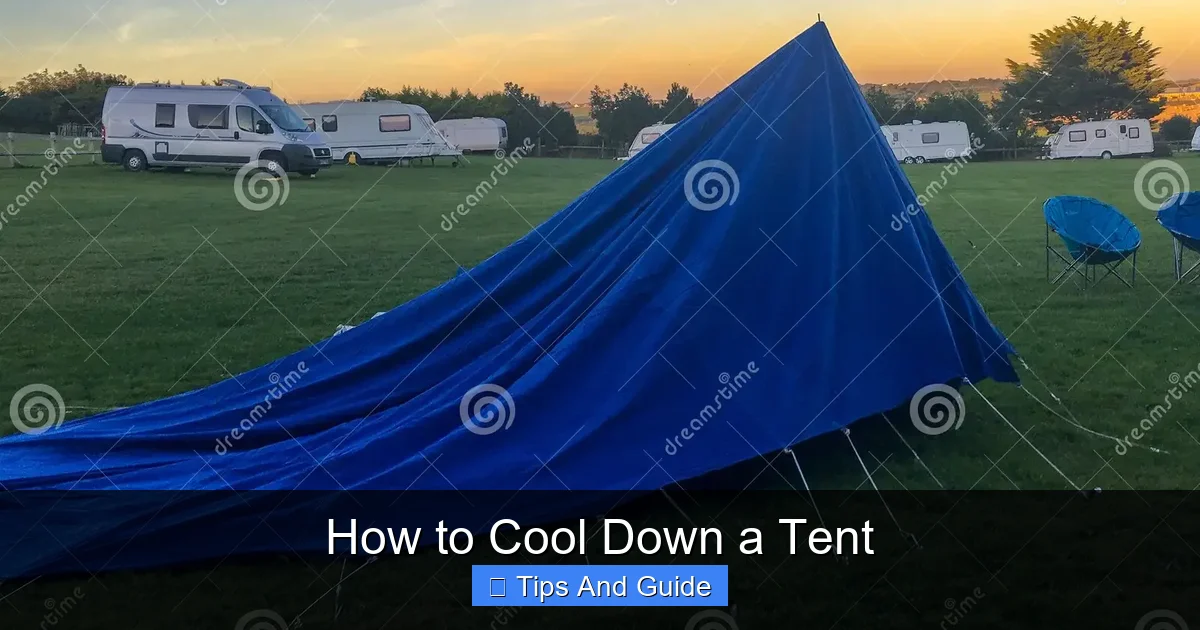
Don’t let a sweltering tent ruin your camping trip! This guide offers practical strategies to effectively cool down your tent on hot days. From strategic site selection and ventilation techniques to utilizing cooling gadgets, you’ll learn how to create a more comfortable outdoor living space. Stay cool and enjoy the outdoors with these simple yet effective methods.
# How to Cool Down a Tent
Camping is an incredible way to connect with nature, but when the sun beats down, a tent can quickly turn into an oven. No one enjoys sweltering inside their shelter. Fortunately, there are many effective ways to cool down your tent and make your outdoor adventure much more pleasant. This guide will walk you through everything you need to know, from choosing the right campsite to using simple gadgets to beat the heat. Get ready to transform your hot, stuffy tent into a cool, inviting oasis.
## Understanding Why Tents Get Hot
Before we dive into solutions, it’s helpful to understand why tents become so warm. Tents are essentially enclosed spaces. When sunlight hits the fabric, it heats up. The air inside gets trapped, and any heat generated by occupants or electronics also contributes to the rising temperature. Darker tent colors absorb more heat than lighter ones. In humid conditions, the trapped moisture from breathing and sweating also adds to the discomfort. Understanding these factors helps us target the right strategies.
## Pre-Trip Preparations and Tent Choice
Your tent choice and how you prepare can make a big difference before you even set up camp.
### Choosing the Right Tent
If you often camp in warm weather, consider a tent designed for breathability. Look for tents with large mesh panels and multiple vents. Lighter colored tents tend to absorb less heat than darker ones. Some tents even have special reflective coatings. For more information on different types of tents, you might find it useful to explore guides on the best pop-up tent reviews or the best camping backpacking tent, as many modern designs prioritize ventilation.
### Color Matters
While not always the primary deciding factor, a lighter-colored tent will reflect more sunlight and stay cooler than a dark-colored one. This might be a consideration if you are buying a new tent specifically for hot weather camping.
## Strategic Campsite Selection
Where you pitch your tent is arguably the most critical factor in keeping it cool.
### Seek Natural Shade
This is the golden rule of staying cool. Always try to set up your tent under the shade of trees. Even partial shade can significantly reduce the amount of direct sunlight hitting your tent. Look for mature trees that provide a dense canopy. Be mindful of potential hazards like dead branches.
### Consider Sun Path
Think about the sun’s movement throughout the day. While a spot might be shaded in the morning, it could be in direct sun by the afternoon. Try to pick a location that will remain shaded for the longest possible period, especially during the hottest parts of the day.
### Utilize Wind Direction
Position your tent so that prevailing breezes can flow through it. Open up all the windows and doors on the side facing the wind. This helps to create a cross-breeze that will circulate air and push out the hot air.
### Avoid Heat Traps
Areas like large, open fields with no shade or near reflective surfaces (like water or asphalt) can amplify the heat. Try to camp in areas that offer some natural insulation or windbreaks.
## Maximizing Ventilation
Proper ventilation is your best friend when trying to cool down a tent. It’s all about getting that hot air out and letting cooler air in.
### Open All Vents and Windows
Most tents come with multiple vents and windows. Open them all up! Even if it’s breezy, opening them allows air to move. If it’s still and hot, opening them allows you to manage airflow.
### Create a Cross-Breeze
Position your tent doors and windows to create a pathway for air to enter one side and exit the other. If you can, set up your tent so that the main entrance and any mesh windows are facing opposite directions to catch any available breeze.
### Use the Rainfly Strategically
The rainfly provides an extra layer of insulation, which can be beneficial in cold weather but works against you in heat. If it’s not raining and not excessively windy, consider pitching your tent without the rainfly. This exposes the mesh inner tent directly to the air, maximizing ventilation. If you must use the rainfly for privacy or to block light, ensure there is a good gap between the rainfly and the tent body to allow for airflow.
### Keep Doors and Windows Unzipped (When Safe)
When you are inside the tent and feel safe, keep the main tent doors and windows unzipped. This allows for maximum air exchange. If you need privacy or to block light, use the privacy flaps or curtains that often come with tents, but keep the mesh underneath open.
## Harnessing the Power of Shade
Beyond just picking a shady spot, you can actively create shade.
### Use an Additional Tarp
A simple tarp can be a game-changer. Pitch a tarp over your tent to create an extra layer of shade. You can set it up a few feet above the tent, leaving a gap for air circulation, or create a more elaborate shaded area. This blocks direct sunlight from hitting your tent fabric.
### Employ Reflective Materials
Some campers use reflective blankets (like emergency thermal blankets) or specialized reflective tarps pitched above their tents to bounce sunlight away. Be cautious with these, as they can sometimes reflect heat *towards* the tent if not positioned correctly. The primary goal is to prevent the sun’s rays from directly warming your tent.
### Utilize Natural Obstructions
If you can’t find a perfectly shaded spot, look for natural features that can provide some shade. A large rock formation, a dense bush, or even a parked vehicle (if appropriate for the campsite) can offer temporary respite from the sun.
## Evaporative Cooling and Water Tricks
Water has a natural cooling effect through evaporation.
### Dampen the Tent Exterior
In very dry climates, lightly misting the outside of your tent with water can help. As the water evaporates, it will draw heat away from the tent fabric. Be careful not to saturate the fabric, as this could lead to condensation issues inside.
### Hang Damp Cloths
Hang damp towels or cloths from the tent poles or inside the tent, especially near vents. As the water evaporates, it will slightly cool the air passing through.
### Cool Your Sleeping Gear
Consider bringing a cooling towel or a spray bottle filled with water and a few drops of essential oils like peppermint or eucalyptus. A quick spritz can be incredibly refreshing. You can also pre-chill some water bottles in a cooler and place them in your sleeping bag before bed. For comfort, ensure you have a good camping mattress for tent or a comfortable camping mat for tent that doesn’t trap heat.
### Freeze Water Bottles
Fill water bottles with water and freeze them. Place these frozen bottles in a cooler, and you can use them to cool your tent by placing them in front of a fan or even in your sleeping bag.
## Utilizing Cooling Gadgets
Modern technology offers some simple solutions for tent cooling.
### Battery-Powered Fans
A small battery-powered fan is an essential item for hot weather camping. Place it strategically to create a breeze. You can find many options designed for camping, often with rechargeable batteries. Look for guides on the best camping fan for tent or even the best camping fan for large tent if you have a bigger setup.
### Portable Air Conditioners
For those who prioritize comfort and are willing to invest, portable camping air conditioning units are available. These are typically larger and require a power source, so they are best suited for car camping or locations with generator access. Researching the best camping AC unit for tent is a good starting point if this is an option you’re considering.
### Cooling Mats and Pillows
Specialized cooling mats and pillows designed for sleeping can help regulate your body temperature within the tent.
## Minimizing Internal Heat Sources
What you do inside your tent also impacts its temperature.
### Avoid Cooking Inside
Never cook inside your tent. Stoves generate significant heat and are a major fire hazard. Cook in a designated area away from your tent. This also applies to using fuel-powered lanterns; opt for LED battery-powered lights, like those found in guides for the best camping lights for tent.
### Limit Electronics
Electronics like laptops, tablets, and even some phones can generate a surprising amount of heat when in use. If possible, keep them off or in a cool, shaded place outside the tent when not in use.
### Manage Body Heat
When you’re sleeping, your body heat will contribute to the tent’s warmth. If you are camping with others, ensure there’s enough space and ventilation to manage the combined body heat. Consider sleeping bags designed for warmer weather or simply using a sleeping bag liner or a sheet.
### Dehydrate Your Sweat
If you’re prone to sweating, try to dry off before bed. A quick wipe-down with a towel can help reduce the humidity inside the tent.
## Timing is Everything
Sometimes, the best way to cool down your tent is to manage your time.
### Be Active During Cooler Hours
Plan your hikes and activities for the cooler parts of the day, like early morning or late evening. Spend the hottest midday hours relaxing in the shade or swimming if water is nearby.
### Open Up at Night
As soon as the sun begins to set and the outside temperature drops, open up your tent completely to allow cool night air to circulate. This will help dissipate the heat that built up during the day.
## Troubleshooting Common Issues
Even with the best efforts, tents can still get warm. Here are a few common problems and solutions.
### Problem: Condensation Inside the Tent
* **Cause:** Warm, moist air from breathing and cooking condenses on cooler tent fabric. This is exacerbated by poor ventilation.
* **Solution:** Increase ventilation as much as possible. Ensure there is airflow between the inner tent and the rainfly. Wipe down any excessive moisture with a towel. Avoid drying damp clothes inside the tent.
### Problem: Tent Still Feels Warm Despite Shade
* **Cause:** Even in shade, trapped air and body heat can make a tent feel stuffy. Radiant heat from the ground can also be a factor.
* **Solution:** Focus on air circulation. Use fans, open all vents and doors, and consider a tarp overhead for an extra layer of shade. Ensure your sleeping surface, like a camping bed for tent, allows for some airflow underneath.
### Problem: Bugs Getting In When Doors are Open
* **Cause:** Opening doors for ventilation naturally invites insects.
* **Solution:** Ensure your tent has good quality mesh screens on all windows and doors. Keep the mesh doors zipped up even when the main flap is open. Consider using insect repellent around your campsite and wearing light-colored clothing, which is less attractive to many biting insects.
## Conclusion
Keeping your tent cool on a hot camping trip is entirely achievable with a little planning and the right techniques. By prioritizing strategic campsite selection, maximizing ventilation, creating shade, and utilizing simple cooling methods, you can ensure a comfortable and enjoyable experience. Don’t let the heat deter you from enjoying the great outdoors. With these tips, you’re well-equipped to beat the heat and make your tent a cool sanctuary even on the warmest days. Happy camping!
- Strategic Site Selection is Key: Choosing a shady spot or a location with good airflow can significantly reduce tent temperature.
- Maximize Ventilation: Proper use of tent vents, doors, and windows is crucial for circulating air and expelling hot air.
- Harness the Power of Shade: Using tarps or natural shade elements can block direct sunlight, keeping your tent cooler.
- Water is Your Friend: Dampening the tent exterior or using evaporative cooling techniques can lower internal temperatures.
- Consider Cooling Gadgets: Battery-powered fans and other portable cooling devices can provide a welcome breeze.
- Minimize Heat Sources Inside: Be mindful of electronics and cooking activities that generate extra heat within the tent.
