How to Collapse a Pop Up Tent
Collapsing a pop-up tent might seem tricky, but with the right steps, it’s a breeze! This guide breaks down the process into simple, actionable instructions. You’ll learn how to prepare your tent, execute the folding maneuvers, and secure it for storage, ensuring a stress-free experience every time. With a bit of practice, you’ll be packing up your pop-up tent like a pro.
# How to Collapse a Pop Up Tent
So, you’ve had a fantastic time camping, enjoying the great outdoors, or perhaps a fun day at the beach. Your pop-up tent has served you well, offering quick shelter and a cozy space. Now comes the part that can sometimes feel like a puzzle: collapsing it and packing it away. Don’t worry, it’s not as complicated as it might seem! This guide is here to walk you through the process, step-by-step, making collapsing your pop-up tent a simple and stress-free task. We’ll cover everything from initial preparation to the final fold, ensuring your tent is neatly packed and ready for its next adventure.
## Why Collapsing a Pop Up Tent Matters
You might be wondering why we need a guide for something as seemingly simple as folding a tent. Well, pop-up tents, by their very design, rely on tension and a specific structure. Collapsing them incorrectly can lead to frustration, bent poles, torn fabric, or a tent that simply refuses to fit back into its carrying bag. Proper collapsing ensures:
* Longevity of Your Tent: Gentle and correct folding prevents undue stress on the materials and poles, extending the lifespan of your tent.
* Ease of Storage: A neatly collapsed tent takes up less space and is much easier to store in your car, garage, or closet.
* Quick Pack-Up: Knowing the right technique means you can pack up camp much faster, especially when you’re eager to head home or move to your next destination.
* Preventing Damage: Forceful or incorrect folding is a common way to damage the integrated poles, which can be difficult and expensive to repair.
## Preparing Your Pop Up Tent for Collapse
Before you even think about folding, a little preparation goes a long way. Taking these simple steps will make the collapsing process much smoother.
## Step 1: Clear the Tent Interior
First things first, empty everything out of your tent. This includes sleeping bags, mats, clothes, and any gear. Make sure there are no stray items left behind that could get caught in the fabric or poles during folding.
## Step 2: Remove Stakes and Guylines
Walk around the outside of your tent and carefully pull out all the stakes securing it to the ground. If you used guylines, detach them from the tent and the ground stakes. Gather these items together; it’s easy to forget a stake or two!
## Step 3: Dry and Clean the Tent
This is a crucial step for maintaining your tent. If your tent is wet or damp, it’s essential to dry it thoroughly before packing it away. Storing a wet tent can lead to mildew, mold, and unpleasant odors, which can permanently damage the fabric.
### If the Tent is Damp
* Air it out: If possible, set up your tent again in a dry, airy spot for a few hours. A gentle breeze and sunlight are your best friends here.
* Wipe down: Use a dry cloth to wipe away any remaining moisture from the inside and outside of the tent.
* Consider your environment: If you’re packing up after a rainy camp and can’t dry it fully, try to air it out as much as possible. When you get home, unpack it immediately and let it dry completely before storing it long-term.
### If the Tent is Dirty
* Brush off debris: Use a soft brush or a dry cloth to remove dirt, leaves, and any other loose debris from the fabric.
* Spot clean: For stubborn dirt, use a damp cloth with a very mild soap. Be sure to rinse the area thoroughly with a clean, damp cloth afterward and allow it to dry completely. Avoid harsh detergents, as they can damage the waterproofing.
## Step 4: Close All Zippers and Vents
Make sure all zippers on doors and windows are fully closed. This helps to keep the fabric taut and prevents snagging during the folding process. Close any vents as well.
## Step 5: Lay the Tent Flat (If Necessary)
For most standard pop-up tents, you’ll want to collapse them on a flat, clear surface. If your tent is on uneven ground, try to move it to a smoother area. Some tents are designed to be collapsed even when partially staked down, but laying it flat often makes the process easier and more controlled.
## Collapsing Your Pop Up Tent: The Core Technique
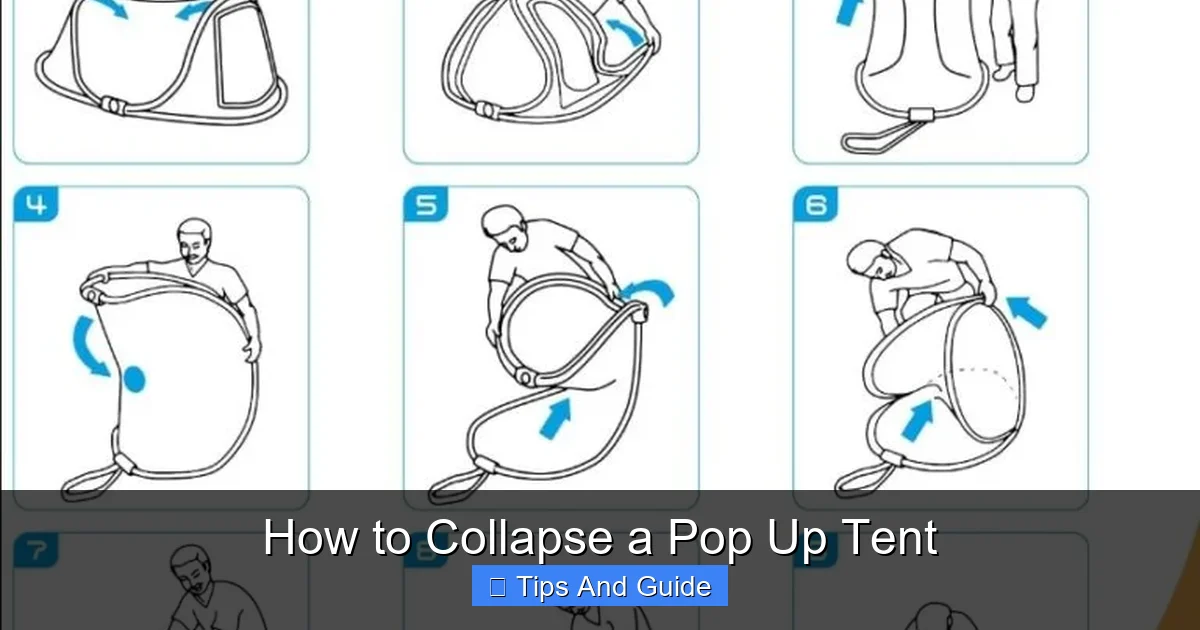
The magic of a pop-up tent lies in its flexible, spring-loaded poles. Collapsing it involves reversing the unfolding process by essentially “unspringing” these poles. While there can be slight variations between brands and models, the fundamental principle is a controlled twist.
## Step 6: Identify the “Bending” Points
Look at your tent. You’ll notice the flexible poles create arches. When collapsing, you’re essentially bringing these arches inward to form a smaller circle or oval. For most dome-style pop-up tents, you’ll be working with two primary hoop poles that cross each other.
## Step 7: The Crucial Twist and Fold
This is the main event! Here’s how to execute the most common collapsing method for dome-style pop-up tents. It’s often easiest to do this with the tent lying flat.
### H3: Grasp the Tent
* Stand or kneel in front of one side of the tent.
* Grasp the tent fabric on one side of the main pole structure, roughly at the middle point of the tent’s length. Use both hands, one on each side of the pole’s arch.
### H3: Bring the Poles Together
* The goal is to bring the two ends of the main hoop pole structure towards each other. Imagine you’re trying to make the tent into a figure-eight shape, or like folding a large round pizza in half, then in half again.
* Gently but firmly push one side of the tent inwards towards the other. You’re aiming to bend the poles inward.
### H3: Execute the Fold
* As you push one side inwards, the poles will naturally want to bend.
* At the same time, try to bring the opposite side of the tent over to meet it. This often results in the tent folding in half, creating two semi-circles.
* You’ll feel the poles bend significantly. Don’t be afraid of this bend; the poles are designed to flex.
* Continue to guide the fabric and poles until the tent forms a compact, somewhat circular shape. You’re essentially creating a nested loop.
### H3: Secure the Shape
* Once you have the tent folded into a manageable circular or oval shape, you might need to adjust it slightly to make it as flat and compact as possible.
* Grip the folded tent firmly. You might need to give it a slight twist or jiggle to settle the poles into their compact position.
## Step 8: Securing the Collapsed Tent
Once the tent is in its collapsed, folded state, you need to secure it so it doesn’t pop back open.
### H3: Use the Straps
* Most pop-up tents come with Velcro straps or ties attached to the tent bag or the tent itself.
* Wrap these straps around the folded tent to hold the shape firmly. Make sure they are tight.
### H3: Fit into the Carrying Bag
* Carefully slide the secured, collapsed tent into its original carrying bag.
* If it’s a tight fit, try gently pressing down on the tent to make it more compact. Sometimes, a slight wiggle can help it slide in.
* Zip up the bag.
## Step 9: Store Your Tent Properly
Your tent is now collapsed and bagged. For long-term storage, find a cool, dry place. Avoid areas with extreme temperatures or high humidity.
## Variations and Specific Tent Types
While the above method is common for dome-style pop-up tents, other types might have slightly different procedures.
### Instant/Cabin Tents
Many larger instant or cabin pop-up tents have thicker poles and a more rigid frame. These often collapse in a similar fashion, but you might need to apply more deliberate pressure to bend the poles. Always refer to your specific tent’s manual for these. Some of the most robust options can be found among the best pop-up tent on the market.
### Car Tents and Larger Structures
If you’re dealing with larger structures like pop-up car tents or those designed for vans, the principles are the same, but the scale is bigger. You might need more space and potentially a second person to help manage the larger fabric panels and poles. For family adventures, ensuring you have the right setup is key, and you might want to research the best pop-up tent for family camping.
### Specialized Tents (Beach, Sun Shelters)
Smaller pop-up tents, like beach shelters or sun tents, usually collapse very easily. They often have fewer poles or a simpler frame. The same twisting motion applies, but it will be much lighter. If you’re looking for something specifically for the beach, check out guides on the best pop-up tent for the beach.
## Troubleshooting Common Pop Up Tent Collapsing Issues
Even with the best intentions, you might encounter a few hiccups. Here’s how to deal with them.
### Problem: The Tent Won’t Fold into a Compact Shape
* Cause: Poles are not properly aligned, or you haven’t achieved the necessary “bend.”
* Solution: Go back to Step 7. Ensure you’re bringing the two opposing sides of the main hoop poles together. You need to create a defined bend in the poles. Sometimes, standing the tent on its edge and gently pressing down on the top can help initiate the bend. Make sure all fabric is tucked in and not obstructing the fold.
### Problem: The Poles Are Stubborn or Won’t Bend Enough
* Cause: You might be hesitant, or the poles are very stiff.
* Solution: Apply firm, steady pressure. Don’t yank or force it suddenly, but a confident push is often needed. Imagine you’re trying to make a circle smaller by pushing the edges towards each other. If the tent is still a bit stiff, try gently flexing one pole section back and forth to loosen it up before attempting the main fold.
### Problem: The Fabric is Bunching Up or Not Lying Flat
* Cause: Fabric not managed correctly during the folding process.
* Solution: As you bring the two halves of the tent together, use your free hand to guide the fabric. Smooth it down so it lies flat against the poles. Think of it as folding a large piece of cloth; you want to avoid big wrinkles as you fold.
### Problem: The Tent Pops Back Open After Securing
* Cause: Straps are not tight enough, or the tent hasn’t settled into its folded position.
* Solution: Make sure the Velcro straps are wrapped as tightly as possible around the collapsed tent. You might need to press down on the tent as you tighten the straps. If it’s still popping open, try twisting the collapsed tent slightly while the straps are loose before tightening them. This helps the poles lock into a more compact state.
### Problem: The Tent Doesn’t Fit Back into the Bag
* Cause: Tent isn’t collapsed compactly enough, or the bag is the wrong size.
* Solution: Focus on making the collapsed tent as flat and tight as possible. Press down firmly on it as you secure the straps. Sometimes, re-folding it slightly differently can yield a more compact shape. If it’s a consistent problem, you might be overstuffing the bag or the bag itself might be too small for the tent when perfectly folded. Always try to use the original bag that came with your tent.
## Tips for Effortless Pop Up Tent Collapsing
* Read Your Manual: Every tent is slightly different. Your tent’s instruction manual is the definitive guide for its specific collapse mechanism.
* Watch a Video: Search online for videos of your specific tent model being collapsed. Seeing it done can be incredibly helpful.
* Practice at Home: Before your first trip, practice collapsing and setting up your tent in your backyard or living room. This way, you’ll be a pro by the time you’re at the campsite.
* Don’t Rush: While you want to be efficient, rushing can lead to mistakes and potential damage. Take your time, especially when you’re new to it.
* Teamwork: For larger pop-up tents, having a second person can make the process much easier and quicker.
## Conclusion
Collapsing a pop-up tent doesn’t have to be a battle. By following these steps – preparing your tent, executing the controlled twist, and securing it properly – you can transform a potentially frustrating task into a smooth, efficient part of your camping or outdoor experience. Remember to dry and clean your tent thoroughly before storage to ensure it lasts for many adventures to come. With a little practice and by following this guide, you’ll be packing up your pop-up tent with confidence and ease, ready for your next excursion. Happy camping!
Key Takeaways
- Master the Twist: The core of collapsing most pop-up tents involves a specific twisting motion to create a smaller, manageable shape.
- Clear the Space: Always ensure the area around your tent is clear of debris and obstacles before you begin folding.
- Follow Manufacturer Instructions: Your tent’s manual is the ultimate guide; always refer to it if you’re unsure.
- Gentle but Firm Pressure: Apply consistent pressure when folding to avoid damaging the poles or fabric.
- Secure Properly: Use the provided straps or bags to keep the tent folded tightly for easy storage and transport.
- Practice Makes Perfect: The more you collapse and set up your pop-up tent, the quicker and easier the process will become.
- Troubleshoot Common Issues: Understand how to deal with stubborn poles or fabric that won’t lie flat.